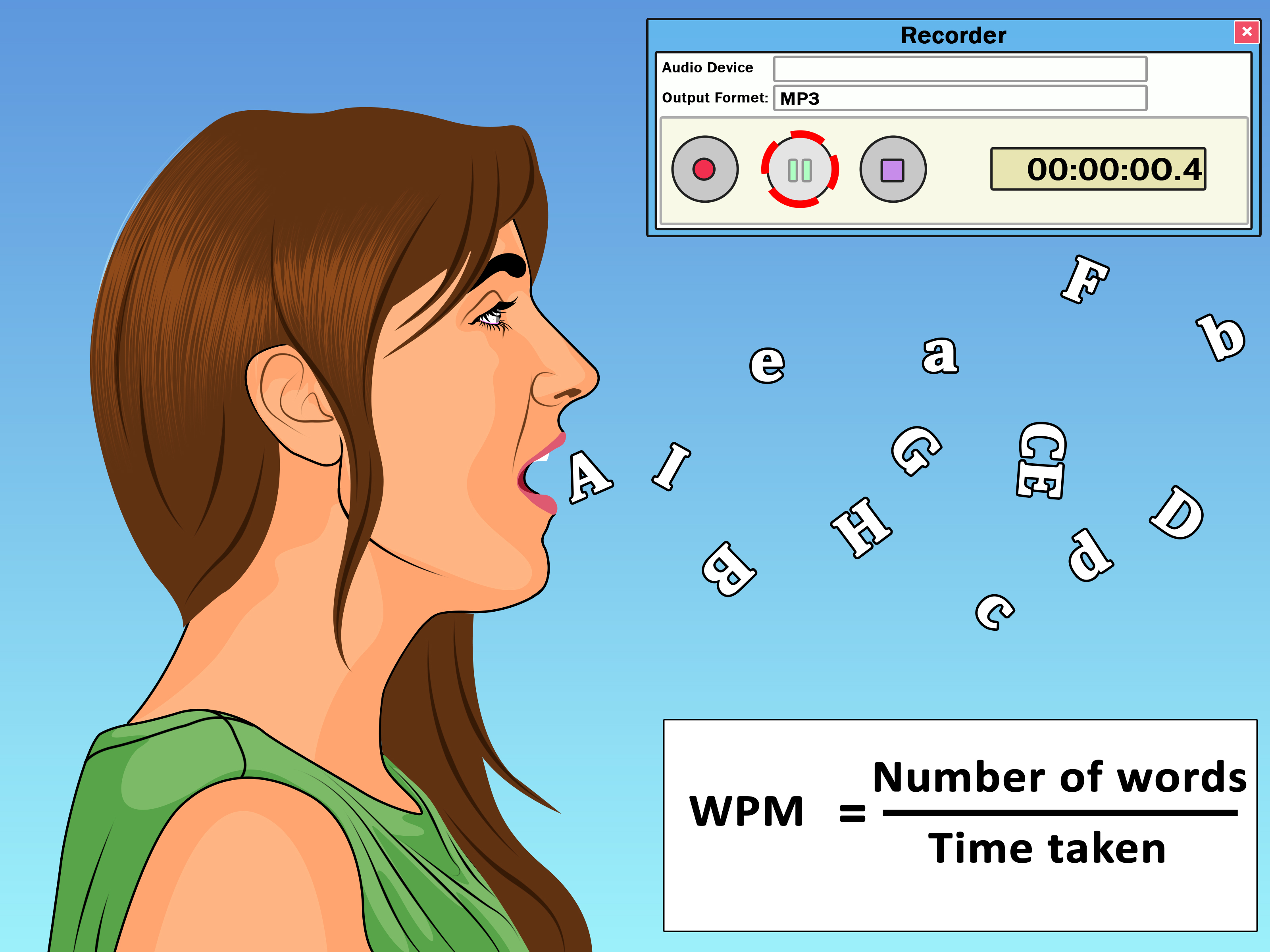
Words per minute, usually shortened to WPM, sounds like one of those tiny metrics that only typing teachers, transcription pros, and suspiciously fast keyboard warriors care about. But once you understand it, WPM becomes surprisingly useful. It can tell you how fast you type, how quickly you read, how long your speech will take, or whether your “quick five-minute presentation” is secretly a twelve-minute expedition with snacks required.
At its simplest, words per minute means exactly what it says: the number of words processed in one minute. The word “processed” matters because WPM can apply to typing, reading, speaking, dictation, transcription, and even classroom reading fluency. The basic formula is easy:
Words Per Minute = Total Words ÷ Total Minutes
However, real life likes to sneak in complications. Typing speed may include errors. Reading speed may need comprehension. Speaking speed may change depending on nerves, caffeine, or whether your audience looks bored. That is why this guide breaks WPM into three practical methods: calculating typing WPM, reading WPM, and speaking WPM. Each method includes examples, formulas, and tips so you can measure your speed without needing a calculator the size of a microwave.
What Does Words Per Minute Mean?
Words per minute is a speed measurement. It tells you how many words are typed, read, or spoken during a measured amount of time. For typing tests, many platforms define one “word” as five characters, including spaces and punctuation. This helps keep results fair because actual words vary wildly in length. “Cat” is not the same typing workout as “incomprehensibility,” even though both count as one dictionary word. Five-character word units solve that problem neatly.
For reading and speaking, the calculation is usually more literal. You count the actual number of words in a passage or script, then divide by the time it takes to read or say them. For example, if you read a 600-word article in 3 minutes, your reading speed is 200 WPM. If you deliver a 750-word speech in 5 minutes, your speaking rate is 150 WPM.
The key is choosing the right version of WPM for your goal. A student practicing oral reading fluency needs a different measurement than a job applicant taking a typing test. A podcaster timing an intro needs a different approach than a novelist estimating reading time for a chapter. Same metric, different mission.
Method 1: Calculate Typing Words Per Minute
Typing WPM is the most common version of words per minute. It measures how quickly you can type text within a timed session. Many online typing tests offer one-minute, three-minute, or five-minute tests because longer tests often give a more stable picture of your real speed. A one-minute sprint is useful, but it can be influenced by luck, nerves, or whether the passage includes words like “jazz,” “quizzical,” and “fjord,” which feel like keyboard obstacle courses.
Gross Typing WPM Formula
Gross WPM measures raw speed before adjusting for mistakes. The standard formula is:
Gross WPM = Total Characters Typed ÷ 5 ÷ Time in Minutes
Why divide by five? Because typing tests often treat five characters as one standard word. This includes letters, spaces, numbers, and punctuation. So if you type 1,500 characters in 5 minutes, the calculation looks like this:
1,500 ÷ 5 = 300 standard words
300 ÷ 5 minutes = 60 gross WPM
That means your raw typing speed is 60 WPM. Not bad. Your keyboard is not yet smoking, but it is respectfully warm.
Net Typing WPM Formula
Gross WPM is useful, but it can be misleading if you make many mistakes. A person who types 90 WPM with typos in every sentence is not necessarily more productive than someone who types 65 WPM cleanly. That is where net WPM comes in.
Net WPM = Gross WPM – Error Rate
A common way to calculate error rate is:
Error Rate = Number of Errors ÷ Time in Minutes
Example: You type for 2 minutes. Your gross speed is 70 WPM, but you make 10 uncorrected errors.
Error Rate = 10 ÷ 2 = 5 errors per minute
Net WPM = 70 – 5 = 65 WPM
Your net typing speed is 65 WPM. That number is more useful because it rewards accuracy. In the real world, speed without accuracy is like a delivery truck that arrives early but drops your furniture in the neighbor’s pool.
Typing Accuracy Formula
Typing tests often report accuracy as a percentage. The formula is:
Typing Accuracy = Correct Characters ÷ Total Characters × 100
If you typed 950 correct characters out of 1,000 total characters, your accuracy is:
950 ÷ 1,000 × 100 = 95%
A good typing result balances speed and accuracy. If you are practicing for school, work, coding, transcription, or data entry, do not chase WPM so aggressively that your accuracy collapses. A fast typist who constantly backspaces may feel busy, but the final output can resemble a raccoon sprinting across a keyboard.
Method 2: Calculate Reading Words Per Minute
Reading WPM measures how many words you read in a minute. This is helpful for students, teachers, editors, public speakers, content creators, and anyone trying to estimate how long it will take to read an article, chapter, script, or report.
The basic reading WPM formula is:
Reading WPM = Total Words Read ÷ Time in Minutes
Suppose you read a 900-word article in 4.5 minutes. Your reading speed is:
900 ÷ 4.5 = 200 WPM
That means you read 200 words per minute. This is a useful estimate, especially when planning study sessions or calculating reading time for blog posts.
How to Measure Reading WPM Correctly
To calculate your reading WPM accurately, choose a passage that matches your purpose. If you want to test casual reading speed, use a general article or book chapter. If you want to test academic reading speed, use a textbook-style passage. Reading a comic caption and reading a dense legal agreement are not the same sport. One is a jog; the other is mental furniture assembly.
Follow these steps:
Step 1: Choose a passage and count its words. You can use a word processor, Google Docs, Microsoft Word, or a trusted word counter.
Step 2: Start a timer and read naturally. Do not skim unless your goal is to measure skimming speed.
Step 3: Stop the timer when you finish.
Step 4: Divide the total word count by the number of minutes.
Example: You read 1,200 words in 6 minutes.
1,200 ÷ 6 = 200 WPM
Reading WPM With Comprehension
Reading speed alone is not the whole story. If you read 500 WPM but remember only that “there were words,” the score is not very helpful. Good reading measurement should include comprehension. After timing yourself, summarize the passage or answer a few questions. If your understanding drops sharply, your practical reading WPM is probably lower than your raw reading WPM.
This matters especially for students. In education, oral reading fluency often uses words correct per minute, or WCPM. Instead of counting every word attempted, WCPM subtracts errors from the total words read. The formula is:
WCPM = Total Words Read – Errors
If a student reads 135 words in one minute but makes 7 errors, the score is:
135 – 7 = 128 WCPM
This is different from silent reading WPM, but the principle is the same: accuracy matters. Fast reading is only impressive when the meaning comes along for the ride.
Method 3: Calculate Speaking Words Per Minute
Speaking WPM measures how many words you say in one minute. This is useful for presentations, YouTube scripts, podcasts, voiceovers, audiobooks, speeches, classroom talks, and wedding toasts that should not become historical documentaries.
The formula is simple:
Speaking WPM = Total Words Spoken ÷ Time in Minutes
Example: Your speech has 780 words, and it takes 6 minutes to deliver.
780 ÷ 6 = 130 WPM
Your speaking rate is 130 words per minute.
How to Measure Your Speaking Rate
The easiest way is to write or paste your script into a document, check the word count, record yourself reading it out loud, and time the recording. Then divide the word count by the duration in minutes.
If your recording is 4 minutes and 30 seconds, convert it to 4.5 minutes. If it is 2 minutes and 15 seconds, convert it to 2.25 minutes. The decimal matters because math, like a strict librarian, does not appreciate vague estimates.
Example: You speak 540 words in 3 minutes and 36 seconds.
First convert the time:
36 seconds ÷ 60 = 0.6 minutes
3 minutes + 0.6 = 3.6 minutes
Then calculate:
540 ÷ 3.6 = 150 WPM
Your speaking speed is 150 WPM.
Why Speaking WPM Matters
Speaking rate affects clarity, audience attention, and timing. If you speak too slowly, listeners may start mentally reorganizing their sock drawer. If you speak too quickly, they may feel like they are chasing a squirrel through a PowerPoint deck. A conversational speaking rate often falls somewhere around the middle range, but the best speed depends on your topic, audience, and delivery style.
For serious topics, technical lessons, or emotional stories, slower pacing can help listeners process meaning. For energetic intros, casual videos, or motivational talks, a faster pace may feel natural. The goal is not to hit one perfect number. The goal is to sound clear, confident, and human.
How to Convert Seconds Into Minutes for WPM
Many WPM mistakes happen because people forget to convert seconds into minutes. Since the formula uses minutes, you need to convert any extra seconds into a decimal.
Minutes = Seconds ÷ 60
Here are common conversions:
30 seconds = 0.5 minutes
15 seconds = 0.25 minutes
45 seconds = 0.75 minutes
90 seconds = 1.5 minutes
Example: You type 250 standard words in 2 minutes and 30 seconds. Convert 30 seconds to 0.5 minutes. Your total time is 2.5 minutes.
250 ÷ 2.5 = 100 WPM
That is the correct speed. If you accidentally divide by 2 instead of 2.5, you get 125 WPM, which is flattering but false. Your ego may enjoy it; your spreadsheet will not.
Gross WPM vs. Net WPM: Which One Should You Use?
Use gross WPM when you want to measure raw speed. Use net WPM when accuracy matters. In almost every practical situation, net WPM is more useful because it reflects usable performance.
For example, imagine two typists:
Typist A: 85 gross WPM with 15 errors in 5 minutes.
Typist B: 72 gross WPM with 2 errors in 5 minutes.
Typist A’s error rate is 3 errors per minute, so the net speed is 82 WPM. Typist B’s error rate is 0.4 errors per minute, so the net speed is 71.6 WPM. Typist A is still faster, but the gap is smaller than the gross score suggests.
Now imagine those errors are in a medical note, legal document, customer invoice, or coding file. Suddenly, accuracy becomes more than a nice bonus. It becomes the difference between “professional” and “please fix this before anyone sees it.”
Common Mistakes When Calculating Words Per Minute
Counting Actual Words Instead of Standard Typing Words
For typing, many tests use five-character word units. If you count dictionary words instead, your result may not match online typing tests. This is especially true if your passage contains very short or very long words.
Ignoring Errors
Typing fast with lots of mistakes can inflate your score. Always check whether your test reports gross WPM, net WPM, or accuracy-adjusted WPM.
Using Too Short a Test
A 15-second test can be fun, but it may not represent your normal speed. For a better estimate, use at least one minute. For serious measurement, use several tests and average the results.
Measuring Reading Speed Without Understanding
If you cannot explain what you just read, your reading speed result is incomplete. Add a comprehension check, especially for study or training purposes.
Forgetting Pauses in Speaking
When calculating speaking WPM, include natural pauses. Real speeches need breathing room. Nobody wants a presentation delivered like an auctioneer trapped in an elevator.
Practical Examples of WPM Calculations
Example 1: Typing WPM
You type 1,250 characters in 5 minutes.
1,250 ÷ 5 = 250 standard words
250 ÷ 5 = 50 gross WPM
If you made 5 errors:
Error Rate = 5 ÷ 5 = 1
Net WPM = 50 – 1 = 49 WPM
Example 2: Reading WPM
You read a 700-word article in 3.5 minutes.
700 ÷ 3.5 = 200 WPM
Example 3: Speaking WPM
Your presentation script has 900 words. You rehearse it in 6 minutes.
900 ÷ 6 = 150 WPM
If your presentation limit is 5 minutes, you either need to speak faster or trim the script. Trimming is usually better. Your audience will thank you, even if they do not send a formal certificate of gratitude.
Tips to Improve Your Words Per Minute
To improve typing WPM, practice regularly with accurate finger placement, relaxed posture, and consistent drills. Focus on accuracy first, then speed. Speed built on mistakes is like building a house on pudding.
To improve reading WPM, read more often, build vocabulary, reduce distractions, and practice with material slightly above your comfort level. Do not sacrifice comprehension just to chase a bigger number.
To improve speaking WPM, record yourself and listen back. Mark places where you rush, pause awkwardly, or sound unclear. Practice with a timer, but do not become robotic. A good speaking pace should feel natural, not like you are racing a microwave countdown.
Personal Experiences and Real-World Lessons About Calculating WPM
One of the biggest lessons about words per minute is that the number can be useful, but it can also become oddly addictive. The first time someone takes a typing test and sees “42 WPM,” the brain immediately whispers, “Surely we can make it 50.” Then 50 becomes 60. Then 60 becomes 70. Suddenly, a harmless typing test has turned into a keyboard-based fitness journey, minus the gym socks.
In everyday writing work, WPM is most useful as a planning tool. For example, if a person knows they can type about 55 net WPM, they can estimate how long a rough draft might take. A 1,100-word draft may require around 20 minutes of pure typing time, but real writing includes thinking, deleting, reorganizing, fact-checking, and staring into the distance like a philosopher with a deadline. So the WPM number helps, but it should not be treated as the whole schedule.
Reading WPM is equally practical. Many students and professionals underestimate how long reading takes. A 30-page report may look manageable until the text is dense, technical, or packed with unfamiliar terms. Timing a few pages gives a realistic reading speed. Once you know your actual pace, you can plan study blocks more honestly. This prevents the classic mistake of saying, “I’ll read the whole thing tonight,” and then discovering at 11:47 p.m. that the whole thing has become your sworn enemy.
Speaking WPM is especially helpful for presentations. A script that looks short on the page can become surprisingly long when spoken aloud. This is why rehearsing with a timer matters. People often write a speech, estimate the time by vibes, and then discover the vibes were lying. If a 1,200-word speech must fit into 6 minutes, the speaker would need to average 200 WPM, which may sound rushed for many audiences. Cutting the script to around 800 or 900 words can create more room for pauses, emphasis, and actual breathing, which remains a popular activity among public speakers.
Another useful experience is averaging multiple attempts. One typing test may not show your true skill. You may be tired, distracted, or unlucky with the text. The same goes for reading and speaking. A better approach is to measure three times and calculate the average. If your typing results are 58, 62, and 60 WPM, your average is 60 WPM. That number is more reliable than celebrating the best score and pretending the worst score moved to another country.
Finally, WPM teaches a quiet but valuable lesson: speed is only impressive when it serves the goal. A fast typist should still produce clean text. A fast reader should still understand the material. A fast speaker should still be clear. Words per minute is not a trophy by itself. It is a tool for improving communication. Use it to track progress, manage time, and build confidence. Then let the number support your work instead of bossing you around.
Conclusion
Calculating words per minute is simple once you know what you are measuring. For typing, use character-based formulas and adjust for errors when accuracy matters. For reading, divide total words by total reading time and check comprehension. For speaking, count the words in your script, time your delivery, and divide words by minutes.
The best method depends on your goal. Typists need net WPM and accuracy. Readers need speed plus understanding. Speakers need timing plus clarity. Whether you are preparing for a job test, improving study habits, recording a podcast, or trimming a speech before your audience quietly escapes, WPM gives you a practical way to measure and improve performance.
And remember: faster is nice, but accurate, clear, and confident is better. The keyboard may love speed, but your readers, listeners, teachers, clients, and future self will appreciate words that actually make sense.
Note: This HTML body is written for web publishing and contains only original, rewritten content based on real WPM measurement methods.