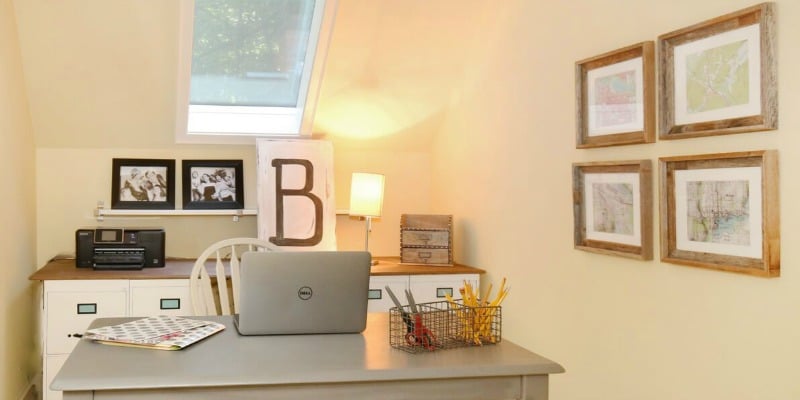
If your current home office looks like a folding chair lost a custody battle with a laundry basket, welcome. You are among friends. The good news is that a functional, attractive workspace does not need custom cabinetry, a designer mood board, or a suspiciously expensive “productivity candle.” A smart budget home office makeover can absolutely happen for around $250, especially when you combine secondhand finds, a little paint, and one of the internet’s most practical DIY ideas: the filing cabinet desk.
This setup works because it solves three problems at once. First, it gives you a solid work surface. Second, it adds storage without demanding more square footage. Third, it looks surprisingly polished when you style it well. Two filing cabinets plus a tabletop can create a desk that feels custom, works hard, and costs far less than many store-bought office desks.
Even better, this makeover is not just about aesthetics. A good workspace should help you sit comfortably, keep clutter under control, and make daily work feel less chaotic. That means your makeover should balance style, storage, and ergonomics. In other words, yes, you can have a pretty office without destroying your neck.
Why a DIY Filing Cabinet Desk Is the MVP of Budget Office Design
A DIY filing cabinet desk is one of the simplest ways to fake a built-in look on a realistic budget. Instead of buying a full desk with limited storage, you use filing cabinets as the base and place a wood top, countertop remnant, or sturdy desktop across them. The result feels substantial and customizable.
It delivers storage where you actually need it
Traditional desks often give you one shallow drawer and a dream. Filing cabinets, on the other hand, hold paper, cords, notebooks, office supplies, printers, and all the random items that somehow multiply the moment you start working from home. If your goal is a cleaner desktop, more hidden storage is your best friend.
It works in small rooms
Small home offices need vertical thinking and compact furniture. Filing cabinets let you create a desk footprint that makes sense for your room. You can use slim metal cabinets, wider lateral cabinets, or even one cabinet paired with a leg support if space is tight. In a nook, spare bedroom, or bedroom corner, this flexibility matters.
It looks more expensive than it is
Paint the cabinets matte black, creamy white, soft sage, or charcoal gray. Add a stained wood top. Swap in fresh hardware if needed. Suddenly, your office says “intentional design” instead of “I assembled this while eating crackers on the floor.” The trick is consistency. Match finishes, keep the palette simple, and avoid overcrowding the space.
Can You Really Pull Off a $250 Home Office Makeover?
Yes, but with one important asterisk: you need to shop strategically. If you buy everything brand-new from big-box retailers, the price climbs fast. Filing cabinets and wood tops alone can eat most of your budget. But if you mix thrifted cabinets, discounted materials, leftover paint, and a few affordable accessories, the math becomes much friendlier.
That is why the smartest home office makeover ideas start with what you already have. An old filing cabinet, a salvage wood panel, a lamp from another room, or baskets you already own can shave a surprising amount off the total.
Sample $250 budget breakdown
| Item | Estimated Cost |
|---|---|
| Two secondhand filing cabinets | $80 |
| Reclaimed wood top or discounted desktop | $60 |
| Paint, primer, sandpaper | $28 |
| Hardware, screws, felt pads, brackets | $22 |
| Cable management supplies | $15 |
| Desk lamp or thrifted task light | $20 |
| Wall organizer, pegboard, or corkboard | $15 |
| Decor touches like a plant, tray, or art print | $10 |
| Total | $250 |
This is a realistic budget if you are flexible on finishes and open to secondhand pieces. If you want brand-new matching cabinets and a premium wood top, your budget will need a glow-up of its own.
Step 1: Plan the Layout Before You Buy Anything
The biggest budget mistake is buying furniture first and asking questions later. Measure your wall, your chair clearance, and the room around the desk. You want enough room to sit comfortably, open drawers fully, and keep your monitor at a comfortable viewing distance.
Choose a wall with decent light, but avoid harsh glare directly on the screen. Natural light is great, but a monitor facing a bright window can turn your workday into an accidental staring contest with reflections. If possible, position the desk near a window rather than directly in front of one.
Also think about what lives around the desk. Will you need a printer nearby? Do you need room for dual monitors? Are you sharing the office with craft supplies, bills, or a cat who believes keyboards are heated beds? Your layout should support real life, not an imaginary minimalist influencer version of it.
Step 2: Build the Desk Base with Filing Cabinets
This is the part where the makeover starts feeling dramatic. Place two filing cabinets several feet apart, then lay the desktop across them. That is the basic formula. The style depends on what you choose for the base and top.
Best cabinet options
- Metal filing cabinets for an industrial or modern look
- Wood-look lateral file cabinets for a softer, furniture-like finish
- Mixed cabinets if you plan to paint them the same color
Best top options
- Reclaimed wood plank top
- Prefab desktop panel
- Countertop remnant
- Plywood wrapped with edge banding and painted or stained
For stability, use rubber bumpers, felt pads, or brackets underneath the top if needed. Many people leave the top unattached so the desk is easy to move, but if you want a more permanent feel, simple brackets can keep everything aligned.
Try to choose a top deep enough for daily work. A cramped desk looks cute for five minutes and annoying for five years. You need room for a keyboard, monitor, notebook, and perhaps a coffee mug you will absolutely forget exists until it goes cold.
Step 3: Make It Pretty Without Making It Precious
A good DIY office desk should be durable, not delicate. Beauty matters, but so does not panicking every time a pen rolls across the surface.
Paint for instant cohesion
If the filing cabinets do not match, paint them. One color makes mixed pieces look intentional. Soft white brightens a dark room. Black adds contrast and hides wear. Green and blue feel calm and collected, which is nice because your inbox probably is not.
Use warm materials to soften office vibes
Metal cabinets can feel cold unless you balance them with warmer finishes. A wood top, woven baskets, linen bulletin board, cork accessories, or framed art can make the office feel more like part of your home and less like an accounting annex from 1997.
Add vertical storage
When floor space is limited, the wall becomes your secret weapon. A floating shelf, pegboard, or corkboard keeps essentials close without swallowing desktop space. This is especially useful if your filing cabinet desk is compact and every square inch matters.
Step 4: Make the Setup Comfortable Enough to Use Every Day
No office makeover is successful if it looks amazing but leaves you hunched like a comma. Ergonomics are not glamorous, but neither is shoulder pain.
Your monitor should sit at a height that feels natural to view without tipping your head up or down. Keep the screen roughly an arm’s length away. Your shoulders should stay relaxed, your elbows close to your body, and your wrists fairly neutral. Under the desk, leave enough room for your legs and feet so you are not kicking a storage bin every time you answer an email.
If the desk height is not adjustable, adjust what you can. Raise the monitor with a stand or stacked books. Use a footrest if your feet do not rest comfortably on the floor. Choose a chair that supports your lower back. You do not need a luxury chair to be comfortable, but you do need one that does not feel like an elaborate prank.
Easy ergonomic upgrades on a budget
- Laptop riser or stack of sturdy books
- External keyboard and mouse
- Footrest or low stool
- Clamp lamp or task light
- Cable clips to reduce reaching and tangling
Step 5: Organize the Space So It Stays Functional
Storage is not helpful if it becomes a mystery dungeon. A smart office organization plan keeps the desk working after the makeover glow wears off.
Create zones
Use one drawer for active work items, another for supplies, and another for paperwork. Label folders. Add small bins or trays inside drawers so paper clips are not roaming free like tiny metal tumbleweeds.
Hide the ugly stuff
Routers, charging cords, backup batteries, and shredders are useful, but they are not decorative. Put them inside cabinets, baskets, or on low shelves when possible. A clean sightline instantly makes the room feel calmer.
Keep the desktop lean
The easiest way to make a budget office feel elevated is to leave breathing room. A lamp, a small plant, a tray, and one personal object usually look better than twenty cute things competing for attention. Your desk is a workspace, not a gift shop checkout counter.
Design Ideas That Make a Cheap Office Look Custom
Want that “wait, you made this?” reaction? These details help.
Match the cabinet height carefully
If one cabinet is shorter, use furniture pads or a cut board underneath to level it. Nothing ruins the custom illusion faster than a visibly slanted desktop.
Repeat a color three times
If you choose black hardware, repeat black in the lamp and picture frames. If you choose warm oak tones, repeat that tone in a shelf or organizer. Repetition makes the room feel designed instead of accidental.
Use art that suits the room’s scale
One larger print often looks more polished than a cluster of tiny pieces. In a small office, visual clutter can feel like actual clutter.
Bring in one living thing
A plant instantly softens a workspace. Even a low-maintenance option makes the office feel less mechanical. If keeping a plant alive feels unrealistic, a good faux one is still better than a dead one making the room look haunted.
Mistakes That Blow the Budget Fast
- Buying brand-new cabinets before checking secondhand options
- Choosing a top that is too thin and warps under weight
- Ignoring chair comfort and spending everything on decor
- Skipping cable management and ending up with visual chaos
- Overdecorating a small desk until it no longer functions
- Forgetting to measure drawer clearance and legroom
The most successful small home office ideas are the ones that feel calm, useful, and easy to maintain. Fancy is optional. Functional is not.
Real-Life Experiences from a $250 Office Makeover
One of the most surprising things about a budget home office makeover is how quickly the emotional side kicks in. At first, it seems like a simple furniture project. Find cabinets, add a top, paint a few things, done. But once the space starts coming together, the room often feels different in a bigger way. A corner that used to collect junk starts to feel purposeful. The desk becomes a signal that says, “This is where work happens now.” That mental shift can be just as valuable as the storage itself.
People often expect the most dramatic part to be the paint color or the final styling, but the real turning point is usually the desk. A filing cabinet desk has a way of making the room feel anchored. The base looks substantial, and the hidden storage immediately reduces surface clutter. Once the desktop is clear, the whole office feels calmer. That is the sneaky power of closed storage. It is not glamorous, but it is wildly effective.
Another common experience is realizing how much money gets saved by being flexible. The perfect matching cabinets are nice in theory, but many successful makeovers start with two totally different pieces that only become a set after sanding and paint. Budget projects reward creativity more than perfection. The cabinet with the scratched drawer, the leftover quart of paint, the lamp borrowed from the guest room, and the art print you already owned can suddenly look like part of a plan instead of leftovers from other rooms.
There is also a practical lesson almost everyone learns: comfort matters more than expected. A beautiful desk setup loses its charm quickly if the monitor is too low, the chair is uncomfortable, or your knees keep bumping into a drawer edge. Small ergonomic fixes, like raising a screen or clearing under-desk space, often end up making the biggest day-to-day difference. That is why the smartest makeovers do not stop at surface beauty. They pay attention to posture, lighting, and how the desk actually functions during a long work session.
And then there is the maintenance question. A fancy-looking office is easy to love on day one. A useful office is easy to keep tidy on day thirty. Filing cabinets help because they make cleanup fast. Papers disappear, chargers get assigned a drawer, and the desktop can be reset in two minutes. That ease matters. A room that is easy to maintain is a room that stays attractive.
In the end, the best experience tied to a $250 budget home office makeover is not just that it looks better. It is that the room starts working better for real life. The desk feels sturdy. The storage feels intentional. The room feels more focused. And every time someone asks where you bought the desk, you get to enjoy the deeply satisfying moment of saying, “I made it.”
Final Thoughts
A stylish office does not require a giant renovation budget. With a little planning, some smart sourcing, and a DIY filing cabinet desk, you can create a workspace that looks custom, stays organized, and supports how you actually work. That is the sweet spot: affordable, practical, and good-looking enough to make video calls feel slightly more civilized.
So yes, a budget home office makeover can happen for $250. You may need thrift-store patience, a paintbrush, and a willingness to see potential in slightly ugly furniture. But the payoff is real. You get a workspace that earns its keep every single day, and you get to keep enough money left over for the truly essential office upgrade: better coffee.