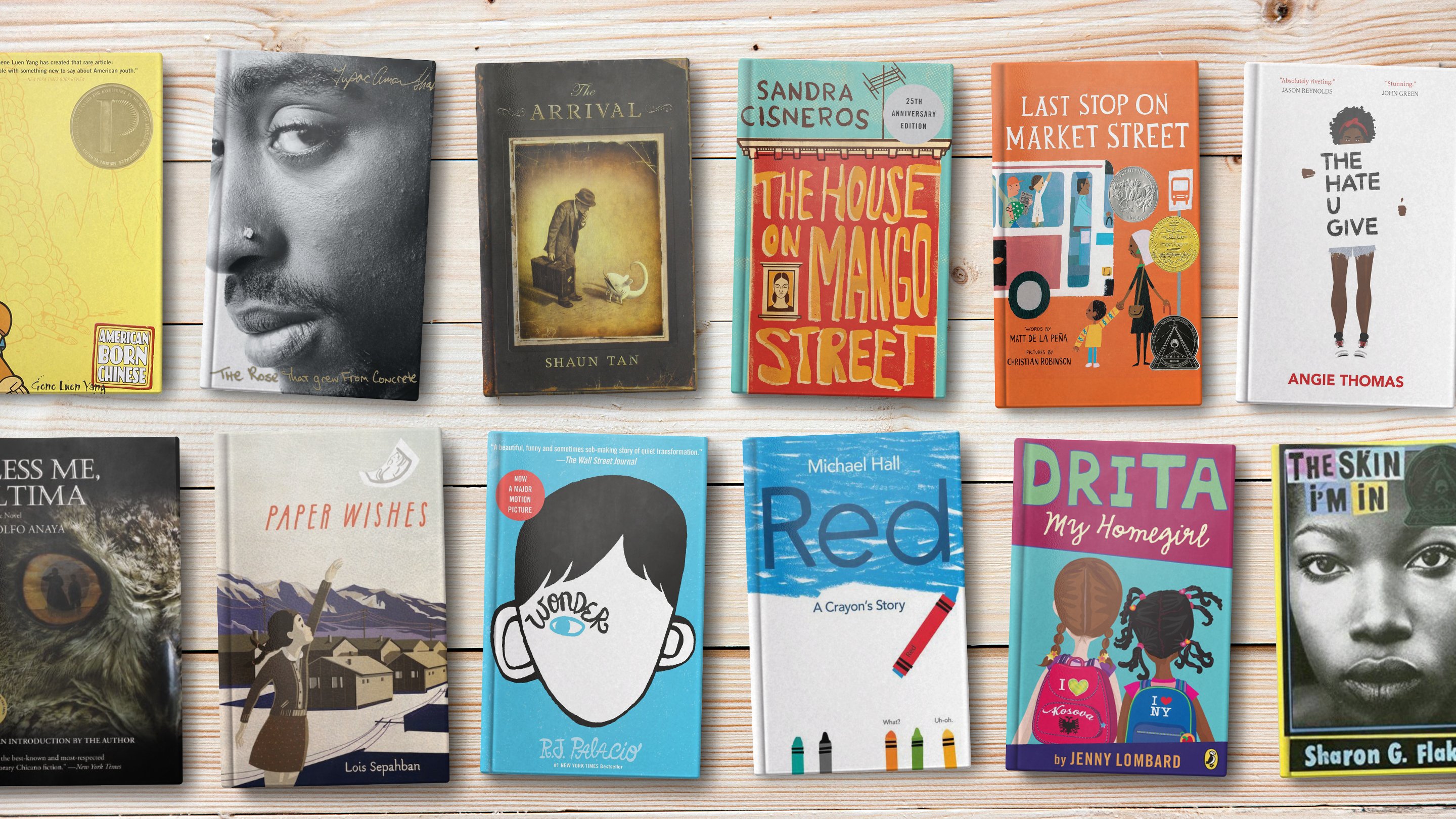
A great classroom library should feel less like a dusty storage unit and more like a lively neighborhood. Students ought to encounter characters who resemble them, families whose traditions feel familiar, and experiences they may never have considered. The best diverse books do more than check demographic boxes; they deliver humor, suspense, tenderness, adventure, and the occasional emotional wallop that makes an entire class suspiciously interested in the ceiling.
Diverse literature can include differences in race, culture, language, religion, family structure, economic circumstances, disability, immigration history, gender, and sexual orientation. It should also show underrepresented characters doing ordinary thingsmaking friends, arguing with siblings, playing sports, falling in love, solving mysteries, and generally making choices that cause adults to rub their temples.
The grade ranges below are practical starting points rather than iron gates. Book selection should consider reading ability, interest, emotional development, background knowledge, and local curriculum requirements. A sophisticated fifth grader may enjoy a middle school novel, while a high school class may discover that a picture book contains more thematic depth than a 500-page classic with seventeen characters named Charles.
Why Diverse Books Belong at Every Grade Level
Students need both mirrors and windows. A mirror reflects a reader’s own life, while a window offers a view into someone else’s world. Strong classroom collections provide both without treating one character as the official spokesperson for an entire culture.
Research and educator guidance suggest that access to varied, representative books can strengthen reading engagement, classroom discussion, identity development, empathy, and literacy skills. Recent national findings also show that most secondary English teachers consider diverse literature important, even though many say such texts still make up less than half of their curriculum.
Diverse Books for Kindergarten Through Grade 2
Early elementary selections work best when illustrations support comprehension, the language rewards rereading, and the characters experience emotions young children recognize. These six choices combine cultural specificity with universal questions about belonging, confidence, family, and community.
1. The Day You Begin by Jacqueline Woodson
Woodson’s lyrical picture book follows children who feel different because of their names, languages, experiences, appearances, or family circumstances. It reassures young readers that connection often begins when someone finds the courage to share a personal story. Use it to open conversations about belonging, classroom community, and welcoming new students.
2. Last Stop on Market Street by Matt de la Peña
CJ wonders why he and his grandmother ride the bus instead of owning a car. During their trip, Nana helps him notice beauty, music, generosity, and community in unexpected places. The story invites age-appropriate discussion about economic differences without turning its characters into objects of pity.
3. Alma and How She Got Her Name by Juana Martinez-Neal
Alma Sofia Esperanza José Pura Candela believes her name is far too long until her father explains the relatives and family stories behind each part. This warm picture book works beautifully for lessons about names, ancestry, identity, and pronunciation. It may also inspire the world’s most enthusiastic classroom name project.
4. Fry Bread: A Native American Family Story by Kevin Noble Maillard
Through poetic language and rich illustrations, fry bread becomes food, art, history, family, survival, and community. The book portrays Native American life as living and contemporary rather than trapped in a distant historical chapter. Its detailed back matter gives adults useful context for deeper conversations.
5. We Are Water Protectors by Carole Lindstrom
Inspired by Indigenous-led environmental movements, this visually striking book follows a child who pledges to protect water from a threatening “black snake.” It supports discussions about environmental responsibility, Native sovereignty, collective action, and the connection between natural resources and community well-being.
6. Eyes That Kiss in the Corners by Joanna Ho
A young Asian girl celebrates the shape of her eyes and the family members who share them. Instead of measuring beauty against a narrow standard, she finds confidence in heritage, imagination, and intergenerational connection. Pair it with an art or writing activity about features students appreciate in themselves.
Diverse Books for Grades 3–5
Upper elementary readers are ready for longer conflicts and more complicated questions about fairness, identity, friendship, disability, migration, and social class. Humor remains essential. Nobody wants every lesson about diversity to feel like a very serious vegetable.
7. Front Desk by Kelly Yang
Mia Tang lives in a motel managed by her Chinese immigrant parents and secretly helps hide families who need shelter. The novel blends humor and suspense with discussions of immigration, poverty, racism, labor, and entrepreneurship. Mia’s determination to improve her writing gives educators a natural connection to literacy instruction.
8. New Kid by Jerry Craft
Jordan Banks would rather attend art school, but his parents enroll him in an elite private academy where he is one of the few Black students. Craft’s graphic novel explores code-switching, microaggressions, friendship, privilege, and the exhausting experience of being noticed and misunderstood at the same time.
9. The First Rule of Punk by Celia C. Pérez
After moving to Chicago, Mexican American seventh grader Malú forms a punk band and creates zines while navigating school expectations and family tension. The novel celebrates bicultural identity, artistic rebellion, music, and the realization that authenticity does not require rejecting one side of yourself to please another.
10. Amina’s Voice by Hena Khan
Amina is a Pakistani American Muslim girl who loves singing but fears performing in public. Changes in her friendships and an attack on her Islamic community push her to find courage. The story presents faith, family, and cultural identity alongside familiar worries about school, friendship, and self-confidence.
11. El Deafo by Cece Bell
In this funny graphic memoir, Cece imagines her powerful hearing device turning her into the superhero El Deafo. The book explores hearing loss, accessibility, friendship, embarrassment, and the desire to be treated as a complete person rather than an inspirational classroom assignment.
12. When Stars Are Scattered by Victoria Jamieson and Omar Mohamed
This graphic memoir follows Omar and his younger brother Hassan through years in a refugee camp in Kenya. Education offers Omar hope, but attending school means spending time away from his brother, who needs significant support. The accessible format opens serious conversations about displacement, caregiving, resilience, and opportunity.
Diverse Books for Grades 6–8
Middle school readers are experts in detecting lectures disguised as novels. These books succeed because they offer compelling narrators, emotional honesty, and conflicts that cannot be resolved by one conveniently inspirational speech.
13. Other Words for Home by Jasmine Warga
Told in verse, the novel follows Jude, a Syrian girl who leaves her father and brother behind to live with relatives in the United States. As she learns English and adapts to a new school, Jude confronts stereotypes while refusing to abandon her ambitions, humor, culture, or sense of self.
14. The Night Diary by Veera Hiranandani
During the 1947 partition of India, 12-year-old Nisha writes letters to her deceased mother while her family makes a dangerous journey toward safety. The novel personalizes a major historical event through questions of religion, national identity, family separation, violence, and what it means to call a place home.
15. Ghost Boys by Jewell Parker Rhodes
After 12-year-old Jerome is killed by a police officer, he becomes a ghost who witnesses the effects of his death and meets the spirit of Emmett Till. The novel provides an accessible entry point for discussions about racial bias, historical memory, injustice, grief, and the consequences of assumptions.
16. Merci Suárez Changes Gears by Meg Medina
Merci balances school pressures, financial differences, changing friendships, and her Cuban American family’s expectations. At home, she begins noticing troubling changes in her beloved grandfather. The novel treats family caregiving and economic inequality with warmth, humor, and the kind of awkward middle school realism that requires no additional decoration.
17. The Crossover by Kwame Alexander
Twelve-year-old Josh narrates this verse novel through the rhythms of basketball, hip-hop, sibling rivalry, and family love. As his relationship with his twin brother changes and his father faces health problems, Josh learns that growing up involves more than improving his jump shot.
Diverse Books for Grades 9–12
Young adult books can help teenagers examine systems, identity, relationships, mental health, and moral responsibility through characters close to their own age. The following novels include mature subjects, so educators should review them in full and consider student readiness, learning goals, and applicable school policies.
18. The Poet X by Elizabeth Acevedo
Xiomara Batista uses poetry to process body image, faith, family expectations, romance, and the feeling that adults have already written the rules for her life. The verse format makes the book approachable while providing sophisticated opportunities to analyze voice, metaphor, performance, silence, and personal agency.
19. The Hate U Give by Angie Thomas
Starr Carter witnesses a police officer kill her unarmed childhood friend and must decide when and how to speak publicly. The novel examines racism, activism, code-switching, media narratives, friendship, family, and community pressure while giving Starr a life that includes humor, romance, and ordinary teenage concerns.
20. Aristotle and Dante Discover the Secrets of the Universe by Benjamin Alire Sáenz
Two Mexican American teenagers form an intense friendship while exploring family secrets, masculinity, ethnicity, loneliness, and sexual identity. Its thoughtful pace makes it valuable for discussions about emotional vocabulary and how silence within families can shape the way young people understand themselves.
21. Firekeeper’s Daughter by Angeline Boulley
Daunis Fontaine, an unenrolled biracial Ojibwe teenager, becomes involved in an investigation after violence and drug trafficking affect her community. The thriller combines suspense with detailed attention to tribal citizenship, cultural knowledge, hockey, family loyalty, exploitation, and the responsibilities that accompany community belonging.
22. Darius the Great Is Not Okay by Adib Khorram
Darius, an Iranian American teenager living with depression, travels to Iran and develops a meaningful friendship with a local boy. The novel explores mental health, masculinity, family relationships, cultural belonging, and the strange experience of visiting a place that feels simultaneously like home and somewhere completely new.
How to Choose and Teach Diverse Books Thoughtfully
A diverse reading list is strongest when it includes multiple books from each community rather than relying on one title to explain millions of people. Indigenous characters, for example, should appear in contemporary family stories, environmental narratives, fantasy, biography, humor, and adventurenot only in historical accounts of suffering.
Educators should also examine who created the book, how characters are developed, whether the culture is portrayed with specificity, and whether stereotypes are challenged or quietly repackaged in attractive illustrations. Collection audits can reveal whose voices dominate, which groups appear mainly in stories about hardship, and where joyful or everyday representation is missing.
Most importantly, give students choices. One student may connect with a verse novel, another with a graphic memoir, and a third with a thriller. Reading level matters, but interest can motivate students to tackle more challenging material. Audiobooks, bilingual editions, accessible formats, paired texts, and teacher read-alouds can widen participation without lowering intellectual expectations.
Experience-Based Lessons from Using Diverse Books Across Grade Levels
The following observations synthesize classroom practices and educator reports rather than claiming that every student will respond in the same way. Children are not programmable reading robots. Two students can finish the same novel and emerge with completely different favorite characters, questions, and opinionswhich is usually where the best discussion begins.
One common experience is that students become more willing to talk when a book gives them language for something they have felt but never named. After reading a story about a character whose name is repeatedly mispronounced, students may begin sharing the histories of their own names. A discussion that starts with pronunciation can expand into family relationships, migration, nicknames, embarrassment, and respect. The book does not force a student to disclose personal information; it simply opens a door.
Another useful lesson is that diverse books should not appear only during heritage months. When teachers save every Black history title for February or every Asian American story for May, diversity begins to resemble a holiday decoration: unpacked briefly, admired politely, and returned to storage. Integrating representative books throughout the year makes them part of ordinary academic life. A Native environmental story can support a science unit, a refugee memoir can enrich geography, and a novel in verse can teach imagery and rhythm.
Student choice also changes the atmosphere. A whole-class novel creates shared discussion, but book clubs allow students to choose among several texts connected by a theme such as belonging, justice, family, migration, or courage. Groups can compare how different authors approach the same idea. One group might examine immigration through realistic fiction, another through verse, and another through a graphic memoir. The resulting conversation is broader than any single title could provide.
Graphic novels often create especially memorable experiences for readers who have been labeled reluctant. A student who avoids dense pages may finish New Kid or El Deafo quickly and then participate confidently in a complex discussion about bias or disability. That is not a shortcut around literacy. Readers must interpret facial expressions, panel transitions, color, visual symbolism, pacing, and the relationship between images and words.
Teachers also learn the value of preparation. A book involving racism, forced migration, police violence, religious discrimination, or mental health should not be introduced with “Let’s just see where the conversation goes.” Establish discussion agreements, provide historical context, anticipate harmful misconceptions, and offer students more than one way to respond. Some will speak immediately; others may produce deeper thinking in a journal, artwork, recorded reflection, or small-group conversation.
Perhaps the most encouraging experience occurs when students begin recommending books to one another. A title stops being “the diversity book the teacher assigned” and becomes “the story you absolutely have to read because the ending wrecked me.” That shift matters. Representation is most powerful when it lives inside genuinely appealing literature rather than sitting beside it as a separate educational obligation.
Finally, educators frequently discover gaps in their own reading. Building an inclusive collection is not a one-time shopping trip followed by a ceremonial high five. New books appear, language evolves, student populations change, and communities continue telling stories that were previously overlooked. The goal is not a mathematically perfect shelf. It is an active reading culture in which students can encounter themselves, one another, and a world far larger than the classroom.
Conclusion
These 22 diverse book choices offer strong starting points for building inclusive reading experiences from kindergarten through high school. Together, they represent different cultures, religions, economic circumstances, abilities, family histories, and identities while also delivering mystery, humor, poetry, sports, friendship, adventure, and unforgettable characters.
The most effective diverse reading list is not simply representative; it is irresistible. When students recognize that excellent stories can come from every kind of voice, reading becomes more than an academic requirement. It becomes an invitation to listen, question, imagine, and discover who else is sharing the world with them.
Editorial note: Grade recommendations are flexible and should be adjusted for individual reading ability, emotional readiness, instructional purpose, local policy, and family context. This article was informed by guidance and recommendations from U.S. educational, library, literacy, publishing, and book-review organizations, including the American Library Association, Reading Rockets, the National Education Association, School Library Journal, Colorín Colorado, the Cooperative Children’s Book Center, NCTE, the National Book Foundation, Publishers Weekly, Common Sense Media, Diverse BookFinder, and The New York Public Library.