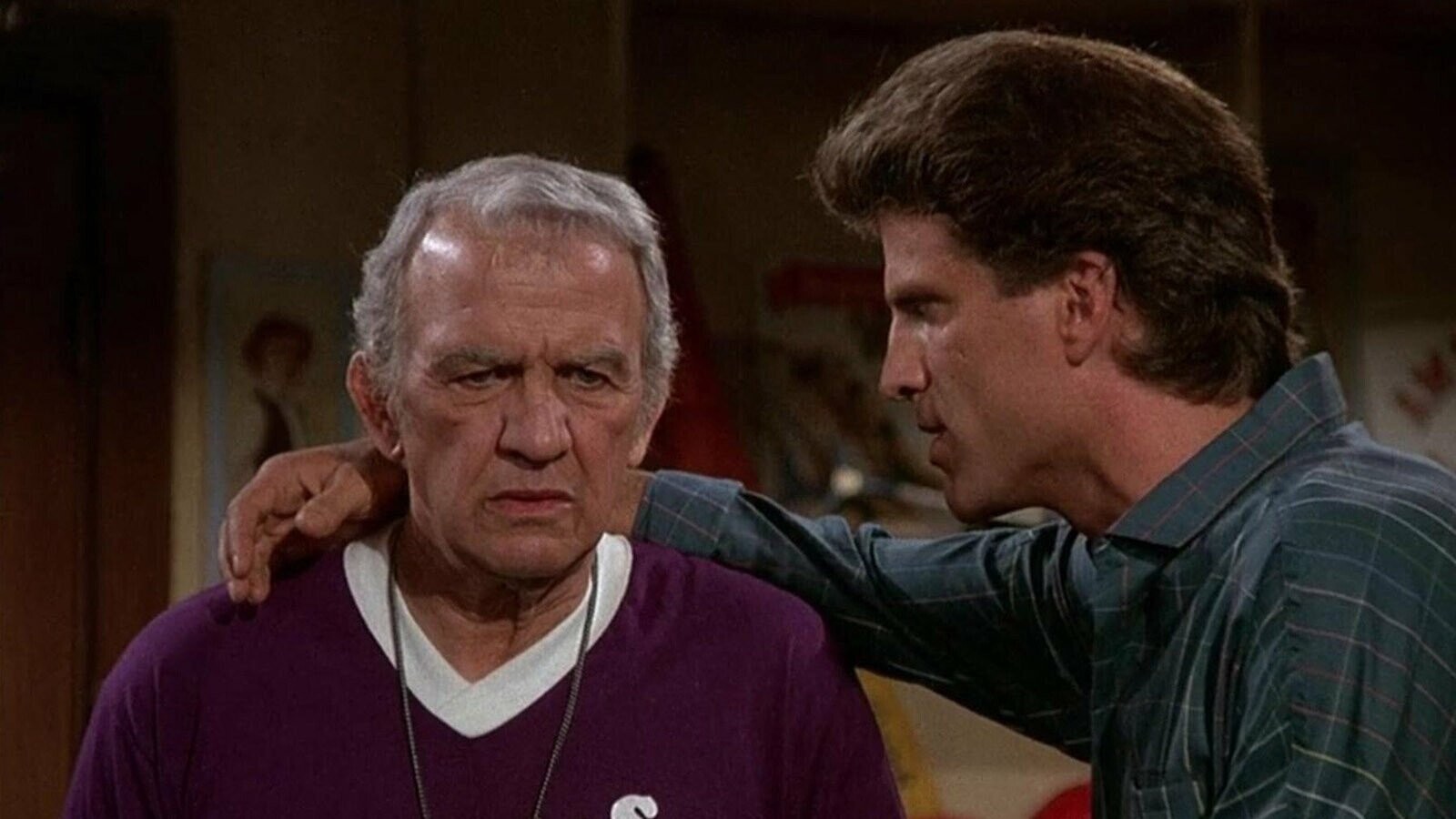
Television can fake almost anything. It can turn a backlot into Brooklyn, make a coffee budget look like a Manhattan apartment, and convince us that every hospital corridor has dramatic blue lighting. But one thing TV can never truly fake is grief. When an actor dies in the middle of a show’s run, the writers, cast, crew, and audience all slam into the same terrible reality at once. Suddenly, story arcs stop being story arcs. They become emergency rewrites, memorials, and emotional triage.
That is why episodes built around a performer’s death feel different from ordinary character exits. They are not just plot devices. They are acts of adaptation under heartbreak. Some series gave characters heroic off-screen deaths. Some quietly sent them away. Some used existing footage, voice work, or carefully edited final scenes. A few even transformed the loss into one of the most memorable hours in TV history.
This is not a ranking of the “saddest” TV moments, because grief is not the Olympics and nobody needs a gold medal in crying on the couch. Instead, this is a look at 21 times a TV show had to write around an actor’s death, and how those choices changed the series forever.
Why These Storylines Hit So Hard
When a show loses a cast member, it loses more than a face on screen. It loses chemistry, rhythm, unfinished plans, and the small familiar comforts that make a fictional world feel real. Writers are forced to answer impossible questions: Do you kill the character too? Recast? Leave the door open? Pretend they moved to Arizona, which is television’s favorite witness protection program?
The best of these episodes do something rare. They serve the story while also respecting the person behind it. The worst feel mechanical or overly clever. The unforgettable ones usually choose honesty over spectacle. They slow down, let characters grieve, and allow viewers to do the same.
21 Times a TV Show Had to Write Around an Actor’s Death
1. Glee turned Finn Hudson’s absence into a tribute instead of a twist
After Cory Monteith died before Season 5, Glee wisely resisted the urge to turn Finn’s exit into a mystery box. The tribute episode, “The Quarterback,” revealed that Finn had died off-screen but refused to make the cause the centerpiece. That choice kept the focus where it belonged: on shock, sadness, memory, and the strange way a school hallway can suddenly feel enormous when one person is missing. It was messy, openly emotional, and probably the only correct choice for a show built on ensemble feeling.
2. 8 Simple Rules had to reinvent itself after John Ritter
John Ritter’s death during Season 2 forced the sitcom into terrain it had never planned to visit. Instead of pretending the family’s lovable dad could be replaced with a shrug and a punchline, the show returned with “Goodbye,” a two-part episode in which Paul Hennessy dies off-screen. The family’s grief became the story. Later additions like James Garner and David Spade helped the show keep moving, but the tone had permanently shifted. A light family comedy suddenly had a bruise, and you could feel it.
3. Riverdale gave Fred Andrews a death worthy of Luke Perry
Riverdale is a show that has never met a wild plot twist it did not want to marry, but when Luke Perry died, it went impressively simple. The Season 4 premiere revealed that Fred Andrews died while helping a stranded stranger on the roadside. In a series famous for cults, serial killers, and enough melodrama to power a small city, Fred’s death was grounded, direct, and deeply human. It worked because Perry’s character had long served as the show’s moral center. The writers understood that the tribute had to feel earned, not flashy.
4. NewsRadio chose quiet grief over sitcom gimmicks
Phil Hartman’s death left a crater. When NewsRadio returned, the show revealed that Bill McNeal had died of a heart attack. That may sound blunt, but the execution mattered more than the summary. The premiere let the office react in ways that felt genuinely shell-shocked, which is fitting for a sitcom workplace that suddenly seemed far too real. The show carried on, but it never quite recovered its former balance, proving that some performers are not simply part of an ensemble. They are part of the engine.
5. The Sopranos lost a villain and rewrote its emotional map
Nancy Marchand’s death changed The Sopranos in a major way. Livia Soprano was not just Tony’s mother; she was one of the show’s most potent sources of menace, guilt, and psychological damage. Plans for her future storyline had to be abandoned. The series used one final, famously awkward CGI-assisted scene before killing Livia off. But what mattered more was the vacuum she left behind. Her absence forced the show to redistribute its darkness, reshaping family dynamics and clearing room for other characters to inherit her chaos.
6. The West Wing folded real loss into its political drama
John Spencer died during the final season of The West Wing, and the writers eventually chose to have Leo McGarry die off-screen during the election storyline. That decision turned what could have been a routine political sprint into something heavier and more reflective. Leo had always been the grown-up in the room, the ballast, the fixer, the guy who knew where the bodies were buried and where the coffee was hidden. Without him, the show lost part of its institutional soul. The resulting episodes play like both narrative necessity and public mourning.
7. Archer found a bittersweet way to say goodbye to Malory
Jessica Walter had recorded most of her Season 12 dialogue before her death, which gave Archer a narrow but valuable creative path. Rather than kill Malory Archer, the finale revealed that she had stepped away to enjoy a private life with Ron. The send-off was elegant, funny, and gently devastating. On a show powered by cynicism, alcohol, and the occasional international disaster, Malory’s farewell managed to feel tender without losing her signature steel. That is harder to pull off than it looks, especially in animation, where a voice is everything.
8. And Just Like That… refused to kill Stanford Blatch
When Willie Garson died during production, the revival series had limited footage to work with and an awkward structural problem: Stanford was too beloved to vanish without explanation, yet too specific a character to recast casually. So the show wrote him out by sending him to Tokyo for work, later expanding that goodbye through letters and references. Did every viewer love the execution? No. Did it reflect a desire to keep the character alive because the actor mattered so much? Absolutely. Sometimes “writing around” death means choosing not to mirror it on screen.
9. The Cleaning Lady had to pivot an entire season after Adan Canto
Adan Canto’s death arrived while The Cleaning Lady was already in motion, which made the rewrite especially difficult. At first, Arman Morales was kept off-screen and missing, reflecting the production’s hope that Canto might return once treatment allowed. After his death, the series adjusted again and ultimately gave Arman a final, carefully constructed exit. The result feels like a season visibly trying to rebalance itself in public, because that is exactly what it was doing. It is one of the clearest modern examples of how grief can reroute an ongoing narrative in real time.
10. The Marvelous Mrs. Maisel gave Jackie a small but meaningful farewell
Brian Tarantina’s Jackie was not the title character, but he was one of those invaluable supporting players who make a show’s world feel inhabited. After Tarantina died, The Marvelous Mrs. Maisel revealed that Jackie had suffered a stroke off-screen. The farewell was not huge, which was exactly why it worked. It let Susie’s grief do the talking. In a series that often moves at the speed of a stand-up comic on two espressos, the pause mattered. It reminded viewers that even side characters can leave giant holes.
11. Monk turned loss into character growth
When Stanley Kamel died between seasons, Monk wrote Dr. Kroger’s death into the Season 7 premiere. For a show about ritual, anxiety, and routine, losing Monk’s therapist was not a minor tweak. It was an earthquake in cardigan form. The series smartly used that disruption to push Adrian Monk into uncomfortable emotional territory, eventually introducing a new therapist rather than pretending the old equilibrium could hold forever. It was one of the more psychologically honest responses on this list.
12. NCIS: Los Angeles stretched out Owen Granger’s goodbye
Miguel Ferrer’s death came while his character was already entangled in a dramatic storyline. The show first had Granger disappear from the hospital, then later confirmed that he had died off-screen. That staggered approach let the series preserve the suspense of the existing arc while gradually making space for grief. It was not as immediate as some tribute episodes, but it reflected the practical problem many dramas face: the machine is already moving, and you have to rewire it without blowing up the whole dashboard.
13. The Goldbergs said goodbye to Pops with warmth, not sentimentality overload
George Segal’s death left The Goldbergs without one of its most reliable charm generators. Rather than go overly maudlin, the Season 9 premiere revealed that Pops had died peacefully in his sleep months earlier and sent the family on a memory-soaked search tied to his favorite places. The episode understood what made the character work: he was warmth, mischief, and old-school cool in one cardigan-friendly package. The tribute felt affectionate without becoming syrupy, which is harder than it sounds in a nostalgia comedy.
14. Blue Bloods honored Treat Williams by deepening Frank Reagan’s grief
Treat Williams was a recurring presence rather than a full-time cast member, but his character Lenny Ross mattered because of what he unlocked in Frank Reagan: history, vulnerability, and actual human softness. After Williams died, Blue Bloods wrote Lenny’s death into the show and built an episode around the fallout. Instead of using the loss as mere exposition, the series let it reshape Frank’s emotional landscape. On a procedural that often runs on order and routine, that kind of tenderness stood out.
15. Sesame Street made children’s television history with Mr. Hooper
Few shows have handled an actor’s death with more long-term cultural impact than Sesame Street. After Will Lee died, the show created “Farewell, Mr. Hooper,” an episode that explained death to children in clear, honest language. Big Bird’s confusion became the audience’s entry point, and the script refused to sugarcoat the central truth: Mr. Hooper was not coming back. There are no dragons, no dream sequences, no “he moved to a farm upstate.” Just grief, kindness, and one of the bravest writing decisions in TV history.
16. Cheers replaced “Coach” without replacing the feeling
Nicholas Colasanto’s death forced Cheers to do something extremely risky for a hit sitcom: lose one of its foundational personalities and keep pouring drinks anyway. The solution was to acknowledge Coach’s death and introduce Woody Boyd as a new presence rather than a duplicate. Smart move. If the show had tried to manufacture Coach 2.0, it likely would have failed spectacularly. Woody worked because he was different: younger, weirder, more open-faced. The series preserved the spirit of the bar by refusing to photocopy a legend.
17. Dallas kept Jock Ewing off-screen until it could not anymore
When Jim Davis died, Dallas chose a slow-burn approach. Jock Ewing remained off-screen for a stretch before the show finally confirmed his death in a helicopter crash. That delay may sound odd now, but it reflected an old-school TV instinct: buy time, protect the ongoing story, and avoid rushing the goodbye. The choice also preserved Jock’s mythic status. He did not just disappear. He became a looming absence, the kind that hangs over a family saga long after the chair at the table is empty.
18. The Big Bang Theory made an unseen character’s loss feel enormous
Carol Ann Susi’s Mrs. Wolowitz was mostly a voice, yet her death proved that voice alone can become part of a show’s architecture. The Big Bang Theory wrote Debbie Wolowitz’s death into the series, with Howard learning that his mother had died in her sleep while away. It was a surprisingly moving choice because the character had always existed just off camera, like an emotional foghorn from another room. The show used that absence well. Once the voice stopped, the silence did the work.
19. Hill Street Blues used loss to change the station house itself
Michael Conrad’s Sgt. Esterhaus was one of those characters who seemed to define the tone of a series every time he opened his mouth. After Conrad died, Hill Street Blues killed off Esterhaus and introduced a new desk sergeant. That change mattered because it altered the station’s daily rhythm, not just its cast list. His signature authority and weary humanity were woven into the show’s identity. Once he was gone, the building felt different, and the writers leaned into that instability rather than denying it.
20. Rizzoli & Isles transformed a procedural beat into a real funeral
Lee Thompson Young’s death led Rizzoli & Isles to write Detective Barry Frost out via an off-screen car accident. Procedurals often treat death as a weekly event, but this one landed differently because the grief on screen did not feel entirely fictional. The funeral scenes, especially the eulogy from Jane, carried the heaviness of cast members processing something no script could fully contain. It is a reminder that even shows built on solving death can be undone when it walks in through the studio door.
21. Peaky Blinders had to reroute its final season after Helen McCrory
Helen McCrory’s Polly Gray was not ornamental. She was strategy, authority, danger, and common sense in a room full of men who often behaved like badly supervised fireworks. After McCrory died, Peaky Blinders rewrote its final season so Polly had been killed off-screen before the story resumed. The change had massive ripple effects, especially on Tommy’s motivations and the series’ emotional center of gravity. It is one of the clearest examples of an actor’s loss forcing writers to rethink not just a subplot, but the whole final shape of a show.
What These Episodes Reveal About Television
If there is a pattern across all 21 examples, it is this: the most affecting tribute episodes do not try too hard to be “important.” They focus on character truth. Glee centered community grief. Riverdale matched Fred’s death to Fred’s decency. Sesame Street chose clarity over comfort. The Sopranos let the loss of Livia reshape the entire family ecosystem. Different genres, same lesson: viewers can tell when a show is responding with sincerity instead of scrambling for cleverness.
There is also a practical side to all of this. TV is not a novel; it is a moving train. Scripts are in progress, contracts exist, sets are booked, and hundreds of crew members still have to make next week’s episode. That is why these rewrites are often uneven around the edges. Sometimes a character vanishes for a few episodes first. Sometimes the explanation comes later. Sometimes a farewell scene feels stitched together because, frankly, it was. The miracle is not that these episodes are perfect. The miracle is that any of them work at all.
And yet many do. Some become defining episodes, not despite the tragedy but because the tragedy strips away artifice. For one hour, a sitcom or drama stops performing immortality and admits what everyone already knows: people leave, stories break, and the only thing a cast can do is keep speaking to each other through the loss.
500 More Words on the Experience of Watching These Episodes
Watching a TV show write around an actor’s death is a strange experience because the audience is doing two things at once. We are following the fictional world, but we are also reading the edges of the frame. Every pause feels loaded. Every line that sounds like a goodbye probably is one. Every smile in archive footage suddenly lands like evidence from another timeline, back when everyone assumed there would be more scenes, more seasons, more ordinary Tuesdays on set.
That is why these episodes often feel heavier than movie tributes. Television lives in repetition. A character does not just appear once every few years; they show up in your living room every week, sometimes for a decade. They become part of your routine. You know who sits where, who talks first, who rolls their eyes, who walks through the door carrying the comic energy of the scene. When that person is gone, even viewers who never met the actor can feel the missing rhythm. It is like hearing your favorite song with one instrument suddenly muted. You still recognize it, but your brain keeps waiting for the note that never comes.
There is also something uniquely revealing about how different genres handle this kind of loss. A family sitcom tends to go intimate. A procedural often wraps grief inside casework until it can afford to stop and breathe. A soap may delay the inevitable because narrative momentum is its native language. A prestige drama might convert the loss into theme, letting death deepen the show’s existing concerns about power, memory, or family. None of these approaches is automatically better than another. They just expose what each series values when the floor drops out.
As viewers, we remember these episodes partly for the writing and partly for what leaks through it. You can see cast members acting, yes, but sometimes you can also see them holding themselves together with dental floss and professionalism. That blend can be devastating. It gives certain scenes an almost documentary quality. The tears belong to the character, but maybe not only to the character. The stunned silence belongs to the script, but maybe not only to the script. Television rarely gets that close to reality on purpose.
And maybe that is the lasting power of these stories. They remind us that TV, for all its artificiality, is made by communities. Writers’ rooms, crews, casts, hair and makeup teams, editors, assistants, directors, stand-ins, drivers, and all the people whose names flash by in the credits while most of us reach for the remote. When someone dies, those communities do not get to pause life completely. They have to build an ending anyway. Sometimes that ending is elegant. Sometimes it is imperfect. Sometimes it is just the least impossible option available. But when it is done with care, the audience feels that care. We do not just watch the show continue. We watch a creative family figure out how to keep going, and for once, that is the real story.
Conclusion
The phrase “the show must go on” sounds brave until you remember what it actually asks of people. In these 21 cases, writers were not merely solving a script problem. They were navigating unfinished arcs, grieving coworkers, audience expectations, and the uncomfortable fact that fiction had just been interrupted by life. Some shows responded with tribute episodes, some with quiet exits, some with structural rewrites that changed everything after them.
The best examples did not just patch a hole. They honored the performer by understanding what made the character matter in the first place. That is why these episodes still resonate. They are not only about death. They are about storytelling under pressure, ensemble chemistry, and the rare moments when television drops the mask and lets us see the humans behind it.