Hollywood loves a comeback, a tearful acceptance speech, and a camera operator who finds the losing nominee at precisely the worst possible second. But the Academy Awards are not a perfect scoreboard for talent. They are a snapshot of one voting season, one crowded field, and one tiny golden statue that somehow creates enough drama to power Los Angeles for months.
That is why some of the most respected actors, filmmakers, and screen icons in movie history have never won a competitive Oscar. Some have been nominated again and again. Others delivered performances that became part of pop-culture furniture, quoted at dinner parties and reenacted by people who have had exactly one glass of wine too many. Yet the statue never made it to their mantel.
Here are 20 shocking celebrities who have never won an Oscar competitively, along with the performances and career moments that make their absence from the winners’ list feel almost suspiciously rude.
Why Great Celebrities Can Go Oscarless
An Oscar is not a lifetime achievement meter that automatically beeps when an actor reaches a certain level of greatness. It is the result of a specific race in a specific year. A brilliant performance can run into an even more beloved performance, a major career narrative, a breakout newcomer, or a movie that arrives at exactly the right moment with the right campaign.
Genre also matters. Comedy, horror, action, science fiction, animation, and blockbuster performances are often celebrated by audiences long before awards voters catch up. Timing matters. Competition matters. Campaigning matters. Sometimes, frankly, a film is simply too weird, too early, too popular, too dark, or too busy being excellent to fit the Academy’s preferred mold that year.
20 Famous Celebrities Who Have Never Won a Competitive Oscar
1. Glenn Close
Glenn Close has become the unofficial president of the “How Has This Not Happened Yet?” club. With eight competitive nominations, she has delivered some of the sharpest, most unforgettable performances in modern film, from the terrifyingly composed Alex Forrest in Fatal Attraction to the quietly volcanic Joan Castleman in The Wife. Close does not merely enter scenes; she rearranges the furniture, changes the weather, and leaves everyone else acting like they have just received a difficult email.
Her career proves that a winless Oscar record does not mean a lack of respect. It means the Academy has repeatedly noticed her greatness without ever completing the transaction.
2. Richard Burton
Richard Burton earned seven competitive Oscar nominations and never won one, which feels especially strange considering his voice alone could probably have been nominated for Best Supporting Actor. Burton brought Shakespearean weight, romantic intensity, and a thundercloud of charisma to films such as Who’s Afraid of Virginia Woolf?, Becket, and The Spy Who Came in from the Cold.
He was a giant of stage and screen, yet Oscar night repeatedly gave him the cinematic equivalent of a polite nod and a fruit basket. His record remains one of the most famous examples of how awards history can be both fascinating and mildly irritating.
3. Amy Adams
Amy Adams has earned six Academy Award nominations without taking home the statue. Her range is almost unfair. She can play a warm-hearted optimist in Enchanted, a morally complicated social climber in The Master, a determined linguist in Arrival, and a ruthless political figure in Vice without ever looking as though she is trying too hard.
That may be part of the problem: Adams makes difficult acting look strangely effortless. She is one of those performers who can break your heart in a close-up and then make you forget she was acting at all. The Academy has clearly admired her work. It just has not yet put the gold in her hands.
4. Thelma Ritter
Thelma Ritter received six nominations, all in the supporting-actress category, and won none. That is especially wild because Ritter could make a supporting role feel like the entire movie had quietly been built around her. In films such as All About Eve, Pickup on South Street, and Pillow Talk, she specialized in characters with sharp instincts, sharper dialogue, and absolutely no patience for nonsense.
Ritter was the kind of actor who could enter for three minutes, deliver one dry remark, and make audiences wonder why the camera was not following her home.
5. Annette Bening
Annette Bening has been nominated multiple times for performances that range from fierce to funny to emotionally devastating. Her work in The Grifters, American Beauty, Being Julia, The Kids Are All Right, and Nyad shows how naturally she moves between sophistication and raw vulnerability.
Bening is often cast as women who appear fully in control until the emotional floor disappears beneath them. She plays that collapse with intelligence rather than melodrama. The lack of a competitive Oscar does not make her career incomplete, but it certainly gives film fans something to yell about during award-season group chats.
6. Albert Finney
Albert Finney had five acting nominations and never won. He was a wonderfully unpredictable performer, capable of swagger, tenderness, menace, and comedy without announcing any of it with a neon sign. His nominated work included Tom Jones, Murder on the Orient Express, The Dresser, Under the Volcano, and Erin Brockovich.
Finney had the rare ability to make a role feel lived-in rather than performed. He could play a larger-than-life character and still make the smallest gesture feel completely human. In another universe, he probably has several Oscars and has misplaced one behind a kettle.
7. Michelle Williams
Michelle Williams has built a career out of emotional precision. She does not chase big moments; she lets them creep up on you, sit beside you, and then ruin your entire afternoon. Her Oscar-nominated performances in Brokeback Mountain, Blue Valentine, My Week with Marilyn, Manchester by the Sea, and The Fabelmans show why she remains one of the most admired actors of her generation.
Williams often makes sadness look ordinary, which is exactly why it lands so hard. A glance, a pause, a voice getting slightly quieter: somehow it all becomes cinematic dynamite.
8. Bradley Cooper
Bradley Cooper has earned a remarkable number of nominations across acting, writing, and producing, yet he has never won competitively. He has been recognized for work in Silver Linings Playbook, American Hustle, American Sniper, A Star Is Born, and Maestro, among other projects.
Cooper’s Oscar résumé is so extensive that it could probably qualify for its own publicist. He has transformed from charming comedy lead into a serious, ambitious filmmaker and performer, willing to direct, produce, write, sing, and apparently spend several years mastering the exact eyebrow position of a famous conductor. The win remains elusive, but the Academy clearly keeps inviting him to the party.
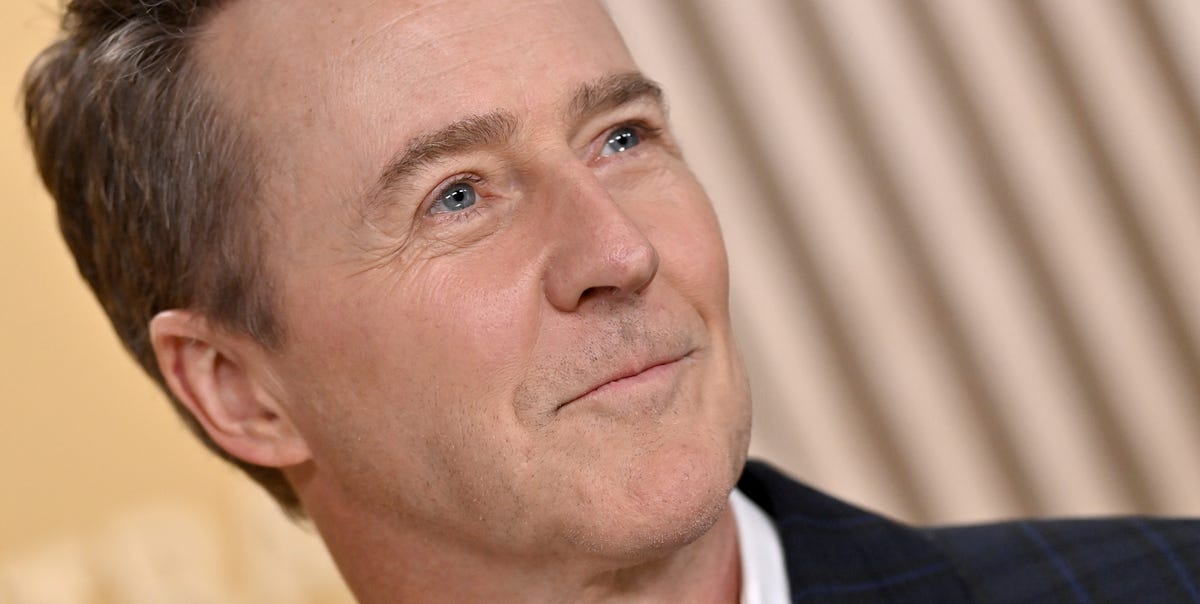
9. Edward Norton
Edward Norton has long been one of the most intense and intelligent actors working in Hollywood. His nominated performances include Primal Fear, American History X, Birdman, and A Complete Unknown. He has a gift for making complicated characters feel dangerous even when they are sitting perfectly still.
Norton is often at his best when a character is thinking one thing, saying another, and quietly planning a third. That kind of layered acting is difficult to reward because it does not always wave at the audience. But it is exactly the kind people revisit years later and realize was doing far more than they first noticed.
10. Willem Dafoe
Willem Dafoe has been nominated for performances in Platoon, Shadow of the Vampire, The Florida Project, and At Eternity’s Gate. He is one of cinema’s most distinctive actors, capable of playing saints, villains, eccentrics, artists, goblins, and men who look like they have personally negotiated with the moon.
Dafoe’s face is a special effect all by itself. He can suggest rage, sorrow, madness, humor, and spiritual revelation in one expression. His Oscar-less status feels less like a judgment on his work and more like a reminder that the Academy is not always prepared for artists operating on Dafoe levels of intensity.
11. Saoirse Ronan
Saoirse Ronan earned major recognition early and has continued to build one of the strongest filmographies of her generation. Her nominated performances in Atonement, Brooklyn, Lady Bird, and Little Women reveal an actor who can make adolescence, ambition, homesickness, and frustration feel immediate.
Ronan is particularly gifted at portraying young women who are smarter than the world around them expects them to be. Her characters often carry entire emotional universes behind a single unimpressed look. She may still have many Oscar nights ahead, which should make future competitors slightly nervous.
12. Ralph Fiennes
Ralph Fiennes has delivered some of the most memorable performances of the past several decades, from the horrifying Amon Göth in Schindler’s List to the quietly pressured cardinal in Conclave. His nominated work also includes The English Patient and The Grand Budapest Hotel.
Fiennes is a master of restraint. He can play rage without shouting, grief without collapsing, and authority without raising his voice. Then, when he does finally explode, everyone in the audience suddenly remembers they left the oven on.
13. Mark Ruffalo
Mark Ruffalo’s Oscar-nominated roles in The Kids Are All Right, Foxcatcher, Spotlight, and Poor Things demonstrate why he has become such a reliable favorite among audiences and filmmakers. He can be gentle, messy, funny, morally complicated, and weirdly charming even when playing someone you would not want to sit next to at brunch.
Ruffalo’s acting often feels spontaneous, as though the scene has surprised him too. That quality makes his characters feel alive. The Oscar win has not arrived, but his performances have already earned a lasting place in modern movie culture.
14. Greta Gerwig
Greta Gerwig has been nominated as a writer and director, yet she has not won a competitive Oscar. Her work on Lady Bird, Little Women, and Barbie helped redefine what mainstream filmmaking can look like when it is funny, personal, visually inventive, and emotionally specific.
Gerwig’s films understand that people are often ridiculous, sentimental, ambitious, insecure, and lovable within the same five-minute conversation. She writes characters who argue about money, love, family, art, and identity with the rhythm of real life. An Oscar would be nice. A permanent influence on contemporary cinema is better.
15. Johnny Depp
Johnny Depp has received Oscar nominations for Pirates of the Caribbean: The Curse of the Black Pearl, Finding Neverland, and Sweeney Todd: The Demon Barber of Fleet Street. His ability to create eccentric characters made him one of the defining movie stars of his era.
Captain Jack Sparrow alone became a pop-culture phenomenon, turning a pirate into a slurring, swaying, eyeliner-wearing icon. Whether audiences prefer Depp in fantasy, drama, or gothic musical mode, his Oscar history proves that commercial success and awards success do not always sail in the same ship.
16. Sigourney Weaver
Sigourney Weaver has never won a competitive Oscar, despite performances that helped reshape how women are portrayed in science fiction and drama. Her work in Aliens, Gorillas in the Mist, and Working Girl earned nominations and cemented her reputation as a performer with enormous authority.
As Ellen Ripley, Weaver did not simply play an action hero. She created a benchmark. Strong, frightened, practical, maternal, furious, and deeply human, Ripley changed audience expectations forever. The fact that Aliens did not result in an Oscar win for Weaver is one of award history’s most famous “seriously?” moments.
17. Scarlett Johansson
Scarlett Johansson earned two acting nominations in the same awards season for Marriage Story and Jojo Rabbit, an achievement that underlined her range. In one film, she played a mother navigating a painful divorce. In the other, she brought warmth and courage to a woman resisting Nazi ideology.
Johansson has spent much of her career balancing blockbuster fame with challenging dramatic work. That combination can sometimes confuse people who want to place actors in one tidy box. Fortunately, her performances refuse to fit inside one.
18. Harrison Ford
Harrison Ford has only one competitive Oscar nomination, for Witness, which is almost as surprising as discovering Han Solo does not own a single decent jacket. Ford is one of the most important movie stars in history, with defining roles in Star Wars, Indiana Jones, Blade Runner, The Fugitive, and countless other films.
His legacy shows that awards are only one way to measure impact. Ford has created characters that outlived trends, sequels, reboots, and several generations of people attempting bad whip impressions.
19. Liam Neeson
Liam Neeson received an Academy Award nomination for his devastating performance in Schindler’s List. He has since become known for historical dramas, thrillers, action films, and a very particular set of skills that have kept countless imaginary kidnappers regretting their career choices.
Neeson’s best work has always carried emotional gravity. Even in action movies, he brings a seriousness that makes the stakes feel real. His Oscar record may be short, but his film career is anything but small.
20. Marilyn Monroe
Marilyn Monroe never received a competitive Oscar nomination, which remains one of the strangest omissions in Hollywood history. She was far more than a glamorous image or a celebrity headline. In films such as Some Like It Hot, The Seven Year Itch, Gentlemen Prefer Blondes, and The Misfits, Monroe showed timing, vulnerability, musicality, and a deeply affecting screen presence.
Her performances are often underestimated because her fame became so enormous that it swallowed everything around it. But watch her closely and the talent is obvious. Monroe understood comedy, loneliness, and the power of being watched better than almost anyone.
What These Oscar Snubs Actually Tell Us
The biggest lesson is not that the Academy “got it wrong” every time. Awards are subjective, and many winners were genuinely brilliant. The real lesson is that artistic greatness cannot be reduced to one ceremony, one envelope, or one acceptance speech that gets interrupted by walk-off music.
Some actors become legends because of the roles they transform, not the hardware they collect. Some directors reshape the way stories are told. Some stars create characters that become permanent residents of the public imagination. An Oscar can confirm a moment, but it cannot create a legacy from scratch.
Still, there is nothing wrong with hoping that one day several names on this list hear their name called, walk to the stage, thank everyone they have ever met, and attempt to hold an eight-pound statue without dropping it on live television.
The Experience of Watching an Oscar Near-Miss
There is a special kind of emotional experience that comes with watching an actor you admire lose at the Oscars. It is not quite the same as rooting for your favorite sports team, although the snacks are better and the uniforms are much more expensive. You watch the nominees seated in neat rows, smiling with heroic professionalism, while the camera cuts between them as if it is trying to locate the exact moment a human soul leaves the body.
For film fans, an Oscar near-miss becomes part of movie memory. You remember the performance, the competition, the speeches, the red-carpet interviews, and the weeks of predictions that made it feel as though you had earned a minor degree in awards-season sociology. You may not remember every winner from every year, but you remember the roles that felt like they should have changed the outcome.
That is why people still discuss Glenn Close in The Wife, Amy Adams in Arrival, Sigourney Weaver in Aliens, and Richard Burton in Who’s Afraid of Virginia Woolf?. Those performances did not vanish because they lost. In many cases, they grew larger with time. A statue is an immediate headline, but a beloved performance keeps accumulating meaning every time someone discovers the film, recommends it to a friend, or watches it again on a rainy Sunday afternoon.
The experience also reminds viewers that awards are not neutral. They reflect voting bodies, industry trends, marketing campaigns, cultural moods, and the strange alchemy of release dates. A quiet performance can be overwhelmed by a flashy one. A genre film can be dismissed because it looks “too entertaining.” A performer may split attention with a co-star, arrive before the public is ready, or simply face a rival having the career moment of a lifetime.
For actors, losing an Oscar after a nomination must be a complicated experience. It is public recognition mixed with public disappointment, all while wearing formal shoes designed by someone who has clearly never walked upstairs. Yet many performers return to work, take risks, surprise audiences, and prove that the nomination was not the peak of their career. Sometimes the most interesting chapter comes after the loss.
For viewers, the healthiest way to approach Oscar snubs is to treat them as an invitation rather than a grievance. Rewatch the movie. Explore the actor’s earlier work. Compare the nominated performances from that year. Start a conversation about what makes a role memorable. You may discover that your own favorite scene has nothing to do with the kind of performance awards groups typically reward.
In the end, Oscar night is one evening. Great movies stay with us much longer. The actors on this list may not all have competitive Academy Awards, but they have something harder to manufacture: enduring admiration. Their work survives trends, headlines, streaming algorithms, and the annual debate over whether the host’s opening monologue was funny. That is a kind of victory no envelope can fully contain.
Conclusion
The list of celebrities who have never won an Oscar is proof that awards history is full of surprises. Glenn Close, Amy Adams, Bradley Cooper, Sigourney Weaver, Harrison Ford, Marilyn Monroe, and many others have created unforgettable work without a competitive Academy Award on their résumé.
An Oscar can be meaningful, but it is not the final word on talent. Great performances endure because audiences return to them, quote them, feel them, and pass them along. The most shocking thing is not that these celebrities have never won an Oscar. It is that anyone could watch their work and think a trophy is the only proof that it matters.