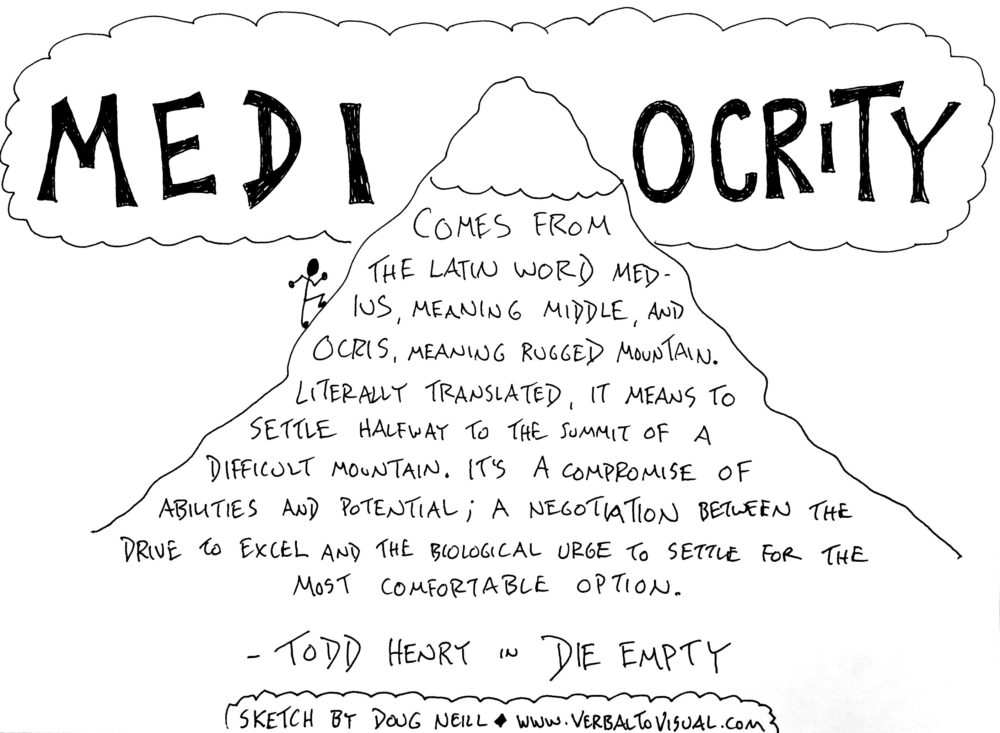
Hiring the wrong person rarely looks dramatic at first. There is no thunderclap, no ominous violin music, no recruiter whispering, “This one will absolutely derail your quarter.” In real life, a mediocre hire often arrives looking perfectly fine on paper, reasonably polished in the interview, and just confident enough to make everyone think, “Well, this should work.” Then, a few weeks later, deadlines wobble, communication gets weird, accountability goes on vacation, and the rest of the team starts carrying more than their fair share.
That is what makes a mediocre hire so tricky. A truly terrible candidate usually announces themselves with neon warning signs. A mediocre one is sneakier. They are not openly disastrous. They are just inconsistent, vague, oddly slippery under pressure, and a little too comfortable doing the minimum while sounding like they are doing the maximum. In other words, they do not crash through the front door. They sort of drift in, smile politely, and quietly lower the ceiling of your team.
If you are trying to improve your hiring decisions, it helps to know what subtle hiring red flags actually matter. Below are the most common signs of a mediocre hire, plus how to separate one bad interview moment from a pattern that could cost you time, money, morale, and a few unnecessary stress snacks.
Why a Mediocre Hire Is More Dangerous Than an Obviously Bad One
A bad hire is easy to identify because the problems show up quickly. A mediocre hire is harder to catch because they usually do just enough to stay in the conversation. They may complete tasks, but without care. They may sound professional, but without depth. They may bring energy, but not judgment. That gray area is where teams get stuck.
Instead of creating momentum, mediocre hires create drag. Managers spend more time clarifying expectations. Strong performers quietly compensate for weak execution. Projects move forward, but in that painfully uneven way where everything takes two extra meetings and three extra Slack messages. Over time, that kind of employee can normalize low standards. Once that happens, you are not just managing one underwhelming hire. You are managing the ripple effects.
1. They Talk in Broad, Shiny Generalities
One of the clearest signs of a mediocre hire is a candidate who sounds impressive until you ask for specifics. They say things like, “I drove alignment,” “I optimized workflows,” or “I led cross-functional collaboration,” which sounds great until you realize those phrases have the nutritional value of decorative parsley.
Strong candidates can explain what they did, why they did it, who was involved, what changed, and how they measured success. Mediocre candidates often hide behind corporate wallpaper. If every accomplishment sounds polished but strangely untraceable, you may be looking at someone who knows how to perform competence more than deliver it.
2. Their Resume and Their Story Do Not Quite Match
Small inconsistencies do happen. Humans are not spreadsheets. But when dates shift, job titles mysteriously inflate, responsibilities get fuzzier under follow-up questions, or the candidate tells a different version of their experience every time they speak, pay attention.
This does not always mean dishonesty in the dramatic, movie-worthy sense. Sometimes it points to carelessness. Sometimes it reflects weak self-awareness. Sometimes it means they are trying to stretch ordinary experience into something bigger. None of those possibilities should make a hiring team feel cozy.
3. They Are Weirdly Unprepared for a Job They Claim to Want
A candidate does not need to memorize your company’s founding story or know the name of your office fern. But they should understand the basics: what the company does, what the role appears to involve, and why they are interested. When someone shows up with generic answers, confuses your business with another company, or seems to be interviewing on autopilot, that is a red flag.
Mediocre hires often want a job, but not necessarily this job. That difference matters. Curiosity and preparation are often early indicators of ownership, and ownership is hard to fake for long.
4. They Blame Everyone Else for Every Rough Patch
Listen carefully to how a candidate talks about former bosses, teammates, clients, and companies. If every past problem was caused by incompetent leadership, lazy coworkers, unrealistic expectations, clueless clients, Mercury in retrograde, or a tragic lack of appreciation for their genius, you have a problem.
Healthy candidates can describe difficult work environments without sounding bitter or allergic to accountability. Mediocre hires usually have a long list of grievances and a very short list of lessons learned. That pattern tends to continue after you hire them.
5. They Answer Questions Without Actually Answering Them
This is one of the most overlooked interview red flags. Ask a direct question and notice whether the candidate responds with a direct answer. If you ask how they handled a conflict, and they launch into a motivational speech about teamwork without naming the conflict, the action they took, or the result, that is not communication skill. That is evasion in a nice blazer.
Mediocre hires often learn how to sound articulate while avoiding anything concrete enough to evaluate. A great follow-up question is simple: “Can you give me one specific example?” If the candidate still cannot do it, the fog is probably the point.
6. Their Confidence Is Doing All the Heavy Lifting
Confidence can be helpful in interviews. It is also one of the easiest traits to overvalue. Some candidates speak with so much certainty that hiring teams stop probing. That is where trouble starts.
A mediocre hire may project certainty without demonstrating judgment. They may answer quickly instead of thoughtfully. They may oversell their expertise, dismiss nuance, or act as though every problem has an obvious solution they alone discovered sometime between coffee and noon. Real competence usually has a little humility built into it. People who know their stuff tend to understand complexity. People who do not often speak like everything is easy.
7. They Show Signs of Low Follow-Through Before They Even Start
Late interview attendance, sloppy emails, missed attachments, delayed responses, and forgotten details all matter. No, one minor slip does not automatically mean someone will be a weak employee. But repeated lapses during the stage when they are supposedly trying their hardest should not be brushed off as harmless.
The hiring process is usually a candidate’s best behavior season. If their follow-through is already inconsistent, imagine what it might look like when the novelty wears off, the workload increases, and nobody is grading the font choice on their thank-you email.
8. They Struggle to Listen
A mediocre hire often reveals themselves not just in what they say, but in what they fail to hear. They interrupt, answer the wrong question, repeat a rehearsed story no matter what was asked, or bulldoze through conversations without adapting. This is especially risky for roles that require collaboration, client management, leadership, or nuanced problem-solving.
People who do not listen well in interviews rarely become magically attentive once they have access to your calendar, your customers, and your project timelines.
9. They Are More Excited About Perks, Titles, or Status Than the Work Itself
Every candidate wants fair compensation, growth, and a healthy work environment. That is normal. But when the questions are heavily focused on title inflation, management authority, rapid promotion, flexibility without responsibility, or what they can avoid rather than what they can contribute, pause.
Mediocre hires often want the rewards of strong performance before demonstrating the habits that produce it. They are attracted to the packaging of the role, not the substance. That mismatch tends to become visible as soon as the job asks for discipline instead of aspiration.
10. Their Career Pattern Shows Motion but Not Progress
Job changes are not automatically a red flag. Plenty of excellent candidates have nontraditional paths. What matters is whether the pattern makes sense. Has the person grown in responsibility, judgment, skill, or scope? Can they explain why they moved and what they learned?
Mediocre hires often have a career history full of movement but light on development. Every role sounds similar. Every departure has a convenient explanation. There is activity, but no real arc. A good candidate can connect the dots. A mediocre one hands you a pile of disconnected dots and hopes you enjoy abstract art.
11. They Resist Feedback Before You Even Hire Them
Sometimes a candidate gets a clarifying question and immediately becomes defensive. Sometimes they push back on hypothetical coaching scenarios or talk about feedback as though it is something only lesser mortals require. This matters more than many hiring teams realize.
People who cannot tolerate correction are expensive to manage. They learn slowly because they spend more energy protecting their ego than improving their performance. A candidate does not need to be endlessly agreeable, but they should show coachability, self-awareness, and at least a passing acquaintance with the phrase, “That is fair.”
12. They Sound Fine Until You Compare Them to the Actual Role
This is the classic hiring trap. A candidate can be likable, polished, and perfectly decent, yet still be mediocre for the role you need filled. Maybe they are strategic when you need operational rigor. Maybe they are friendly but disorganized. Maybe they interview well but cannot demonstrate the core skill the job depends on.
Hiring teams often talk themselves into these candidates because nothing feels glaringly wrong. But “nothing glaringly wrong” is not the same as “genuinely right.” A mediocre hire is often the result of vague role criteria meeting a candidate who is just plausible enough.
How to Tell the Difference Between Nerves and a True Red Flag
This part matters. Not every imperfect interview equals a weak candidate. Good people get nervous. Introverts may warm up slowly. Someone may ramble once, stumble on a question, or forget one detail while still being a fantastic hire. The goal is not to punish ordinary human behavior. The goal is to identify patterns.
Ask yourself three questions:
- Is this issue repeated across multiple interactions?
- Does it connect to a core requirement of the role?
- Does the candidate respond well to follow-up, clarification, or challenge?
If the problem disappears with a second question, it may be nerves. If it gets worse every time you dig deeper, that is a sign. Great hiring is not about being cynical. It is about being observant.
How to Avoid Making a Mediocre Hire
Use structured interviews
Ask each serious candidate the same core questions. That makes comparison easier and reduces the odds that charm hijacks judgment.
Score evidence, not vibes
After each interview, rate specific competencies such as communication, ownership, problem-solving, and role fit. “I liked them” is not data. It is a mood.
Check references like you mean it
Do not treat reference checks as ceremonial paperwork. Ask about reliability, collaboration, accountability, and whether the person would be rehired.
Use work samples when appropriate
A small, relevant exercise often tells you more than an hour of polished interviewing. Just keep it reasonable and respectful.
Hire for contribution, not clone energy
Do not overvalue “culture fit” if what you really mean is “reminds me of people I already like.” The best hires often add perspective, not just familiarity.
Experiences From the Real World: What Mediocre Hires Actually Look Like
One manager thought she had found the perfect operations lead because the candidate interviewed like a TED Talk with excellent posture. He used all the right phrases, had a sharp resume, and spoke confidently about scaling processes. Once hired, however, the pattern changed fast. His documents looked good from a distance but fell apart on inspection. He avoided specifics, delegated basic tasks he should have owned, and created more meetings than outcomes. Nothing was technically on fire, but nothing improved either. The team spent months untangling polished nonsense.
Another hiring team brought in a sales rep who seemed unstoppable in conversation. He had energy, ambition, and enough confidence to power a midsize city. The warning sign was that he answered every question at full speed and almost never listened to the end. At first, that read as enthusiasm. Later, it showed up as missed client context, overpromising, awkward handoffs, and a habit of charging ahead without understanding the ask. He was not lazy. He was simply not careful. And in client-facing work, careless can be expensive.
Then there is the candidate who looked average in interviews but excellent in the reference check and work sample. She was thoughtful, concise, and not especially flashy. One interviewer worried she lacked “executive presence,” which is often code for “did not perform confidence like a game show host.” Yet her sample work was precise, practical, and original. Her references described her as dependable, calm under pressure, and highly coachable. She became one of the strongest hires on the team. That experience taught the company a valuable lesson: smooth interviewing and real competence are related, but they are not twins.
There was also the marketer who seemed perfectly acceptable until the team reviewed his follow-through across the hiring process. He rescheduled twice, forgot a portfolio link, answered questions with broad statements, and sent a thank-you note to the wrong company. Any one of those issues might have been forgivable. Together, they formed a pattern. The company passed. A few months later, they heard from a shared contact that his new employer was struggling with missed deadlines and vague campaign reporting. Mystery solved.
These experiences all point to the same truth: mediocre hires rarely announce themselves with one giant mistake. They usually reveal themselves through repetition. Repeated vagueness. Repeated carelessness. Repeated blame. Repeated mismatch between what they say and what they actually demonstrate. That is why good hiring requires more than intuition. It requires a process that gives the truth enough chances to show up.
And when it does, believe it. Your future team will thank you, your stronger employees will stop stress-sighing into their coffee, and your hiring process will become far more effective. Not perfect, because hiring involves humans and humans are gloriously weird, but better. And better is how great teams are built.
Conclusion
The signs of a mediocre hire are usually subtle, but they are not invisible. Watch for vague achievements, weak accountability, poor listening, low preparation, shaky follow-through, defensiveness, and mismatched motivation. The goal is not to find flawless people. It is to find candidates who show evidence of competence, curiosity, ownership, and coachability. When you build a structured hiring process around those traits, you reduce costly mistakes and dramatically improve your odds of bringing in someone who raises the standard instead of quietly lowering it.