The internet has trained us to approach astonishing claims with the emotional posture of a suspicious raccoon inspecting an unattended trash can. That caution is healthy. Fake facts spread quickly, especially when they involve animals doing something undignified, planets ignoring common sense, or weather behaving like it has a personal grudge.
Occasionally, however, a claim sounds completely fabricated and turns out to be supported by serious scientific research. Nature does not seem particularly interested in maintaining a believable storyline. It produces cube-shaped droppings, million-pound clouds, frozen frogs that restart themselves, and a planet where the day lasts longer than the year.
The following ridiculous claims are real, although several need a little context. That context often makes them even stranger.
1. A Day on Venus Is Longer Than a Year on Venus
The planet with a scheduling problem
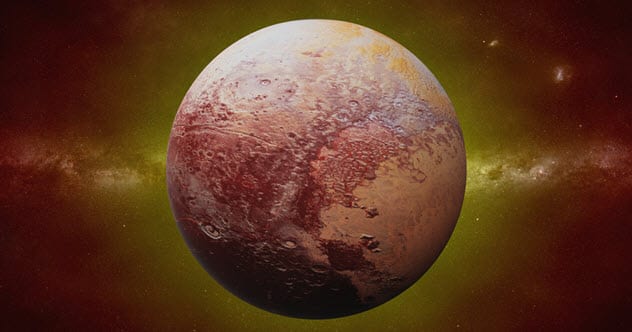
Venus takes about 225 Earth days to complete one orbit around the Sun. That is its year. Yet the planet needs approximately 243 Earth days to complete one rotation on its axis. In other words, Venus finishes its year before it finishes its day.
The weirdness does not stop there. Venus rotates in the opposite direction from most planets in our solar system. From its surface, assuming you could survive the crushing pressure and temperatures hot enough to melt lead, the Sun would appear to rise in the west and set in the east.
There is one important distinction: the 243-day figure measures a complete rotation relative to distant stars. Because Venus is also moving around the Sun, the time from one sunrise to the next is approximately 117 Earth days. Either way, nobody is popping out for a quick afternoon coffee.
This ridiculous but true claim illustrates how familiar words such as “day” and “year” can become wonderfully confusing once they leave Earth.
2. Wombats Produce Cube-Shaped Poop
Nature’s least requested building material
Bare-nosed wombats are the only known animals that regularly produce cube-shaped droppings. The cubes are not cut after leaving the body, and wombats are not secretly carrying tiny digestive ice-cube trays.
Researchers found that the shape develops inside the final section of the wombat’s intestine. Different regions of the intestinal wall vary in stiffness and contract at different rates. As digested material slowly moves through this section, those variations create flat surfaces and relatively sharp corners.
The shape may help the droppings remain where wombats place them. Wombats use feces to communicate and mark territory, often depositing it on rocks, logs and other prominent surfaces. A cube is less likely to roll away than a round pellet, although scientists continue studying the exact social purpose of these deposits.
The discovery is more than a zoological punchline. Researchers have suggested that understanding how soft tissue creates corners without cutting or molding could inspire new manufacturing techniques. Humanity studied wombat poop and found potential engineering lessons. That is either scientific excellence or the most elaborate excuse ever given for avoiding normal office work.
3. Octopuses Have Three Hearts and Blue Blood
A cardiovascular system designed by fantasy writers
An octopus has three hearts. Two branchial hearts pump blood through the gills, where it collects oxygen. A third systemic heart sends oxygenated blood throughout the rest of the body.
The systemic heart temporarily stops beating when an octopus swims. That makes swimming energetically expensive, which helps explain why many octopuses prefer crawling along the seafloor rather than constantly jetting through the water like anxious underwater rockets.
Their blood is also blue because it uses a copper-rich protein called hemocyanin to transport oxygen. Human blood relies on iron-containing hemoglobin, which appears red. Hemocyanin works effectively in cold, low-oxygen marine environments, although it is not as efficient as hemoglobin under every condition.
Three hearts, blue blood, color-changing skin, flexible bodies and problem-solving intelligence would sound excessive in a fictional creature. In an octopus, they are simply standard equipment.
4. Sharks Existed Long Before Dinosaurs
The original veterans of planet Earth
The earliest shark ancestors appeared more than 400 million years ago. The first dinosaurs did not emerge until roughly 230 million years ago. Shark lineages were therefore cruising ancient oceans for well over 150 million years before dinosaurs began stomping around on land.
They also survived several major extinction events. The sharks alive today are not identical to their prehistoric ancestors, of course. Evolution has produced, altered and eliminated countless shark species over hundreds of millions of years. The broader lineage, however, has demonstrated astonishing resilience.
Shark fossils are somewhat unusual because sharks have skeletons made primarily from cartilage rather than bone. Cartilage usually decomposes before it can fossilize. Much of the shark fossil record therefore consists of teeth, scales and occasional exceptionally preserved structures.
So when a shark swims past, you are not looking at a dinosaur. You are looking at a member of an evolutionary tradition that was already old by the time dinosaurs arrived.
5. Lightning Can Be Hotter Than the Sun’s Surface
A brief atmospheric blowtorch
A lightning channel can heat the surrounding air to approximately 50,000 to 54,000 degrees Fahrenheit. The visible surface of the Sun is around 10,000 degrees Fahrenheit, meaning the air around a lightning bolt can briefly become about five times hotter.
This comparison does not mean lightning contains more total heat than the Sun. The Sun is incomprehensibly larger and continuously releases enormous quantities of energy. A lightning channel is narrow, local and extremely short-lived.
The sudden heating causes the surrounding air to expand explosively. That expansion generates a shock wave, which becomes the thunder we hear. The light reaches our eyes before the sound reaches our ears because light travels much faster than sound.
Lightning therefore creates thunder by briefly turning a thin pathway of air into something hotter than the solar surface. It is beautiful, scientifically fascinating and an excellent reason to go indoors instead of holding a metal golf club while insisting the storm “doesn’t look that close.”
6. The Moon Has Quakes That Can Last More Than 10 Minutes
Earth is not the only world that shakes
Seismic activity occurs on the Moon, producing events known as moonquakes. Instruments installed during the Apollo missions recorded thousands of lunar seismic events and revealed several different causes.
Deep moonquakes can result from Earth’s gravity stretching and tugging at the Moon’s interior. Meteoroid impacts create additional vibrations. Temperature changes also matter because surface rocks expand and contract as the Moon moves between intensely hot daylight and extremely cold darkness.
Some shallow moonquakes appear connected to faults created as the Moon slowly cools and contracts. The strongest recorded shallow events reached magnitudes of around 5.5 and could continue shaking for more than 10 minutes.
Earth’s water, fractured rock and active geology help damp seismic vibrations relatively quickly. The Moon is drier and more rigid, so vibrations can continue reverberating. Rather than producing one sharp jolt, the lunar surface may ring for an unsettlingly long time.
7. Bananas Are Berries, but Strawberries Are Not
Botany has rejected the grocery aisle
In everyday language, berries are small, sweet fruits that look appropriate on cereal. Botanical classification follows a different set of rules.
A true botanical berry develops from a single flower containing one ovary. Its seeds are generally embedded within fleshy fruit tissue. Bananas satisfy this structural definition, making them berries despite their size, shape and total absence from anything marketed as a “mixed berry” dessert.
Strawberries do not qualify as true berries. Their red flesh is enlarged flower tissue known as a receptacle. The tiny objects commonly called strawberry seeds are actually individual dry fruits called achenes, each usually containing a seed.
Raspberries and blackberries are not true botanical berries either. They are aggregate fruits composed of multiple smaller fruit structures. Meanwhile, tomatoes, grapes, eggplants and certain peppers can qualify as berries under botanical definitions.
The produce department is not technically lying to you. It is simply using culinary categories, while botanists are operating an entirely different classification system and apparently enjoying the confusion.
8. Some Frogs Freeze Solid and Return to Normal
The wood frog’s annual reboot
Wood frogs living in cold regions can survive while a substantial portion of their bodies freezes. During winter, ice may form around their organs and between their cells. Their breathing stops, their hearts stop beating and they appear dead.
Before and during freezing, the frogs flood their tissues with protective compounds, including glucose. These natural cryoprotectants limit cellular dehydration and reduce the damage normally caused by ice formation. The ice forms mainly outside the cells rather than shredding their internal structures.
In some northern habitats, wood frogs may remain frozen for months. When temperatures rise, they thaw, their hearts begin beating again and they return to ordinary frog activities such as feeding, moving and making extremely loud romantic announcements near ponds.
The frogs are not immortal, and they cannot survive unlimited cold. Their adaptation works only within particular temperature ranges and physiological conditions. Still, an animal that can stop breathing, freeze through winter and restart in spring deserves considerably more respect than its modest appearance usually receives.
9. Antarctica Is the World’s Largest Desert
A desert does not need sand or heat
Many people picture deserts as blazing landscapes filled with dunes, camels and dramatic human regret. Temperature, however, does not determine whether a region is a desert. Precipitation does.
Deserts receive very little rain or snow. By that definition, Antarctica is the largest desert on Earth. Much of the continent receives remarkably little annual precipitation, even though it holds an enormous quantity of frozen water accumulated over extremely long periods.
The Sahara is the world’s largest hot desert, but Antarctica is larger overall. Its interior is also one of the coldest, driest and windiest environments on the planet.
Calling Antarctica a desert does not mean it never snows. It means the continent’s average precipitation is low enough to meet the climatic definition. The snow that does fall may remain for centuries because temperatures rarely allow it to melt.
Antarctica is therefore both an immense ice-covered continent and a desert. Geography has once again demonstrated that everyday definitions are merely suggestions.
10. An Ordinary Cloud Can Weigh More Than a Million Pounds
The fluffy heavyweight floating overhead
A typical cumulus cloud measuring roughly one cubic kilometer may contain about 1.1 million pounds of water droplets. Larger storm clouds can contain vastly more water.
Clouds look weightless because their water is divided among an enormous number of microscopic droplets. Each droplet falls very slowly and can be supported by rising air currents. The cloud also exists within a parcel of moist air whose overall density can be lower than that of the surrounding drier air.
Eventually, droplets collide and combine. Once they grow too heavy for air currents to keep suspended, they fall as rain or other precipitation. The cloud has not suddenly gained weight; its water has simply reorganized into drops large enough to descend efficiently.
The next time a small white cloud drifts peacefully overhead, remember that it may contain hundreds of tons of water. The sky has been suspending industrial-scale quantities of material above us this entire time, and everyone somehow agreed not to make it awkward.
Why Ridiculous True Claims Are So Easy to Doubt
These strange facts feel fake because the human brain relies on shortcuts. We compare new information with patterns built from ordinary experience. Poop is usually rounded, so cube-shaped poop sounds invented. Clouds float, so they seem nearly weightless. An animal whose heart has stopped appears dead, so a frozen frog returning to normal feels like a storytelling trick.
Scientific reality is not obligated to match those mental shortcuts. Nature works through physical structures, evolutionary pressures and environmental conditions that may be far removed from daily human life. When those systems produce an unfamiliar outcome, the result sounds absurd even when the underlying mechanism is logical.
The best response is neither immediate belief nor automatic rejection. It is curiosity followed by verification. A credible version of a strange claim should identify the organism, measurement or circumstance involved. “Lightning is hotter than the Sun” is misleading without explaining that a narrow lightning channel briefly exceeds the temperature of the Sun’s visible surface. “Frogs survive being frozen” needs the species, temperature limits and protective chemistry.
Details do not ruin a remarkable fact. They transform a catchy sentence into something genuinely interesting.
The Experience of Sharing Facts That Sound Completely Fake
Stage one: immediate rejection
Tell a group of people that wombats make cubes, and the first reaction is usually not thoughtful scientific discussion. Someone narrows their eyes. Someone reaches for a phone. Another person confidently announces that they saw something similar online and it was “definitely AI.” This is understandable. The modern internet produces fabricated animal photos faster than nature produces actual animals.
The interesting part comes when the claim survives the search. Skepticism turns into fascination, followed by urgent questions that nobody expected to ask that day. How sharp are the corners? Why does the wombat need cubes? Did scientists volunteer for this project, or was it assigned as punishment?
Stage two: the irresistible demonstration
Some ridiculous facts become much more convincing when they include numbers. Saying that Venus rotates slowly sounds ordinary. Saying its rotation lasts about 243 Earth days while its year lasts about 225 days makes people pause. The numbers expose exactly where common intuition fails.
The million-pound cloud produces a similar reaction. People look upward as though the cloud has just become a safety violation. Explaining that the water is spread across a cubic kilometer restores some comfort, but not all of it. A pleasant summer sky now feels like an enormous suspended plumbing system.
Stage three: one fact takes over the conversation
Every group has one person who becomes emotionally attached to a particular claim. The botanical berry argument is especially dangerous. Once someone learns that a banana is a berry and a strawberry is not, the conversation may never return to its original subject.
Breakfast becomes taxonomy. Smoothies become controversial. Somebody points at a tomato. Somebody else demands a ruling on watermelons. The original fact was supposed to be a quick piece of trivia, but it has transformed an ordinary meal into an unofficial horticulture conference.
Stage four: accuracy becomes more entertaining than exaggeration
The temptation with unusual facts is to make them even more dramatic. Sharks become “older than trees,” frogs “come back from the dead,” and lightning becomes “hotter than the entire Sun.” These versions may attract attention, but they often remove essential context.
The accurate explanation is usually better. Shark ancestry extends back more than 400 million years, well before dinosaurs. Wood frogs use cryoprotective chemistry to survive controlled freezing within environmental limits. Lightning briefly heats a narrow air channel beyond the temperature of the Sun’s visible surface.
Those mechanisms are more impressive than the vague exaggerations. Accuracy reveals the process, and the process is where the real wonder lives.
Stage five: the world becomes pleasantly less predictable
After collecting enough ridiculous true claims, ordinary surroundings begin to feel different. A thunderstorm becomes a display of extreme atmospheric heating. A drifting cloud becomes hundreds of tons of suspended water. A bowl of fruit becomes evidence that culinary and botanical language have never signed a peace treaty.
That change in perspective is the best part of the experience. Strange facts are not merely ammunition for trivia night. They are reminders that familiar appearances conceal complicated systems. The world is not boring and occasionally interrupted by oddities. It is continuously odd, and familiarity simply prevents us from noticing.
Conclusion
The most ridiculous claims are often memorable because they expose the limits of everyday intuition. Venus does not respect our calendar. Wombats manufacture geometric droppings. Octopuses manage three hearts, and wood frogs temporarily shut down for winter. Even a cheerful cloud may be carrying more than a million pounds of water.
Not every unbelievable statement deserves belief. The internet remains fully capable of inventing nonsense before breakfast. Yet automatic disbelief can be just as limiting as gullibility. The better habit is to investigate the specific claim, check reliable evidence and pay attention to scientific context.
Reality does not always sound realistic. Fortunately, it is under no obligation to improve its writing.
Editorial note: The claims in this article are based on established scientific and educational sources. Numerical values are approximate where measurements vary, and contextual qualifications have been retained to avoid turning accurate facts into misleading trivia.