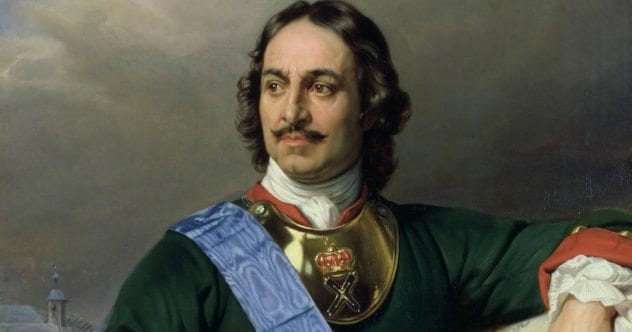
Peter the Great did not gently invite Russia into the modern age. He kicked open the door, dragged in a shipbuilder, a mathematician, a barber, a tax collector, and possibly a confused Dutch carpenter, then announced that everyone was now going to behave more like Western Europe. Subtle? Not exactly. Effective? In many ways, yes.
When Peter I ruled Russia from the late 17th century into the early 18th century, his country was powerful but still deeply tied to older Muscovite traditions. Western Europe, meanwhile, was buzzing with scientific curiosity, military innovation, printed news, global trade, secular education, and new ideas about government. Peter wanted Russia in that conversation. Unfortunately for anyone fond of long beards, old calendars, or doing things because “that is how grandfather did it,” Peter was not a patient reformer.
This article explores 10 odd ways Peter the Great forced Russia toward the Enlightenment. Some reforms were brilliant. Some were brutal. Some were so strange they sound like rejected sitcom plots. Together, they reshaped Russia’s identity, turning it into a major European power with a navy, a new capital, a stronger state, and a much shorter average beard.
1. He Taxed Beards Like They Were Luxury Real Estate
Peter’s beard tax is the reform everyone remembers because, frankly, history rarely gives us fiscal policy with facial hair. After traveling through Western Europe during the Grand Embassy of 1697–1698, Peter noticed that many European elites were clean-shaven. To him, the beard became more than hair. It was a symbol of old Russia, religious conservatism, and resistance to Western habits.
So he ordered nobles and officials to shave. According to famous accounts, he even cut off beards himself, which is the kind of leadership style that makes a staff meeting suddenly terrifying. Men who insisted on keeping their beards had to pay a tax and could receive a token showing they had purchased the right to remain magnificently whiskered.
The deeper point was cultural engineering. Peter wanted Russian elites to look, act, and think more like Europeans. Was shaving a beard the same as embracing science, reason, and reform? Of course not. But Peter understood symbols. Change the outside, he believed, and the inside might eventually follow.
2. He Made Western Clothing a Political Uniform
Peter did not stop at beards. Traditional long Russian coats, known as kaftans, also landed on his reform hit list. He pushed nobles, officials, and urban elites to wear Western-style clothing. Shorter coats, breeches, stockings, and European court fashion became the new dress code for anyone who wanted to survive near power without looking like a walking complaint.
At first glance, this sounds shallow. Why should a country’s modernization depend on pants? But dress reform was part of Peter’s larger battle against cultural isolation. Clothing told people where they belonged. Traditional garments pointed toward old Muscovy; Western dress pointed toward diplomatic courts, naval academies, military drills, and bureaucratic offices modeled on Europe.
The oddness is that Peter used fashion as public policy. He treated sleeves and hems as if they were matters of national security. In his mind, Russia did not merely need new tools; it needed new habits. If nobles were going to negotiate, study, govern, and fight like Europeans, they might as well stop dressing like time travelers from the previous century.
3. He Changed the Calendar and Basically Rebooted Time
Before Peter’s calendar reform, Russia dated years from the traditional Byzantine calculation of the creation of the world, and the New Year began on September 1. Peter found this deeply inconvenient for a country trying to trade, fight, and correspond with Western Europe. So, in December 1699, he ordered Russia to begin counting years from the birth of Christ and to celebrate the New Year on January 1, starting in 1700.
Imagine being told by royal decree that time itself has been reorganized. That is not a software update; that is an existential pop-up window. Yet the reform mattered. It made Russian state documents, diplomacy, and commerce easier to align with European practice.
Peter did not fully adopt the Gregorian calendar used in much of Catholic Europe. Russia kept the Julian calendar for the days of the month until 1918. Still, the reform was a major cultural signal. Peter wanted Russia to stop measuring itself by a separate sacred timeline and start operating on a more internationally recognizable clock. Enlightenment thinking loved order, measurement, and standardization. Peter gave Russia all three, plus a new reason to throw a January party.
4. He Built a Capital City in a Swamp Because Europe Needed a Window
Peter founded St. Petersburg in 1703 on land taken during the Great Northern War against Sweden. The location was harsh, wet, and unforgiving. In other words, perfectif your goal was to build a symbolic “window to the West” and you had no fear of mud, mosquitoes, or human suffering.
St. Petersburg was more than a city. It was an argument in stone, water, and straight avenues. Unlike old Moscow, with its medieval layout and sacred associations, the new capital looked toward the Baltic Sea and Western Europe. It supported trade, diplomacy, naval power, and the image of Russia as a European empire.
Moving the capital from Moscow to St. Petersburg in 1712 was a psychological revolution. Peter was telling his nobles: the future is not behind us in old customs; it is ahead of us, toward ships, ports, embassies, and European politics. The city was expensive, difficult, and built at great human cost. But as a symbol of forced modernization, it was unmatched. Peter did not just open a window to Europe; he built the whole house around it.
5. He Created a Navy Almost From Scratch
Russia had vast land, fierce cavalry traditions, and serious military potential. What it did not have, when Peter began, was a proper modern navy. Peter considered that unacceptable. A major European power needed ships, shipyards, sailors, ports, and officers who knew port from starboard without guessing.
Peter personally studied shipbuilding in the Netherlands and England. He recruited foreign experts, built dockyards, and forced Russia to think like a maritime state. During his reign, Russia constructed a Baltic fleet and used naval power to challenge Sweden, gain access to the Baltic Sea, and strengthen its European standing.
This was odd because Peter’s passion for ships bordered on obsession. He did not merely order naval reform from a throne; he worked with tools, learned techniques, and treated shipbuilding as both science and statecraft. The navy reflected Enlightenment-era values in a practical form: technical knowledge, mathematics, engineering, discipline, and the belief that nature could be mastered through skill.
6. He Forced Nobles to Serve the State Instead of Just Looking Important
Peter had little patience for nobles who believed birth alone made them useful. In 1722, he introduced the Table of Ranks, a system that organized military, civil, and court service into levels. Status and advancement depended more on service and performance than on hereditary prestige.
This was not democracy. Peter was still an autocrat, not a powdered-wig philosopher handing out voting rights. But the Table of Ranks weakened the old boyar aristocracy and tied elite identity to state service. A noble was expected to work, train, obey, and produce results. Imagine telling a hereditary aristocrat, “Congratulations on your ancient family name. Now please report to your desk job.”
The Table of Ranks made Russia more bureaucratic, more centralized, and more merit-oriented within the limits of an autocratic society. It supported a rational state machine, one of the key political features associated with early modern Europe. Peter wanted useful servants, not decorative ancestors.
7. He Turned Education Into a National Duty
Peter understood that modernization required brains, not just boots. Russia needed engineers, navigators, artillery officers, translators, doctors, administrators, and technicians. Religious education alone could not produce the workforce required for a modern state.
So Peter promoted secular schools and technical training. He supported schools for mathematics, navigation, artillery, engineering, and military service. At times, education was compulsory for certain groups, especially the children of nobles and service families. Some young Russians were sent abroad to study at state expense, which must have sounded glamorous until they realized the return trip involved lifelong service to the tsar.
This reform pushed Russia toward Enlightenment habits: measurement, practical science, foreign languages, and technical expertise. Peter’s goal was not education for personal self-expression. He wanted education that served the state. Still, by creating secular pathways for learning, he opened doors that later Russian thinkers, scientists, and reformers would walk through.
8. He Modernized the Alphabet and Promoted Printed Information
Peter also attacked the written wordin a constructive way, mostly. In 1710, he introduced a simplified civil script for secular printing, separating everyday administrative and scientific writing from older Church Slavonic forms. This made printed materials more practical for government, education, science, and public communication.
He also promoted translations from Western European languages and supported Russia’s first printed newspaper, Vedomosti, launched in 1703. This was a big deal. Newspapers create shared information. They help people think beyond local rumor, monastery walls, and whatever one loud uncle claims at dinner.
By encouraging print culture, Peter gave modernization a voice. Laws, technical manuals, news, educational texts, and translated works could circulate more effectively. Enlightenment culture depended on reading publics, printed debate, and the spread of useful knowledge. Peter’s Russia was still tightly controlled, but the tools of information were beginning to move.
9. He Put the Church Under State Control
Peter’s church reform was one of his most dramatic and controversial changes. After the death of Patriarch Adrian in 1700, Peter delayed appointing a new patriarch. In 1721, he formally replaced the patriarchate with the Holy Synod, a governing body supervised by a secular official appointed by the tsar.
This did not make Russia secular in the modern American sense. The Orthodox Church remained central to Russian life. But Peter reduced its independent political power and placed it inside the machinery of the state. To him, the church should support public order, education, moral discipline, and imperial goals.
That move reflected a broader early modern trend: rulers wanted institutions to serve centralized government. Peter feared any rival authority that could slow reform. By subordinating the church, he cleared space for schools, science, administration, and state-directed modernization. It was not gentle Enlightenment tolerance; it was autocratic rationalization with incense in the background.
10. He Built Museums, Collected Oddities, and Made Curiosity Official
Peter loved practical knowledge, but he also loved curiosity. His Kunstkamera, founded from his collections and established in St. Petersburg, became Russia’s first public museum. It displayed natural specimens, anatomical curiosities, scientific instruments, and ethnographic objects. Some exhibits were strange enough to make visitors reconsider lunch.
But the point was serious. Peter wanted to fight superstition by showing that unusual bodies, natural phenomena, and foreign cultures could be studied rather than feared. Museums turned curiosity into public education. They taught people to observe, compare, classify, and ask questions.
The Kunstkamera fits perfectly into the Enlightenment spirit. It celebrated knowledge as something visible, collectible, and organized. Peter’s museum told Russia that the world was not simply mysterious; it was investigable. That is a major shift. Once people begin asking “How does this work?” instead of “What omen is this?” the Enlightenment has entered the room, possibly carrying a jar with something alarming inside it.
Why Peter’s Enlightenment Was So Strange
Peter the Great’s reforms were odd because they combined science and coercion, curiosity and punishment, European elegance and Russian autocracy. He admired Western methods, but he did not import Western liberty in any broad sense. He modernized the state while tightening the state’s grip. He promoted education but mostly so people could serve better. He encouraged printing but did not create a free press. He reduced church independence but not because he believed in modern pluralism.
In other words, Peter forced Russia toward the tools of the Enlightenment without fully embracing the Enlightenment’s softer promises. He wanted rational administration, technical skill, scientific curiosity, global trade, and military efficiency. He was less interested in individual rights, public consent, or philosophical coffeehouse debates where everyone politely disagreed for six hours.
That contradiction makes Peter fascinating. He was both a modernizer and a despot. He dragged Russia closer to Europe while demanding obedience at every step. His reforms were not a clean staircase into progress. They were more like a construction site: noisy, dangerous, impressive, and full of people wondering who approved the design.
The Lasting Impact of Peter the Great’s Reforms
Peter’s changes transformed Russia into a major European power. The army and navy became stronger. The government became more centralized. St. Petersburg connected Russia to Baltic trade and diplomacy. Education, science, and print culture gained new importance. The nobility became more dependent on state service. The church lost some political independence. Russia entered the European balance of power with new confidence.
But the cost was high. Many reforms were imposed harshly. Taxes increased. Labor demands were heavy. St. Petersburg was built with enormous human suffering. Traditional communities experienced Peter’s changes not as a cheerful upgrade, but as a command from above. Modernization arrived wearing boots.
Still, Peter’s reign changed the direction of Russian history. Later rulers, including Catherine the Great, built on many Petrine foundations. Russian science, administration, diplomacy, and elite culture all developed in the long shadow of Peter’s reforms. His legacy remains complicated because the question is complicated: can progress forced by autocracy still be called progress?
Experiences and Reflections: What Peter’s Strange Reforms Teach Modern Readers
Reading about Peter the Great today feels oddly familiar. Most of us have lived through some version of forced modernization, though thankfully without a monarch inspecting our chin. A workplace adopts new software. A school switches platforms. A city changes traffic systems. A business “goes digital” overnight. Suddenly everyone is told the old way is finished, the new way is mandatory, and training will occur at 8 a.m. sharp.
Peter’s Russia reminds us that modernization is not just about new tools. It is about identity. When Peter ordered nobles to shave and wear Western clothes, he was not simply chasing fashion. He was telling them to imagine themselves differently. That is why change can feel so personal. A new calendar may look administrative on paper, but to people who built rituals around the old calendar, it feels like someone rearranged the furniture inside their soul.
There is also a useful lesson in Peter’s obsession with practical learning. He did not admire Europe only from palace windows. He traveled, watched shipbuilders, studied machinery, hired experts, and demanded skills. That part of his legacy still feels powerful. Real reform requires knowledge. Countries, companies, and individuals cannot modernize by slogans alone. Someone has to learn the math, build the ship, translate the manual, train the apprentice, and fix the leak when the glorious new vessel starts taking on water.
At the same time, Peter’s example warns us about the danger of confusing speed with wisdom. He moved fast because he had the power to do so. But speed can crush people. Reform imposed without patience, consent, or local understanding often produces resentment. Peter succeeded in many state goals, yet his methods left deep scars. Modern leaders can admire his energy while rejecting his brutality. A good reformer should not need a razor and a tax token to make a point.
Peter also shows that symbols matter. A capital city, a uniform, a newspaper, a school, a museumthese are not small things. They tell people what the future is supposed to look like. St. Petersburg announced that Russia would face Europe. The Kunstkamera announced that curiosity was useful. The Table of Ranks announced that service mattered. Even the beard tax, ridiculous as it sounds, announced that private appearance could become public politics.
For writers, teachers, and history lovers, Peter’s reign is a reminder that progress is rarely tidy. The Enlightenment was not one smooth parade of reason triumphing over darkness. In Russia, it arrived mixed with empire, war, taxation, forced labor, censorship, ambition, and genuine curiosity. That makes the story richer and more honest. Human history is not a motivational poster. It is a crowded workshop where brilliant ideas and terrible methods sometimes share the same bench.
The best modern takeaway may be this: change works best when it combines Peter’s hunger for learning with far more respect for human beings. Learn from the world. Build institutions. Invest in education. Support science. Improve communication. Reward competence. Challenge superstition. But do it without humiliating people for their traditions or treating society like raw material for one ruler’s dream.
Peter the Great forced Russia toward the Enlightenment in ways that were bold, bizarre, and often harsh. His reforms shortened beards, moved capitals, built fleets, reorganized ranks, printed newspapers, opened schools, and made curiosity a tool of empire. He was not a gentle philosopher-king. He was a giant with a blueprint, a hammer, and no interest in waiting for committee approval. That is why his story still fascinates: it shows both the power of modernization and the danger of forcing the future to arrive at sword point.
Conclusion
Peter the Great’s reforms were among the strangest and most consequential modernization campaigns in European history. He did not simply admire the Enlightenment from afar; he tried to manufacture its conditions in Russia through law, fashion, war, education, science, bureaucracy, and cultural shock therapy. Some measures look visionary. Others look absurd. Many were both.
From beard taxes to naval academies, from St. Petersburg to the Holy Synod, Peter reshaped Russia by forcing old institutions to serve a new imperial project. He helped make Russia a European power, but his methods reveal the darker side of top-down progress. The result was not a fully enlightened society, but a transformed onemore technical, more centralized, more outward-looking, and much harder to ignore.