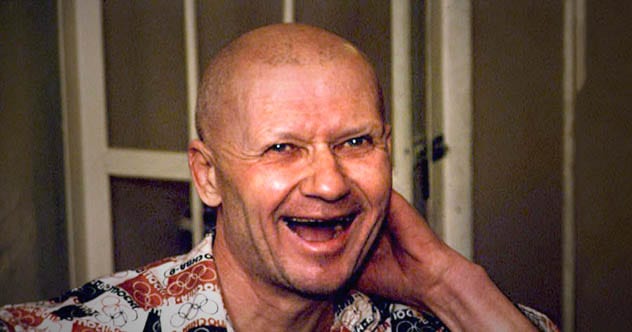
Andrei Chikatilo did not resemble the cinematic version of a serial killer. He was not a shadowy aristocrat, a masked stranger, or a criminal mastermind delivering theatrical speeches. He was a bespectacled former teacher, husband, father, grandfather, Communist Party member, and office employee who blended into everyday Soviet life.
Behind that forgettable appearance was the man later nicknamed the Rostov Ripper, the Butcher of Rostov, and the Forest Strip Killer. Between 1978 and 1990, he murdered children, teenagers, and young women across parts of Russia, Ukraine, and Uzbekistan. A Russian court ultimately convicted him of 52 murders, although he confessed to additional killings.
The Chikatilo case is disturbing for more than its victim count. It exposed wrongful convictions, defective forensic reasoning, political secrecy, bureaucratic rivalry, and the danger of treating vulnerable people as unimportant. The Soviet authorities did not merely drop the ball; at several points, they filed it in the wrong cabinet, stamped it confidential, and punished someone else for losing it.
This account avoids unnecessary graphic detail and focuses on verified events, investigative failures, and the human consequences of the case.
Who Was Andrei Chikatilo?
Andrei Romanovich Chikatilo was born on October 16, 1936, in a rural village in the Ukrainian Soviet Socialist Republic. His childhood unfolded amid poverty, famine stories, wartime destruction, and political repression. Some biographies repeat a story told by his mother that an older brother had been kidnapped and cannibalized during the Ukrainian famine. Historians have never conclusively verified that family story, so it should not be treated as proven fact or as a convenient explanation for his later crimes.
As an adult, Chikatilo married, had two children, worked in education, and later held administrative and supply-related jobs. Allegations of inappropriate behavior around students contributed to the collapse of his teaching career. His employment later required travel, giving him access to train stations, bus terminals, unfamiliar towns, and isolated areas where he could approach potential victims without attracting immediate attention.
10 Disturbing Facts About Andrei Chikatilo
1. He maintained the appearance of an ordinary family man
One of the most unsettling facts about Andrei Chikatilo is how conventional his public life appeared. He had a wife, children, steady employment, political membership, and the outward habits of a respectable Soviet citizen. Neighbors and coworkers were not looking at an obvious outlaw. They were looking at another middle-aged man carrying papers, commuting to work, and complaining about ordinary problems.
That normal appearance became one of his most effective disguises. Children and young travelers had little reason to assume that a teacher-like older man offering directions, food, lodging, or help was dangerous. His case remains a grim reminder that threatening behavior cannot always be recognized through appearance, occupation, education, or family status.
2. He often approached victims around public transportation
Chikatilo repeatedly searched for victims near railway stations, bus stops, markets, cafés, and transportation corridors. These locations gave him several advantages. Crowds made brief conversations look harmless, travelers frequently needed assistance, and people could disappear into another town without immediately being reported missing in the correct jurisdiction.
He commonly used ordinary conversation rather than dramatic force at the beginning of an encounter. He might promise a meal, offer directions, suggest a shortcut, mention a place to stay, or simply act sympathetic. He then guided the person toward woodland, a forest strip, or another secluded location.
The terrifying element was not sophistication. It was familiarity. His approach resembled countless harmless interactions that happen in stations every day.
3. Many of his victims were children or socially vulnerable people
The court convicted Chikatilo of murdering 21 boys, 14 girls, and 17 women. Many victims were children, teenagers, runaways, travelers, people with intellectual disabilities, or individuals living on society’s margins. Others came from stable homes and simply encountered him at the wrong moment.
Targeting vulnerable people reduced the likelihood of an immediate, coordinated response. A missing runaway might be assumed to have left voluntarily. A traveler could be reported in one region while a body was found in another. Families without political influence struggled to make officials treat disappearances as connected emergencies.
True-crime retellings often reduce victims to a number. In this case, the number 52 can become so overwhelming that it hides the individual lives behind it. Each victim had a name, relationships, habits, hopes, and relatives who were left to navigate years of uncertainty.
4. An innocent man was executed for Chikatilo’s first known murder
Perhaps the most damning investigative failure involved the 1978 murder of nine-year-old Yelena Zakotnova. Authorities eventually prosecuted Alexander Kravchenko, a man with a previous criminal record. Reports indicate that his confession was obtained under intense pressure, while evidence supporting his whereabouts was discounted or altered during the process.
Kravchenko was convicted and executed. Chikatilo later admitted responsibility for the killing.
This was not a harmless detour in an investigation. An innocent man lost his life, the real killer remained free, and the false solution gave officials a reason to close the case. Chikatilo went on to claim many more victims.
The episode demonstrates why a confession is not automatically reliable and why investigators must test it against independent evidence. A justice system focused on producing a culprit can become remarkably efficient at producing the wrong one.
5. Soviet ideology made the investigation harder
Soviet officials were reluctant to acknowledge that a serial killer could operate within their society. Violent sexual crime was frequently portrayed as a product of capitalist decay, making a homegrown serial murderer politically embarrassing. Public warnings were limited, press coverage was controlled, and information did not circulate as freely as investigators needed.
Serial killers, inconveniently, do not respect ideological memos.
For years, many residents were not given a clear picture of the danger. Police departments also operated within a bureaucratic culture that rewarded solved cases, discouraged embarrassing disclosures, and made cooperation across jurisdictions difficult. Chikatilo exploited those gaps simply by traveling.
Secrecy did not protect the reputation of the state. It protected the offender from public awareness.
6. The manhunt became enormous, invasive, and frequently unfocused
Once investigators recognized that the killings were connected, the search expanded into an operation commonly known as Operation Forest Strip. Police monitored transportation centers, questioned thousands of people, searched wooded areas, reviewed criminal records, and conducted mass screening.
Contemporary reporting described blood testing on an extraordinary scale and the questioning of large numbers of former prisoners, psychiatric patients, gay men, and other groups officials considered suspicious. Some unrelated crimes were uncovered, but broad suspicion also consumed resources and exposed vulnerable citizens to harassment.
The operation illustrates the difference between activity and accuracy. An investigation can generate mountains of paperwork, interviews, laboratory tests, and arrests while still failing to identify the correct person. More motion does not always mean more progress, especially when stereotypes replace evidence.
7. Police arrested him in 1984and then released him
In September 1984, detectives observed Chikatilo behaving suspiciously around women at a bus station. When he was detained, authorities found items that appeared consistent with the investigation, and his description fit information already gathered by police.
Yet investigators released him after interpreting a mismatch between his blood type and biological evidence recovered in the murder cases as proof that he could not be the offender. Contemporary accounts later characterized the conclusion as a serious forensic error. Chikatilo was convicted of lesser theft-related offenses but was no longer treated as the leading murder suspect.
He remained free for approximately six more years and killed again.
Forensic science can be powerful, but it is not magic. Laboratory findings are only as reliable as the collection methods, assumptions, technology, and human interpretation surrounding them. In this case, one supposedly decisive exclusion overwhelmed a large collection of warning signs.
8. A psychological profile helped investigators communicate with him
Psychiatrist Alexander Bukhanovsky studied the case files and developed an extensive behavioral profile of the unidentified killer. The profile described a socially conventional but sexually troubled offender whose crimes were connected to fantasies, humiliation, and a need for control.
After Chikatilo’s final arrest in November 1990, investigators struggled to obtain a complete confession. Bukhanovsky was brought in to speak with him and discussed elements of the profile. Accounts differ over precisely how much credit should go to the psychiatrist, prosecutors, and detectives, but Bukhanovsky’s involvement helped shift the interrogation away from simple confrontation.
Chikatilo subsequently began describing murders and directing investigators toward evidence and crime scenes.
The profile did not identify him through supernatural insight. Its value was practical: it organized patterns, anticipated behavior, and offered investigators a way to communicate with a suspect who wanted to view himself as sick rather than responsible.
9. His trial became a chaotic national spectacle
Chikatilo went on trial in Rostov-on-Don in 1992. He appeared inside a metal courtroom cage, partly because officials feared attacks from victims’ relatives and partly because of his disruptive behavior. He shouted, interrupted proceedings, made erratic gestures, and repeatedly attempted to present himself as mentally unfit.
Psychiatric evaluations and the court concluded that he was legally sane and responsible for his actions. The verdict reportedly extended hundreds of pages and took many hours to read because it addressed the individual charges in detail.
For victims’ families, the proceedings were not entertainment. Relatives had to sit near the man accused of destroying their families while hearing the circumstances of each death described publicly. News coverage often focused on the cage, the defendant’s outbursts, and the grotesque mythology surrounding him, but the emotional burden fell on people who had already waited years for answers.
10. His execution did not resolve every question raised by the case
Chikatilo was convicted of 52 murders in October 1992 and sentenced to death. After unsuccessful appeals and a rejected clemency request, he was executed by shooting on February 14, 1994.
His death ended the prosecution, but it did not repair the institutional damage. Alexander Kravchenko could not be restored to life. Families could not recover the years spent searching for missing relatives. Investigators could not undo the consequences of releasing Chikatilo in 1984. The exact number of murders he committed also remained uncertain because his confessions exceeded the number of convictions and not every claim could be independently proved.
The most disturbing legacy of the Rostov Ripper is therefore larger than one offender. It is the knowledge that preventable failuressecrecy, coercive interrogation, forensic overconfidence, prejudice, and poor coordinationallowed one violent man to continue killing.
Experiences and Lessons Connected to the Rostov Ripper Case
The experience of victims’ families
For the families, the case was not a tidy sequence of crime, investigation, arrest, and verdict. Many first experienced an unexplained disappearance. They then encountered uncertainty, rumors, slow-moving officials, or suggestions that the missing person had run away. Some waited years before remains were identified or connected to the wider investigation.
The eventual trial offered legal recognition, but recognition is not the same as healing. Contemporary reports described grieving relatives shouting in court, requiring medical attention, or reacting intensely as the verdict was read. Their responses were not evidence of a courtroom circus. They reflected the accumulated pressure of loss, official failure, and prolonged exposure to details no family should have to hear.
The experience of investigators
Detectives working on the case faced a puzzle spread across enormous distances. Bodies were discovered in different districts, victims came from different communities, and local agencies did not always exchange information efficiently. The offender changed locations and selected people whose disappearances might not immediately generate national attention.
Investigators also operated under political pressure. Public acknowledgment of a serial killer threatened the official image of social order, while every new body increased demands for a fast arrest. That combination can be poisonous: authorities want immediate results, yet the institution discourages an honest description of the problem.
Some investigators persisted for years, comparing cases, organizing surveillance, and seeking behavioral assistance. Others participated in premature arrests and coercive practices. The case therefore resists a simple story of heroic police versus a brilliant criminal. Chikatilo was not a flawless genius. He benefited repeatedly from a flawed system.
The experience of the wider community
Residents of the Rostov region lived with rumors before they received reliable information. Train stations, forest paths, and ordinary travel routes acquired a second meaning. Places used for commuting, recreation, or walking home became associated with disappearances.
When authorities withhold credible warnings, communities manufacture explanations of their own. Suspicion spreads toward strangers, psychiatric patients, minority groups, former prisoners, and anyone who seems unusual. That social panic can harm innocent people while doing little to identify the actual offender.
Transparent communication would not have guaranteed Chikatilo’s immediate capture, but it could have helped families recognize patterns, encouraged witnesses to report encounters, and warned young travelers about approaches near transportation hubs. Public information is not merely a public-relations decision. In an active serial case, it can be part of prevention.
The experience of modern true-crime readers
The Chikatilo case is often marketed through nicknames, record-setting victim counts, and lurid descriptions. That approach can accidentally transform a mediocre, predatory man into a dark celebrity. The more attention placed on his alleged cleverness, appetites, and courtroom behavior, the less remains for the victims and the institutional failures that prolonged the crimes.
A responsible reader should distinguish verified facts from folklore. Stories about Chikatilo’s childhood, motives, medical characteristics, and private behavior have often been repeated without strong documentation. A dramatic explanation may feel satisfying, but violence rarely has one neat cause. Poverty, war, humiliation, sexual dysfunction, or childhood trauma do not automatically produce murderers, and millions of people survive those experiences without harming anyone.
The useful lessons are less sensational. Confessions require corroboration. Forensic evidence must be interpreted cautiously. Missing vulnerable people deserve immediate attention. Agencies must share information. Political embarrassment should never outweigh public safety. And true-crime writing should remember that the killer is not the protagonist merely because his name appears in the headline.
That perspective makes the story less like monster mythology and more like what it actually was: a preventable human catastrophe involving dozens of individual lives.
Conclusion
Andrei Chikatilo became one of the Soviet Union’s most notorious serial killers, but his crimes cannot be understood through body counts and frightening nicknames alone. His ability to continue killing depended partly on his ordinary appearance and mobility, but it was magnified by wrongful prosecution, institutional secrecy, investigative prejudice, poor communication, and a catastrophic forensic conclusion.
The lasting value of studying the Rostov Ripper case is not the opportunity to stare at an offender portrayed as uniquely monstrous. It is the opportunity to examine how justice systems failand how those failures can be corrected before another family is told that its missing child is not a priority.