When summer walks into your home wearing steel-toed boots, you suddenly become very interested in air conditioners. Not “someday I should compare models” interested. More like “why is my couch sweating?” interested. For renters, homeowners, dorm dwellers, and anyone trying to cool one stubborn room, the big question often comes down to this: window A/C vs. portable A/C: which should you get?
The short answer is simple: get a window air conditioner if your window and living situation allow it. A window unit usually cools better, uses less energy for the same cooling comfort, costs less upfront in many sizes, saves floor space, and tends to be quieter because part of the machinery sits outside. But portable air conditioners are not useless little plastic penguins on wheels. They are often the best choice when you cannot install a window unit, have a casement window, live in a building with rules against window A/Cs, or need temporary cooling that can move from room to room.
So the real answer is not “one is always better.” It is: the better A/C is the one that fits your room, your window, your budget, your lease, and your tolerance for noise, hoses, and mild appliance drama. Let’s compare both options without turning this into an HVAC textbook wearing sunglasses.
What Is a Window Air Conditioner?
A window air conditioner is a self-contained cooling unit that sits in a window opening, usually a double-hung window. The front of the unit faces your room, while the back hangs outside. It pulls heat and humidity from indoor air, sends cooler air back into the room, and releases heat outdoors.
That outside-facing design is the big reason window A/C units are often more efficient than portable units. The noisy, heat-releasing parts are partly outside, not sitting in your bedroom like an overworked mini fridge with opinions. Window units also avoid the long exhaust hose problem that portable units must deal with.
Best Uses for Window A/C Units
A window A/C is usually ideal for bedrooms, living rooms, home offices, small apartments, garages with compatible windows, and any room where you want dependable cooling for weeks or months at a time. If you plan to cool the same room every day during summer, a properly sized window unit is often the smarter long-term buy.
What Is a Portable Air Conditioner?
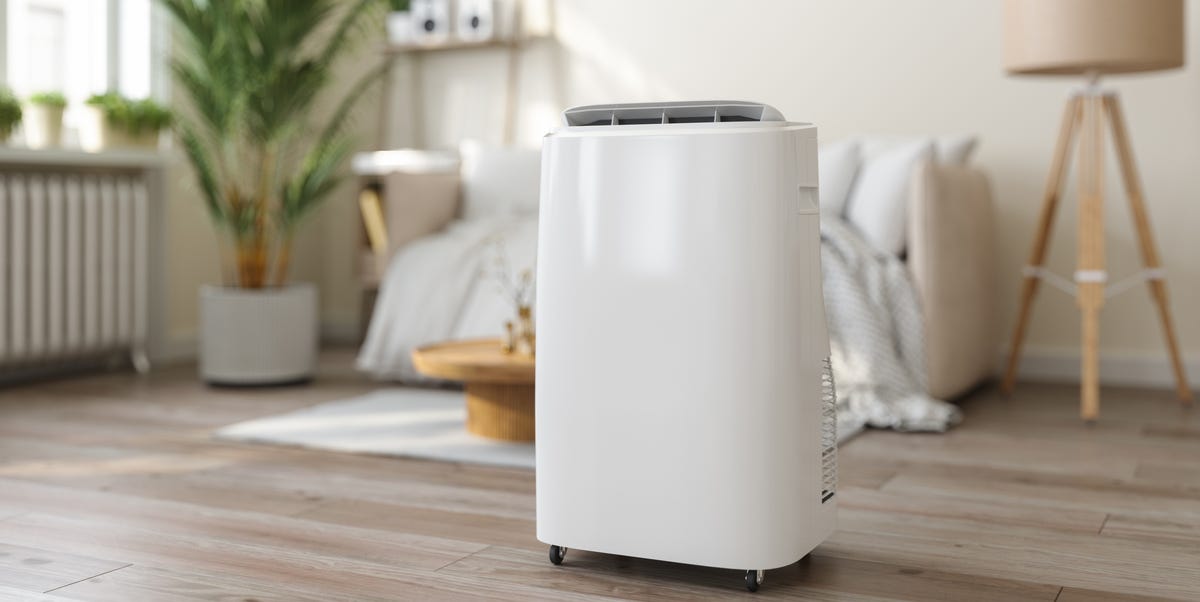
A portable air conditioner is a floor-standing cooling unit that rolls on wheels and vents hot air outside through an exhaust hose. Most models come with a window kit that lets you attach the hose to a sliding or double-hung window. Some people hear “portable” and imagine they can roll it anywhere, plug it in, and enjoy arctic breezes. Sadly, physics has entered the chat. A portable A/C still needs to exhaust hot air outdoors. Without venting, it will basically cool and heat the same room at the same time, which is like bailing water from a boat while someone drills artistic holes in the bottom.
Portable units are popular because they are easier to set up than heavy window units and work in situations where window installation is not allowed or not practical. They are helpful for renters, temporary spaces, rooms with unusual windows, or people who do not want to lift a heavy metal box into a window opening.
Single-Hose vs. Dual-Hose Portable A/C
Many portable A/Cs use a single exhaust hose. These units pull indoor air across the condenser and push hot air outside. The downside is that this can create negative pressure, which may pull warm air back into the room through cracks, doors, or leaky windows. Dual-hose portable air conditioners use one hose for intake and one for exhaust, which can improve performance because the unit does not rely as heavily on already-cooled indoor air. If you are buying a portable A/C for serious cooling, a dual-hose model is usually worth considering.
Window A/C vs. Portable A/C: The Biggest Difference
The biggest difference is cooling efficiency. A window air conditioner typically delivers more real cooling for the electricity it uses. A portable air conditioner gives you flexibility, but it pays for that flexibility with lower efficiency, more noise, and the need for floor space.
This is especially important when comparing BTU ratings. A 10,000 BTU window unit and a 10,000 BTU portable unit do not always feel equal in real life. Portable air conditioners often show two cooling numbers: an older ASHRAE rating and a newer DOE or SACC rating. The SACC number is usually lower because it attempts to reflect real-world portable A/C performance more accurately, including heat from the exhaust hose and air infiltration. In plain English: when shopping portable units, pay attention to the DOE or SACC rating, not just the big shiny number on the box.
Cooling Power: Which One Makes the Room Colder?
In most rooms, a window air conditioner cools faster and more effectively. Because the unit sits partly outside, it can reject heat more directly. It also does not have a warm exhaust hose radiating heat back into the room. That matters on a July afternoon when the sun is treating your apartment like a rotisserie chicken.
A portable A/C can still cool a room, especially a small or medium room with good sealing and limited sun exposure. But it has to work harder. The hose gets warm, the unit sits inside the room, and single-hose models may pull warm air in from elsewhere. If your room is large, sunny, poorly insulated, or open to other spaces, a portable unit may struggle unless you buy a strong model and seal the vent kit carefully.
Example
For a 250-square-foot bedroom, a properly sized window A/C may cool the room steadily and cycle normally. A portable unit with a similar advertised BTU number may need to run longer, sound louder, and still leave hot corners if the hose kit leaks or the room has afternoon sun. That does not mean the portable unit is bad. It means the window unit has the easier job.
Energy Efficiency: Which Costs Less to Run?
Window A/C units usually win on energy efficiency. Look for models with strong efficiency ratings such as CEER and ENERGY STAR certification. Inverter window units can be especially attractive because they adjust compressor speed instead of constantly switching on and off. That can mean steadier temperatures, lower energy use, and less “clunk, hum, silence, repeat” behavior.
Portable air conditioners generally use more energy to provide the same comfort. They may still be acceptable if you only cool one room occasionally or cannot install anything else. But if you plan to run an A/C for many hours every day, the electricity cost difference can become noticeable. The cheaper portable unit at checkout may not feel so cheap after a month of heroic power consumption.
Installation: Which Is Easier?
Portable A/C units are usually easier to install. You roll the unit into place, attach the hose, fit the window panel, plug it into a proper outlet, and begin the sacred ritual of arguing with the remote control. No heavy lifting into a window frame is usually required.
Window A/C units require more effort. You need the right window type, a secure fit, support if required, and careful sealing around the side panels. Some larger units are heavy enough that installation becomes a two-person job. If the unit is not installed securely, it can be unsafe. Nobody wants their air conditioner making a dramatic exit from the second floor.
That said, once installed, a window unit is more “set it and forget it.” Portable units are easier at first, but you still have to manage the hose, seal the window kit, drain moisture if needed, and store the unit when not in use.
Noise Level: Which Is Quieter?
Window units are often quieter in the room because part of the system sits outside. Modern inverter and U-shaped window A/C designs can be surprisingly calm compared with older box-style units. They are still appliances, not meditation coaches, but many are comfortable for sleeping.
Portable units tend to be louder because the whole machine is inside the room: compressor, fan, water system, and all. Some premium portable models are quieter than others, but as a category, portable A/Cs usually make more indoor noise. If you are a light sleeper, read decibel ratings carefully and look for owner comments about sound quality, not just sound level. A low hum is easier to live with than a rattly buzz that sounds like a blender learning jazz.
Floor Space and Appearance
Window A/C units save floor space. They occupy the window, which is both a benefit and a drawback. You lose some view, some natural light, and maybe the ability to open that window easily. But your floor remains free for furniture, laundry baskets, or whatever mysterious cable pile lives near your desk.
Portable units take up floor space and need clearance around the intake and exhaust. The hose also needs a path to the window. In a small bedroom, that can be annoying. A portable A/C may look less permanent, but it is not invisible. It sits there proudly like a rolling suitcase that decided to become a weather machine.
Window Compatibility and Building Rules
This is where portable A/Cs earn their fan club. Not every room can accept a window unit. Some apartments, condos, historic buildings, and dorms prohibit window air conditioners. Some windows are casement, awning, sliding, crank-out, or otherwise unfriendly to standard window units. Some homeowners simply do not want the look of a window box hanging outside.
If your lease, HOA, dorm policy, or window design says “absolutely not,” then a portable air conditioner may be your best realistic option. Just remember that “portable” still means “vented.” You will need a safe way to exhaust hot air outside, and the window kit should be sealed as tightly as possible.
Maintenance: Which Is Less Annoying?
Both types need regular filter cleaning. A dirty filter reduces airflow, makes the unit work harder, and can turn your cool breeze into a dusty sigh. Window units usually require cleaning the filter, checking the seal, and occasionally cleaning coils or clearing debris from the outdoor side.
Portable units can require more hands-on attention, especially in humid climates. Many units evaporate some moisture through the exhaust, but some still need draining. If the tank fills, the unit may shut off. Some models include continuous drain options, which can be useful in basements or muggy rooms. If you live somewhere humid, do not ignore the drain setup. Your A/C should cool the room, not start a tiny indoor swamp.
BTU Sizing: Do Not Buy the Biggest Unit Just Because It Looks Powerful
A common sizing rule for room air conditioners is about 20 BTU per square foot, adjusted for ceiling height, sunlight, shade, room use, and the number of people regularly occupying the space. A very sunny room may need more capacity. A shaded room may need less. Kitchens often need extra cooling because appliances add heat.
Buying an oversized A/C can backfire. A unit that is too large may cool the air quickly but shut off before removing enough humidity. The result is a room that feels cold, damp, and weirdly uncomfortable. A unit that is too small will run constantly and still fail to cool the room. Proper sizing is not glamorous, but neither is paying extra for a machine that performs like a confused refrigerator.
Cost: Which One Is Cheaper?
Window A/C units are often less expensive than comparable portable units, especially in small and medium sizes. Basic 5,000 to 8,000 BTU window units can be budget-friendly, while smart inverter window units cost more but may save energy over time.
Portable units frequently cost more for similar real-world cooling. You are paying for mobility, built-in wheels, a hose system, and easier setup. In some cases, the higher price is worth it because a portable A/C solves a problem a window unit cannot solve. But if both options work in your room, the window unit often offers better value.
Quick Comparison: Window A/C vs. Portable A/C
| Category | Window A/C | Portable A/C |
|---|---|---|
| Cooling performance | Usually stronger and faster | Good for small or temporary spaces |
| Energy efficiency | Usually better | Usually lower |
| Installation | More difficult, may require help | Easier, no heavy window mounting |
| Noise | Often quieter indoors | Usually louder indoors |
| Floor space | Saves floor space | Takes up floor space |
| Best for | Long-term cooling in one room | Renters, tricky windows, temporary cooling |
Which Should You Get?
Choose a window air conditioner if you have a compatible window, permission to install it, and want the best cooling performance for the money. It is the better choice for bedrooms, living rooms, offices, and apartments where the unit can stay in place through the season. If you care about energy bills, quiet operation, and strong cooling, start with window units.
Choose a portable air conditioner if you cannot use a window unit, need temporary cooling, have building restrictions, or want something easier to set up and remove. For the best results, choose a model with a realistic DOE or SACC rating, consider dual-hose designs, seal the window kit carefully, keep the hose short and straight, and clean the filter regularly.
In a perfect world, every room would have ideal windows, perfect insulation, low humidity, cheap electricity, and a landlord who answers emails before the next geological era. In the real world, you choose the A/C that fits your constraints. For most people with a normal window, the winner is a window A/C. For people with restrictions, awkward windows, or temporary needs, a portable A/C is the practical rescue plan.
Real-World Experiences: What It Feels Like to Live With Each One
On paper, window A/C units sound like the obvious winner, and in many homes they are. But real life has a way of throwing in crooked windows, lease rules, heavy boxes, and that one room that turns into a baked potato at 4 p.m. So it helps to think beyond specifications and imagine actually living with each type.
Living with a window A/C is usually simple once the installation is done. The first day can be a little stressful because you need to lift the unit, center it properly, secure it, seal the gaps, and make sure it tilts slightly as recommended by the manufacturer. After that, it becomes part of the room. You press the button, cold air arrives, and life improves. In a bedroom, a good window unit can make sleep much easier because it cools steadily without taking up space next to the bed. In a home office, it can keep the room comfortable while your laptop, monitor, and coffee-fueled ambition all produce extra heat.
The downside is that a window unit is not something most people want to move often. Once it is in, it is in. If you cool your bedroom at night but want your living room cool during the afternoon, you probably will not be carrying the unit back and forth like a gym workout with refrigerant. Window units are best when one room clearly deserves the cooling crown.
Portable A/Cs feel different. The setup is less intimidating, especially for anyone who does not want to wrestle with a heavy unit near an open window. You roll it in, attach the hose, install the window panel, and you are mostly ready. That convenience is real. In apartments where window units are banned, a portable A/C can be the difference between sleeping normally and lying awake wondering if humans can melt.
But portable units also create daily little annoyances. The hose needs space. The unit takes up floor area. The window kit may need extra sealing. The compressor is in the room with you, so you hear more of the work happening. In humid weather, you may need to drain water or monitor the tank. None of these issues are deal-breakers, but they are part of the ownership experience.
A common real-world mistake is buying a portable A/C expecting it to cool a big, open living area. Portable units perform best when the room is closed off. Shut doors, block sun with curtains, keep the hose as short as possible, and avoid placing the unit near heat sources. A portable A/C in a sealed bedroom can feel surprisingly effective. The same unit in an open-plan apartment may feel like it is politely suggesting coolness rather than delivering it.
Another experience-based tip: think about where the air blows. Some window units push air straight ahead, while others direct it upward or sideways. Some portable units have strong front airflow but do not distribute air evenly. A simple fan can help move cool air around the room, allowing the A/C to work less aggressively. This is especially useful in rooms with odd layouts, tall ceilings, or sunny corners.
Storage matters too. At the end of the season, window units may need to be removed, cleaned, and stored safely unless you leave them installed year-round. Portable units are easier to store upright in a closet, garage, or corner, but they are not tiny. Keep the hose, window kit, remote, drain plug, and manual together. Future you will be deeply grateful and may even say nice things about past you.
Finally, consider your patience. If you want maximum cooling and do not mind installation, choose the window A/C. If you need flexibility and can tolerate a little extra noise and floor space sacrifice, choose the portable A/C. The best air conditioner is not the one with the loudest marketing claim. It is the one that keeps your actual room comfortable without turning your home into an obstacle course or your electric bill into a scary novel.
Conclusion
In the matchup of window A/C vs. portable A/C, the window unit usually wins for cooling performance, energy efficiency, lower operating cost, and space-saving design. It is the best choice if your window type, building rules, and installation comfort all line up. A portable A/C is the better choice when a window unit is not allowed, not possible, or not worth the hassle for temporary cooling.
Before buying, measure your room, check your window type, review your lease or building rules, compare DOE/SACC ratings for portable models, look for ENERGY STAR-certified options when available, and think honestly about noise, maintenance, and where the unit will live. The right A/C should cool your room, not complicate your summer. Your future non-sweaty self deserves that level of respect.