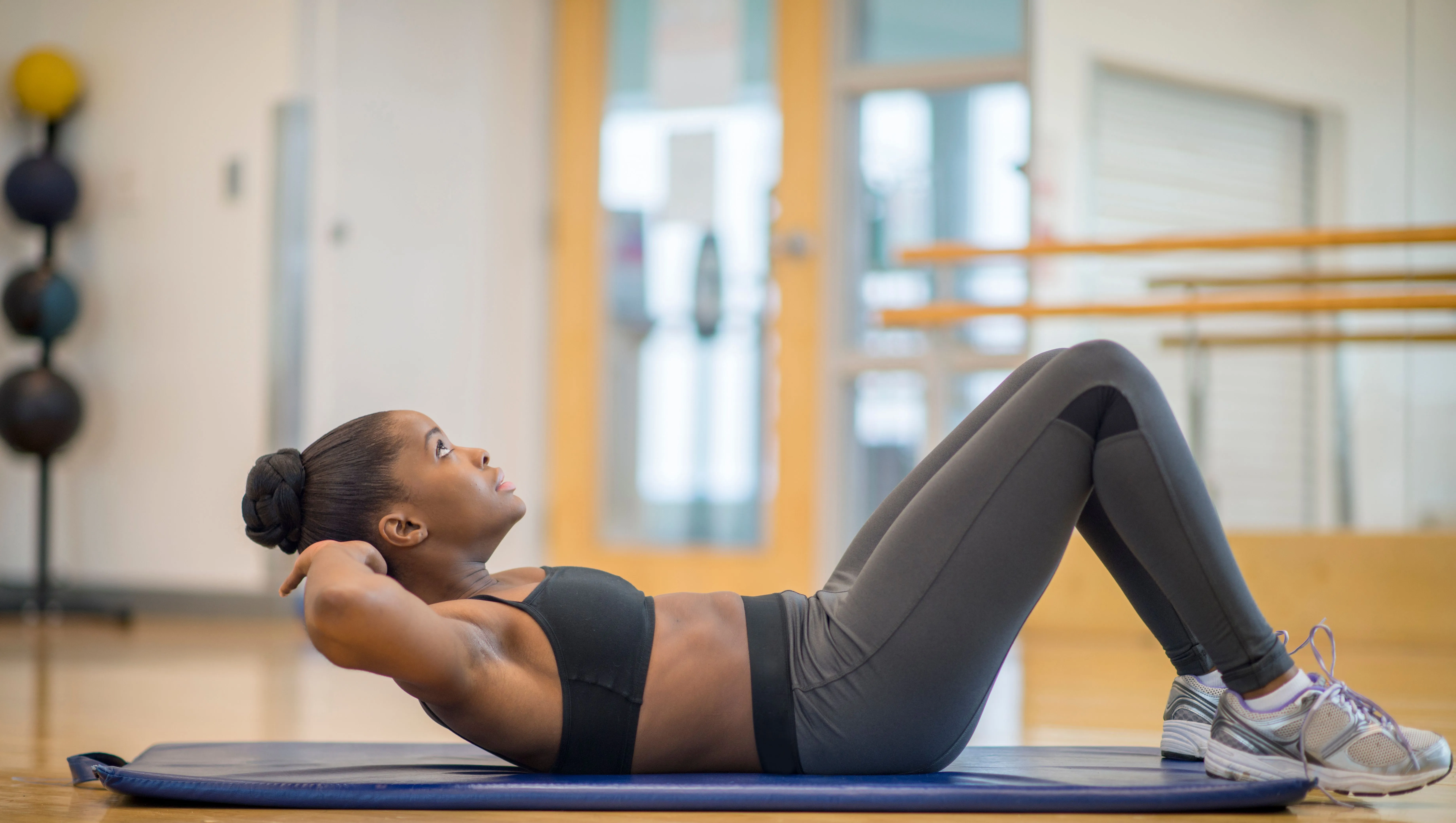
You start a set of sit-ups, expecting superhero abs. Instead, your stomach rises into a little ridge, dome, loaf, alien mountain, or mysterious “why is my belly doing origami?” shape. First: do not panic. A stomach bulge during sit-ups is surprisingly common, and it does not automatically mean something is seriously wrong. But it is also not something to ignore, especially if the bulge is new, painful, firm, or getting bigger.
The most common reasons your stomach bulges during sit-ups include abdominal pressure, poor core coordination, diastasis recti, and sometimes a hernia. In plain English, your abdominal wall may not be managing pressure well when you flex forward. Sit-ups create a lot of force through the front of the core, and if the deep abdominal muscles are not helping, that pressure looks for an exit sign.
This guide explains what causes abdominal bulging during sit-ups, how to tell the difference between harmless form issues and warning signs, and which safer core exercises can help you rebuild strength without turning your midsection into a pop-up tent.
What Does a Stomach Bulge During Sit-Ups Look Like?
People describe the bulge in different ways. Some notice a vertical ridge down the middle of the abdomen. Others see a cone-shaped dome near the belly button. Some feel a soft mound that appears only during sit-ups, crunches, planks, or getting out of bed. A few notice a small localized lump that becomes more obvious when coughing, lifting, or straining.
The pattern matters. A long ridge along the center line of the abdomen often points toward abdominal coning or diastasis recti. A small, specific lump around the belly button, groin, or a surgical scar may suggest a hernia. A general belly expansion may simply be pressure mismanagement, bloating, posture, or doing the exercise with poor breathing mechanics.
Why Sit-Ups Make the Bulge More Noticeable
Sit-ups are not gentle little core kisses. They are high-pressure trunk-flexion exercises. When you curl your torso toward your thighs, your abdominal muscles contract, your ribs move toward your pelvis, and pressure inside the abdomen increases. Your core is supposed to distribute that pressure evenly, like a well-run traffic system.
But if the deep core muscles, pelvic floor, diaphragm, and abdominal wall are not working together, the pressure may push forward. That forward pressure can create a visible bulge. Think of squeezing a tube of toothpaste with the cap loose. Something is going to push outward, and unfortunately it may be your midline.
Main Causes of Stomach Bulging During Sit-Ups
1. Diastasis Recti
Diastasis recti is a separation or widening between the left and right sides of the rectus abdominis, the “six-pack” muscle. These muscles meet at the linea alba, a band of connective tissue running down the center of the abdomen. When that tissue becomes stretched or weakened, the abdomen may dome or ridge outward during movements that increase pressure.
Diastasis recti is commonly associated with pregnancy and postpartum recovery, but it can also affect men and people who have never been pregnant. Risk factors may include repeated heavy straining, rapid weight changes, abdominal surgery, poor lifting habits, chronic constipation, or years of high-pressure core training without proper deep-core control.
The classic sign is abdominal coning: a ridge that appears down the middle of the belly during sit-ups, crunches, getting out of bed, or lifting. It may not hurt, which is why people often keep training through it. Unfortunately, “no pain” does not always mean “great idea.” Repeatedly pushing pressure through a vulnerable midline may make symptoms harder to improve.
2. Hernia
A hernia happens when tissue pushes through a weak spot or gap in the abdominal wall. Unlike diastasis recti, which is a widening of connective tissue, a hernia involves tissue protruding through a defect. Hernias can appear near the belly button, groin, upper abdomen, or an old surgical incision.
A hernia-related bulge may become more noticeable when you cough, lift, strain, stand for a long time, or do sit-ups. It may feel like a small lump rather than a long ridge. Some hernias are painless, while others cause aching, burning, pressure, pulling, or discomfort. If a bulge becomes painful, hard, discolored, or cannot be gently reduced, medical care is important.
Red flags include sudden severe pain, nausea, vomiting, fever, a rapidly enlarging lump, skin color changes over the bulge, or a bulge that does not go down when lying down. Those symptoms deserve prompt medical attention. Your abs can wait. Your intestines cannot.
3. Poor Breathing and Bracing
Many people hold their breath during sit-ups. This is common, especially when the exercise feels difficult. Holding your breath increases intra-abdominal pressure. If you combine breath-holding with forceful trunk flexion, the pressure may drive outward through the front of the abdomen.
A better strategy is to exhale during the hardest part of the movement. For sit-ups, that means breathing out as you lift. Imagine fogging a mirror or gently blowing through a straw. This helps the deep abdominal muscles engage and reduces the tendency to bear down.
4. Weak Deep Core Muscles
Your core is not just the six-pack muscle. The deeper system includes the transversus abdominis, diaphragm, pelvic floor, obliques, spinal stabilizers, and muscles around the hips. If the rectus abdominis dominates while the deep stabilizers nap in the background, sit-ups may create visible doming.
This is why someone can do hundreds of crunches and still have poor core control. Strength is not only about doing more reps. It is about coordinating pressure, posture, and breathing. More sit-ups are not always the answer. Sometimes they are the thing keeping the problem around.
5. Postpartum Core Changes
Pregnancy stretches the abdominal wall and changes how the core, diaphragm, and pelvic floor work together. After birth, it is common to notice doming during sit-ups, planks, roll-ups, or even when getting out of bed. Returning too quickly to intense ab exercises may increase pressure before the tissues are ready.
This does not mean postpartum people are fragile. It means the training plan should be smarter than “six weeks are up, go wrestle gravity.” Gentle breathing, pelvic floor coordination, deep-core activation, walking, and progressive strengthening are usually better starting points than full sit-ups.
6. Bloating, Body Fat, or Posture
Sometimes the bulge is not a medical condition at all. Digestive bloating, natural fat distribution, anterior pelvic tilt, tight hip flexors, or rib flare can make the stomach look more prominent during sit-ups. If the belly expands evenly rather than forming a ridge or lump, technique and posture may be the main factors.
Still, appearance alone is not a diagnosis. If the bulge is new, painful, localized, or associated with pressure symptoms, it is worth checking with a healthcare professional or physical therapist.
Should You Keep Doing Sit-Ups If Your Stomach Bulges?
Usually, no. At least not until you understand what is happening. Training through abdominal coning is like driving with the check-engine light on and saying, “Maybe the car just wants attention.” If sit-ups repeatedly create a visible dome, ridge, or lump, pause them and switch to lower-pressure core exercises.
You do not have to abandon core training. You simply need to choose exercises that build control first. The goal is to strengthen the core without forcing the abdominal wall to bulge forward.
How to Reduce Stomach Bulging During Core Work
Start With 360-Degree Breathing
Lie on your back with your knees bent. Place one hand on your lower ribs and one hand on your lower belly. Inhale gently through your nose and let the ribs expand sideways and slightly backward. Exhale slowly through your mouth and feel the lower abdomen draw inward without sucking in aggressively.
Do not clamp your abs like you are bracing for a toddler to jump on you. Think gentle tension. The goal is control, not panic armor.
Practice Abdominal Bracing
Abdominal bracing teaches the core to stabilize without doming. Lie on your back with knees bent. Exhale, gently tighten the lower abdomen, and imagine drawing your hip bones slightly toward each other. Your stomach should not bulge upward. Hold for a few seconds while breathing normally, then relax.
If you see coning, reduce the intensity. Smaller and cleaner beats bigger and messier.
Try Heel Slides
Lie on your back with knees bent. Exhale and gently brace. Slowly slide one heel away from your body, keeping your pelvis steady and your belly flat. Inhale to return. Alternate sides. This teaches the core to resist movement without creating excessive pressure.
Use Dead Bug Progressions
The dead bug is a favorite for a reason: it trains the deep core while keeping the spine supported. Start with arms up and knees bent at 90 degrees. Exhale, brace, and slowly lower one heel toward the floor. Return and switch sides. If your abdomen domes, shorten the range of motion.
Add Bird Dog
Begin on hands and knees. Exhale and gently brace. Extend one leg behind you without arching your back or letting your belly drop. For more challenge, extend the opposite arm. Keep the movement slow and boring. Boring is underrated. Boring builds control.
Build Toward Modified Planks
Full planks can be too intense for some people with abdominal coning. Start with wall planks, counter planks, or knee planks. Keep the ribs stacked over the pelvis, exhale gently, and stop if the midline domes. Progress only when you can hold the position with steady breathing and no bulging.
Technique Fixes for Safer Ab Training
Exhale on Effort
The simplest cue is often the most powerful: exhale during the hardest part of the movement. Whether you are lifting a weight, rolling up from the floor, or standing from a chair, breathing out helps manage pressure.
Avoid “Bulge Reps”
If your abdomen cones on rep eight, your set ended at rep seven. Quality matters more than finishing the number you planned. Your core does not receive a trophy for stubbornness.
Stop Pulling on Your Neck
Yanking your head forward during sit-ups does not train your abs better. It often increases tension and encourages poor mechanics. If you return to curl-up variations later, keep the movement small, controlled, and led by the ribs rather than the chin.
Check Your Rib Position
Rib flare can make the belly push forward. Try stacking your ribs over your pelvis before core exercises. Imagine your rib cage and pelvis as two bowls facing each other. If one bowl tips, pressure spills.
Progress Gradually
Do not jump from breathing drills to weighted sit-ups because you had one good Tuesday. Progress from breathing to bracing, heel slides, dead bugs, bird dogs, bridges, side planks, and then more advanced movements if symptoms stay controlled.
When to See a Doctor or Physical Therapist
Get professional guidance if the bulge is painful, firm, one-sided, growing, or appears near the belly button, groin, or surgical scar. You should also seek care if you notice nausea, vomiting, fever, skin discoloration, sudden severe pain, or a bulge that does not reduce when lying down.
A physical therapist, especially one trained in core rehabilitation or pelvic health, can assess diastasis recti, breathing mechanics, pelvic floor coordination, posture, and exercise technique. A physician can evaluate whether a hernia is present and whether imaging or surgical consultation is needed.
Can You Ever Do Sit-Ups Again?
Maybe. Sit-ups are not evil. They are just not the best exercise for every body at every stage. If you can perform a small curl-up without doming, breath-holding, pain, pelvic pressure, or neck strain, it may be appropriate later in your progression. But if sit-ups always create a ridge or lump, there are many better ways to train your core.
A strong core is not defined by how many sit-ups you can do. It is defined by how well your body controls movement, pressure, and load. Dead bugs, carries, bridges, Pallof presses, planks, side planks, squats, and hinges can all build excellent core strength without forcing your stomach to bulge.
Common Mistakes That Make Abdominal Bulging Worse
Doing More Crunches to “Flatten” the Bulge
This is the classic trap. If crunches or sit-ups cause coning, doing more of them usually reinforces the same pressure pattern. You cannot out-crunch poor pressure management.
Ignoring Constipation and Straining
Core pressure is not only a gym issue. Chronic straining during bowel movements can increase abdominal pressure repeatedly. Hydration, fiber, movement, and medical advice for persistent constipation may all support abdominal wall health.
Returning Too Fast After Surgery or Pregnancy
After abdominal surgery, C-section, pregnancy, or injury, tissues need time and progressive loading. Rushing into intense ab workouts may make bulging more noticeable. Follow medical clearance and choose gradual strengthening.
Confusing Soreness With Success
Feeling your abs burn does not guarantee you trained them well. If every set comes with coning, pressure, pain, or pelvic heaviness, the exercise is probably not serving you yet.
Experience Section: What It Feels Like to Fix the Bulge
Many people first notice stomach bulging during sit-ups in the most ordinary setting: a bedroom floor, a gym mat, or a home workout video where the instructor is smiling like gravity signed a peace treaty. You lie down, start the movement, and suddenly there it is: a ridge down the middle of your stomach. The first reaction is usually confusion. The second is often poking it, because apparently humans see a strange body thing and immediately become amateur scientists.
The frustrating part is that the bulge may not hurt. That makes it tempting to keep going. People often think, “Maybe my abs are just weak,” so they add more sit-ups, more planks, more leg lifts, and more punishment disguised as motivation. But the turning point usually comes when they realize the issue is not laziness. It is coordination. The core is not failing because it lacks drama; it is failing because pressure is not being managed well.
A common experience during recovery is learning to slow down. That sounds simple until you try it. Breathing drills feel almost too easy at first. Heel slides may feel less impressive than crunches. Dead bugs look silly enough to deserve their own nature documentary. But after a few weeks of consistent practice, many people notice small wins: less doming when getting out of bed, better control during workouts, fewer feelings of pressure, and a stronger connection to the lower abdomen.
Another important lesson is that the mirror is not the only measurement. The goal is not to shame the belly into behaving. The goal is to build a core that supports you when you lift groceries, carry a child, run, garden, sneeze, laugh too hard, or haul laundry like an Olympic event. A flatter appearance may happen, but function comes first.
People who improve often become more aware of daily habits. They stop jackknifing out of bed and start rolling to the side. They exhale before lifting heavy objects. They notice when they are gripping their upper abs or flaring their ribs. They learn that “brace your core” does not mean “hold your breath and turn purple.” It means creating steady, balanced tension while still breathing like a normal person at a grocery checkout.
The emotional side matters too. Seeing your stomach bulge can feel embarrassing, especially in a fitness culture obsessed with flat abs. But abdominal coning is not a character flaw. It is information. Your body is waving a little flag and saying, “Different strategy, please.” When you respond with smarter training instead of panic, progress becomes much less mysterious.
The best experience is not necessarily returning to endless sit-ups. It is realizing you do not need them as badly as you thought. A well-designed core routine can be challenging, athletic, and effective without causing your abdomen to dome. When the core starts working as a team, workouts feel smoother. Movements feel stronger. And that strange mid-sit-up mountain becomes less of a scary surprise and more of a useful clue you learned how to solve.
Conclusion
If your stomach bulges during sit-ups, the most likely causes are pressure mismanagement, diastasis recti, poor breathing mechanics, weak deep-core coordination, or a hernia. A long midline ridge often suggests coning or abdominal separation, while a localized lump may need evaluation for a hernia. Either way, the smartest move is not to do 200 more sit-ups and hope your abdomen files a complaint in writing.
Pause high-pressure ab exercises, learn to exhale on effort, rebuild deep-core strength, and progress gradually. If the bulge is painful, new, firm, growing, or associated with nausea, vomiting, fever, discoloration, or a surgical scar, seek medical care. A strong core should support your life, not turn every workout into a guessing game.
Note: This article is for educational purposes only and does not replace professional medical advice, diagnosis, or treatment. If you have pain, a persistent lump, postpartum concerns, or symptoms of a possible hernia, consult a qualified healthcare provider.