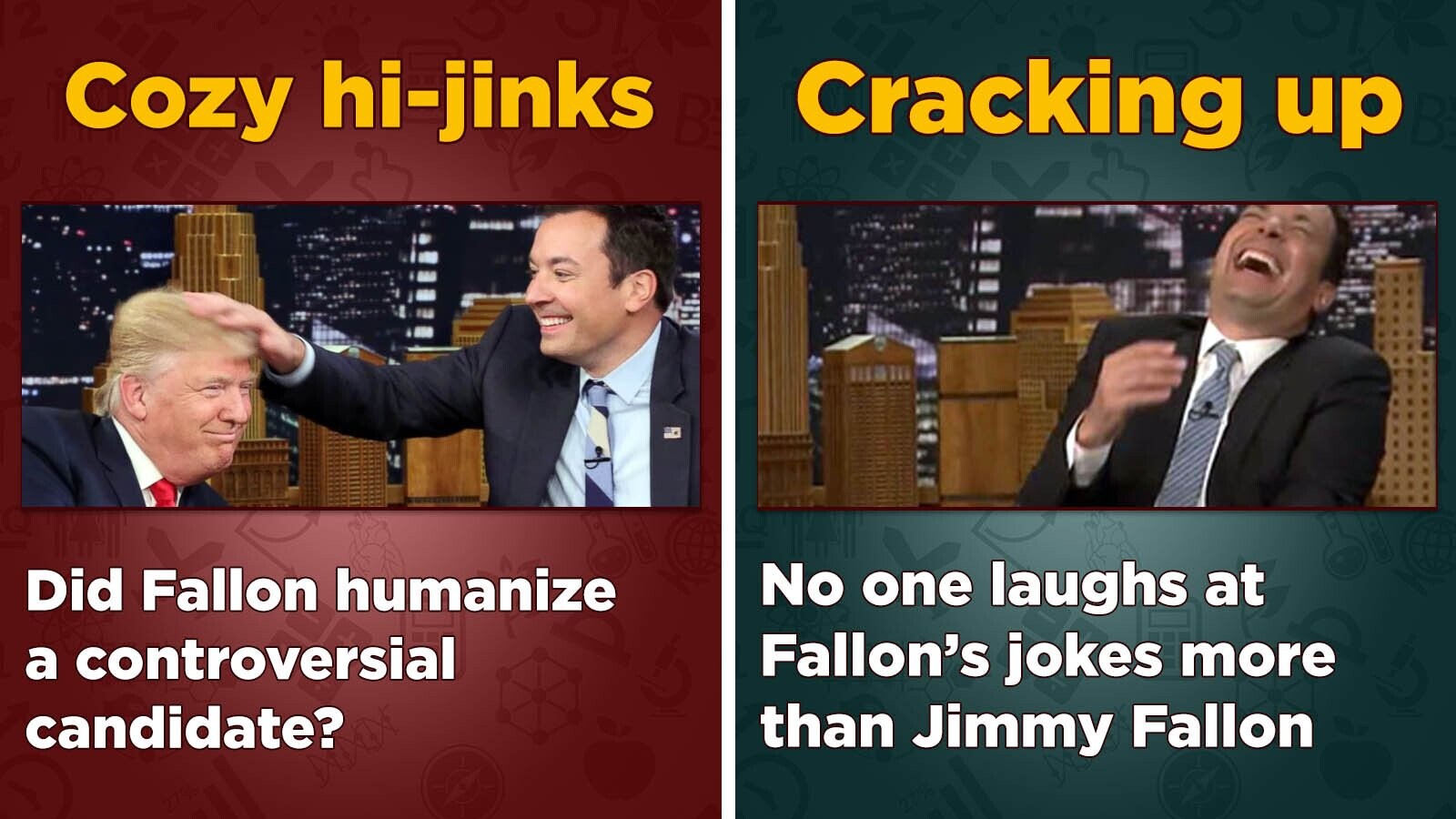
For a while, Jimmy Fallon seemed impossible not to like. He was the giggly guy from Saturday Night Live, the host who could turn a celebrity interview into a karaoke accident, the late-night golden retriever who made famous people play charades while The Roots made everything cooler by existing. He did not enter your living room like a political prophet or a roast-master assassin. He arrived like someone who had just discovered a party game and needed everyone to understand that this party game was, spiritually, the future of television.
Then, somewhere between viral lip-sync battles, Donald Trump’s hair, changing media habits, workplace allegations, and a public growing allergic to anything that smells too rehearsed, the internet mood shifted. The question became: Why did we stop liking Jimmy Fallon? Or, more accurately, why did a noticeable slice of the audience move from “Jimmy is adorable” to “Why is he laughing before the joke lands?”
This is not a hit piece. Fallon still has fans, a major NBC platform, a long-running career, and enough celebrity contacts to build a small nation made entirely of couch interviews. But the public conversation around him changed. Here are four theories that help explain why.
Theory 1: The “Nice Guy” Brand Started Feeling Too Polished
Jimmy Fallon’s superpower has always been enthusiasm. He claps. He laughs. He leans forward. He makes every guest seem like the funniest, coolest, most talented human ever to survive a press junket. In the early 2010s, that approach felt refreshing. Late-night TV had plenty of sarcasm, cynicism, and desk-based superiority. Fallon offered something warmer: a celebrity playground where movie stars could sing, dance, lose at games, and look human for seven carefully edited minutes.
But charm has a shelf life when audiences start seeing the machinery behind it. The same laugh that once felt generous began to seem automatic. The same “Oh my gosh, you’re the best!” energy began to resemble a customer-service voice for Hollywood. Viewers became more media-literate, more skeptical, and far more willing to call out performance. Fallon’s sincerity, whether real or not, became the thing people debated.
That matters because late-night hosts are not just joke delivery systems. They are trust-based personalities. Johnny Carson had cool distance. David Letterman had ironic detachment. Conan O’Brien had weirdness. Stephen Colbert had sharp political identity. Seth Meyers had writerly precision. Jimmy Kimmel evolved into a more personal, sometimes emotional commentator. Fallon’s identity was friendliness. When friendliness began to look like brand management, the audience started checking the label.
The authenticity problem
Search interest around “Jimmy Fallon fake laugh” and similar phrases tells us something about the public mood, even if it does not tell the whole truth. The issue is not that Fallon laughs. It is that viewers began to wonder whether the laughter was part of the format. A host can survive being silly, corny, or even politically inconsistent. But once the audience suspects the emotional reactions are pre-packaged, the whole show starts to feel like a cupcake with a barcode.
Fallon’s style works best when the fun feels spontaneous: a musical sketch with Justin Timberlake, a classroom instruments performance, a ridiculous game that somehow makes an Oscar winner look like someone’s cousin at Thanksgiving. It works less well when every segment appears designed to become a shareable clip before it has a reason to exist. That is where some viewers began to drift.
Theory 2: The Trump Hair Moment Became a Cultural Turning Point
Any discussion of Fallon’s public image has to stop at September 2016, put on protective gloves, and examine the hair. During Donald Trump’s presidential campaign, Fallon interviewed him on The Tonight Show and playfully messed up his hair. At the time, it was classic Fallon: goofy, harmless on the surface, and built for the next morning’s internet. But the political climate was not built for harmless.
To critics, the bit felt like a soft-focus makeover for a highly controversial candidate. Instead of pressing Trump on serious issues, Fallon turned the interview into a humanizing comedy moment. The backlash was immediate and long-lasting. Many viewers saw it as proof that Fallon’s “everybody have fun” style was not neutral at all; it was inadequate for the moment.
Fallon later expressed regret and said he did not intend to normalize Trump or endorse his politics. Still, intent and impact are different creatures. Intent is the puppy you brought home. Impact is the Great Dane now sitting on your chest at 3 a.m.
Why that moment stuck
The hair ruffle mattered because late-night television changed during the Trump era. Audiences increasingly expected hosts to take a stance. Colbert leaned into political satire. Meyers sharpened “A Closer Look.” Kimmel became more pointed on health care, gun violence, and political hypocrisy. Fallon, by contrast, looked like he was trying to keep the old variety-show tent standing while the weather outside turned into a tornado wearing a red tie.
That does not mean every late-night host must become a policy analyst with cue cards. But it does mean the job changed. For many viewers, Fallon’s reluctance to go hard politically did not feel like balance. It felt like avoidance. The Trump interview became a symbol for that avoidance, fairly or unfairly.
One awkward television moment rarely destroys a career. But it can crystallize doubts that were already forming. Fallon’s critics looked back at his soft celebrity interviews, constant games, and broad niceness and said, “Ah. That is the problem.” The hair was not just hair anymore. It became a metaphor with product volume.
Theory 3: The Internet Outgrew the Viral Late-Night Clip Machine
Fallon helped modernize late-night TV for the social media era. When he moved from Late Night to The Tonight Show, his team understood YouTube, Twitter, Facebook, celebrity games, and short-form shareability better than almost anyone in network late night. Segments like “Lip Sync Battle,” “Wheel of Musical Impressions,” “Ew!,” and classroom-instruments performances were engineered for the internet without feeling entirely cynical at first.
That strategy worked. Fallon’s show generated clips people watched even if they never tuned in at 11:35 p.m. He was not just hosting a television show; he was feeding the content beast, one charming celebrity humiliation ritual at a time.
But the beast got hungrier. Eventually, every platform became crowded with celebrity games, podcast confessions, TikTok challenges, chicken-shop interviews, hot-wing interrogations, livestream chaos, and creators who seemed less filtered than network television could ever allow. Suddenly, Fallon’s viral formula looked less innovative. It looked like a very expensive version of something the internet could do faster, weirder, and with worse lighting.
The late-night format itself is under pressure
Fallon’s reputation problem is partly a Jimmy Fallon problem, but it is also a late-night television problem. Broadcast audiences have been shrinking as viewers move to streaming platforms, YouTube, TikTok, podcasts, and clips consumed whenever the algorithm coughs them up. Younger viewers are less likely to wait for a monologue at a scheduled time. They already saw eight jokes about the news before breakfast, three of them from someone filming in a parked car.
That shift makes Fallon’s strengths less special. His show was built to create cheerful, snackable moments. Now the entire internet is snacks. Some are spicy. Some are unhinged. Some should legally be labeled “not food.” In that environment, a polished celebrity game on network TV can feel strangely formal, like wearing a tuxedo to eat mozzarella sticks.
Fallon is still good at spectacle, music, impressions, and low-conflict celebrity play. But audiences now have more options for authenticity, chaos, comedy, and commentary. The middle lane that Fallon occupied so successfully is narrower than it used to be.
Theory 4: Workplace Allegations Damaged the Wholesome Image
In 2023, reporting about The Tonight Show described allegations from current and former employees who claimed the workplace had been stressful, unpredictable, and at times toxic. Fallon reportedly apologized to staff after the story circulated, saying he wanted the show to be fun and inclusive. As with any workplace story based on allegations, it is important to be careful and fair. But the effect on public perception was real.
For a celebrity whose brand depends heavily on warmth, kindness, and harmless fun, workplace allegations hit differently. If a famously edgy comic is accused of being difficult, the public may shrug with a grim “well, yes.” If the king of giggles is accused of creating a stressful environment, the contrast is sharper. It makes the audience question the whole package.
Again, the issue is not whether viewers know the full truth of what happened behind the scenes. Most do not. The issue is that public image is fragile. Fallon’s brand was built on the idea that everyone was having the best time ever. Reports suggesting some employees were not having the best time ever made the smile look more complicated.
The gap between on-screen joy and off-screen pressure
Late-night shows are high-pressure machines. They produce topical comedy quickly, book celebrities, manage network expectations, chase clips, and compete in a brutally changed media economy. Even a “fun” show is still a workplace with deadlines, hierarchy, money, stress, and people trying not to cry near the snack table.
But modern audiences care more about behind-the-scenes culture than they used to. The old bargain was simple: entertain us, and we will not ask too many questions about how the sausage is made. Now viewers very much ask how the sausage is made, who made it, whether they were paid fairly, and why the sausage has a publicist.
That cultural shift made the allegations more damaging. Fallon did not just have to remain funny. He had to remain believable as the cheerful center of a cheerful universe.
So, Did We Really Stop Liking Jimmy Fallon?
Not exactly. “We” is doing a lot of work here, like a group project student who secretly wrote the whole slideshow. Millions of people still watch Fallon clips, NBC extended his tenure, and celebrities continue to treat The Tonight Show as a major stop on the promotional circuit. Fallon remains talented, musically gifted, quick with impressions, and unusually skilled at making guarded celebrities look playful.
What changed is the cultural temperature. The qualities that made Fallon famousniceness, broad appeal, celebrity access, viral games, political lightnessbecame more complicated in a sharper, more fragmented media world. Viewers now reward hosts who seem specific, opinionated, strange, intimate, or unpredictable. Fallon’s old strength was that he seemed like he could entertain everyone. Today, trying to entertain everyone can make a performer look like he is avoiding something.
The public did not wake up one morning and unanimously vote Jimmy Fallon off the island. The shift was slower. Some people got tired of the laugh. Some never forgave the Trump interview. Some outgrew celebrity games. Some were bothered by workplace reports. Some simply moved to podcasts and TikTok and forgot late night existed until a clip appeared between a cooking hack and a dog wearing shoes.
What Fallon Still Does Well
It is easy to mock Fallon because his style is so imitable. Laugh loudly, slap the desk, compliment the guest, play a game, repeat. But that simplicity hides real craft. Fallon is a strong musical comedian. He understands rhythm, impressions, and the soft art of making celebrities comfortable enough to be ridiculous. That is harder than it looks. Many hosts can ask a question. Fewer can convince an A-list actor to sing nonsense into a toy microphone without looking kidnapped.
His best segments remind us why he became so popular. When the chemistry is right, Fallon creates a feeling of shared silliness that does not require cynicism. There is still value in that. Not every late-night moment needs to arrive holding a flaming sword of discourse. Sometimes a tired viewer really does want a famous person to play a dumb game badly.
The challenge is that Fallon’s lane now requires more self-awareness. Audiences can still enjoy sweetness, but they want it with texture. They can still enjoy games, but they want surprise. They can still enjoy celebrity interviews, but they want something that feels less like a press-release pillow fight.
Experiences That Explain the Fallon Fatigue
Think about the experience of watching Fallon in different eras. In 2014, a typical viewer might stumble onto a clip during lunch and feel delighted. There was a movie star in a suit, somehow lip-syncing like rent was due. The Roots were there. Fallon was laughing. The clip was short, cheerful, and easy to send to a friend with the message, “This is dumb but I love it.” That was the magic: low commitment, high charm.
Now imagine the same viewer a decade later. Their phone is already full of comedians, creators, podcasts, reaction videos, celebrity interviews, behind-the-scenes drama, and political clips that arrive faster than any late-night monologue can. By the time Fallon makes a joke about yesterday’s headline, the viewer has already seen thirty versions of it, including one from a teenager with a ring light and suspiciously good timing. The old late-night rhythm feels slower. The desk feels heavier. The laughter feels bigger than the moment requires.
There is also the experience of emotional mismatch. After years of political crisis, pandemic anxiety, labor fights, celebrity scandals, and institutional distrust, some viewers became less patient with entertainment that appears aggressively cheerful. Fallon’s show often says, “Everything is fun!” The audience sometimes replies, “Is it, though?” That does not mean joy is wrong. It means joy has to feel earned.
For longtime fans, the shift can be awkward. You may remember laughing at Fallon on SNL, enjoying his musical sketches, or watching a Tonight Show clip with family. Then one day you notice the formula. The guest enters. Fallon overpraises. The anecdote sounds rehearsed. The game begins. Everyone laughs. Confetti may or may not be emotionally involved. Nothing terrible happens, but nothing surprising happens either. The comfort food starts tasting like packaging.
For younger viewers, the experience is different. They may not have grown up with the sacred idea of The Tonight Show. To them, Fallon is not the inheritor of Carson, Leno, and a grand late-night tradition. He is one more face in an endless feed. He competes not only with Colbert, Kimmel, and Meyers, but with Amelia Dimoldenberg, Sean Evans, TikTok creators, Twitch streamers, podcast hosts, and random people explaining celebrity drama in front of beige curtains. In that competition, network polish can look like distance.
Then there is the uncomfortable experience of learning too much. When viewers hear workplace allegations connected to a show built on joy, they may rewatch the joy differently. The applause is still applause, but now there is a question underneath it. Were people backstage okay? Was the fun fun for everyone? The answers are not always clear, but the questions change the atmosphere.
All of this helps explain why the Fallon conversation feels bigger than Fallon. It is about what audiences now expect from public figures. We want them funny, but also authentic. Kind, but not fake. Political, but not exhausting. Light, but not empty. Spontaneous, but not messy. That is an impossible order, basically a Starbucks drink with constitutional implications.
Jimmy Fallon did not become untalented. The room changed. The audience changed. The internet changed. And the version of likability that made him a star became harder to maintain under brighter, harsher, more suspicious lights.
Conclusion
So why did we stop liking Jimmy Fallon? Four theories stand out: his polished niceness began to feel less authentic, the Trump hair moment exposed the limits of apolitical comedy, the internet outgrew his viral clip formula, and workplace allegations complicated his wholesome image. None of these theories fully erases Fallon’s talent or success. He remains a major late-night figure with real comedic gifts and a durable platform.
But public affection is not a lifetime subscription. It has to renew, update, and occasionally stop asking celebrities to play games that feel designed by a marketing department with a fog machine. Fallon’s challenge is not to become Colbert, Kimmel, Meyers, or some TikTok chaos goblin with a microphone. It is to make his own warmth feel surprising again.
Note: This article is written for web publication as original commentary based on real public reporting, ratings discussion, and widely covered media events. It avoids unsupported claims by treating controversial workplace reports as allegations and focusing on public perception, audience behavior, and late-night industry trends.