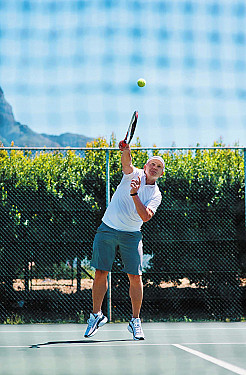
Sudden calf pain has a talent for being dramatic. One second you are stepping forward, sprinting for a ball, jogging across the street, or simply proving to your dog that you still have “athletic range.” The next second, your calf feels as if someone snapped it with a rubber band, kicked it from behind, or installed a tiny thunderstorm in your leg. That unpleasant surprise is often called tennis leg.
Despite the sporty name, tennis leg does not require a tennis racket, white shorts, or a lifelong rivalry with your doubles partner. It is commonly a strain or tear involving the gastrocnemius muscle, the large calf muscle that helps you push off, jump, climb stairs, and look mildly heroic when walking uphill. Harvard Health and other medical sources describe tennis leg as a sudden calf injury that often causes sharp pain, cramping, swelling, bruising, and difficulty walking.
The good news: many mild to moderate cases heal with smart home care, gradual rehabilitation, and patience. The less fun news: calf pain can sometimes look like more serious problems, including a blood clot, Achilles tendon injury, or ruptured Baker’s cyst. That is why the best first move is not “walk it off like a movie cowboy.” The best first move is to stop, protect the leg, and pay attention.
What Is Tennis Leg?
Tennis leg is a common term for an acute calf muscle injury, usually involving the medial head of the gastrocnemius muscle near the point where muscle and tendon meet. The gastrocnemius crosses both the knee and ankle, which makes it powerful but also vulnerable when the knee is straight and the ankle suddenly bends upward.
This injury often happens during quick acceleration, sudden stopping, jumping, lunging, or changing direction. Tennis players are famous for those movements, but runners, pickleball players, basketball players, weekend hikers, gym-goers, and ambitious parents chasing toddlers can all experience it.
Why It Feels So Sudden
Tennis leg often feels like a sudden pop, snap, cramp, or blow to the back of the calf. Some people even turn around because they think someone kicked them. That is not overreacting; it is the calf’s way of filing a very loud complaint.
The injury can range from a mild strain, where only a few muscle fibers are stretched or torn, to a more significant partial tear with swelling, bruising, and limping. Complete tears are less common but require prompt medical care.
Common Symptoms of Tennis Leg
Symptoms vary depending on severity, but the classic pattern is sudden calf pain during activity. You may notice:
- Sharp pain in the upper or middle calf
- A popping, snapping, or tearing sensation
- Cramping or tightness
- Pain when walking, climbing stairs, or pushing off the toes
- Swelling or bruising after the injury
- Tenderness when pressing the calf
- Weakness or difficulty standing on tiptoe
A mild strain may feel like tightness and soreness. A moderate strain may make you limp and may produce visible bruising within a day or two. A severe injury may make it difficult or impossible to bear weight.
What to Do Immediately After Tennis Leg
The first 24 to 72 hours matter. Your goal is simple: reduce pain, limit swelling, protect the damaged tissue, and avoid turning a manageable injury into a longer rehab saga with sequels.
1. Stop the Activity
Stop playing, running, lifting, or walking briskly as soon as you feel the injury. Continuing through sharp calf pain can worsen the tear. This is not the moment for inspirational sports-movie behavior. This is the moment for common sense wearing sneakers.
2. Protect the Calf
If walking hurts, reduce weight-bearing. Use support, hold onto a railing, or consider crutches if you have access to them and know how to use them safely. The goal is to avoid repeated pulling on the injured fibers.
3. Use Ice Properly
Apply an ice pack wrapped in a thin towel for about 15 to 20 minutes at a time. Repeat every few hours during the first couple of days while awake. Do not place ice directly on the skin, unless you are trying to add frostbite to your list of hobbies. You are not.
4. Compress the Area
A compression wrap or calf sleeve may help control swelling and provide support. The wrap should feel snug, not strangling. If your foot becomes numb, cold, blue, or more painful, loosen the wrap right away.
5. Elevate the Leg
When resting, raise your leg above heart level if possible. Elevation can help fluid drain away from the injured area and may reduce swelling.
RICE, PRICE, or PEACE and LOVE?
You may see different acronyms for soft-tissue injury care: RICE means rest, ice, compression, and elevation. PRICE adds protection. Some modern sports medicine discussions use PEACE and LOVE, which emphasizes protection, elevation, avoiding unnecessary anti-inflammatory overuse, compression, education, gradual loading, optimism, vascularization, and exercise.
For most everyday readers, the practical message is this: protect the calf early, reduce pain and swelling, avoid aggressive stretching at first, and return to movement gradually. The calf is not a broken phone; smacking it and hoping it works again is not a treatment plan.
Should You Take Pain Medicine?
Over-the-counter pain relievers such as acetaminophen may help with discomfort. Nonsteroidal anti-inflammatory drugs, such as ibuprofen or naproxen, may reduce pain and swelling for some people, but they are not right for everyone. People with kidney disease, stomach ulcers, bleeding risk, certain heart conditions, or those taking blood thinners should ask a healthcare professional before using them.
Topical pain-relief gels may also help some people. Always follow label directions. More medication is not better; it is just more medication.
When to See a Doctor
Many mild calf strains can be managed at home, but tennis leg deserves medical attention if symptoms are severe, unusual, or not improving. See a healthcare provider promptly if you have:
- Severe pain or rapid swelling
- Inability to walk or bear weight
- Major bruising or a visible deformity
- Numbness, tingling, coldness, or color change in the foot
- Pain that does not improve after several days
- Repeated calf injuries
- Concern for Achilles tendon rupture
Do Not Ignore Blood Clot Warning Signs
One reason calf pain needs respect is that a deep vein thrombosis, or DVT, can sometimes resemble a muscle injury. Seek urgent medical care if calf pain comes with marked swelling, warmth, redness, tenderness, unexplained shortness of breath, chest pain, coughing blood, or sudden dizziness. Those symptoms are not “wait and see” symptoms.
Medical evaluation may include a physical exam, ultrasound, or MRI. Ultrasound can help identify a gastrocnemius tear and can also help rule out DVT when symptoms overlap.
How Tennis Leg Is Diagnosed
A clinician will usually ask how the injury happened, where the pain is located, whether you felt a pop, and whether you can walk or rise onto your toes. They may compare both calves, check swelling and bruising, test strength, and examine the Achilles tendon.
Imaging is not always needed for mild strains, but it can be useful when the diagnosis is unclear, symptoms are severe, or a blood clot or tendon injury must be ruled out. Ultrasound is commonly used because it is accessible and can show fluid, muscle tearing, and vascular issues. MRI may be considered for complex or high-grade injuries.
Recovery Timeline: How Long Does Tennis Leg Take to Heal?
Recovery depends on the severity of the strain, your age, your activity level, and whether you give the injury the respect it deserves. A mild strain may improve noticeably within one to two weeks. A moderate strain may take four to eight weeks. Severe tears can take several months and may require specialist care.
The biggest mistake is returning to full activity as soon as walking feels “mostly fine.” The calf may feel better before it is ready for sprinting, jumping, or sudden direction changes. That is how people convert one injury into a recurring subscription.
Rehab: How to Return to Movement Safely
Once the sharp pain and swelling begin to settle, gentle movement becomes important. Complete rest for too long can lead to stiffness and weakness. The key is progressive loading: gradually asking the muscle to do more without provoking sharp pain.
Early Phase: Gentle Motion
Start with pain-free ankle movements, such as pointing and flexing the foot or making slow ankle circles. Gentle walking may be appropriate if it does not increase pain. Avoid forceful stretching in the early phase, especially if it creates a pulling or tearing sensation.
Middle Phase: Strength and Flexibility
As symptoms improve, rehab may include gentle calf stretching, seated calf raises, standing calf raises, and balance work. The soleus muscle, which sits deeper in the calf, is trained more when the knee is bent. The gastrocnemius is emphasized more when the knee is straighter.
Later Phase: Sport-Specific Training
Before returning to tennis, running, pickleball, basketball, or other sports, you should be able to walk briskly, climb stairs, perform calf raises, and do light jogging without pain. Then you can gradually add acceleration, deceleration, cutting, hopping, and sport-specific drills.
A physical therapist can be especially helpful for athletes, people with recurring calf strains, or anyone who wants a structured plan instead of the classic “I watched three videos and now I am my own medical team” approach.
What Not to Do After Tennis Leg
Good recovery is partly about doing the right things and partly about avoiding the tempting wrong things.
- Do not stretch aggressively right after the injury.
- Do not massage deeply over fresh swelling or bruising.
- Do not keep playing through sharp pain.
- Do not apply heat in the first day or two if swelling is active.
- Do not return to sprinting just because normal walking feels okay.
- Do not ignore one-sided calf swelling or redness.
How to Prevent Tennis Leg
You cannot prevent every injury, because bodies are not machines and sports are chaotic little experiments in physics. But you can reduce your risk.
Warm Up Before Explosive Movement
A proper warm-up increases blood flow, prepares the nervous system, and helps the calf tolerate quick changes in force. Try five to ten minutes of light movement followed by dynamic drills such as marching, heel raises, gentle skips, or short progressive accelerations.
Build Calf Strength Gradually
Strong calves are more resilient. Include straight-knee calf raises, bent-knee calf raises, and controlled lowering exercises. Start with body weight before adding load. Your calves should not discover strength training for the first time during a frantic sprint to return a drop shot.
Increase Training Slowly
Sudden jumps in running volume, court time, hill work, or high-intensity intervals can overload the calf. Increase intensity gradually and schedule recovery days. Muscles appreciate ambition; they just prefer it in reasonable portions.
Wear Supportive Footwear
Worn-out shoes can alter mechanics and increase strain. Choose footwear suited to your activity, especially for court sports that involve lateral movement.
Example: A Practical First-Week Plan
Here is a general example for a mild to moderate tennis leg injury. This is not a substitute for medical advice, but it shows what a sensible approach may look like.
Day 1 to Day 2
Stop the activity. Use protection, rest, ice, compression, and elevation. Walk only as tolerated. Avoid stretching deeply. Monitor for red flags such as severe swelling, warmth, redness, numbness, or shortness of breath.
Day 3 to Day 5
If pain is improving, add gentle ankle range-of-motion exercises. Continue compression if helpful. Try short, easy walks if they do not increase symptoms. If pain remains sharp or walking is difficult, contact a healthcare provider.
Day 6 to Day 7
If symptoms are clearly improving, begin gentle strengthening such as seated heel raises. Keep everything pain-free or mildly uncomfortable at most. No sprinting, jumping, or “just testing it” on the court. Testing it too early is how calves learn revenge.
Experience-Based Section: What Tennis Leg Feels Like in Real Life
People often describe tennis leg in surprisingly similar ways. One common story goes like this: someone is moving normally, maybe lunging for a ball or stepping quickly off a curb, and suddenly they feel a sharp snap in the calf. They look behind them because it genuinely feels like an outside force hit the leg. Then comes the awkward realization: nobody kicked them. Their calf simply resigned from active duty without giving two weeks’ notice.
In the first few minutes, the biggest challenge is usually confusion. Is it a cramp? A pulled muscle? An Achilles injury? A blood clot? A sign that adulthood has officially become too realistic? The pain can be intense, but the location gives clues. Tennis leg usually centers in the calf, often higher or toward the inner side, while Achilles rupture pain may be lower near the heel and may make pushing off nearly impossible. Still, guessing is not a diagnosis, especially when swelling or walking difficulty is present.
Another real-world issue is pride. Many active people want to finish the game, the run, the workout, or the yard project. That is understandable. Nobody wants to be defeated by a calf muscle, which is basically a drumstick with responsibilities. But continuing can turn a small tear into a bigger one. The smarter move is to stop immediately, sit down, and let the leg calm down.
The first night can be uncomfortable. People often notice that stairs are suddenly personal enemies. Walking to the kitchen may feel like crossing a mountain pass. This is when compression, elevation, and careful icing can help. It also helps to plan your environment: keep essentials nearby, avoid unnecessary trips, and do not pretend you are fine while carrying laundry down stairs. Laundry has waited before. It can wait again.
By the third or fourth day, mild injuries may feel much better, which is both encouraging and dangerous. This is the “false confidence” stage. The calf says, “I am fine,” but what it really means is, “I can handle walking to the mailbox, not sprinting after a tennis ball like a golden retriever in human shoes.” A gradual return is the difference between recovery and a recurring calf problem that appears every time you get ambitious.
Many people find that physical therapy changes the recovery experience. A therapist can identify weakness, stiffness, poor ankle mobility, balance issues, or training habits that contributed to the strain. Rehab often feels boring at first because it starts small: ankle motions, easy heel raises, gentle balance work. But those small steps are the bridge back to normal activity. Calves are stubborn; they like proof, not motivational speeches.
The emotional side matters too. A calf injury can make active people feel older, slower, or frustrated. That reaction is normal. The goal is not to panic or rush. The goal is to treat the injury as useful feedback. Maybe you need better warm-ups. Maybe you increased mileage too quickly. Maybe your calves need strength work. Maybe your shoes are old enough to have a retirement plan. Tennis leg is annoying, but it can also be a loud reminder to train smarter.
Once you return to activity, confidence should come back gradually. Start with walking, then brisk walking, then easy jogging, then controlled drills, and only later full-speed play. A good rule of thumb: if you cannot perform repeated calf raises, hop lightly, and change direction without pain, your calf is not ready for heroic movement. Heroism can wait. Healing gets priority.
Conclusion
Tennis leg is a sudden calf muscle strain or tear that can stop you mid-stride and make walking feel like a negotiation. The best immediate response is to stop activity, protect the leg, use ice, compression, and elevation, and avoid aggressive stretching during the early phase. Mild cases often improve with home care, but severe pain, major swelling, inability to walk, or symptoms that suggest a blood clot require medical attention.
Recovery is not just about waiting. It is about progressing wisely: gentle motion, gradual strengthening, balance work, and a careful return to sport. With smart care and a little patience, most people can return to their usual activities without turning tennis leg into a recurring guest star.