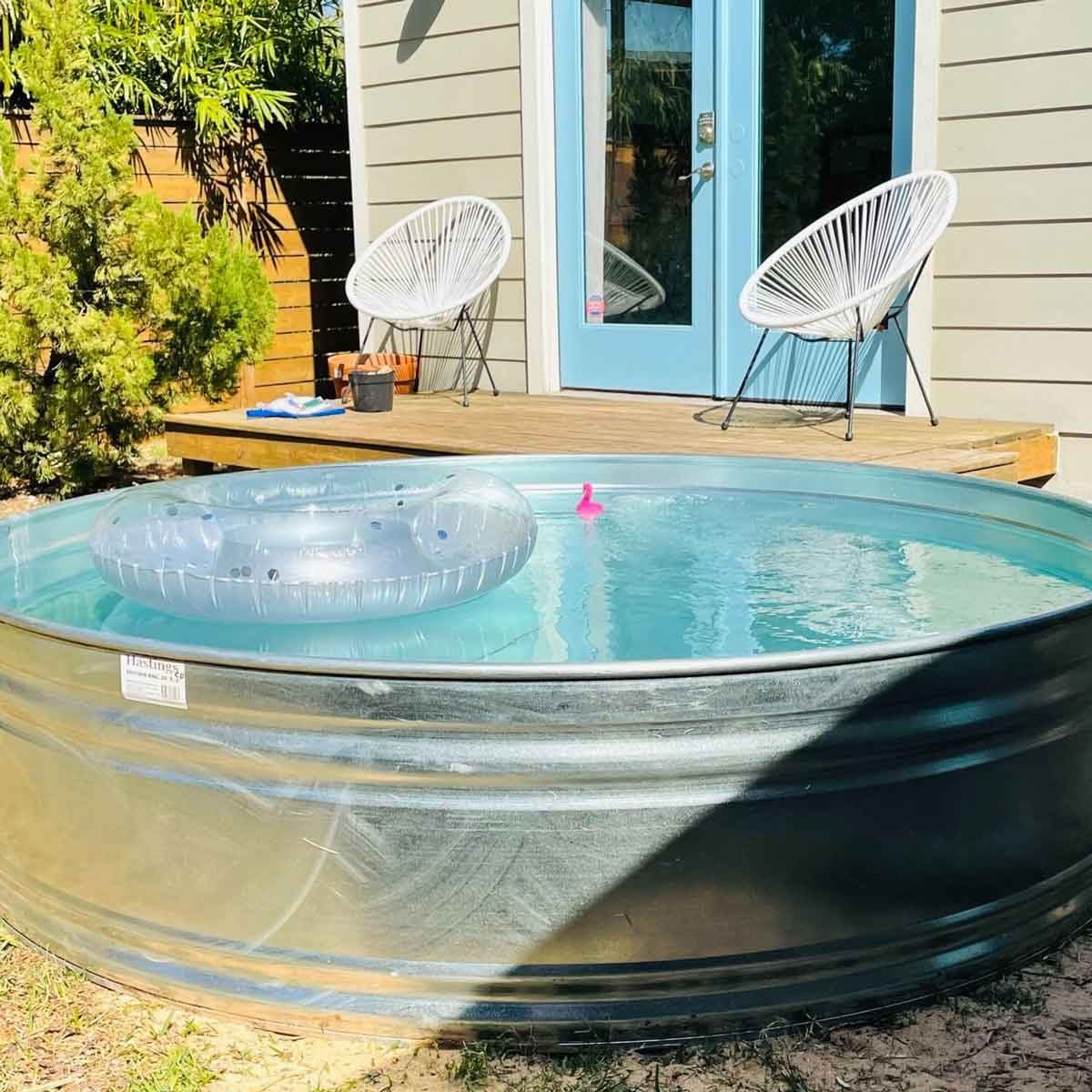
A stock tank pool is what happens when practical farm equipment gets a backyard makeover and discovers it looks excellent beside a striped umbrella. Originally designed to hold drinking water for livestock, these sturdy containers have become popular small-pool alternatives because they are compact, relatively affordable, quick to install, and easy to style.
The concept is simple, but a tank is not automatically a safe swimming pool because it contains hose water. A dependable setup needs level ground, filtration, balanced chemistry, safe electrical service, controlled access, and a drainage plan. This guide covers the enjoyable detailsand the unglamorous ones that keep your summer oasis from becoming a 700-gallon science experiment.
What Is a Stock Tank?
A stock tank is a large, open container used on farms and ranches to provide water for cattle, horses, sheep, and other animals. Most are made from galvanized steel or molded polyethylene, commonly called poly, and are sold in round, oval, or rectangular shapes.
For pool use, homeowners generally choose a tank about 2 feet deep. Round models measuring 6 to 8 feet across are popular for several seated adults, while narrow oval tanks suit one or two people, small patios, or cold plunges. An 8-foot tank is not a lap pool unless your stroke is “slowly rotate while holding lemonade,” but it offers plenty of room for soaking and cooling off.
A converted tank usually receives a pump, filter, return fittings, sanitizer dispenser, cover, and steps. It may stay rustic or be integrated into decking, wood cladding, privacy screens, gravel, and landscaping.
Why Are Stock Tank Pools Trending?
They occupy a useful middle ground between an inflatable kiddie pool and permanent pool construction. A compact tank can fit in an urban yard, courtyard, side garden, or modest patio without consuming the entire outdoor area. It is also durable, visually distinctive, and endlessly customizable.
Galvanized steel creates an instant farmhouse-industrial look. Black poly tanks can resemble modern plunge pools. Exterior paint, timber surrounds, bamboo screening, murals, pavers, umbrellas, and built-in benches can shift the mood from rustic ranch to boutique resort.
The tank may cost only a few hundred dollars, but a realistic budget includes delivery, site preparation, a pump and filter, plumbing fittings, test supplies, sanitizer, a cover, steps, and required barriers. Current U.S. estimates show that complete DIY projects can range from several hundred dollars to more than $1,000, depending on size and design.
Galvanized Steel vs. Plastic Stock Tanks
Galvanized Steel
Steel is the classic social-media choice. Its ribbed silver walls are rigid, stylish, and relatively easy to wipe clean. The drawback is corrosion. Chlorine, salt, scratches, trapped moisture, and incompatible fittings can shorten its life. Never let concentrated chlorine tablets rest directly against the metal, and avoid saltwater systems unless the manufacturer specifically approves them.
Polyethylene
Poly tanks are lighter, rustproof, and less conductive, so exposed walls are less likely to become painfully hot. They can be easier to move and may feel friendlier around children. However, some models require added support, textured surfaces can hold algae, and uneven ground may cause flexing.
Follow both the tank and pump manufacturers’ instructions before drilling. Retailers and builders do not all recommend the same conversion method, and modifying a tank may affect its warranty.
Understand the Full Water Weight
Water weighs about 8.34 pounds per gallon. A 700-gallon pool therefore holds roughly 5,838 pounds of water before adding the tank, equipment, steps, or swimmers. That charming backyard tub can weigh as much as a large vehicle.
Place it on firm, level groundnot an ordinary deck. A decked-in look can be built around the tank, but any supporting structure should be engineered for the total load. When in doubt, consult a qualified contractor instead of asking the deck to believe in itself.
How to Build a DIY Stock Tank Pool
1. Check Local Rules
Contact your building or zoning department and review HOA requirements. Local rules may cover permits, setbacks, barriers, alarms, electrical connections, drainage, and water disposal. A shallow DIY pool can still be regulated as a residential pool.
2. Choose and Prepare the Site
Select a well-drained area with safe access, suitable sun exposure, privacy, hose access, and compliant outdoor power. Remove grass, roots, rocks, and sharp debris. Compact the base and level it in several directions using an appropriate material such as compacted sand, crushed stone, pavers, or a professionally prepared slab. A sloping waterline is annoying; uneven wall pressure can be worse.
3. Plan Filtration Before Drilling
Many owners use a small above-ground pool pump and cartridge filter. Match the system to the tank volume and follow the manual. Pump conversions may require inlet and return holes, gaskets, bulkhead fittings, hoses, and valves. Measure repeatedly: galvanized steel is famously uninterested in your apology.
4. Install Compatible Fittings
Use pool-appropriate components and waterproof materials compatible with the tank. Let sealants or coatings cure fully. A product described as “water-resistant” is not automatically approved for continuous immersion or swimmer contact.
5. Fill in Stages
Add a few inches of water, then inspect for leaks, shifting, bulging, and an uneven waterline. Correct problems before filling completely. Run the pump and inspect every connection. Do not power it with an improvised household extension cord.
Filtration, Chlorine, and Routine Care
Standing water can grow algae, collect debris, support germs, and attract mosquitoes. A filter removes particles and keeps water moving, but filtration does not replace sanitation.
The CDC recommends pool water with a pH of 7.0 to 7.8 and at least 1 part per million of free chlorine. When cyanuric acid or stabilized chlorine is used, the recommended minimum is 2 ppm. Follow product labels because chemistry changes quickly in a small volume, especially after heavy use, rain, refilling, or hot weather.
Basic Maintenance Checklist
- Skim leaves, insects, grass, and other debris.
- Run the pump according to its flow rate and instructions.
- Clean or replace the filter cartridge as directed.
- Brush the walls and clean the floor before buildup becomes slippery.
- Test chlorine and pH regularly, then make measured adjustments.
- Cover the pool when unused, while remembering that a cover does not replace a barrier.
- Inspect metal for scratches, oxidation, rust, or coating failure.
Never mix pool chemicals. Store them closed, dry, ventilated, and away from children. More sanitizer is not “extra clean”; it can irritate swimmers, damage equipment, and accelerate corrosion.
Stock Tank Pool Safety
A stock tank pool may look casual, but any accessible water can be dangerous to children. Use layers of protection: active adult supervision, a four-sided barrier, a self-closing and self-latching gate, appropriate alarms, and a safety cover where suitable. Remove or secure access steps when the pool is unattended. Keep rescue equipment and a phone nearby, and ensure caregivers know CPR.
Never allow diving. Discourage standing on the rim, rough play, glass containers, or electrical devices near the water. Steps should be stable and slip-resistant. Pets need supervision too; not every dog is a lifeguard, despite strong personal branding.
Pool equipment should be rated for outdoor and pool use, connected through properly installed ground-fault circuit-interrupter protection, and positioned according to local codes and manufacturer instructions. Hire a licensed electrician when new wiring is needed.
Common Problems and Practical Fixes
Rust
Keep water balanced, use compatible fittings, prevent chlorine tablets from touching metal, and repair finish damage early. Salt is especially aggressive toward galvanized steel.
Cloudy or Green Water
Test before adding chemicals. Remove debris, clean the filter, brush surfaces, restore circulation, and adjust chemistry according to product directions.
Hot Surfaces
Exposed metal can heat in direct sun. Add properly secured shade and check the rim before children enter. Never let anyone swim under a cover.
Leaking Fittings
Drain below the leak, dry the area, and reinstall the fitting according to its instructions. Common causes include twisted gaskets, poor hole placement, overtightening, and incompatible sealantnot a shortage of decorative silicone.
Stock Tank Pool Design Ideas
Treat the pool area as an outdoor room. Create a clean landing zone with pavers, gravel, or properly designed decking. Add stable steps, shade, weather-resistant seating, towel hooks, low-voltage outdoor lighting, and plants that tolerate splashing.
For a modern look, use a black poly tank or a properly prepared exterior coating. For a resort mood, combine warm wood, striped textiles, large planters, and a privacy screen. Keep plumbing accessible; a beautiful pump enclosure loses its charm when it must be demolished to clean the filter.
Is a Stock Tank Pool Right for You?
It is a strong choice for people who want a compact soaking pool, have a secure and level yard, accept regular water testing, and prefer a manageable DIY project. It is less suitable for lap swimming, diving, large parties, unstable ground, unsupervised children, or anyone expecting maintenance-free water.
Think “small above-ground pool,” not “farm container with magical immunity to biology and building codes.” That expectation leads to a safer, cleaner, and longer-lasting result.
Real-World Stock Tank Pool Experience: Lessons From a Backyard Season
The first surprise is how much of the project happens before the tank arrives. It is tempting to focus on paint, floats, and whether the umbrella should say “Palm Springs” or merely imply it. In practice, the base decides whether the finished pool feels polished or permanently irritating. A tank that is slightly off-level creates a crooked waterline you will notice every day. Worse, uneven support can stress the vessel and fittings. Spending another afternoon compacting and checking the pad is better than draining hundreds of gallons later.
Delivery also deserves a real plan. An 8-foot tank may not be extremely heavy when empty, but it is wide, awkward, and talented at catching wind. Measure gates, side passages, tree clearances, and the route from the street. Recruit enough helpers and choose the resting spot before unloading. “We’ll figure it out when the truck gets here” is how neighbors receive free live theater.
Once the pool is running, a pump and cover quickly prove their value. Without circulation, clear water can become dull or slippery faster than expected in hot weather. The filter collects surprising amounts of pollen, dust, hair, and tiny insects. A cover reduces the daily leaf harvest, although securing it and removing rainwater become chores of their own. Windy weather also tests every loose cover, umbrella, towel, and inflatable object, so secure accessories before the backyard begins mailing them to neighboring ZIP codes. A five-minute inspection works well: skim the surface, check pump flow, look at the fittings, and test the water when scheduled.
Chemistry rewards restraint. Because the volume is small, careless doses create large swings. Calculate the tank’s actual capacity, read labels, and use test results instead of copying an online “one handful every Tuesday” routine. A floating dispenser helps keep tablets away from metal, but it still needs careful adjustment and secure storage when children are present.
Comfort upgrades matter more than flashy decorations. Stable steps, shade, towel hooks, and a landing surface that does not become mud after every splash improve the experience more than a flock of novelty floats. Keep added rim padding clean, and do not create an easy climbing feature that gives children unsupervised access.
End-of-season draining requires thought too. Decide where the water will go, follow local rules, allow sanitizer to fall to an acceptable level when required, and prevent erosion or flooding. Clean and dry the tank, service the filter, inspect for corrosion or cracks, and store small fittings somewhere safer than the mysterious dimension occupied by missing garden gloves.
The larger lesson is that a stock tank pool rewards modest expectations and consistent care. It will not replace a conventional swimming pool, but it can transform a backyard. Friends linger longer, children invent aquatic kingdoms, adults discover the joy of shoulder-deep conversation, and whoever holds the skimmer becomes official pool staff. When the setup is level, filtered, sanitized, and secured, the trend makes practical sense: it delivers a lot of summer pleasure in a surprisingly small circle.
Conclusion
A stock tank pool turns durable agricultural equipment into a compact backyard retreat, but the successful version is more than a tank and a hose. Choose the right material, prepare a level load-bearing base, install compatible filtration, maintain safe chemistry, plan drainage, and use real pool barriers and supervision. Do that well, and your DIY pool can remain refreshing, stylish, and pleasantly low on drama.