If aliens ever park a shimmering saucer beside Earth and ask, “So, tiny carbon neighbors, how do you explore a solar system without instantly crashing into everything?” humanity has a surprisingly impressive answer. We may still lose socks in the dryer, argue about pizza toppings, and name robots things like Ingenuity and Perseverance, but when it comes to probing the solar system, human beings have learned a few hard-won lessons.
Solar system exploration is not just about flinging shiny hardware into the dark and hoping gravity feels generous. It is a disciplined blend of physics, patience, robotics, chemistry, planetary science, communication engineering, and the emotional stamina to wait years for a spacecraft to phone home with a blurry-but-glorious image of a rock. From Mars rovers and asteroid sample return missions to Jupiter flybys, Saturn orbiters, solar probes, and deep-space communication networks, humans have built a practical handbook for exploring worlds we cannot yet visit in person.
So, dear hypothetical aliens, pull up a plasma chair. Here is what humanity can teach you about probing the solar system without turning every mission into a very expensive meteor.
Lesson 1: Start Close, Then Get Ambitious
Human solar system exploration began with a simple rule: do not try to swallow the universe in one bite. Early probes targeted the Moon, Venus, Mars, and Mercury because they were close enough to reach with developing technology and strange enough to teach us something new. That step-by-step approach built the foundation for robotic space exploration.
Mariner 10, for example, taught humans how powerful gravity assists could be. By using Venus to bend its trajectory, the spacecraft reached Mercury and became the first mission to visit two planets in one journey. That is the spaceflight equivalent of using a grocery store coupon and somehow getting a free telescope.
Later missions became bolder. MESSENGER orbited Mercury and studied its geology, magnetic field, and chemical composition. Mars missions evolved from flybys to orbiters, landers, rovers, helicopters, and sample-caching campaigns. By the time humans sent New Horizons to Pluto and the Kuiper Belt, we had learned that patience is not just a virtue; it is mission architecture.
Lesson 2: Use Robots First, Because Robots Do Not Complain About Snacks
Aliens with soft biological bodiesor awkward tentacles, no judgmentshould appreciate this: robots are excellent scouts. They do not need breathable air, sandwiches, entertainment, or reassuring emails from mission control. They can roll across Mars, dive into Saturn, orbit Mercury, buzz above Martian dust, or skim the Sun’s atmosphere while humans safely panic from a control room.
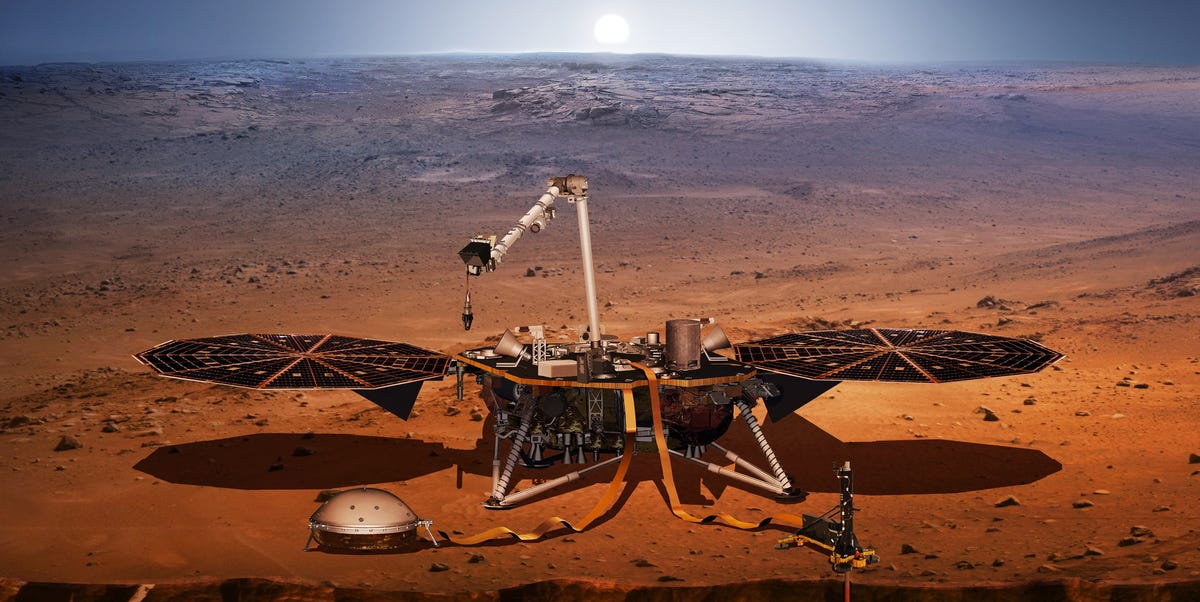
Mars rovers show this beautifully. Curiosity has studied ancient environments in Gale Crater to understand whether Mars once had conditions suitable for microbial life. Perseverance is exploring Jezero Crater, searching for signs of ancient life and collecting rock and regolith samples for possible return to Earth. These rovers are not tourists; they are mobile laboratories with cameras, drills, spectrometers, weather stations, and the stubborn personality of a very expensive mountain goat.
Ingenuity added another lesson: test new mobility in small steps. Designed as a technology demonstration, the Mars helicopter completed 72 flights, proving powered, controlled flight was possible in Mars’ thin atmosphere. That success now influences future concepts, including more capable aerial explorers. In plain English: humanity brought a tiny helicopter to another planet, and it worked. Somewhere, the Wright brothers are high-fiving in physics heaven.
Lesson 3: Let Gravity Do Some of the Heavy Lifting
One of humanity’s finest tricks is using planets as cosmic slingshots. Gravity assists allow spacecraft to gain speed, change direction, and reach destinations that would otherwise require impossible amounts of fuel. This is not cheating. It is celestial budgeting.
The Voyager missions used a rare planetary alignment to fly past the outer planets. Voyager 1 visited Jupiter and Saturn before heading into interstellar space. Voyager 2 flew by Jupiter, Saturn, Uranus, and Neptune, giving humans their only close-up spacecraft views of Uranus and Neptune so far. Decades later, the twin Voyagers continue to demonstrate another key principle: build spacecraft tougher than your expectations.
New Horizons also used a gravity assist from Jupiter to speed toward Pluto. After its historic Pluto flyby, it continued into the Kuiper Belt, proving that a well-designed probe can keep doing science long after the headline moment has passed. Aliens should write that down: always plan for the bonus round.
Lesson 4: Explore Many Kinds of Worlds
Humans have learned that the solar system is not a neat set of “planet balls.” It is a chaotic museum of deserts, volcanoes, ice shells, methane lakes, magnetic storms, ancient asteroids, dusty comets, dwarf planets, ring systems, and moons that may be more interesting than the planets they orbit.
Cassini transformed our understanding of Saturn. It studied the planet, rings, and moons for more than a decade. Its discoveries included liquid methane seas on Titan and strong evidence for a global ocean beneath Enceladus, with indications of hydrothermal activity. That changed how scientists think about habitability. A world does not need palm trees and beach weather to be worth studying. Sometimes the most exciting place is an icy moon spraying clues into space like a cosmic sprinkler.
Europa Clipper follows that same logic. It is designed to study Jupiter’s moon Europa, where a subsurface ocean may hold conditions suitable for life. The spacecraft will orbit Jupiter and perform repeated flybys of Europa, using instruments to examine the ice shell, composition, geology, and possible habitability. The mission is not expected to scoop up alien fish, but it may tell us whether Europa has the ingredients life needs.
Lesson 5: Bring Pieces Home When You Can
Remote sensing is powerful, but sometimes science wants the actual stuff. That is where sample return missions become priceless. They allow laboratories on Earth to study extraterrestrial material with instruments far too large, delicate, or power-hungry to send into space.
OSIRIS-REx visited the near-Earth asteroid Bennu, collected material from its surface, and returned the sample to Earth in 2023. Early analysis showed carbon-rich material and water-bearing minerals, making Bennu a time capsule from the early solar system. For aliens, the lesson is simple: if you want to understand planetary formation, do not just photograph the crumbs. Bring home the crumbs.
Sample return also teaches humility. Bennu’s surface was more rugged than expected, forcing mission teams to adapt. That is a recurring theme in space exploration. The solar system does not read mission proposals. It reveals itself on its own terms, usually while engineers are drinking coffee and saying, “That was not in the simulation.”
Lesson 6: Protect the Worlds You Visit
Human beings have learned that probing the solar system comes with responsibility. Planetary protection is the idea that missions should avoid contaminating other worlds with Earth life and should protect Earth from potential harmful contamination when returning samples. This matters scientifically and ethically.
If a spacecraft carries microbes to Mars or Europa, it could confuse future life-detection experiments. Imagine aliens visiting Earth, dropping space mold into Yellowstone, then proudly announcing they discovered alien biology. Rude. Also bad science.
Planetary protection guidelines shape how spacecraft are cleaned, where they are allowed to land, and how samples are handled. The more a world may support life, the more careful explorers must be. For any alien civilization planning solar system exploration, this may be the most important rule: do not ruin the mystery before you solve it.
Lesson 7: Build Communication Before You Need It
A probe that cannot communicate is basically a very expensive bottle thrown into the cosmic ocean. Humanity’s Deep Space Network is one of the unsung heroes of solar system exploration. With giant radio antennas placed around Earth, the network sends commands to distant spacecraft and receives faint signals from missions across the solar system.
Deep-space communication is not instant. Signals take minutes to reach Mars, hours to reach the outer planets, and much longer for spacecraft near the edge of the solar system. That delay forces probes to be partly autonomous. They must protect themselves, manage power, aim instruments, and sometimes wait calmly while Earth catches up.
Aliens may have faster methods, perhaps quantum whispering or polite wormholes, but the human lesson still applies: exploration depends on infrastructure. The probe is only one part of the mission. The antennas, software, navigation teams, power systems, data archives, and mission planners are the invisible skeleton holding the adventure together.
Lesson 8: Study the Sun Like Your Whole Neighborhood Depends on It
Human beings learned that probing planets is not enough. The Sun controls space weather, energizes atmospheres, shapes magnetic environments, and occasionally throws tantrums that can affect satellites, power grids, and astronauts. So humanity sent Parker Solar Probe closer to the Sun than any previous spacecraft.
Parker Solar Probe uses a heat shield and repeated gravity assists from Venus to study the solar corona, solar wind, and energetic particles. At closest approach, it travels at astonishing speed through brutal radiation and heat. This is the spacecraft version of walking into a dragon’s mouth with a thermometer and a clipboard.
The lesson for aliens is practical: understand the star first. Every planet, moon, asteroid, and comet exists inside a stellar environment. A solar system is not just objects orbiting a star; it is a star-powered machine.
Lesson 9: Expect Missions to Outgrow Their Original Job Description
Some of humanity’s best discoveries came from missions that exceeded their planned lifetimes. Cassini continued after its primary mission. The Mars rovers repeatedly outlived expectations. Voyager became an interstellar mission. New Horizons continued beyond Pluto. Spacecraft often become wiser with age, assuming their power systems, reaction wheels, transmitters, and software continue cooperating.
This teaches an important planning strategy: design for the official mission, but leave room for surprise. Extra fuel, flexible software, robust instruments, and creative operations can turn a good mission into a legendary one.
Aliens should also note that old spacecraft become emotional objects for humans. We treat them like distant relatives. When a probe wakes up after a communication problem, we cheer. When a mission ends, we mourn. This may seem irrational, but it motivates careful stewardship. Besides, if you send a robot to another world and it survives dust storms, radiation, freezing nights, and budget meetings, it deserves respect.
Lesson 10: Curiosity Is a Strategy, Not Just a Mood
Human solar system exploration is driven by questions. Was Mars ever habitable? Do ocean worlds like Europa and Enceladus have the chemistry life needs? How did the planets form? What can asteroids reveal about early solar system materials? How does the Sun shape space weather? What can Mercury, Venus, Mars, and the outer planets tell us about Earth?
Good probing begins with good questions. A spacecraft is not successful just because it arrives. It succeeds when its instruments, trajectory, and operations are designed around meaningful scientific goals.
That is why missions differ so much. A rover crawls slowly because geology rewards close inspection. A flyby races past because distant worlds may be reachable only through speed and precision. An orbiter maps patterns over time. A lander touches one place deeply. A sample return mission brings a physical archive home. A solar probe dives into danger because some data can only be collected in the furnace.
Experience Notes: What We Would Tell Alien Explorers Before Launch
If humanity could sit across from alien mission designers, we would probably begin with a confession: space exploration looks glamorous from the outside, but most of it is waiting, checking, recalculating, and trying not to spill coffee near mission-critical hardware. The dramatic flyby image is only the final sparkle on years of careful work.
First, we would tell them to respect distance. Distances in the solar system are emotionally unreasonable. Mars may look close in posters, but commands still take minutes to arrive. Jupiter is so far away that a spacecraft must become a long-distance pen pal. Pluto is not “just over there”; it is a commitment. The experience of exploring our solar system has taught humans that every mission is a relationship with time.
Second, we would tell them to love redundancy. Space does not offer repair shops between Earth and Saturn. If a valve sticks, a wheel wears down, a camera heater fails, or a computer resets at the worst possible moment, the spacecraft needs backup options. Human engineers design fault protection systems, duplicate components, safe modes, and recovery procedures because deep space is magnificent but not customer-friendly.
Third, we would tell them to listen to small data. A faint radio signal from Voyager, a mineral signature from a Martian rock, a temperature reading from a moon, or a subtle wobble in a spacecraft’s motion can rewrite textbooks. Solar system probing is not always about fireworks. Often it is about noticing that one tiny measurement does not match the old story.
Fourth, we would recommend patience with planetary personalities. Mars is dusty. Venus is hostile. Mercury is sun-blasted. Jupiter is a radiation bully. Saturn is elegant but complicated. Titan hides its surface beneath haze. Asteroids may look like potatoes and behave like rubble piles. The solar system has range.
Finally, we would tell aliens that exploration changes the explorers. Humans once imagined Mars as a world of canals, Venus as a jungle, and Pluto as a tiny frozen footnote. Probes corrected us. They made the solar system stranger, richer, and more beautiful than our guesses. That may be the greatest lesson humanity can teach: send the probe not to prove you were right, but to discover how wonderfully wrong you were.
Conclusion: Humanity’s Solar System Playbook for Aliens
What can human beings teach aliens about probing the solar system? More than our messy species might appear capable of at first glance. We have learned to use gravity as a tool, robots as scouts, samples as time capsules, communication networks as lifelines, and planetary protection as a scientific conscience. We have explored Mars with wheels and rotors, studied Saturn with orbiters, touched asteroid history with sample return missions, skimmed the Sun with heat-shielded courage, and sent spacecraft so far away they now speak to us from beyond the planets.
Humanity’s greatest lesson is not that we know everything. We absolutely do not. Our maps still have blank spaces, our theories keep evolving, and our spacecraft occasionally remind us that the universe has a mischievous sense of humor. The real lesson is that curiosity, patience, engineering, and humility can turn a small world into a solar system explorer.
So if aliens ever ask for advice, we should offer them this: build carefully, ask brave questions, protect the places you visit, expect surprises, and never underestimate a small probe with a good antenna and a stubborn team back home.