A home gym should make exercising more convenientnot turn every workout into a scavenger hunt for the missing resistance band. Yet dumbbells migrate under benches, yoga mats unroll themselves across the floor, and jump ropes develop an impressive talent for tangling around everything they touch.
A mobile home gym storage caddie brings all that unruly equipment together in one compact station. With multiple shelves, vertical compartments, accessory hooks, and locking wheels, it can hold the gear you use most while keeping valuable workout space clear. Better still, a well-designed DIY caddie can be customized for your equipment instead of forcing your equipment to fit a generic storage rack.
The idea builds on practical storage principles recommended by home-improvement and organization experts: keep frequently used gear accessible, move heavy objects off walking paths, use vertical space intelligently, and choose mobile storage when one room serves several purposes.
Why Home Gym Clutter Becomes a Bigger Problem Than Expected
Most home gyms do not become messy because their owners are hopelessly disorganized. They become messy because exercise equipment comes in shapes that apparently were designed during a committee meeting nobody attended.
Dumbbells are dense and heavy. Foam rollers are light but bulky. Resistance bands are flexible enough to fall behind furniture. Yoga mats refuse to stand upright without support. Smaller accessorieslifting straps, sliders, collars, massage balls, gloves, and heart-rate monitorsvanish as soon as they are placed on an open shelf.
The result is usually a collection of separate storage attempts: a basket for bands, a rack for weights, a corner for mats, and a bench covered with everything else. Each solution works individually, but together they consume more room and create more visual clutter.
Floor clutter is also a practical safety issue. Clear pathways make a workout area easier to navigate, particularly when carrying weights or moving quickly between exercises. Accessible-home-gym guidance recommends reachable storage, nonslip surfaces, and unobstructed routes between equipment.
What Makes a Home Gym Storage Caddie So Useful?
It Creates One Home for Everyday Equipment
A storage caddie works best as a centralized station for the accessories used in regular workouts. Instead of walking around the room collecting equipment, you can roll the cart into position and begin.
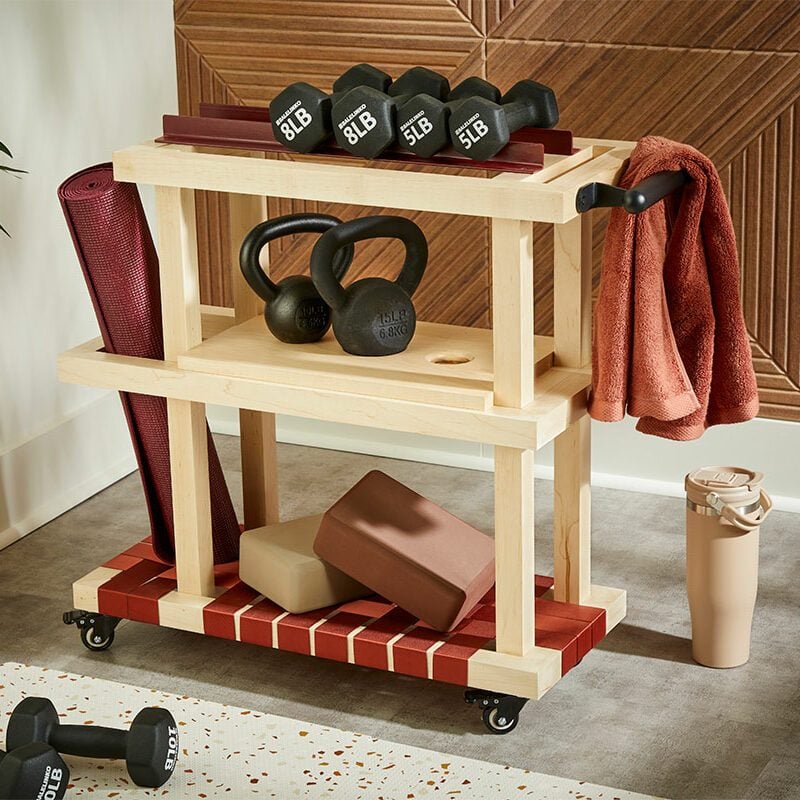
The bottom shelf can carry dumbbells and kettlebells. A middle shelf can hold yoga blocks, medicine balls, ankle weights, or cycling shoes. The upper section can organize towels, gloves, headphones, and cleaning supplies. Narrow vertical bays can support rolled mats and foam rollers, while hooks keep bands and ropes separated.
It Moves Instead of Making You Rearrange the Room
Mobility matters in a spare bedroom, basement, office, or shared garage. A rolling caddie can be parked against a wall between workouts and moved beside a mat or bench when needed. Commercial fitness carts use the same basic approach, combining a compact footprint with casters, shelves, hooks, and compartments for different equipment types.
It Makes Cleanup Almost Automatic
Organization systems fail when putting something away requires too many decisions. A successful caddie gives every item an obvious destination. The kettlebell goes on the reinforced bottom shelf. The bands hang from hooks. The mat slides into its vertical bay. Cleanup becomes a two-minute reset rather than a weekend archaeological expedition.
Plan the Caddie Around Your Actual Workout Gear
Before buying lumber or reaching dramatically for a power tool, take inventory. Place all the equipment you want to store in one area and divide it into four groups:
- Heavy equipment: dumbbells, kettlebells, weight plates, and medicine balls.
- Tall or rolled equipment: yoga mats, foam rollers, massage sticks, and mobility poles.
- Hanging equipment: resistance bands, jump ropes, belts, straps, and cable attachments.
- Small accessories: gloves, collars, sliders, towels, chalk, and cleaning products.
Measure the largest items instead of estimating. A caddie that is one inch too narrow for your favorite mat will remind you of that mistake every day. Also consider future purchases. Leaving one open hook or an extra few inches of shelf width costs little during construction and can prevent another storage problem later.
For a typical collection of compact home gym equipment, a caddie approximately 30 inches wide, 18 inches deep, and 30 to 36 inches tall provides useful capacity without dominating the room. Treat those numbers as a starting point, not sacred geometry. A narrow apartment version may be only 12 inches deep, while a garage version can be wider and more heavily reinforced.
The Anatomy of an Effective Three-Tier Gym Caddie
A Strong, Low Base
The lowest shelf should carry the heaviest equipment. Keeping dense objects close to the floor lowers the center of gravity and reduces the chance of tipping. It also prevents you from lifting a heavy kettlebell down from shoulder height, which is a surprisingly energetic way to begin the wrong kind of workout.
Use three-quarter-inch plywood or sturdy solid lumber for the base. Add support rails or a center brace if the shelf will carry several pairs of dumbbells. A rubber liner can reduce noise, protect the finish, and keep round equipment from shifting.
A Flexible Middle Shelf
The middle tier should handle medium-size items that change with your routine. Adjustable shelf pins offer maximum flexibility, but a fixed shelf is simpler and stronger. Open-front shelves are generally more convenient than deep cabinets because the contents remain visible and easy to reach.
Professional storage guidance often recommends placing heavy items low and using baskets or labeled containers for smaller accessories. Open storage also makes it easier to notice when something has been returned to the wrong place.
Vertical Compartments for Mats and Rollers
A tall side compartment solves the awkward-cylinder problem. Install one or two dividers to create upright bays for yoga mats, foam rollers, mobility sticks, or rolled exercise towels. The compartment should support the lower portion of each item while leaving enough height above it for easy removal.
A retaining rail or elastic cord across the open side can keep tall items from leaning into the room. Avoid making the compartment too tight; foam rollers are not known for their cooperation when wedged together.
Hooks and Small-Item Storage
Hooks make excellent use of the caddie’s side panels. Use them for bands, jump ropes, lifting belts, suspension straps, and headphones. Space the hooks far enough apart that accessories can be removed individually without dragging three neighbors along for the adventure.
A shallow tray or removable bin on top can contain small items. A divided container is particularly useful for barbell collars, massage balls, grip trainers, fitness trackers, and earbuds.
Locking Casters Built for the Load
Choose casters only after estimating the total loaded weight of the cart. Add the weight of the wooden caddie itself, then include every dumbbell, kettlebell, and accessory it may carry. Select casters whose combined rating exceeds that figure by a comfortable margin.
Plate-mount casters are commonly used for mobile workstations because their broad mounting plates provide secure attachment and are available in higher-capacity and locking configurations. Larger wheels roll more easily across mats and uneven thresholds, while smaller wheels maintain a lower center of gravity. Soft rubber or polyurethane wheels are generally friendlier to interior flooring.
Recommended Materials and Tools
A straightforward plywood caddie can be built with commonly available materials:
- One sheet of three-quarter-inch cabinet-grade plywood
- Wood glue
- Wood screws or pocket-hole screws
- Four plate-mount swivel casters, including at least two locking models
- Utility hooks or short pegs
- Rubber shelf liner
- Sandpaper in medium and fine grits
- Paint, polyurethane, or another durable finish
- Optional bins, labels, elastic cord, and edge banding
Useful tools include a circular saw with a straightedge guide or a table saw, a drill/driver, a tape measure, a square, clamps, and a sander. Wear appropriate eye, hearing, and respiratory protection, and follow the operating instructions for every tool.
How to Build the Home Gym Storage Caddie
Step 1: Draw the Layout
Sketch the caddie from the front and side. Mark the dimensions of the base, side panels, shelves, vertical dividers, and caster locations. Assign each compartment to actual equipment before finalizing the drawing.
Step 2: Cut and Label the Panels
Cut the plywood pieces carefully and label them immediately. Marking “left side,” “middle shelf,” and “mat divider” may feel unnecessary until several nearly identical rectangles are leaning against the wall plotting against you.
Step 3: Assemble the Base and Sides
Apply wood glue along the joints and secure the side panels to the base. Check for square before tightening the fasteners. A frame that begins out of square rarely experiences a sudden moral awakening later.
Step 4: Install the Shelves
Position the lowest weight shelf first, reinforcing it with support strips when necessary. Add the middle and upper shelves while repeatedly checking the spacing against your equipment.
Step 5: Add Vertical Dividers
Install the mat and foam-roller dividers. Test the opening with the largest rolled item before permanently fastening the final divider.
Step 6: Attach Hooks and Accessory Holders
Lay the caddie on its side and arrange the hooks before drilling. Make sure long bands and ropes will not hang low enough to catch beneath the wheels.
Step 7: Install the Casters
Reinforce the underside where necessary, mark the mounting holes, and install each caster with suitable fasteners. Position the brakes where they can be reached easily with a foot. Once upright, engage the locks and test the cart before adding equipment.
Step 8: Sand, Finish, and Load Gradually
Round sharp corners, smooth the surfaces, and apply a durable finish. After it cures, load the heaviest equipment first. Check for shelf flex, loose fasteners, unstable movement, or tipping before filling the upper compartments.
How to Organize the Finished Caddie
Build a Strength-Training Zone
Place dumbbells and kettlebells on the bottom shelf, arranging the heaviest pieces near the center. Store collars, straps, and gloves directly above them. This creates a logical strength-training zone and reduces unnecessary lifting.
Create a Mobility and Recovery Zone
Use the vertical compartments for mats, foam rollers, and massage sticks. Place yoga blocks, sliders, and mobility balls in a nearby bin. Keeping related items together makes it easier to transition from training to cooldown instead of collapsing on the floor and promising to stretch tomorrow.
Keep Cardio Accessories Ready
Hang jump ropes and resistance bands on separate hooks. Store a clean towel, water bottle, and headphones on the top shelf. Frequently used equipment should remain easiest to see and reach, while occasional accessories can occupy lower-priority compartments.
Safety and Maintenance Rules That Matter
- Keep the heaviest equipment on the lowest shelf.
- Lock the casters before removing weights or beginning a workout.
- Do not exceed the rated capacity of shelves, hooks, or wheels.
- Keep bands and ropes from trailing onto the floor.
- Inspect fasteners, shelf joints, and casters regularly.
- Keep heavy equipment inaccessible to unsupervised children.
- Do not use the caddie as a seat, step stool, or exercise platform.
Clean high-touch equipment after use and allow it to dry before returning it to enclosed bins. The CDC advises cleaning shared athletic equipment after use, following manufacturer instructions, and replacing items with damaged surfaces that cannot be cleaned adequately. Regular cleaning normally begins with a compatible soap or detergent; stronger disinfectants should be used according to their labels and required contact times.
Smart Variations for Different Home Gyms
For an apartment: Build a narrower cart with quiet, nonmarking wheels. Focus on bands, a mat, light dumbbells, and recovery tools rather than large weight sets.
For a garage gym: Use moisture-resistant plywood, a durable finish, larger casters, and additional reinforcement. Include a closed bin to protect fabric accessories from dust.
For yoga and Pilates: Expand the vertical section and reduce the heavy-weight shelf. Add cubbies for blocks, straps, towels, rings, and small balls.
For family use: Assign labeled compartments to each person. Keep adult weights low but secured, and reserve upper bins for lighter accessories.
For an evolving gym: Use adjustable shelves, removable dividers, slotted side rails, or pegboard panels. Storage specialists consistently favor adaptable systems because exercise collections rarely remain exactly the same.
Conclusion: A Small Project That Makes the Whole Gym Work Better
A home gym storage caddie does more than hide clutter. It shortens setup time, creates safer walking space, protects equipment, and makes the room feel ready for exercise. Because the design is mobile and customizable, it can serve a garage filled with weights, a compact apartment workout corner, or anything in between.
The most successful version is not necessarily the largest or fanciest. It is the one designed around your habits. Put heavy gear low, daily accessories within reach, rolled items upright, and loose equipment on dedicated hooks. Add correctly rated locking casters, test the structure carefully, and leave room for your fitness routine to grow.
Once everything has a home, the gym stops looking like a sporting-goods store after a minor earthquake. More importantly, there is one less obstacle between you and the workout you intended to start 20 minutes ago.
Real-World Experience: What Changes After You Start Using a Gym Caddie
The biggest improvement often appears before the first exercise begins. Consider a realistic home gym shared by two adults in a spare bedroom. Their equipment includes adjustable dumbbells, two kettlebells, several resistance bands, a yoga mat, a foam roller, ankle weights, blocks, sliders, and a jump rope. Before adding a caddie, the heavier gear sits beside a dresser while everything else lives in three unrelated baskets.
Preparing for a workout means moving a basket, searching for the correct band, and untangling the jump rope from a set of ankle weights. None of these tasks is especially difficult, but together they create friction. On a busy evening, five minutes of preparation can be enough to turn “I’ll exercise now” into “I’ll definitely exercise tomorrow.” Tomorrow, as history has documented, is an extremely busy day.
During the first week with a caddie, the immediate advantage is visibility. The bands hang separately, so their resistance levels can be identified at a glance. The yoga mat and foam roller remain upright instead of leaning against the wall. The weights sit on the reinforced lower shelf, where they no longer threaten the hardwood floor or anyone’s toes.
The cart is normally parked beside the closet. For strength sessions, it rolls next to the bench. For yoga, it moves toward the center of the room, placing the mat, blocks, and strap within arm’s reach. Because two casters lock, the caddie stays in place when a kettlebell is removed. After the workout, everything returns to the same location and the cart rolls back against the wall.
By the second week, the users begin refining the setup. A small bin that originally held towels becomes the recovery compartment for massage balls and sliders. One hook is moved higher because a long resistance band was brushing the wheel. A rubber liner is added beneath the kettlebells to reduce noise. These small adjustments illustrate why a customizable caddie is more useful than a rigid storage unit: the organization can evolve through actual use.
Cleaning also becomes simpler. A microfiber cloth and equipment-safe cleaner stay in a top tray. High-touch items can be wiped down, allowed to dry, and returned without making a separate trip for supplies. The cart itself is easy to roll away when the floor needs vacuuming or mopping.
After a month, the room does not remain perfectly arranged every second. Real homes are inhabited by real people, and real people occasionally place a resistance band on the nearest available surface. The difference is that restoring order requires almost no thought. A quick end-of-session reset returns the room to normal.
That may be the caddie’s most valuable contribution. It does not create motivation through inspirational slogans or dramatic lighting. It quietly removes minor annoyances. Equipment becomes easier to find, workouts begin faster, and cleanup becomes less negotiable. The room feels less like a storage area that occasionally hosts exercise and more like a gym that happens to be at home.