Body horror is the movie genre that looks at the human body and says, “Interesting design. What if we made everyone deeply uncomfortable?” It is not horror built only around haunted houses, jump scares, or people making questionable basement decisions. Body horror is more intimate. It turns skin, identity, aging, technology, hunger, illness, beauty standards, and transformation into cinematic nightmares that crawl under the imagination and set up a tiny, rent-free apartment.
The best body horror movies are not just gross-out contests. Sure, they can be squirmy. Sometimes they make popcorn feel like a risky food choice. But the great ones use physical change as a metaphor for fear: fear of losing control, fear of becoming someone else, fear of being judged by your appearance, fear that your body is not really “yours” in the way you thought. That is why this subgenre has lasted for decades and keeps evolving, from practical-effects classics to stylish modern nightmares about fame, gender, appetite, and technology.
Below are seven great body horror movies that are hard to look away from, even when your survival instincts are politely suggesting you study the ceiling. Viewer discretion is wise: most of these films are intense, adult-oriented, and designed to unsettle. But for horror fans who appreciate sharp ideas with their shivers, these picks show why body horror remains one of cinema’s boldest, strangest, and most unforgettable corners.
What Makes a Great Body Horror Movie?
A strong body horror film usually does three things well. First, it makes the body feel uncertain. Something changes, mutates, malfunctions, or refuses to behave. Second, it connects that physical change to a deeper theme, such as obsession, desire, social pressure, technology, or identity. Third, it creates images you remember without needing to explain every detail. The best body horror does not simply ask, “Isn’t this disgusting?” It asks, “Why does this feel so personal?”
That is the secret ingredient. A monster in the woods can be scary, but a body you cannot trust? That is horror with a mirror attached.
1. The Fly (1986)
Why it is impossible to ignore
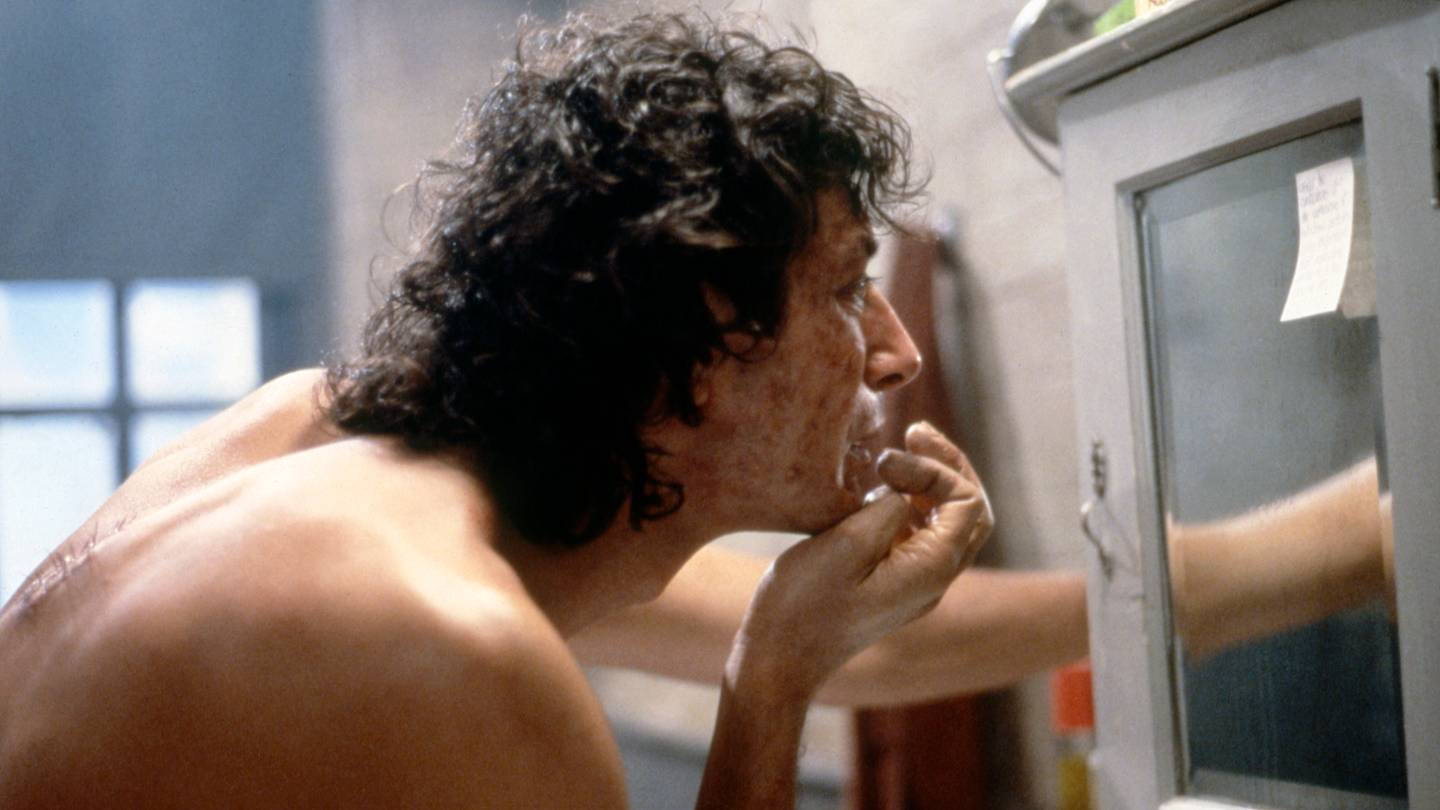
David Cronenberg’s The Fly is often treated as the crown jewel of body horror, and honestly, the crown fits. Jeff Goldblum plays Seth Brundle, a brilliant scientist whose teleportation experiment goes terribly wrong after a tiny biological complication enters the equation. What follows is not merely a monster movie. It is a tragic story about ambition, love, illness, ego, and the terrifying speed at which a person can become unrecognizable to himself.
The genius of The Fly is that it makes transformation emotional before it makes it shocking. Brundle is not just “turning into something.” He is losing language, tenderness, judgment, and connection. Geena Davis, as journalist Veronica Quaife, gives the film its aching human center. Her fear is not the cheap kind where someone screams because something jumped from the shadows. It is the harder fear of watching someone you care about disappear in slow motion.
For SEO-friendly horror fans searching for the best body horror movies, The Fly belongs near the top because it understands that physical change is most disturbing when it carries heartbreak. It is also a masterclass in practical effects, pacing, and restraint. Yes, the movie is intense, but its real sting is emotional. Consider it a romance with a laboratory, a cautionary tale with a telepod, and a reminder that science should always have a “maybe don’t do that today” button.
2. The Thing (1982)
Paranoia, isolation, and one very bad day in Antarctica
John Carpenter’s The Thing is body horror wearing a thick winter coat. Set at an isolated Antarctic research station, the film follows a group of men facing a shape-shifting alien that can imitate living beings. That premise alone is enough to make trust pack its bags and leave town. If anyone could be the threat, then every conversation becomes a test, every glance becomes suspicious, and every room feels too small.
The film’s practical creature effects are legendary, but what makes The Thing great is the psychological pressure. The body horror is not only about strange physical forms. It is about identity itself. If something can perfectly copy a person, what does “person” even mean? Is the body proof of selfhood, or just a costume with better lighting?
Kurt Russell’s MacReady gives the film its rugged, exhausted cool. He is the kind of character who looks like he could fix a helicopter, grill a steak, and distrust everyone in the room before breakfast. Carpenter keeps the mood cold, tense, and brutally efficient. There is no cozy safety net here. The movie’s dread comes from the suspicion that survival may require impossible choices.
As a body horror movie, The Thing remains essential because it combines physical terror with social breakdown. The scariest part is not only what the alien can become. It is what fear turns people into.
3. Videodrome (1983)
Media addiction before everyone had a screen in their pocket
Before smartphones made us all part-time screen goblins, David Cronenberg’s Videodrome imagined a world where media could invade the body and rewrite reality. James Woods stars as Max Renn, a cable television executive who discovers a mysterious broadcast that appears to blur the line between entertainment, hallucination, and physical transformation.
Videodrome is one of the smartest body horror movies because its fears have aged almost too well. The film asks what happens when people consume violent, extreme, or addictive media until their sense of self begins to bend. In the early 1980s, that idea felt like a nightmare about television. Today, it feels like a push notification with better lighting.
The movie is strange, philosophical, and proudly uncomfortable. Its body horror is tied to technology, desire, and control. Cronenberg does not treat the screen as a harmless window. He treats it as a living force, something that can change the viewer as much as the viewed. That makes Videodrome a must-watch for fans interested in body horror with big ideas and a weird little grin.
It is not a casual background movie. You do not fold laundry to Videodrome unless your laundry has signed a waiver. But if you want body horror that feels prophetic, stylish, and deeply odd in the best way, this one still has a signal worth tuning into.
4. Society (1989)
Class satire with a very strange party invitation
Brian Yuzna’s Society begins like a glossy teen mystery and slowly reveals itself as one of the wildest class satires in horror. The story follows a wealthy Beverly Hills teenager who suspects that his family and social circle are hiding something deeply wrong. He is correct. In fact, he may be underestimating the situation, which is impressive because paranoia is already doing push-ups in the corner.
What makes Society so memorable is its mix of social commentary, dark comedy, and practical effects. The film takes the phrase “the rich feed off the poor” and refuses to leave it as a metaphor. That is the whole mischievous engine of the movie. Beneath the expensive clothes, polished manners, and country-club smiles, the elite world in Society is revealed as something parasitic, absurd, and deeply inhuman.
Unlike the colder dread of The Thing or the tragic intimacy of The Fly, Society leans into satire. It is bizarre, sometimes goofy, and very aware that horror can be funny without becoming harmless. Its body horror has a carnival-mirror quality, stretching social anxiety into grotesque comedy. The result is a cult film that still feels relevant whenever wealth, privilege, and fake politeness start wearing matching sweaters.
If you enjoy horror movies that pair discomfort with a wicked sense of humor, Society deserves a spot on your watchlist. Just do not accept any mysterious invitations from people who describe networking as “family bonding.”
5. Raw (2016)
Coming of age, but make it extremely unsettling
Julia Ducournau’s Raw is a French coming-of-age body horror film about Justine, a vegetarian veterinary student whose first year at school awakens appetites she does not understand. On paper, that sounds like a campus drama took a wrong turn into the horror aisle. On screen, it becomes a sharp, controlled, and surprisingly emotional exploration of hunger, identity, family pressure, and the awkward terror of becoming an adult.
What separates Raw from simpler shock cinema is Ducournau’s precision. The film is not interested in random nastiness. It uses discomfort to examine how young people inherit expectations and secrets from families, schools, and social rituals. Justine’s transformation is frightening, but it also works as a metaphor for growing into desires that polite society would rather not discuss.
Raw is stylish without being empty, intense without being careless, and darkly funny in moments where you almost feel guilty for laughing. The veterinary-school setting adds a clever layer because the film constantly places human bodies next to animal bodies, asking where instinct ends and civilization begins. The answer, apparently, is “somewhere very inconvenient.”
For viewers looking for modern body horror movies with strong character work, Raw is essential. It proves that body horror can be intimate, intelligent, and emotionally messy in ways that feel painfully human.
6. Titane (2021)
A strange, tender engine of identity and transformation
After Raw, Julia Ducournau returned with Titane, a film that is difficult to summarize without sounding like you lost a bet with a film studies professor. It involves trauma, performance, machines, family, identity, and physical transformation, but its emotional core is surprisingly tender. Beneath the extreme premise is a story about loneliness and the desperate need to be accepted in a body, a role, and a life that may not feel stable.
Titane won the Palme d’Or at Cannes, which helped push modern body horror further into serious critical conversation. That matters because the film is not designed as a simple midnight-movie dare. It is bold, abrasive, and unpredictable, but it also cares about grief and connection. The body horror is not decoration. It is the film’s language for describing identity under pressure.
The movie’s power comes from contrast. One moment it is confrontational; the next it is quiet and wounded. Ducournau understands that shocking images only last when they are attached to emotional stakes. Titane may start with provocation, but it lingers because it finds strange compassion in places where most films would only chase chaos.
This is not the easiest recommendation on the list, but it is one of the most fascinating. If The Fly is body horror as tragedy and Videodrome is body horror as media theory, Titane is body horror as identity crisis with the volume turned up.
7. The Substance (2024)
Beauty standards, fame, aging, and the nightmare of “better”
Coralie Fargeat’s The Substance brought body horror roaring back into mainstream conversation with a sharp, satirical story about celebrity, aging, beauty culture, and self-punishment. Demi Moore plays Elisabeth Sparkle, a fading star pushed aside by an industry obsessed with youth. When she encounters a mysterious product promising a younger, “better” version of herself, the film turns that fantasy into a brutal critique of image culture.
What makes The Substance hit so hard is not just its intensity. It is the familiarity of its target. The movie takes the everyday pressure to look younger, thinner, smoother, brighter, fresher, more marketable, and more algorithm-friendly, then exaggerates it until the absurdity becomes impossible to ignore. It is body horror for the era of filters, fitness branding, and mirrors that apparently have personal grudges.
Demi Moore’s performance gives the film real emotional weight. She plays Elisabeth not as a shallow cautionary figure, but as someone shaped by a culture that rewards women for being visible and then punishes them for aging while visible. Margaret Qualley’s role sharpens the film’s split between image and self, turning the fantasy of reinvention into a nightmare of competition within one person’s life.
The Substance is stylish, angry, funny, and deliberately excessive. It is not subtle, but subtlety is not always the right tool for a world that sells insecurity in family-size packaging. For modern body horror fans, this film is a must-watch because it connects classic transformation horror with contemporary anxieties about beauty, fame, and the impossible demand to become your own replacement.
Why These 7 Body Horror Movies Still Matter
These seven films work because they understand that the body is never just the body. In horror, it becomes a battlefield for science, class, gender, desire, technology, illness, aging, and identity. The Fly makes transformation tragic. The Thing makes imitation terrifying. Videodrome turns media into infection. Society weaponizes class satire. Raw makes appetite a coming-of-age crisis. Titane bends identity into something strange and wounded. The Substance attacks the beauty industry with a smile sharp enough to cut glass.
Body horror movies are often remembered for their wildest images, but their staying power comes from the ideas underneath. We keep returning to them because they dramatize fears we already carry: changing too fast, aging too visibly, wanting too much, trusting too easily, or realizing that the world sees our bodies before it sees us.
That is why the best body horror movies are so hard to look away from. They are not just showing us monsters. They are showing us the uncomfortable possibility that the monster is a social rule, a personal insecurity, a technological habit, or a mirror we cannot stop checking.
Extra Experience: What It Feels Like to Watch Great Body Horror
Watching a great body horror movie is a very specific experience. It is not the same as watching a ghost story, where you can reassure yourself that you do not live in a cursed Victorian mansion and therefore are probably safe. Body horror gives you no such luxury. You are watching it while sitting inside the very thing the movie is questioning: a body. Congratulations, you brought the haunted house with you.
The first experience is usually curiosity. You hear people talk about The Fly, The Thing, or The Substance with the tone usually reserved for roller coasters and questionable buffet decisions. You press play thinking, “How intense can it be?” This is the classic opening mistake. Body horror does not always attack immediately. It often begins with normal life: a lab, a research station, a TV office, a school, a glamorous studio. Everything looks manageable. Then the film quietly moves the furniture in your brain.
The second experience is tension. You realize the movie is not only asking what will happen next, but what the next change means. In Raw, a shift in appetite becomes a crisis of identity. In Videodrome, hallucination becomes a question about what media does to the mind. In The Substance, beauty becomes a trap with professional lighting. You are not simply waiting for a scare. You are decoding a metaphor while your nervous system taps you on the shoulder and asks whether this is truly necessary.
The third experience is the famous “I should look away, but I will not” effect. Great body horror creates images that are uncomfortable because they are meaningful. They are not random. They are visual arguments. A body changes because a character has crossed a line, because society has demanded something impossible, or because technology has entered a place it should have approached with more humility and perhaps a clipboard full of ethical questions.
There is also a surprising amount of empathy in the best body horror. The Fly hurts because Seth Brundle is not just a creature feature problem; he is a person losing himself. Titane shocks, but it also searches for tenderness inside alienation. Society is outrageous, yet its anger at class exploitation is easy to understand. These movies may be strange, but they are rarely empty. Under the weirdness is a pulse.
Another part of the experience is conversation afterward. Body horror is made for the post-movie debrief. Someone will say, “What did I just watch?” Someone else will pretend to be calm while clearly reconsidering dinner. Then the deeper discussion begins: aging, beauty standards, capitalism, technology, bodily autonomy, family secrets, social performance, identity. That is the sneaky brilliance of the genre. It invites you with shock, then traps you in analysis. Rude? Maybe. Effective? Absolutely.
For newcomers, the best approach is to choose based on mood. Want tragedy? Start with The Fly. Want paranoia? Try The Thing. Want media theory with a fever? Videodrome. Want social satire that behaves like it escaped from a locked cabinet? Society. Want modern coming-of-age horror? Raw. Want bold art-house intensity? Titane. Want a recent, glossy, furious takedown of beauty culture? The Substance.
The final experience is admiration. Even if a body horror movie makes you squirm, you may find yourself respecting the craft: the makeup effects, performances, sound design, editing, symbolism, and nerve required to make something so personal feel so cinematic. These films prove that horror can be smart without becoming dry, emotional without becoming soft, and funny without losing its bite.
So yes, trust us: you may not be able to look away. But that is because great body horror is not only about what happens to bodies on screen. It is about what happens to your thoughts after the credits roll.
Conclusion
The best body horror movies stay with viewers because they transform physical fear into emotional and cultural meaning. The Fly, The Thing, Videodrome, Society, Raw, Titane, and The Substance each prove that the genre can be tragic, funny, political, stylish, personal, and deeply unsettling without relying on empty shock. They are not always easy watches, but they are unforgettable ones.
If horror is a mirror, body horror is the mirror that leans in too close and asks why you are uncomfortable. Then, because it has no manners, it waits for an answer.