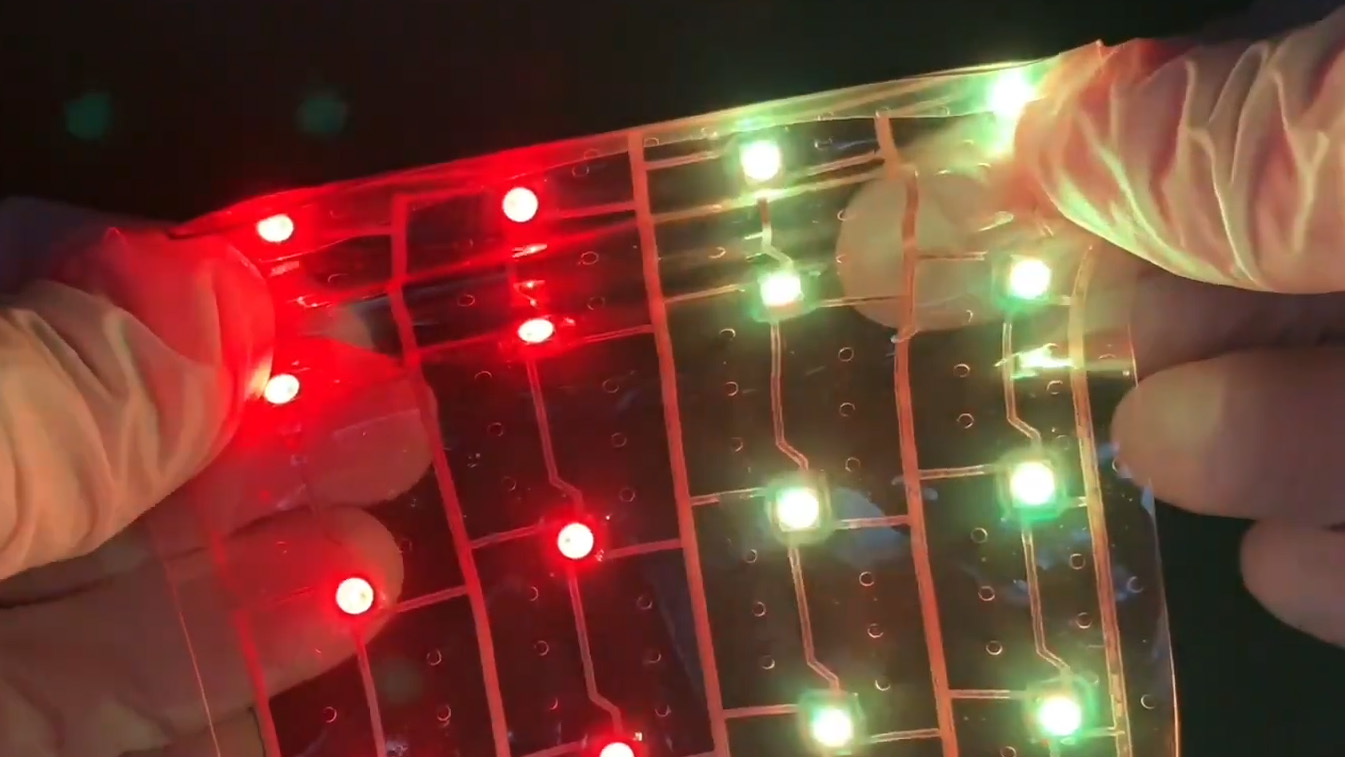
Flexible circuits sound like science fiction until you remember that almost every modern phone, camera, laptop hinge, smartwatch, and compact gadget already uses them somewhere. They fold. They bend. They sneak through tiny spaces like electronic yoga instructors. But here is the catch: most “flexible” circuits are not truly stretchy. They can flex, but ask them to stretch like a rubber band and they may respond with cracks, resistance changes, or the electronic equivalent of a dramatic fainting spell.
That is why truly flexible circuits are, quite literally, a bit of a stretch. The next generation of stretchable electronics aims to go beyond ordinary flexible printed circuit boards by creating circuits that can bend, twist, roll, conform to the body, and expand under strain while still carrying signals reliably. This matters for wearable health sensors, soft robotics, smart textiles, electronic skin, medical implants, aerospace structures, automotive interiors, and devices that need to live on surfaces that refuse to stay flat.
The big idea is simple: if electronics are going to move with people, machines, clothing, or soft materials, the circuits need to stop behaving like tiny glass bridges. They need to act more like skin, fabric, or silicone. Easy to say. Much harder to build.
Flexible Circuits vs. Stretchable Circuits: Not the Same Party
A traditional flexible circuit usually starts with a thin plastic film, often polyimide, plus copper traces laminated or etched into a pattern. This structure is excellent for bending around corners, folding into tight electronic assemblies, and replacing bulky wire harnesses. Flexible PCBs are already widely used because they reduce space, weight, and assembly complexity.
But bending is not stretching. A sheet of paper can bend around a pencil. That does not mean you can pull it to twice its length and expect it to survive. The same basic distinction applies to ordinary flex circuits. They handle controlled motion when designers respect bend radius, copper thickness, adhesive behavior, stack-up design, and fatigue limits. They are not automatically ready for repeated elongation.
Stretchable circuits are built for a different mechanical world. Instead of merely bending, they are designed to elongate, wrinkle, twist, and recover. A stretchable circuit may use elastomeric substrates, conductive inks, liquid metal conductors, serpentine traces, soft encapsulation layers, or hybrid islands of rigid components connected by deformable interconnects. In plain English: the circuit has to move without throwing a tantrum.
Why Stretchable Electronics Are Suddenly So Interesting
The demand for stretchable electronics is rising because technology is moving off flat boards and onto bodies, textiles, curved structures, and soft machines. A rigid PCB works beautifully inside a desktop computer. It is much less charming when asked to sit comfortably on a wrist, chest, elbow, knee, robotic gripper, inflatable device, or medical patch.
Wearable electronics are one of the clearest examples. A fitness tracker with a hard case is useful, but it only measures what it can measure from one little island on the body. A stretchable patch could conform to skin, move naturally, and collect better signals from muscles, heart activity, respiration, hydration, temperature, or motion. The more the device feels like a second skin, the less it feels like wearing a tiny remote control taped to your arm.
Medical devices also benefit from softness. Human tissue is elastic, wet, curved, and constantly moving. A hard electronic device can irritate tissue or fail mechanically when used in places that flex. Stretchable integrated circuits, soft sensors, and conformal electronic patches create possibilities for better monitoring, more comfortable diagnostics, and implantable devices that cooperate with the body instead of arguing with it.
Soft robotics is another major driver. Traditional robots are built from rigid links, motors, and joints. Soft robots use flexible materials that can bend, inflate, curl, squeeze, and adapt to delicate objects. To sense pressure, strain, shape, temperature, or touch, they need electronics that can deform along with the robot. A rigid sensor on a soft robot is like wearing ski boots to a ballet class. Technically possible, but nobody is moving gracefully.
The Materials Problem: The Substrate Has to Stretch First
A stretchable circuit starts with the material that supports it. In ordinary flexible PCBs, polyimide is popular because it is thin, stable, heat-resistant, and strong. For stretchable systems, engineers often look at elastomers such as silicone, thermoplastic polyurethane, PDMS, SEBS, and newer specialty films designed specifically for printed electronics.
These substrates must do several jobs at once. They need to stretch without tearing, recover without permanent deformation, survive processing temperatures, bond with inks or metals, tolerate environmental exposure, and avoid becoming electrically troublesome. A substrate that stretches beautifully but cannot handle printing, curing, sintering, soldering, or encapsulation is not a platform; it is a floppy disappointment.
Newer stretchable circuit materials are trying to solve this problem. Panasonic’s BEYOLEX, for example, is a thermoset, non-silicone polymer substrate designed for flexible, stretchable, conformable, and pliable printed electronics. Its appeal comes from properties such as high elongation, low hysteresis, high environmental stability, transparency, and compatibility with functional inks. That combination matters because printed electronics often need heat or curing steps that many soft substrates cannot tolerate well.
In the real world, material choice is rarely glamorous. It is a negotiation. The material must stretch enough, recover enough, process easily enough, and cost little enough. Engineers do not just ask, “Can it stretch?” They ask, “Can it stretch ten thousand times, keep its resistance stable, survive humidity, hold an adhesive bond, and not make manufacturing teams cry into their coffee?”
The Conductive Trace Problem: Metal Does Not Like Yoga
The next challenge is conductivity. A circuit is not useful unless it can move electrons where they need to go. Copper is excellent at conducting electricity, which is why it dominates conventional PCBs. Unfortunately, copper is not naturally elastic. Thin copper can bend if designed properly, but repeated stretching can cause fatigue, cracks, and resistance changes.
Silver inks and copper inks are widely used in printed electronics because they can be deposited through screen printing, inkjet printing, aerosol jet printing, or direct-write processes. They can create useful conductive paths on flexible and even stretchable substrates. However, particle-based inks often face a familiar problem: when stretched, the conductive network can separate, crack, or rearrange, increasing resistance.
That is where liquid metal and conductive composites enter the story. Gallium-based liquid metals, such as eutectic gallium-indium alloys, are electrically conductive and mechanically deformable. When used in channels, composites, or printable inks, they can maintain electrical pathways while the surrounding material stretches. In some designs, liquid metal fills gaps that would otherwise become cracks. In others, it forms the main conductor inside an elastic matrix.
Liquid metal is not magic, though it does sound like something a movie villain would keep in a laboratory. It brings its own engineering headaches: oxidation, adhesion, patterning precision, compatibility with other metals, encapsulation, leakage, cost, and manufacturability. Still, it is one of the most promising routes toward circuits that remain conductive under real strain.
The Geometry Trick: Make the Wire Squiggle
One of the smartest ways to make a circuit stretch is not to stretch the conductor itself very much. Instead, designers use geometry. Serpentine traces, wavy interconnects, horseshoe shapes, fractal patterns, and origami-like layouts allow the circuit to unfold under strain.
Think of a straight wire as a stiff handshake. Pull it, and the force goes directly into the material. Now imagine the same wire shaped like a spring or a lazy river. Pull it, and the shape opens gradually. The conductor experiences less strain even though the overall circuit stretches. This is the genius behind many epidermal electronics and soft sensor systems.
Researchers have demonstrated skin-like electronic patches where tiny serpentine wires connect sensors, antennas, LEDs, and other components. The squiggly traces allow the system to bend, wrinkle, twist, and stretch while the more fragile chips and device islands remain relatively protected. In other words, the circuit does the stretching around the components, not through them.
This hybrid strategy is extremely practical because many high-performance electronic components are still rigid. Microcontrollers, LEDs, sensors, radio chips, and power components do not become stretchy just because we ask politely. A common design approach is to place these rigid parts on small “islands” and connect them with stretchable interconnects. The result is not perfectly soft everywhere, but it can be flexible enough for wearable and conformal applications.
Printed Electronics: Circuits Built Like Graphics
Printed electronics is a major pathway for stretchable circuit manufacturing. Instead of subtractive etching, where copper is removed from a copper-clad sheet, printed electronics deposits conductive, dielectric, semiconductive, or sensing materials only where needed. This can reduce waste, support rapid prototyping, and enable unusual substrates.
Printing methods include screen printing, inkjet printing, aerosol jet printing, dispenser printing, transfer printing, laser patterning, and direct ink writing. Each has trade-offs. Screen printing is scalable and good for thicker deposits. Inkjet printing is precise and digital but requires careful ink formulation. Aerosol jet printing can create fine features on non-flat surfaces. Direct ink writing can print soft materials, pastes, and composites in custom patterns.
For stretchable electronics, printing is attractive because it lets engineers combine soft substrates with functional inks. Conductors, dielectric layers, strain sensors, antennas, heaters, electrodes, and even some semiconductor structures can be printed. The dream is a manufacturing process where circuits are created more like decals, labels, or textile graphics than traditional boards.
Of course, printed electronics still has limits. Printed traces may have higher resistance than bulk copper. Fine-pitch features can be difficult. Multilayer registration is tricky. Curing temperatures must match the substrate. Surface treatment may be needed for adhesion. Connectors are often the weak spot. The printer may be digital, but physics remains stubbornly analog.
Connections: The Stretchy Circuit Still Has to Talk to the Rigid World
One overlooked challenge in flexible and stretchable circuits is the connection point. A stretchable sensor may perform beautifully in the middle of a soft patch, then fail where it connects to a rigid PCB, battery, microcontroller, or data logger. This transition zone is where mechanical strain loves to gather and cause trouble.
Flexible-to-rigid interconnections can use ZIF connectors, FFC connectors, crimp contacts, snap connectors, anisotropic conductive films, conductive adhesives, or Z-axis conductive tapes. The best choice depends on whether the application needs reworkability, low resistance, washable durability, medical comfort, low profile, or long-term reliability.
For wearable devices, snap connectors are popular because they are familiar, removable, and practical. For flat flexible cables, ZIF connectors are convenient. For thin printed sensors, conductive adhesives and anisotropic films may be better. But every connection method must be tested under realistic movement. A connector that works perfectly on the bench may become a tiny betrayal machine once it meets sweat, stretch, vibration, washing, or repeated bending.
Testing: Because “It Worked Once” Is Not Engineering
Testing is where stretchable circuit claims become real. It is not enough to stretch a sample once, take a flattering photo, and declare victory. Engineers need to know how resistance changes during strain, how many cycles the circuit can survive, whether cracks form, whether adhesion fails, how performance changes with temperature and humidity, and what happens at the connector.
Common tests include cyclic stretching, bending fatigue, peel strength, thermal cycling, environmental exposure, dielectric breakdown testing, impedance testing, and visual inspection for delamination or cracking. For conventional flex PCBs, IPC-related standards help define reliability expectations. Stretchable electronics often require additional custom testing because the mechanical behavior can be more complex than ordinary flex circuits.
One useful metric is resistance stability under strain. If a conductor doubles or triples in resistance every time it stretches, it may still work for a simple strain sensor but not for a power line or high-speed signal. In some sensing applications, resistance change is the feature. In interconnects, it is usually the problem. Context is everything.
Real-World Applications of Truly Stretchable Circuits
Wearable Health Patches
Stretchable circuits can support skin-mounted patches that measure muscle activity, heart signals, respiration, movement, temperature, or pressure. Because they conform to the body, they can be more comfortable and potentially more accurate than rigid devices. The goal is not just “wearable” electronics, but electronics people forget they are wearing.
Smart Textiles
Clothing stretches, folds, wrinkles, and gets washed. That makes smart textiles difficult. Stretchable conductive inks, printed sensors, embroidered interconnects, and soft encapsulation can help integrate electronics into sleeves, sportswear, compression garments, gloves, and rehabilitation devices. The trick is making the electronics behave like fabric rather than a crunchy sticker.
Soft Robotics
Soft robots need sensors that move with their bodies. Stretchable circuits can measure strain, pressure, bending, contact, and deformation. They can also provide heaters, antennas, or distributed electrodes. For grippers handling delicate objects, stretchable sensors may help robots feel what they are touching without crushing it like an overenthusiastic handshake.
Automotive and Aerospace Surfaces
Stretchable and conformal electronics can be integrated into curved dashboards, seats, structural surfaces, aircraft interiors, spacecraft systems, or lightweight sensor skins. In aerospace, printable electronics and flexible substrates are especially interesting because weight, space, and shape flexibility matter. A circuit that conforms to a structure can save volume and reduce wiring complexity.
Human-Machine Interfaces
Stretchable touch sensors, gesture patches, artificial skin, and pressure-sensitive surfaces can improve how people interact with machines. Instead of rigid buttons and flat screens everywhere, interfaces could become curved, soft, wearable, and more natural. Imagine a sleeve that controls a device through movement, or a flexible surface that senses touch across a curved object.
The Sustainability Angle: Less Etching, More Precision
Stretchable and printed electronics may also support cleaner manufacturing, though this depends heavily on materials and process choices. Traditional PCB manufacturing often involves subtractive etching, chemical baths, and waste streams. Printed electronics can place conductive material only where needed, reducing some forms of waste.
However, sustainability is not automatic. Silver inks, specialty polymers, gallium-based metals, multilayer laminates, and mixed-material assemblies can create recycling challenges. Some researchers are exploring recyclable soft electronics, recoverable conductive inks, and designs that separate functional layers more easily at end of life. That work matters because a future full of disposable smart patches and electronic textiles could become an e-waste confetti cannon if nobody plans ahead.
Why Truly Flexible Circuits Are Harder Than They Look
Stretchable circuits combine several fields that do not always speak the same language: electronics, materials science, mechanical engineering, chemistry, manufacturing, biomedical design, and reliability testing. A beautiful conductive ink may fail adhesion. A wonderful substrate may dislike heat. A brilliant serpentine design may consume too much space. A soft patch may work until the connector pulls loose. A wearable sensor may survive stretching but not laundry day.
This is why progress comes from systems thinking. The substrate, conductor, geometry, components, encapsulation, adhesive, connector, and use environment must be designed together. No single material solves everything. The best designs usually combine multiple strategies: stretchable substrates, clever trace geometry, island-bridge layouts, conductive composites, printed layers, and carefully protected interfaces.
For product designers, the key lesson is simple: do not treat stretchability as an afterthought. You cannot design a normal PCB, put it on a soft sheet, and expect it to become wearable magic. Stretchable electronics must be designed from the first sketch with strain paths, neutral mechanical planes, component placement, encapsulation, and interconnect fatigue in mind.
Design Tips for Engineers and Makers
If you are designing with stretchable or flexible circuits, start by defining the mechanical motion. Will the circuit bend, twist, stretch, fold, compress, or slide? How often? How far? In what direction? A circuit that survives a one-time installation bend has very different requirements from a sensor stretched thousands of times on a knee sleeve.
Next, separate sensing areas from interconnect areas. If you are making a strain sensor, resistance change may be useful in the sensing zone. But signal routing traces should remain as stable as possible. Use serpentine patterns, wide traces, soft encapsulation, and strain relief near connectors.
Keep rigid components away from high-strain zones. Place chips, LEDs, resistors, and batteries on stable islands. Let the bridges stretch, not the islands. For prototypes, test early with exaggerated movement. It is better to discover a weak trace on day two than after you have built a gorgeous demo that fails five minutes before presentation time.
Finally, document everything: substrate batch, ink type, curing temperature, trace width, layer thickness, strain percentage, cycle count, connector method, encapsulation material, and failure mode. Stretchable electronics can be sensitive to small process changes. Good notes are the difference between engineering and “I swear it worked yesterday.”
Experience Notes: What Working With Stretchable Circuit Ideas Teaches You
The most important experience related to truly flexible circuits is that stretch changes how you think about electronics. With a normal PCB, the board is a stable foundation. You place components, route traces, check clearances, and worry about electrical performance. With stretchable electronics, the “board” is no longer a quiet platform. It is part of the mechanical system. It moves, pulls, relaxes, buckles, wrinkles, and sometimes behaves like it has weekend plans of its own.
One practical lesson is that failures often appear at transitions. The middle of a printed stretchable trace may survive surprisingly well, especially when the material and geometry are chosen carefully. But the place where that trace meets a connector, solder pad, snap, rigid board, or stiff encapsulation can become a stress hotspot. A tiny stiffness mismatch can turn into a crack starter. This is why strain relief is not decoration. It is survival gear.
Another lesson is that prototypes need movement testing that resembles the final use. A wearable patch should not only be stretched neatly in one direction on a bench. It should be bent, twisted, pressed, warmed, exposed to moisture if appropriate, and cycled repeatedly. Human motion is messy. Knees do not bend like laboratory fixtures. Elbows twist. Shirts pull diagonally. Skin stretches differently depending on posture. Real use makes elegant assumptions look embarrassed.
Working with printed conductive materials also teaches patience. Ink thickness, curing time, surface preparation, and substrate cleanliness can dramatically affect results. A trace that looks perfect may have poor adhesion. A trace with slightly uneven edges may perform well. A low-resistance reading at rest may hide problems under strain. The multimeter tells part of the story, but cyclic testing tells the gossip.
Component selection becomes more strategic, too. Standard surface-mount parts are not stretchable, so the layout must protect them. Instead of pretending everything can deform equally, good designs accept that some parts are rigid and create mechanical zones around them. This is similar to designing flexible armor: hard pieces can work if the connections between them are allowed to move.
There is also a creative joy in stretchable circuit design. The patterns look less like traditional PCB routing and more like biological systems, textiles, springs, river paths, or vines. Serpentine traces, mesh structures, and island-bridge layouts feel almost organic. That visual shift reflects the deeper engineering shift: electronics are moving from boxes into bodies, fabrics, and curved environments.
The biggest takeaway is humility. Truly flexible circuits are not just thinner PCBs. They are electromechanical systems where every material choice has consequences. Stretch too far, and resistance changes. Cure too hot, and the substrate suffers. Encapsulate too stiffly, and the soft circuit loses its advantage. Connect carelessly, and the best sensor becomes a decorative noodle. But when the design works, it is genuinely exciting. A circuit that bends, rolls, conforms, and keeps functioning feels like electronics finally learned how to breathe.
Conclusion
Truly flexible circuits represent a major step beyond ordinary flex PCBs. Traditional flexible circuits are excellent for compact electronics, folding assemblies, and space-saving designs, but stretchable electronics open the door to devices that move with skin, textiles, soft robots, and curved surfaces. The technology depends on a carefully balanced mix of stretchable substrates, conductive inks, liquid metal composites, serpentine geometry, soft encapsulation, reliable interconnects, and serious testing.
The future will not be built entirely on rigid rectangles. Some of it will be printed, stretched, wrapped, worn, and embedded into materials that move. That future is still difficult, messy, and full of engineering puzzlesbut that is exactly what makes it interesting. Truly flexible circuits may be a bit of a stretch, but they are stretching electronics toward places rigid boards could never comfortably go.