Note: This article is an original, web-ready editorial piece based on publicly available information about Johannes Stötter, his bodypainting illusion work, and the “Butterfly” artwork.
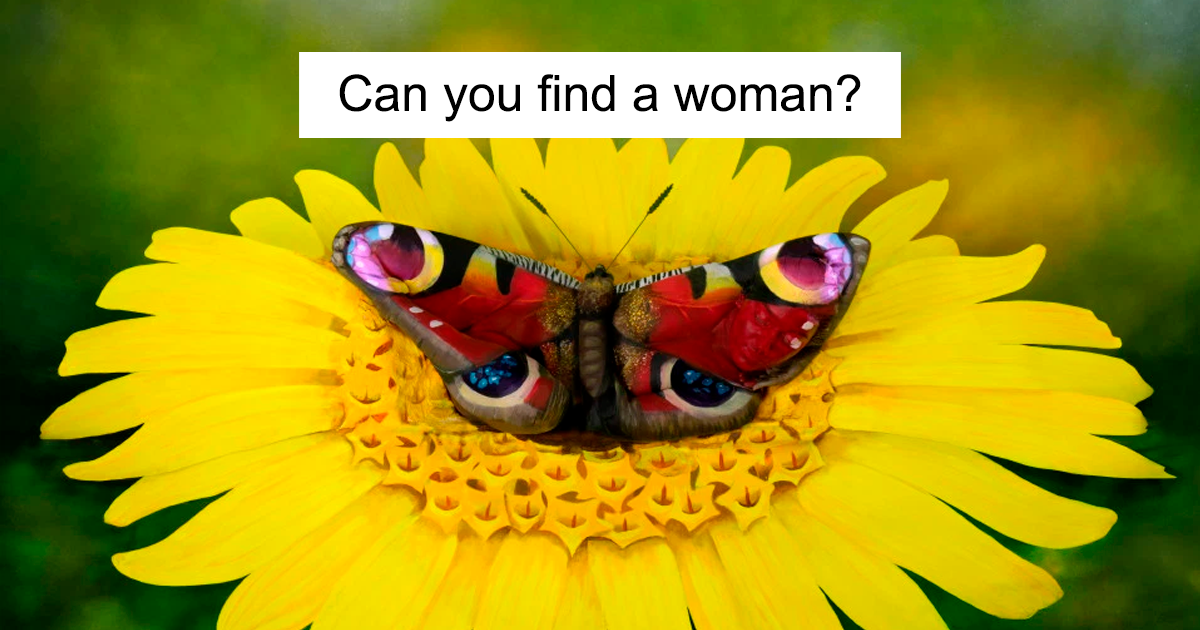
At first glance, it looks like a butterfly has landed quietly on a giant yellow flower. The wings are rich with red, black, white, blue, and violet details. The body is centered perfectly. The illusion feels so natural that your brain politely signs the paperwork and says, “Yes, butterfly. Case closed.”
Then someone tells you the truth: this butterfly is actually a woman whose entire body was painted by Johannes Stötter. Suddenly, your eyes start doing detective work. The curve of a shoulder becomes a wing. A bent arm becomes part of the pattern. Human form disappears into insect anatomy. What looked like a still-life photograph becomes a living optical illusion, and your brain has to apologize for being too confident.
Johannes Stötter is widely known as a master of fine art bodypainting and camouflage illusion. Based in South Tyrol in northern Italy, he has built a global reputation by transforming live models into animals, landscapes, objects, and natural scenes. His art is not simply “painting on skin.” It is a puzzle made from anatomy, color theory, composition, patience, and the kind of detail that makes perfectionists nod respectfully while clutching their coffee.
Who Is Johannes Stötter?
Johannes Stötter is an Italian artist, musician, and fine art bodypainter whose work often explores the relationship between the human body and nature. His background helps explain the unusual emotional depth of his illusions. He is not only interested in making viewers say, “Wow.” He wants them to look longer, question what they are seeing, and feel a stronger connection to the natural world.
Before becoming internationally famous for bodypainting, Stötter was deeply connected to music, painting, and the landscapes of the Alps. Nature has always been one of his strongest sources of inspiration. Animals, textures, natural colors, and organic forms appear again and again in his work. That is why his body art feels less like a costume and more like a living ecosystem briefly borrowing a human body.
Stötter gained major international attention with his animal bodypainting illusions, including his famous tropical frog made from several painted models. Over the years, he has created striking works featuring creatures such as frogs, chameleons, parrots, wolves, fish, sea turtles, and butterflies. His art has been shared widely across media platforms because it has a rare quality: it stops people mid-scroll. In a world where most of us swipe past everything at Olympic speed, that is no small achievement.
The Story Behind the Butterfly Bodypainting Illusion
The “Butterfly” artwork is one of Stötter’s most captivating illusions because it combines beauty, surprise, and technical complexity in one image. The final photograph appears to show a vivid butterfly resting on a large yellow flower. But hidden within the composition is a live model, carefully posed and painted so her body becomes the butterfly’s wings, body, and pattern.
The concept was not created in a quick burst of inspiration and finished by lunchtime. The idea reportedly developed over several years, beginning with sketches and refinements before becoming the final illusion. Stötter studied the shape and visual rhythm of butterfly wings, then translated that symmetry onto the contours of a human body. That step is crucial. A canvas is flat. A person is not. Skin curves, folds, breathes, shifts, and responds to posture. Painting a butterfly on a living model is less like filling in a coloring book and more like solving a three-dimensional puzzle while the puzzle occasionally needs to stretch.
The final result works because Stötter treats the model’s body as both surface and structure. The pose is not random. Every limb must support the illusion. The body has to curl and align in a way that allows the painted forms to read as wings. The background flower is also essential. Without it, the butterfly would still be impressive, but the full illusion would lose its sense of scale, setting, and wonder.
Why the Illusion Works So Well
Optical illusion bodypainting succeeds when the artist understands how viewers process images. Most people do not examine a picture piece by piece right away. We look for familiar shapes. If the silhouette, colors, shadows, and background all support the same story, our brain accepts it quickly. Stötter uses that habit beautifully.
1. The Butterfly Shape Is Instantly Recognizable
Butterflies have one of nature’s most recognizable silhouettes. Their broad wings, balanced symmetry, and slim central body create a visual pattern that humans identify almost immediately. Stötter uses this to his advantage. Before viewers notice the model, they recognize the butterfly form. Once the brain sees “butterfly,” it becomes harder to unsee it.
2. The Colors Create a Natural Disguise
The red, black, white, blue, and violet accents across the wings create complexity and distraction. These colors are not simply decorative. They break up the human form and guide the viewer’s eye across the surface. Dark outlines help define the wings, while bright highlights suggest the reflective markings found in real butterfly patterns. The result is lively, dramatic, and slightly mischievouslike nature wearing stage makeup.
3. The Yellow Flower Completes the Scene
The large yellow flower is not just a pretty background. It gives the butterfly a believable place to exist. It creates contrast, scale, and a natural resting point. The warm yellow petals make the darker butterfly details stand out, while the soft green background helps the whole scene feel outdoorsy and organic. The model disappears more effectively because the environment supports the illusion.
4. The Human Body Becomes Architecture
In traditional painting, the artist controls the surface. In bodypainting, the surface has bones, muscles, temperature, and limits. Stötter’s skill is in turning those limits into advantages. A curved back can become the arc of a wing. A bent arm can create a visual line. The model’s pose becomes the hidden architecture of the artwork.
Bodypainting as Fine Art, Not Just Decoration
Bodypainting is sometimes misunderstood as party makeup or festival decoration. While it can be playful, Stötter’s work shows how sophisticated the medium can be. His illusions require drawing, painting, sculpture-like thinking, photography, staging, lighting, and performance. The model is not a passive surface; she is part of the artwork’s structure and emotional presence.
What makes Stötter’s bodypainting especially powerful is its temporary nature. A painting on canvas can hang in a museum for centuries. A bodypainting piece exists for a limited time. It must be created, photographed, filmed, and then eventually washed away. That temporary quality gives the work a poetic edge. The butterfly itself becomes a perfect symbol: beautiful, fragile, and fleeting.
This is one reason the “Butterfly” illusion resonates so strongly. It is not only a visual trick. It also reflects transformation. A human body becomes an insect. Paint becomes wings. Stillness becomes movement in the viewer’s imagination. The artwork invites us to think about metamorphosis, identity, and the way beauty can hide in plain sight.
The Creative Process Behind a Living Illusion
Creating a bodypainting illusion like “Butterfly” involves far more than painting a pretty design. The process usually begins with an idea, followed by sketches, color planning, background preparation, and careful decisions about the model’s pose. Each part must work together. If one angle is wrong, the illusion can collapse faster than a folding chair at a family barbecue.
Stötter’s process often includes testing how the model’s body can form the animal or object he wants to create. This is one of the most challenging parts. The pose must be visually convincing but also physically possible. Models may need to hold difficult positions for long periods while the artist paints details across the skin. Comfort, communication, and trust are essential.
For “Butterfly,” the symmetry of the wings would have required careful alignment. A butterfly’s left and right wings must feel balanced, even if the underlying human body is naturally asymmetrical. The painting has to compensate for curves, shadows, and perspective. This is where Stötter’s experience becomes obvious. He knows how to use highlight and shadow to flatten some areas, emphasize others, and make the body read as something entirely different.
Why Viewers Love This Butterfly Illusion
People love visual surprises, especially when the reveal feels earned. The “Butterfly” bodypainting illusion gives viewers two moments of pleasure. The first is the beauty of the image itself. Even if someone never noticed the hidden human body, the picture would still work as a colorful butterfly resting on a bright flower. The second pleasure comes from discovery. Once viewers realize a person is inside the illusion, they look again with fresh curiosity.
That double experience makes the artwork highly shareable. It is not just an image; it is a small event. Someone sees it, gasps a little, sends it to a friend, and waits for the friend to respond with some version of “No way.” In digital culture, where attention is precious, this kind of built-in reveal is powerful.
The piece also appeals because it feels positive. The butterfly is associated with change, lightness, beauty, and renewal. Stötter’s version adds human creativity to that symbolism. It reminds viewers that transformation is not only something that happens in nature. It also happens through imagination, discipline, and the courage to try something that sounds slightly impossible at first.
How Johannes Stötter Turns Models Into Animals
Stötter’s animal illusions are famous because they treat the body as a flexible visual language. In some works, a single model becomes an animal. In others, multiple models combine to form one creature. This approach requires the artist to understand anatomy in two directions: the anatomy of the human body and the anatomy of the animal being represented.
For example, to paint a convincing frog, the artist must understand the frog’s eyes, skin texture, posture, and proportions. To create a chameleon, he must think about the reptile’s curled tail, head shape, and color transitions. For a butterfly, he must understand wing symmetry, body segmentation, and the delicate relationship between pattern and form.
This is why Stötter’s illusions feel so convincing. He does not simply paint animal colors onto people. He studies how the creature is built, then finds a way for the human form to echo that structure. The result is a collaboration between biology and imagination. It is also a reminder that the human body is far more visually versatile than most of us realize. Most of us use our bodies to sit at desks and search for snacks. Stötter looks at the same basic material and sees wings.
The Role of the Model in the Butterfly Artwork
The model in the “Butterfly” illusion deserves serious credit. Bodypainting models must bring patience, body awareness, and trust to the process. Holding a pose while an artist paints across the skin is physically demanding. The final image may look effortless, but that effortlessness is carefully built.
In this artwork, the model’s body becomes the entire foundation of the butterfly. Her position has to support the wing shape, central body, and overall balance of the composition. Any small shift could change the final image. This makes the work part painting, part performance, and part endurance exercise. It is glamorous in the final photograph, but behind the scenes it likely involves stillness, concentration, and the occasional thought of, “My leg has filed a complaint.”
The collaboration between artist and model is one of the most meaningful parts of bodypainting. The artwork cannot exist without both. Stötter provides the concept, paint, visual planning, and technical mastery. The model provides the living structure, physical discipline, and human presence. Together, they create something neither could create alone.
What the Butterfly Symbol Means in the Artwork
The butterfly has long been associated with transformation, renewal, and beauty. Its life cyclefrom caterpillar to chrysalis to winged adultis one of nature’s most familiar metaphors for change. In Stötter’s artwork, that symbolism becomes even richer because the butterfly is not only painted; it is formed from a human body.
This adds a layer of meaning. The image suggests that transformation is not always obvious at first glance. Sometimes change is hidden under the surface. Sometimes identity is more flexible than it appears. Sometimes a person can become part of a larger natural image without disappearing completely. The human form is concealed, but not erased. That tension gives the artwork emotional depth.
The piece also celebrates the fragile beauty of living art. Like a butterfly, bodypainting is temporary. The paint can be washed away. The pose cannot be held forever. The moment passes. But through photography and video, the illusion remains, allowing viewers around the world to experience that brief transformation again and again.
Why This Artwork Matters in the Age of Digital Effects
Today, almost any image can be altered with software. We live in a time of filters, artificial intelligence, retouching, and digital compositing. That makes Stötter’s handmade illusions even more fascinating. The magic is not only in the final picture; it is in knowing that a real person was painted and positioned to create the effect.
There is something deeply satisfying about practical artistry. Viewers can sense the labor behind it. The brushstrokes matter. The model’s pose matters. The lighting matters. The photograph captures a real arrangement in physical space. That gives the work a tactile honesty, even while it tricks the eye.
This does not mean digital art is less valuable. Digital tools can create extraordinary results. But Stötter’s bodypainting offers a different kind of wonder. It says, “Look what hands, eyes, paint, patience, and a human body can do.” In an era when many images feel instantly generated, that handmade quality stands out.
Lessons Artists Can Learn From Johannes Stötter’s Butterfly
Plan Before You Paint
The “Butterfly” illusion shows the importance of planning. Great creative work may look spontaneous, but it often begins with careful sketches and testing. Artists can learn from Stötter’s willingness to refine an idea over time rather than rushing to publish the first version.
Let the Surface Guide the Design
Bodypainting requires artists to respect the surface they are working on. The human body is not blank in the same way paper is blank. It has curves, movement, and personality. Stötter uses these features instead of fighting them. That lesson applies to many creative fields: understand your medium before trying to master it.
Use Surprise With Purpose
The surprise in this artwork is not a cheap trick. It deepens the viewer’s engagement. Once people realize the butterfly is human, they look more carefully. The reveal makes the artwork more memorable. Good creative surprises should invite a second look, not just a quick reaction.
The Experience of Seeing “Butterfly” for the First Time
The first experience of seeing Johannes Stötter’s “Butterfly” usually begins with confidence. The viewer sees a bright insect on a yellow flower and accepts the image as nature photography or hyperrealistic art. The colors feel familiar enough: red wings, dark outlines, reflective spots, a flower glowing like a little sun. Nothing seems suspicious at first. That is the trap, and it is a lovely one.
Then the reveal arrives. Someone says, “That is actually a woman covered in body paint.” Suddenly the viewing experience changes completely. The image becomes interactive, even if it is still. Your eyes begin searching for evidence. Where is the face? Where are the arms? How is the body positioned? The artwork turns the viewer into an investigator. Instead of passively admiring a picture, you start decoding it.
This kind of experience is rare because it combines beauty with discovery. Many artworks are beautiful. Many illusions are clever. “Butterfly” is both. It gives you the pleasure of looking at something lovely and the intellectual fun of solving a visual mystery. It is the art-world version of finding out the quiet person at dinner is secretly a magician.
The emotional response is also important. Once viewers understand that the butterfly is human, the artwork feels more intimate. It is no longer just an image of nature. It becomes a collaboration between artist, model, and viewer. You become aware of the model’s patience and physical control. You imagine the hours of painting, the careful pose, the pressure to keep everything aligned. The final image may feel effortless, but the reveal makes the effort visible.
For artists, the experience can be motivating. It proves that originality often comes from combining familiar elements in unfamiliar ways. A butterfly is familiar. A painted body is familiar. A flower is familiar. But when Stötter combines them with precision, the result feels fresh and unforgettable. That is a valuable lesson for painters, photographers, designers, makeup artists, and content creators alike.
For casual viewers, the experience is simply fun. It is the kind of image people want to share because it creates a small social moment. You send it to a friend, wait for the reaction, and enjoy the tiny explosion of disbelief. In a digital world overloaded with images, “Butterfly” earns attention because it rewards attention. The longer you look, the more you understand.
The artwork also encourages a slower way of seeing. Most online images are consumed quickly, like visual popcorn. Stötter’s butterfly asks viewers to pause. It reminds us that not everything reveals itself immediately. Sometimes the most interesting truth is hidden in the details. Sometimes beauty is not only in what we see first, but in what we discover after looking again.
That is why the experience of this piece stays with people. It is not just because the illusion is technically impressive, although it absolutely is. It stays with us because it changes our perception in real time. One moment we see a butterfly. The next, we see a woman, an artist, a performance, a painting, and a story about transformation. That is a lot of meaning packed into one pair of wings.
Conclusion
Johannes Stötter’s “Butterfly” is more than a viral bodypainting illusion. It is a masterclass in patience, precision, and visual storytelling. By transforming a woman’s painted body into a vivid butterfly resting on a yellow flower, Stötter challenges the viewer’s assumptions and celebrates the beauty of transformation.
The artwork succeeds because every detail supports the illusion: the model’s pose, the wing symmetry, the bold colors, the flower backdrop, and the careful use of shadow and pattern. It is playful enough to delight casual viewers and sophisticated enough to impress artists who understand just how difficult it is to make a living body disappear into another form.
In the end, the magic of “Butterfly” is not only that it tricks the eye. It teaches the eye to look again. And in a world full of quick glances, that may be the most beautiful illusion of all.