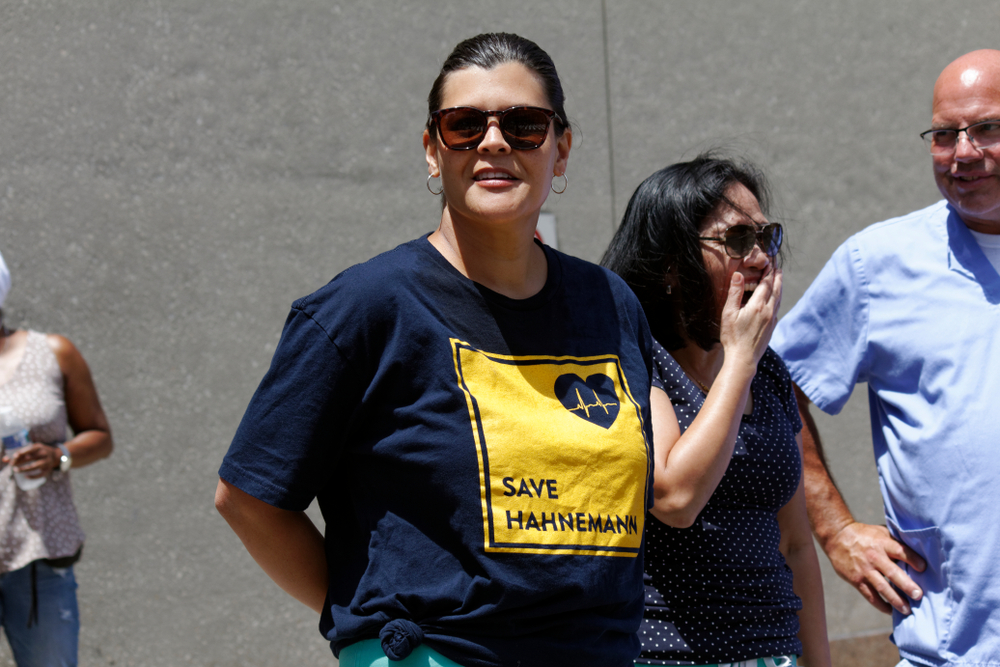
Some disasters arrive with sirens, smoke, and a sky that looks like bad news. Others arrive in a press release. Hahnemann University Hospital’s collapse was the second kind: quieter on the surface, but devastating in every way that counts. When the historic Philadelphia hospital announced in June 2019 that it would close, the damage did not stop at one building. It rippled through emergency care, medical education, neighborhood access, hospital staffing, and public trust. In a city already stretched by inequality, Hahnemann’s downfall felt less like a routine business failure and more like a civic gut punch.
This is why the story still matters. Hahnemann was not just an old hospital with a famous name and a lot of brick. It was a teaching institution, a Level I trauma center, a place where low-income patients got care, and a place where hundreds of physicians learned how to become real doctors rather than textbook astronauts. When it died, the loss was not symbolic. It was operational, immediate, and painfully human.
The disaster at Hahnemann University Hospital also became a national case study in what happens when fragile healthcare economics, aggressive financial strategy, weak policy safeguards, and public need collide at full speed. And spoiler alert: the patient never does well in that showdown.
A Hospital With a Long Memory and a Short Runway
Hahnemann’s roots stretched back to the 19th century, and for generations it occupied a recognizable place in Philadelphia medicine. By the time it neared the end, it was a 496-bed academic medical center affiliated with Drexel University College of Medicine. It treated trauma patients, handled complex medical cases, and served a population that included many patients with Medicaid or no easy alternatives.
That history, however, did not protect it from modern hospital math. By early 2019, Hahnemann was bleeding money. Reports described monthly losses in the range of several million dollars. Leadership turnover did not help. Layoffs arrived. Services shrank. Confidence drained from the building like air from a tire with a nail in it. Technically, the hospital was still open. Spiritually, it was already wobbling.
The ownership structure added another layer of controversy. Hahnemann had been acquired from Tenet Healthcare by an affiliate of American Academic Health System, led by Joel Freedman. Supporters of the owners argued the hospital was already structurally unstable and losing money in a punishing urban market. Critics argued the ownership approach treated a safety-net teaching hospital like a distressed asset waiting for a spreadsheet solution. Those are very different stories, and Hahnemann became the place where they crashed into each other.
The Closure Announcement That Changed Everything
On June 26, 2019, Hahnemann announced it would close because of continuing financial losses. The parent company soon filed for Chapter 11 bankruptcy protection. Regulators intervened. City and state officials pushed back. Court hearings followed. The hospital’s shutdown schedule became a grim countdown, not unlike watching an airport departure board where every flight says “canceled,” except the stranded passengers included trauma patients, pregnant patients, residents, nurses, and faculty physicians.
In rapid sequence, Hahnemann stopped taking certain emergency and trauma patients, halted deliveries in its maternity unit, narrowed admissions, and then shut its emergency department in August. The hospital building was slated to close around early September 2019. What made the process feel especially chaotic was not only that the hospital was closing, but that it was closing while still serving real people who needed care that could not be paused like a software update.
For Philadelphia, the problem was obvious. Hahnemann sat in a central location and functioned as a major access point for vulnerable patients. Closing it meant other institutions would have to absorb those cases fast. Hospitals do not magically grow extra beds, nurses, residents, and radiology capacity overnight. Healthcare is not a clown car, no matter what some budget presentations seem to assume.
Why the Word “Disaster” Fits
It Was a Safety-Net Failure
Hahnemann served many patients who were poor, publicly insured, medically complex, or socially vulnerable. Roughly half of its admissions were tied to Medicaid, and its emergency department saw a very high annual patient load. In plain English, this was not a boutique hospital for elective knee polishing. It was a working hospital that cared for people who often had nowhere better to go.
When a hospital like that closes, the loss is not evenly distributed. Wealthier patients usually find another doctor, another network, another parking garage, another portal password. Poorer patients often lose continuity, miss medications, delay follow-up care, or show up in an already crowded emergency department after their condition worsens. Hahnemann’s closure turned those risks from theory into reality.
It Was an Educational Crisis
If Hahnemann had been only a hospital closure, the story would still have been huge. But it was also one of the worst graduate medical education disruptions in modern U.S. history. More than 550 residents and fellows suddenly had their training base pulled out from under them. These were not casual interns misplacing a stapler. These were doctors-in-training working long shifts in demanding specialties, often only days away from the new academic year.
Accreditation bodies, hospitals, and academic leaders scrambled to relocate them. What would normally take months had to happen in weeks. Residents interviewed while caring for patients. Program directors tried to create landing spots at warp speed. Hospitals wanted clarity on whether federal funding connected to residency positions would follow the trainees. Anxiety was not an unfortunate side effect; it was the atmosphere.
It Turned Training Into a Bankruptcy Asset
Perhaps the ugliest chapter came when Hahnemann’s residency-related assets became the subject of a bankruptcy fight that produced a winning bid of $55 million from a consortium of regional health systems. The legal dispute centered on whether those Medicare-linked training positions and related agreements could effectively be sold in that way. The very existence of the fight was disturbing enough. It made many people in academic medicine feel that physician training had been converted from a public good into something that looked suspiciously like a collectible.
That does not mean every party involved acted in bad faith. Some health systems clearly wanted to preserve training capacity and absorb displaced residents. But the optics were brutal. Future physicians had been uprooted, patients had been displaced, and now the remains of the training infrastructure were being haggled over in bankruptcy court. It was healthcare policy by way of estate sale.
Who Paid the Price?
Patients
The first and most important answer is patients. People lost their usual hospital. Some lost specialists. Some had ongoing cancer care, psychiatric care, prenatal care, or chronic disease management disrupted. Hahnemann’s emergency department had served large numbers of patients, and nearby hospitals quickly felt the pressure after closure plans began. Reports showed increases in emergency volume at surrounding institutions, along with strain in obstetrics and psychiatry.
Healthcare disruptions do not always produce dramatic headlines in the moment. Often, the damage shows up as delayed diagnosis, longer waits, crowded units, fractured records, and exhausted staff. That is part of what made the Hahnemann disaster so maddening: much of the harm was predictable, yet the system had few tools to stop it.
Workers
Thousands of employees were displaced, including nurses, physicians, residents, and support staff. A hospital is not just surgeons and stethoscopes. It is transport workers, lab staff, food service workers, respiratory therapists, coders, clerks, security staff, housekeepers, and people who know exactly where the weird form is when no one else does. When Hahnemann collapsed, livelihoods vanished alongside services.
And even after the doors closed, the fallout continued. Former residents and attending physicians later faced uncertainty around liability insurance coverage tied to their time at Hahnemann. So the disaster did not end when the lights went dim. It kept sending aftershocks through careers and professional lives.
Nearby Hospitals
One hospital’s closure becomes every nearby hospital’s problem. Philadelphia institutions had to absorb patients, staff, trainees, and new operational burdens. Temple reported a notable rise in emergency patients after Hahnemann stopped accepting critical cases. Other systems expanded and improvised. This may sound heroic, and in some ways it was. But it was also expensive, stressful, and destabilizing. A citywide safety net should not depend on whoever can catch the most falling bricks.
Was This Only About Private Equity?
Not entirely, and pretending otherwise makes the lesson too easy. Hahnemann operated in a tough financial environment long before the final collapse. Urban safety-net hospitals often face thin margins, heavy Medicaid reliance, high uncompensated care, aging infrastructure, and intense competition from better-capitalized systems. Those pressures are real.
But it is also true that Hahnemann became a warning sign in national debates about private equity, distressed healthcare ownership, and the mismatch between financial engineering and community obligation. Critics suspected the land and real estate value surrounding the hospital mattered too much. Owners denied that the hospital was acquired in order to flip the site. The problem is that once public trust is broken, denials tend to sound like someone trying to explain why the smoke alarm is “just being dramatic.”
The broader truth is that Hahnemann failed because several bad conditions overlapped: structural underfunding of safety-net care, weak closure safeguards, a bankruptcy process poorly suited to protecting medical education, and an ownership model many people believed was too willing to treat healthcare as a tradeable asset. It was not one villain in a cape. It was a system that left too many doors open to disaster.
The Pandemic Made the Loss Look Even Worse
By 2020, as COVID-19 slammed cities and hospitals hunted for surge capacity, Hahnemann’s empty campus stood in Philadelphia like a taunt. Here was a closed hospital in a poor major city facing a public health emergency. Public officials explored whether the facility could be used again for patients. Negotiations over cost and control became contentious, and no practical reopening happened. That moment hardened public anger. Whatever one believed about bankruptcy law, an empty hospital during a health crisis looked less like efficiency and more like civic absurdity.
It also changed the emotional framing of Hahnemann’s closure. This was no longer just the story of a hospital that had failed in 2019. It became the story of what Philadelphia had lost right before it desperately needed beds, buildings, and flexibility.
Why Hahnemann Still Matters
Hahnemann matters because the same ingredients still exist in American healthcare: fragile urban hospitals, uneven payer mixes, consolidation, investor pressure, workforce burnout, and public systems that often react after the damage is done. It matters because safety-net hospitals cannot be treated as optional until flu season, trauma season, or pandemic season says otherwise. It matters because resident physicians are not spare parts in a federal reimbursement machine.
It also matters because the campus itself became a symbol of what was lost. Years after the closure, the buildings remained a visible reminder that when a hospital dies, the vacancy is not only physical. It is moral, civic, and institutional. More recent redevelopment plans point toward apartments and commercial reuse, which may make urban planning sense on paper. But to many Philadelphians, the site will always carry the memory of a hospital whose value could not be measured only in rent per square foot.
Conclusion
The disaster at Hahnemann University Hospital was not a single bad decision on a single bad day. It was a long-brewing collapse that exposed the weakest joints in American healthcare: how we fund care for poor patients, how we protect teaching hospitals, how bankruptcy law interacts with public need, and how quickly communities can lose essential services when finance outruns responsibility.
Hahnemann’s closing was a healthcare story, a labor story, an education story, a policy story, and yes, a real-estate story too. Most of all, it was a warning. If a 171-year-old hospital in the middle of a major city can disappear while patients are still relying on it and hundreds of residents are still training in it, then the issue is not just what happened at Hahnemann. The issue is how easily it could happen again.
And that is the real disaster: not only that Philadelphia lost Hahnemann, but that the country learned from it more slowly than it should have.
Experiences From the Fallout: What the Disaster Felt Like on the Ground
To understand the disaster at Hahnemann University Hospital, you have to move beyond the bankruptcy filings and into the lived experience. On paper, a closure can look like a sequence of transactions: notices, hearings, bids, transfers, shutdown dates. In real life, it felt more like standing in a house where the floor is giving way room by room while people are still trying to cook dinner.
For residents, the experience was especially brutal. Many were in the middle of summer transition season, the time when new trainees arrive, roles shift, and services are already hectic. Suddenly, instead of focusing on rounds, consults, procedures, and surviving on coffee with suspiciously noble optimism, they had to think about whether their training would count, whether their salaries would continue, where they would live next month, and whether another hospital could absorb them in time. The professional pressure was intense, but the emotional pressure may have been worse. Residency is demanding even when everything works. Hahnemann residents were asked to keep showing up inside a system that was dissolving around them.
For nurses and staff, the closure felt like a betrayal with a time stamp. Units emptied. Services narrowed. Rumors outran memos. Some workers were trying to care for patients while also figuring out whether they would still have a paycheck, health insurance, or a professional home a few weeks later. Support staff, who often get the least public attention and the least elegant tributes, were hit particularly hard. A hospital’s daily life depends on people whose names rarely appear in news stories. They were part of the loss too.
Patients experienced the collapse in the most practical way possible: confusion. Where do I go now? Does my doctor still see me? What happens to my records? What about my baby, my chemotherapy, my psychiatric care, my next dialysis plan, my follow-up after discharge? Healthcare systems love the phrase “continuity of care,” but at Hahnemann continuity was not merely interrupted. It was yanked like a tablecloth from under a crowded dinner table, and not everything landed safely.
Nearby hospitals felt the impact immediately. Emergency departments took on extra patients. Specialty services absorbed new demands. Faculty and administrators had to become problem-solvers at impossible speed. In many accounts, healthcare workers across Philadelphia did heroic work to catch people falling out of Hahnemann’s orbit. But heroism is not a substitute for planning. It is what people do when planning fails.
That is why the Hahnemann story still lingers. The experience was not just about one hospital closing. It was about what it feels like when the institutions meant to protect a city suddenly reveal how fragile they really are. The people closest to Hahnemann did not experience an abstract market correction. They experienced shock, scrambling, anger, grief, and a stubborn sense that something essential had been allowed to break in public.