A kitchen made almost entirely from bamboo sounds like the opening line of an eco-design fairy tale. In Ask og Eng’s hands, however, it becomes something more practical: a hardworking family kitchen, a piece of finely crafted furniture, and a persuasive argument that sustainable kitchen design does not have to look like a recycling center wearing linen pants.
Created by Norwegian design duo Kine Ask Stenersen and Kristoffer Eng, the project transforms one long wall of their family home into a nearly 23-foot composition of vertically grained bamboo cabinetry. The result is restrained but not cold, natural but not rustic, and minimal without forcing the toaster to live in exile.
How Ask og Eng Turned Bamboo Into a Design Language
Ask og Eng began with a personal renovation. Stenersen, who studied environmental geography, and Eng, an architect, experimented with bamboo while developing a kitchen for their own home. That early project eventually grew into a studio specializing in bamboo cabinet fronts, custom kitchens, bathrooms, storage systems, and furniture.
The company first became known for producing fronts designed to work with existing IKEA cabinet systems. That approach offered homeowners a practical middle ground: retain an affordable, standardized cabinet structure while upgrading the visible surfaces with carefully made bamboo components. The studio later expanded into fully bespoke cabinetry, allowing the interiors, drawer configurations, proportions, and finishes to be customized.
Their all-bamboo kitchen represents the more complete version of that philosophy. Bamboo appears not only on the doors but also throughout the cabinet interiors. Instead of functioning as a decorative veneer pasted over an unrelated box, the material becomes the visual and structural identity of the room.
A Kitchen That Behaves Like Furniture
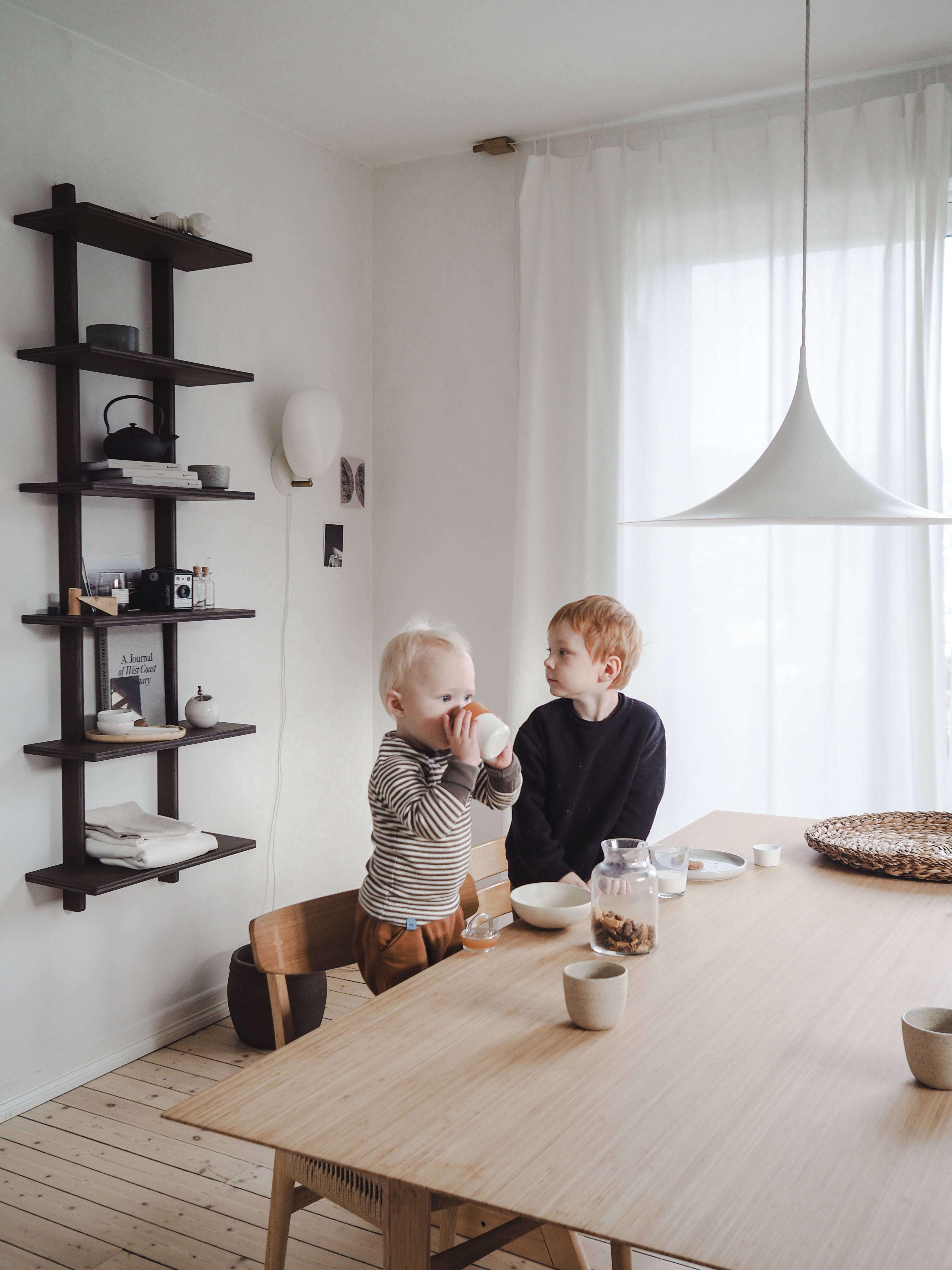
Because the kitchen is visible from the adjoining living area, the designers wanted it to read as a continuous piece of furniture rather than a lineup of ordinary utility cabinets. That decision explains its long, uninterrupted silhouette, integrated appliances, minimal hardware, and consistent grain.
The cabinetry stretches from wall to wall in Ask og Eng’s Rye finish, a warm treatment that emphasizes the bamboo’s vertical pattern. The grain supplies enough movement to keep the elevation interesting, while the simple door and drawer fronts prevent it from becoming visually noisy. It is the design equivalent of someone who dresses simply but owns an excellent coat.
Why Bamboo Works in a Modern Kitchen
Bamboo is technically a grass rather than a tree, although nobody standing in front of a bamboo cabinet is likely to shout, “What magnificent grass storage!” Its botanical classification matters because many commercial bamboo varieties regenerate quickly and can be harvested on a much shorter cycle than conventional timber.
The material can also be strong, lightweight, and dimensionally stable when it is properly processed. Manufactured bamboo panels are created by cutting or breaking the stalks into strips or fibers, drying them, and bonding them under pressure. Different arrangements produce distinct visual effects, including wide horizontal patterns, narrow vertical lines, and denser strand-based surfaces.
Ask og Eng’s vertically oriented bamboo creates a fine, linear appearance that fits naturally within Scandinavian interiors. It has the warmth of wood but a more graphic rhythm, especially when used across a large bank of cabinetry.
Rapid Growth Is Only the Beginning
Bamboo’s renewability is an important advantage, but growth speed alone does not make every bamboo product environmentally responsible. Plantation management, harvesting practices, factory energy use, adhesives, finishes, transportation, product lifespan, and end-of-life options all influence the real environmental impact.
Ask og Eng reports sourcing its material from certified plantations, an important consideration for buyers who want evidence of responsible land management. For any bamboo kitchen, consumers should ask for clear sourcing information rather than accepting a green leaf printed on a brochure as a complete environmental audit.
High-quality bamboo cabinetry may be a sensible sustainable choice when it is responsibly sourced, carefully manufactured, repairable, and durable enough to remain in service for decades. A cabinet that survives several design trends is usually greener than one replaced every time social media declares a new “must-have neutral.”
Inside the All-Bamboo Kitchen
The main cabinetry is paired with a Jura gray limestone countertop containing visible fossils and shell-like markings. Its cool gray color balances the warmth of the Rye bamboo, while its natural variation prevents the room from feeling overly controlled.
Limestone requires a little respect. It can react to acidic foods, stain if spills linger, and scratch under hard use. In this kitchen, cutting boards provide everyday protection. That choice illustrates an important sustainable design principle: natural materials do not have to be indestructible, but owners should understand how to use and maintain them.
Open Storage Without Visual Chaos
Instead of filling the wall with upper cabinets, Ask og Eng used open cross shelves. The decision preserves light and makes the room feel less enclosed during Norway’s darker months. Frequently used objects can remain accessible, while less attractive necessities disappear into the lower drawers and pantry units.
Open shelves are often presented in photographs holding three handmade bowls and one emotionally fulfilled lemon. Real households require more discipline. The concept works best when the items on display are used regularly and share a reasonably consistent visual character. Everything elsespare water bottles, appliance manuals, and the mysterious lid with no known containerneeds a concealed home.
Storage Designed Around Actual Use
The drawers feature integrated cutout pulls, avoiding the need for rows of added knobs and handles. Their internal layouts were planned according to function rather than divided into generic cavities. Cooking tools stay near the cooktop, dishes can be stored close to serving areas, and deep drawers accommodate larger cookware.
This task-based approach matters more than any fashionable finish. A sustainable kitchen should remain useful as routines change, children grow, and new appliances arrive. Flexible drawers, adjustable shelves, accessible corners, and replaceable fittings extend the functional life of the cabinetry.
Integrated Appliances Keep the Room Calm
A concealed dishwasher continues the bamboo frontage without interrupting the long elevation. Wall ovens are integrated into a tall pantry section, while the induction cooktop sits quietly within the stone work surface. The appliances are present, but they do not become the room’s entire personality.
Induction cooking is especially compatible with a modern sustainable kitchen. It transfers energy directly to compatible cookware, offers precise temperature control, and releases less excess heat into the room than gas cooking. It also supports the clean, uninterrupted surface that defines the Ask og Eng aesthetic.
Still, appliance efficiency should not become an excuse for unnecessary replacement. Ask og Eng retained several existing appliances when remodeling and dismantled the former kitchen so many components could be used elsewhere. Reuse is less glamorous than unveiling an entirely new suite of matching equipment, but it often produces a more meaningful environmental benefit.
The Finishing Details Make Bamboo Practical
Raw bamboo would not be suitable for daily exposure to cooking splashes, wet hands, grease, and aggressive experiments involving tomato sauce. Ask og Eng sands the fronts, applies pigmented oil, and seals them with hard-wax oil to improve resistance to moisture and spills.
This treatment preserves the material’s tactile character instead of burying it beneath a thick plastic-looking coating. The surface still appears natural, and the grain remains visible. Over time, an oil-based finish may also allow localized maintenance rather than requiring an entire door to be discarded after minor damage.
Owners should wipe spills promptly, avoid leaving standing water around seams, use gentle cleaning products, and follow the maker’s maintenance instructions. Abrasive pads and harsh degreasers may damage the finish. In other words, clean the cabinets as though they are quality furniture, not the floor of a fast-food kitchen at closing time.
Indoor Air Quality and the Adhesive Question
Manufactured bamboo panels require adhesives, making emissions an important part of product selection. Bamboo itself may be rapidly renewable, but a panel can still contain binders or coatings that affect indoor air quality.
American buyers should request documentation for composite panels and finished cabinetry. Products sold or imported in the United States that fall under federal composite-wood rules should meet TSCA Title VI formaldehyde-emission requirements. Additional third-party testing for low chemical emissions can provide further assurance, particularly in tightly sealed, energy-efficient homes.
Useful questions include:
- Where was the bamboo grown, and is the source independently certified?
- Which adhesives are used in the panels?
- Has the material been tested for formaldehyde and other volatile organic compounds?
- Can damaged doors or drawer fronts be repaired or replaced individually?
- What finish is applied, and how should it be maintained?
- Are spare components likely to remain available?
A credible manufacturer should be able to answer without performing an interpretive dance titled “Trust Us, It’s Green.”
What Makes the Kitchen Genuinely Sustainable?
The strongest environmental feature of the Ask og Eng kitchen is not bamboo in isolation. It is the way several decisions work together.
1. A Durable, Repairable Material System
The cabinetry is designed as lasting millwork rather than disposable decoration. Durable construction, serviceable hardware, maintainable finishes, and replaceable fronts can postpone a future renovation.
2. Reuse Before Replacement
Existing appliances were incorporated into the new composition, while the previous kitchen was carefully taken apart and redirected into other projects. This reduces waste and preserves the energy already invested in manufacturing those components.
3. A Timeless Visual Language
The kitchen avoids highly specific motifs that could feel dated after a few years. Natural grain, simple geometry, warm neutral color, stone, brass, and integrated appliances are easier to live with over the long term than novelty finishes selected mainly for their ability to dominate a “before and after” photograph.
4. Storage That Supports Daily Habits
A kitchen that fits its users is less likely to be torn out because it is frustrating. Purpose-built drawers, accessible work zones, open shelves, concealed appliances, and a pantry wall allow the space to handle cooking, family activity, storage, and entertaining without constant improvisation.
5. Efficient Electric Cooking
The induction cooktop complements the material strategy with efficient performance. Homeowners planning a similar project can also compare ENERGY STAR-certified refrigerators, dishwashers, and electric cooking products when replacement is genuinely necessary.
How to Recreate the Ask og Eng Look
An authentic all-bamboo kitchen is a specialized investment, but its design lessons can be applied at several budget levels.
- Begin with cabinet fronts. Replacing doors and drawer fronts can create a substantial visual change while retaining usable cabinet boxes.
- Choose one dominant natural material. Repetition creates calm. Bamboo, responsibly sourced plywood, oak, or another durable material can establish the room’s identity.
- Limit upper cabinetry strategically. Use open shelves where they improve light and accessibility, but retain enough concealed storage to control clutter.
- Integrate appliances where practical. Panel-ready fronts and flush installations can make the kitchen feel like furniture.
- Pair warm cabinetry with cooler surfaces. Gray limestone, stainless steel, pale recycled composite, or muted tile can balance golden bamboo.
- Use honest finishes. Oils and matte coatings preserve texture and tend to age more gracefully than glossy surfaces that advertise every fingerprint.
- Plan storage before ordering cabinets. Measure cookware, small appliances, dishes, recycling containers, and pantry goods. Design around what actually exists, not a showroom fantasy populated exclusively by matching ceramic jars.
Potential Drawbacks of an All-Bamboo Kitchen
Bamboo cabinetry is not automatically the right choice for every home. Quality varies considerably among manufacturers, and inexpensive panels may use lower-grade adhesives, inconsistent strips, or finishes that do not tolerate kitchen conditions well.
Transportation can also be significant because much of the bamboo used for architectural panels is grown and processed far from the United States. Buyers should consider the complete product rather than judging the raw plant alone.
Natural finishes may need occasional maintenance, and bamboo can still be scratched, stained, or damaged by prolonged moisture. Matching a discontinued finish years later could also be difficult. Requesting extra material for future repairs may be worthwhile.
Finally, a custom bamboo kitchen may cost more upfront than mass-produced cabinetry. Its value depends on construction quality, service life, repairability, and whether the owner genuinely likes the design enough to keep it. Sustainability is not achieved by buying an expensive green kitchen and replacing it when beige becomes unfashionable.
Conclusion: A Kitchen That Practices What It Preaches
Ask og Eng’s all-bamboo kitchen succeeds because it does not treat sustainability as an ornamental feature. Responsible sourcing, material efficiency, appliance reuse, adaptable storage, repairable finishes, and timeless design are integrated into the project’s architecture.
The bamboo provides the visual signature, but the deeper lesson is about restraint. Keep what still works. Select materials carefully. Make storage serve real routines. Choose finishes that can age rather than merely survive a photo shoot. Build a kitchen that feels good enough to remain in place.
That is the quietly radical quality of this design. It is beautiful, certainly, but its real charm is that it appears ready for breakfast, homework, dinner guests, spilled juice, and years of ordinary life. Sustainable design becomes much more convincing when it can handle waffles.
Extended Experience: What Living With an All-Bamboo Kitchen May Feel Like
Imagine the first week after moving into a bamboo kitchen inspired by Ask og Eng. The immediate impression would probably be visual calm. Instead of seeing separate doors, handles, appliances, and upper cabinets competing for attention, you would notice one long plane of warm material. The grain would change subtly as daylight moved across the room, giving the cabinetry more life than a flat painted surface.
Then the practical discoveries would begin. Integrated pulls would feel smooth and intuitive, although guests might spend a second searching for them before realizing the opening is built into the drawer. The absence of bulky hardware would make wiping the fronts easier. There would be no knobs waiting to catch a pocket, headphone cable, or apron tie at precisely the wrong moment.
Purpose-planned drawers would likely produce the greatest daily improvement. Instead of crouching in front of a deep cabinet and excavating three pans to find the fourth, cookware could sit in wide drawers near the cooktop. Plates might occupy another drawer close to the dishwasher, making unloading less of a cross-kitchen migration. A well-designed kitchen saves seconds rather than hours, but those seconds repeat every day.
The open shelving would be both charming and demanding. Favorite cups, mixing bowls, and frequently used ingredients would remain visible and easy to reach. At the same time, the shelves would reveal whether anyone had recently abandoned a grocery receipt, toy dinosaur, or half-empty bag of crackers there. The arrangement would encourage editing, which is either pleasantly mindful or mildly irritating depending on the day.
The bamboo surface would invite touch. Its matte finish and visible fibers would feel warmer than laminate and less formal than highly polished cabinetry. Small scratches might eventually appear, especially in a busy household. Rather than ruining the design, those marks could become part of its patina, provided the finish can be refreshed and damage is addressed before moisture enters exposed edges.
Cleaning habits would change slightly. Splashes around the sink would be wiped promptly, and strong chemical sprays would give way to gentler products. The limestone counter would require cutting boards, trivets, and quick attention to acidic spills. There might be a brief period of treating every surface like a museum artifact, followed by the healthier realization that a kitchen is allowed to look lived in.
The induction cooktop would introduce another adjustment. Compatible cookware would heat quickly, the surface would remain comparatively easy to clean, and the room would receive less waste heat. Someone would inevitably test every pot with a magnet, turning appliance compatibility into an unexpected household science experiment.
Over several months, the strongest experience would probably be how the kitchen blends into the rest of the home. When breakfast is finished and the counters are cleared, it would stop looking like a work zone and return to being a quiet wall of furniture. Yet the tools, appliances, dishes, and recycling bins would still be close at hand.
That balance between visual restraint and everyday usefulness is difficult to achieve. An all-bamboo kitchen should not be judged solely by how sustainable the plant is or how photogenic the grain appears. The real test is whether the kitchen remains pleasant after the novelty fadeswhen someone is late, dinner is burning, the dishwasher needs unloading, and a child has somehow used every clean spoon.
If the cabinetry continues to function gracefully during those moments, the design has achieved something more valuable than a fashionable eco-friendly look. It has become durable domestic infrastructure: warm, adaptable, repairable, and worth keeping.