Note: This article is for educational wellness content and is based on established guidance from reputable U.S. medical, public health, aging, and neuroscience sources. It is not a substitute for personalized medical advice.
Introduction: Your Brain Deserves More Than Crossword Puzzles and Coffee
Your brain is the command center of your life. It helps you remember where you parked, decide whether that “limited-time” online sale is actually worth it, and occasionally saves you from replying-all to an email that should never, ever see daylight. Yet brain health is often treated like something we should worry about only when we get older. That is a bit like waiting until the roof leaks before remembering roofs exist.
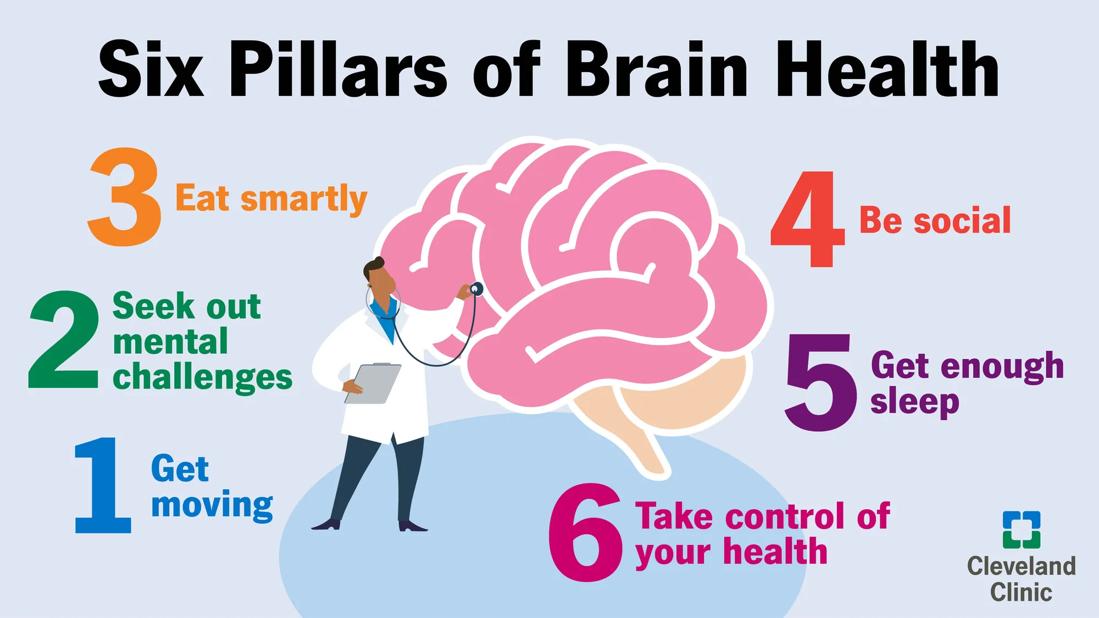
The truth is more encouraging: brain health is shaped every day by ordinary choices. Physical activity, food, sleep, stress management, social connection, and mental stimulation all work together to support memory, focus, mood, learning, and long-term cognitive resilience. These are often called the 6 pillars of brain health, and they are not mysterious, expensive, or reserved for people who own meditation cushions and say things like “neuroplasticity” at dinner parties.
Think of these pillars as a practical maintenance plan for your brain. Not a magic spell. Not a guarantee against every disease. Not a reason to panic if you forgot someone’s name at a party. Instead, they are science-backed habits that help your brain function better now while supporting cognitive health as you age. The goal is not perfection. The goal is consistency, curiosity, and a lifestyle your brain can actually live with.
What Does “Brain Health” Really Mean?
Brain health includes your ability to think clearly, learn new information, remember important details, regulate emotions, make decisions, move your body, communicate, and stay connected with the world around you. It is not just about avoiding dementia or cognitive decline. It is also about feeling mentally sharp enough to handle everyday life without your brain acting like a browser with 47 tabs open.
Healthy brain aging is influenced by genetics, medical history, environment, education, access to care, and lifestyle. You cannot control everything, but you can control more than you may think. The same habits that support the heart, blood vessels, metabolism, and emotional well-being also support the brain. That is why many experts say, “What is good for the heart is good for the brain.” Your brain depends on steady blood flow, oxygen, nutrients, sleep, and a balanced internal environment. It is high-maintenance, yes, but in a lovable genius-cat kind of way.
Pillar 1: Move Your Body to Wake Up Your Brain
Why Exercise Matters for Cognitive Health
Physical activity is one of the strongest lifestyle habits linked to better brain health. Movement improves blood flow, supports heart health, helps regulate blood sugar, lowers inflammation, and may stimulate brain chemicals involved in learning and memory. Regular exercise is also associated with better mood, reduced anxiety, improved sleep, and sharper thinking.
You do not have to train like an Olympic athlete. Your brain is not standing at the door with a clipboard judging your running form. Brisk walking, cycling, swimming, dancing, gardening, strength training, and even short movement breaks can all support brain function. The best exercise is the one you will actually do more than twice before your sneakers become decorative furniture.
How to Put This Pillar Into Practice
Aim for a mix of aerobic activity, strength training, balance, and flexibility. A simple weekly plan might include walking 30 minutes most days, doing bodyweight exercises twice a week, and adding stretching or yoga when your shoulders start behaving like rusty door hinges. If you sit for long hours, stand up and move every 30 to 60 minutes. Your brain appreciates circulation; your lower back will send a thank-you card.
For beginners, start small. Ten minutes of walking after dinner is better than a dramatic fitness plan that collapses by Wednesday. Over time, build toward a routine that challenges your body without making you dread your calendar.
Pillar 2: Eat Smart for a Brain That Runs Smoothly
The Brain Loves a Heart-Healthy Plate
Nutrition plays a major role in brain health because the brain needs steady energy, healthy fats, vitamins, minerals, and protective plant compounds. Research often highlights eating patterns such as the Mediterranean diet, DASH diet, and MIND diet. These approaches emphasize vegetables, leafy greens, berries, beans, nuts, whole grains, olive oil, fish, and other minimally processed foods.
The MIND diet is especially known for combining elements of Mediterranean and DASH-style eating with a focus on foods linked to cognitive health. It encourages brain-friendly choices such as leafy greens, berries, nuts, whole grains, fish, beans, poultry, and olive oil while limiting fried foods, sweets, processed meats, butter, and foods high in saturated fat. Translation: your brain likes plants, fiber, healthy fats, and meals that do not arrive exclusively through a drive-thru window.
Brain-Friendly Foods to Add More Often
Leafy greens such as spinach, kale, romaine, and collards provide folate, vitamin K, and antioxidants. Berries contain polyphenols that help fight oxidative stress. Nuts offer healthy fats and minerals. Beans and lentils provide fiber and steady energy. Fish such as salmon, sardines, and trout provide omega-3 fats. Whole grains help support vascular health and stable blood sugar. Olive oil adds unsaturated fat and makes vegetables taste like they have finally hired a public relations team.
A brain-healthy meal does not need to be fancy. Try oatmeal with berries and walnuts for breakfast, a quinoa bowl with greens and beans for lunch, or grilled fish with roasted vegetables for dinner. If your current diet is mostly beige, start by adding color. Your plate should look less like a printer ran out of ink.
Pillar 3: Sleep Like Your Memory Depends on It
Sleep Is Brain Maintenance, Not Laziness
Sleep is when the brain processes memories, supports learning, regulates mood, and performs important housekeeping. During quality sleep, your brain strengthens useful connections and clears out metabolic waste. Poor sleep, on the other hand, can make attention, decision-making, reaction time, and emotional control wobble like a shopping cart with one bad wheel.
Adults generally need around seven to nine hours of sleep per night, although individual needs vary. The quality and consistency of sleep matter too. A person who sleeps seven steady hours may feel sharper than someone who spends nine hours tossing, turning, and negotiating with the ceiling.
How to Improve Sleep for Brain Health
Keep a consistent sleep schedule, even on weekends when possible. Create a wind-down routine that tells your brain, “The show is closing.” Dim lights, reduce screen exposure before bed, avoid heavy late meals, and keep your bedroom cool, dark, and quiet. Caffeine can be useful in the morning, but after lunch it may turn into a tiny lawyer arguing against your bedtime.
If snoring, gasping, insomnia, restless legs, or daytime sleepiness are ongoing problems, it may be worth discussing them with a health professional. Sleep disorders are common, and treating them can make a meaningful difference in energy, mood, and cognitive performance.
Pillar 4: Manage Stress Before It Manages You
Chronic Stress Can Wear Down the Brain
Short-term stress can help you react quickly, meet a deadline, or escape an awkward conversation near the snack table. Chronic stress is different. When stress becomes constant, it can affect attention, memory, mood, sleep, blood pressure, and inflammation. Over time, unmanaged stress may make it harder for the brain to operate at its best.
Stress management does not mean pretending life is a scented candle commercial. It means building tools that help your nervous system recover. The brain needs pauses, perspective, and moments when it is not being chased by notifications, responsibilities, and the mysterious fear that you forgot something important.
Practical Ways to Lower Mental Load
Start with breathing. Slow breathing can help calm the body’s stress response. Try inhaling for four counts, exhaling for six counts, and repeating for a few minutes. Other helpful practices include walking outside, journaling, prayer, meditation, stretching, talking with someone trustworthy, listening to music, or doing one task at a time instead of pretending multitasking is a personality trait.
Another powerful stress strategy is reducing avoidable friction. Prepare tomorrow’s clothes tonight. Keep a simple to-do list. Set boundaries with screen time. Break large tasks into smaller steps. The brain loves clarity. It does not love being told, “Just handle everything, immediately, forever.”
Pillar 5: Stay Social Because Your Brain Is Not a Solo Project
Connection Supports Memory, Mood, and Resilience
Human beings are wired for connection. Social interaction stimulates attention, language, memory, empathy, and emotional regulation. Meaningful relationships can reduce loneliness, support mental health, and help people stay engaged with life. Even casual conversations can give the brain a workout because listening, responding, reading facial expressions, and remembering details all require cognitive effort.
Social health does not require becoming the mayor of every room. Introverts, please remain calm. Brain-friendly connection can be as simple as a weekly phone call, a walking group, a shared meal, volunteering, a hobby club, or regularly checking in with family and friends. Quality matters more than quantity. One honest conversation can be healthier than 200 likes from people who would not recognize your dog.
Easy Ways to Build Social Connection
Schedule connection the way you schedule appointments. Invite a friend for coffee, join a class, attend community events, volunteer, or create a standing family dinner. If meeting in person is difficult, video calls, voice messages, and online communities can still provide meaningful interaction when used intentionally.
The key is consistency. Relationships grow through small deposits: asking questions, remembering details, showing up, laughing, listening, and occasionally sending memes that are only funny to three people on Earth.
Pillar 6: Challenge Your Mind and Keep Learning
Your Brain Likes Novelty, Not Just Repetition
Mental stimulation supports neuroplasticity, the brain’s ability to adapt, learn, and form new connections. Activities that challenge attention, memory, reasoning, creativity, and problem-solving can help keep the mind engaged. This does not mean you must spend your evenings doing advanced calculus unless that is your idea of a party, in which case, please enjoy your party.
Brain training apps may be entertaining, but real-world learning is often more meaningful. Learning a language, practicing music, taking a course, reading deeply, cooking new recipes, playing strategy games, writing, painting, gardening, repairing things, or learning technology skills can all challenge the brain in useful ways.
How to Make Mental Fitness Stick
Choose activities that are challenging but enjoyable. If an activity is too easy, your brain coasts. If it is too frustrating, you quit and blame the activity for having “bad energy.” The sweet spot is something that makes you stretch a little. Learn a few chords on guitar. Try a new recipe without panicking. Read a book outside your usual genre. Take a class that requires practice.
Combine mental stimulation with other pillars for extra benefit. Take a dance class for movement, learning, and social connection. Join a book club for reading and conversation. Cook a brain-healthy meal with a friend. Your brain loves a bundle deal.
How the 6 Pillars Work Together
The 6 pillars of brain health are not separate boxes. They are more like a team. Exercise can improve sleep. Better sleep can lower stress. Lower stress can make it easier to eat well. Eating well supports energy for movement. Social connection improves mood and motivation. Learning keeps life interesting, which can reduce emotional stagnation. One pillar strengthens another.
This is good news because you do not have to overhaul your life overnight. In fact, please do not. Dramatic lifestyle makeovers often begin with a color-coded spreadsheet and end with takeout eaten directly from the container. A better approach is to build one small habit at a time.
A Simple Brain Health Starter Plan
Start with a 20-minute walk three times this week. Add one serving of leafy greens or berries each day. Set a consistent bedtime for four nights. Practice two minutes of slow breathing before checking your phone in the morning. Call one friend or family member. Learn one new thing, even if it is just how to properly fold a fitted sheet, also known as humanity’s final exam.
Small changes compound. The brain responds to repeated signals. When you repeatedly move, nourish, rest, calm, connect, and learn, you are sending your brain the message that it is safe, supported, and still very much in business.
Common Brain Health Mistakes to Avoid
Waiting Until Later
Brain health is not only for older adults. Habits in early and middle adulthood can influence long-term cognitive resilience. The earlier you begin, the more time your brain has to benefit. That said, it is also never too late to start. The brain remains adaptable across life.
Relying on Supplements Alone
Some supplements may be useful for people with specific deficiencies, but no pill replaces sleep, movement, nutritious food, stress management, social connection, and learning. A supplement cannot outsmart a lifestyle that keeps hitting the snooze button on health.
Ignoring Heart and Metabolic Health
High blood pressure, diabetes, smoking, obesity, untreated sleep apnea, and high cholesterol can affect blood vessels and brain health. Regular checkups and appropriate care can help protect both the heart and the brain. Your brain is not floating in a separate VIP room. It is connected to the rest of your body.
Trying to Be Perfect
Perfection is not a pillar of brain health. Consistency is. One poor night of sleep, one stressful week, or one meal featuring fries does not ruin your brain. What matters is the pattern you return to most often.
of Real-Life Experience: What Practicing the 6 Pillars Actually Feels Like
Building brain health in real life rarely looks like a glossy wellness advertisement. It looks more like trying to go for a walk while your schedule argues back. It looks like buying spinach with heroic intentions and then discovering it has become soup in the refrigerator drawer. It looks like promising to sleep earlier and then remembering at 11:47 p.m. that you wanted to research “one quick thing,” which somehow becomes the history of kitchen tiles.
The most useful experience people often have with the 6 pillars of brain health is learning that small habits are more powerful than dramatic promises. A person may begin with walking around the block after dinner. At first, it feels too simple to matter. But after two weeks, sleep feels a little easier. After a month, the walk becomes a mental reset. Problems that felt tangled at 6 p.m. seem less dramatic after 20 minutes outdoors. The brain likes rhythm. It likes oxygen. It likes not being trapped in a chair all day like a houseplant with email.
Food changes can feel similar. Instead of attempting a perfect brain-health diet, many people do better by adding before subtracting. Add berries to breakfast. Add beans to soup. Add greens to sandwiches. Add nuts instead of a second ultra-sweet snack. Over time, the palate adjusts. The goal is not to become a person who whispers lovingly to kale. The goal is to make the healthier choice normal enough that it no longer requires a motivational speech.
Sleep is often the pillar people resist until life forces the issue. Poor sleep has a sneaky way of making everything harder: cravings get louder, patience gets shorter, and focus runs away like it owes you money. A consistent bedtime routine can feel boring at first, but boring is exactly what the brain needs at night. Dim lights, fewer screens, a cooler room, and a predictable schedule can become a form of self-respect.
Stress management is another pillar that becomes practical only when it is simple. Most people do not need a complicated system. They need a pause before reacting, a walk before spiraling, a notebook before overthinking, or a breathing practice before opening another stressful message. The best stress tools are the ones available on an ordinary Tuesday.
Social connection and learning may be the most underrated pair. Joining a class, calling a friend, volunteering, or practicing a hobby gives the brain novelty and belonging at the same time. That combination is powerful. A brain that feels connected and curious has more reasons to stay engaged.
In the end, the 6 pillars are not a strict program. They are a lifestyle conversation with your brain. Some days you will nail it. Some days your “brain health plan” will include cereal for dinner and falling asleep with the lights on. Fine. Begin again the next morning. Brains are surprisingly forgiving when we stop treating health like an all-or-nothing exam.
Conclusion: Build a Brain-Friendly Life One Habit at a Time
The 6 pillars of brain health are simple, but they are not shallow. Move your body, eat nourishing foods, sleep well, manage stress, stay socially connected, and keep learning. Together, these habits support memory, focus, emotional balance, cognitive resilience, and long-term well-being.
You do not need to transform your entire life by Monday. Start with one habit that feels doable. Walk after lunch. Add berries to breakfast. Set a bedtime alarm. Call someone you care about. Try a new skill. Repeat. Your brain does not need a grand speech. It needs daily evidence that you are taking care of it.
Brain health is not about chasing perfection or fearing aging. It is about building a life that keeps your mind active, your body supported, your relationships meaningful, and your future self quietly cheering you on.