Some homes are blessed with sun-drenched windows, airy rooms, and houseplants that look like they have their own skincare routine. The rest of us have one decent windowsill, a pothos hanging on for dear life, and a basil plant that turns dramatic every Tuesday. That is where the best grow lights come in.
A good indoor grow light is not just a fancy lamp wearing a gardening badge. It gives plants the light they need for photosynthesis when natural sunlight is weak, inconsistent, or completely missing. Whether you are starting tomato seedlings, keeping herbs alive through winter, brightening a shelf of tropical houseplants, or building a mini indoor jungle, the right full-spectrum LED grow light can make the difference between “lush and leafy” and “crispy salad garnish.”
This guide focuses on real-world grow light categories: bulbs, clip-ons, panels, hanging fixtures, shelf systems, stylish lamps, and serious grow-tent lights. Instead of choosing products by hype alone, we look at spectrum, brightness, coverage, adjustability, timer features, heat output, ease of setup, and the kind of gardener each option serves best.
How to Choose the Best Grow Light for Indoor Plants
Before buying a plant light, remember this: plants do not care how futuristic a grow light looks. They care about usable light, distance, duration, and consistency. A light can glow like a spaceship and still disappoint your seedlings if it is too far away or too weak.
Full-spectrum light is the safest bet
For most indoor gardeners, a full-spectrum grow light is the easiest choice. Full-spectrum LEDs include a balanced range of wavelengths that supports seedlings, leafy greens, herbs, foliage houseplants, and many flowering plants. Blue-heavy light helps with compact leafy growth, while red light supports budding, flowering, and fruiting. White or balanced full-spectrum light is usually more pleasant in living spaces because your home does not end up looking like a nightclub for tomatoes.
Do not judge by watts alone
Watts measure energy use, not plant happiness. A modern LED grow light can produce strong plant-usable light with fewer watts than an older bulb. When available, look for PPF or PPFD information, coverage area, and recommended hanging height. For casual houseplants, a modest LED bulb may be enough. For seed starting, herbs, vegetables, or grow tents, you need more intensity and better coverage.
Timers are not optional if you have a life
Most seedlings need roughly 14 to 18 hours of light per day, herbs and leafy greens often do well around 12 to 14 hours, and many houseplants prefer about 6 to 14 hours depending on the species and natural light in the room. A programmable timer prevents accidental plant insomnia. Plants need darkness too, so leaving lights on 24/7 is not a shortcut; it is more like making your fern work the night shift.
The 11 Best Grow Lights for Every Green Thumb
1. Leoter 4-Head LED Grow Light Best Overall for Beginners
The Leoter 4-Head LED Grow Light is a practical favorite for new plant parents because it is flexible, affordable, and easy to position. Its four gooseneck arms let you aim light at several small plants or concentrate all the beams on one needy diva of a calathea. Many versions include dimming levels, adjustable spectrum modes, and built-in timing options.
This is best for apartment gardeners, herb shelves, office plants, and anyone who wants a plug-and-grow setup without building a science lab in the living room. The clamp base is especially useful for bookshelves, plant racks, and desks. It is not the strongest option for fruiting crops, but for everyday houseplants and small herbs, it delivers a lot of usefulness for the price.
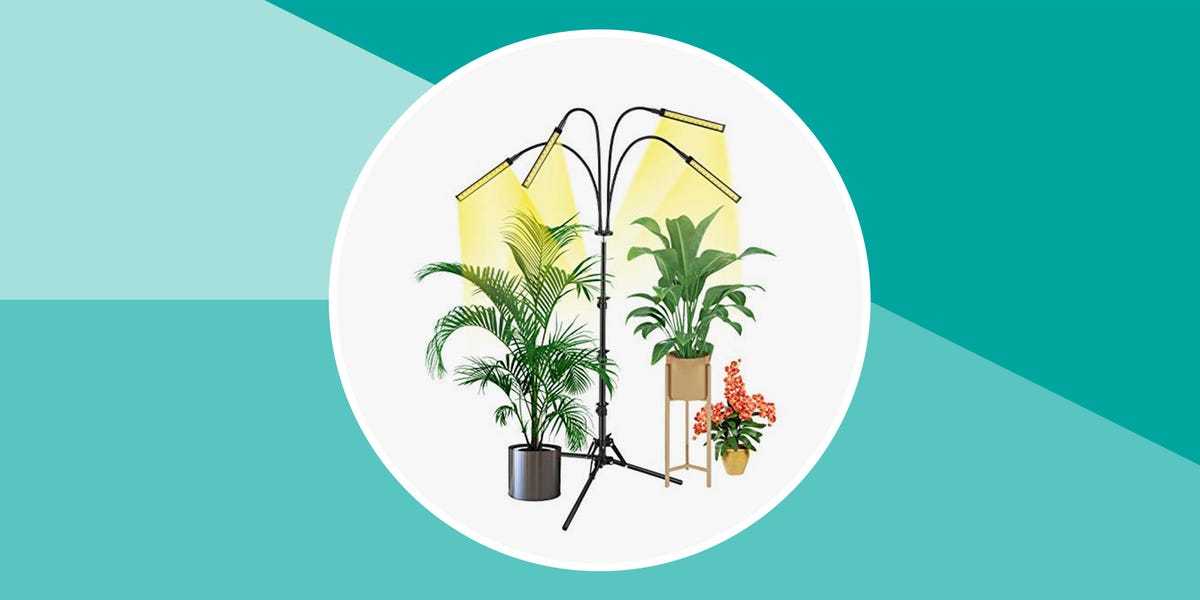
2. LBW LED Grow Light With Stand Best for Tall Plants
The LBW LED Grow Light With Stand is a smart choice when your plant collection includes taller houseplants, young citrus, fiddle-leaf figs, or fast-growing herbs. The adjustable tripod-style stand makes it easier to raise the light as plants grow, which is important because distance affects light intensity.
Unlike clip-on grow lights that need a shelf or table edge, this freestanding design can be placed near a floor plant, beside a windowsill, or in a dark corner that needs rescuing. It is especially helpful for renters who cannot drill holes or mount fixtures. Look for a model with a stable base, good height range, and full-spectrum LED output.
3. GE BR30 LED Grow Light Bulb Best Simple Grow Light Bulb
If you already own a lamp with a standard socket, the GE BR30 LED Grow Light Bulb is one of the easiest upgrades. Screw it in, point it toward the plant, and you have a low-heat, energy-efficient plant light without buying a whole fixture. GE offers grow bulbs designed for seeds and greens as well as flowering and fruiting stages, so choose the version that matches your plants.
This bulb is ideal for a single plant, a small herb pot, a seed tray under a desk lamp, or a decorative fixture placed near a plant stand. Its main limitation is coverage. A bulb can only illuminate so much area, so it is not the best choice for a wide shelf of seedlings. Still, for simplicity, it is hard to beat.
4. SANSI LED Grow Light Bulb Best High-Output Bulb for Small Spaces
The SANSI LED Grow Light Bulb is a strong pick for gardeners who want more punch from a bulb-style light. Many SANSI grow bulbs are known for bright full-spectrum output and ceramic heat-dissipation designs. That makes them useful for small plant corners where you want intensity without installing a large panel.
Use this type of bulb in a sturdy clamp lamp or adjustable floor lamp, and position it according to the plant’s needs. Succulents, herbs, compact citrus, and high-light houseplants can benefit from the extra brightness. Just remember: bright bulbs need thoughtful placement. Too close, and leaves may show stress. Too far, and seedlings may stretch like they are auditioning for a yoga retreat.
5. Mars Hydro TS1000 Best Grow Light for Seed Starting and Small Grow Tents
The Mars Hydro TS1000 is a serious step up from small household grow lamps. This square LED panel is designed for stronger, more even coverage, making it excellent for seed starting, leafy greens, herbs, compact vegetables, and small grow tents. It typically includes dimming control, which helps you lower intensity for young seedlings and increase it as plants mature.
This is a great choice for gardeners who want to start tomatoes, peppers, basil, lettuce, or flowers indoors before transplanting. It is also suitable for people growing year-round greens in a dedicated space. Because it is brighter than decorative plant lights, it works best in a grow tent, utility room, garage setup, or plant station rather than right next to your reading chair.
6. Spider Farmer SF-Series LED Grow Light Best for Serious Indoor Growers
Spider Farmer grow lights are popular among serious indoor gardeners because they offer strong full-spectrum output, broad coverage, and efficient LED boards. A smaller SF-Series model can handle herbs and seedlings, while larger versions are better for grow tents, hydroponic systems, and fruiting vegetables.
This is not the grow light you buy for one lonely succulent on a nightstand. It is for gardeners who care about canopy coverage, dimming, plant spacing, and maximizing growth indoors. If you are growing tomatoes, peppers, microgreens, or multiple trays of seedlings, Spider Farmer is worth considering. The tradeoff is cost and brightness: these lights are powerful, and your houseguests may wonder whether you are communicating with Mars.
7. Barrina T5 LED Grow Light Strips Best for Shelves and Plant Cabinets
Barrina T5 LED grow light strips are excellent for plant shelves, cabinets, propagation stations, and compact indoor gardens. They are slim, easy to mount, and useful when you want even light across several small pots. Many gardeners use them under wire shelving, bookcases, or greenhouse cabinets.
Strip lights are especially good for African violets, pothos cuttings, philodendrons, peperomias, microgreens, and starter trays. They also keep the setup neat because the lights can be mounted overhead instead of dangling like a confused chandelier. For best results, choose full-spectrum strips, keep them close enough to the plants, and use a timer.
8. AeroGarden Trio Grow Light Best Countertop Grow Light
The AeroGarden Trio Grow Light is a tidy, attractive option for countertops, kitchen herbs, and small decorative plants. It suits gardeners who want a cleaner look than clamp lights and do not want to commit to a full hydroponic system. The design is compact, making it useful for basil, parsley, mint, small pothos, or compact leafy plants.
This category shines in kitchens because it keeps plants accessible. You can snip herbs while cooking instead of discovering a forgotten basil corpse in the fridge drawer. The downside is height. Countertop grow lights are usually best for compact plants, not sprawling tomatoes or tall tropicals.
9. Soltech Aspect Grow Light Best Stylish Hanging Grow Light
The Soltech Aspect Grow Light is for plant lovers who care about both plant health and interior design. It looks more like a modern pendant lamp than a typical grow light, which makes it a strong choice for living rooms, dining areas, and stylish plant corners.
This hanging grow light works well over a single statement plant or a small grouping. It is especially appealing for people who do not want purple light, exposed panels, or a grow-tent vibe in the main living area. It is more expensive than basic lights, but it solves a real problem: how to give plants proper light without making your home look like a hardware aisle.
10. Soltech Grove or Similar Under-Cabinet Grow Light Best for Small Apartments
An under-cabinet grow light, such as the Soltech Grove style, is ideal for small homes, kitchens, shelves, and workspaces. These slim bar lights can illuminate a row of herbs, small houseplants, or propagation jars while staying out of the way.
This kind of light is especially useful where surface area is limited. Mount it under a shelf, place plants below, and suddenly a dark corner becomes a mini greenhouse. Look for dimming, a timer, multiple mounting options, and a pleasant white spectrum. The best under-cabinet grow lights blend into the room while quietly doing the plant-parenting work.
11. Gardener’s Supply Stack-n-Grow or Multi-Tier System Best for Seedlings
For gardeners starting lots of seeds, a multi-tier grow light system is the most organized option. Stackable systems from gardening suppliers provide wide, even light over trays, which helps prevent leggy seedlings. They also make watering, labeling, and rotating trays much easier.
This is the best grow light setup for spring seed starting, microgreens, flower seedlings, vegetable transplants, and ambitious gardeners who believe “just a few seeds” means 84 tomato plants. A shelf system costs more upfront, but it saves space and gives more consistent results than balancing trays across random windowsills.
Best Grow Light by Plant Type
For seedlings
Choose a bright LED panel, strip light, or shelf system. Keep the light close enough to prevent stretching, usually a few inches above seedlings depending on the fixture. Raise the light as plants grow. Seedlings generally need long daily light exposure and consistent darkness at night.
For herbs and leafy greens
Basil, cilantro, lettuce, parsley, mint, and spinach need more light than many people expect. A countertop grow light can support a small kitchen herb setup, but panels or shelf strips are better for bigger harvests. Give herbs steady light and avoid placing them too far from the fixture.
For succulents and cacti
Succulents usually need high light. A strong bulb, LED panel, or bright strip setup works better than a weak decorative lamp. Watch for stretching, faded color, or leaning; those are signs your succulent is asking for more light in the most passive-aggressive way possible.
For tropical houseplants
Philodendrons, pothos, monsteras, calatheas, ferns, and peperomias often appreciate bright indirect light or supplemental full-spectrum light. A clip-on, bar light, or stylish hanging fixture can work well. Avoid blasting shade-tolerant plants with intense light from two inches away.
For flowering and fruiting plants
Flowering plants, citrus, tomatoes, and peppers need stronger light than casual foliage plants. Choose a powerful full-spectrum LED panel with good coverage and adjustability. For fruiting crops, weak light usually leads to lush leaves, poor blooms, and disappointment served fresh.
Common Grow Light Mistakes to Avoid
Putting the light too far away
Light intensity drops as distance increases. If seedlings are tall, pale, or leaning, the light may be too far away or too weak. Adjust height gradually and follow the manufacturer’s recommendations.
Using the wrong light for the job
A cute desk grow light may keep a pothos happy, but it will not power a shelf of tomato seedlings. Match the light to your plant type, growing area, and goals.
Skipping the timer
Consistency matters. A timer keeps plants on schedule and protects you from forgetting to turn lights on or off. It is the cheapest upgrade that makes you look like a more responsible gardener than you may feel before coffee.
Ignoring heat and airflow
LEDs run cooler than many older light types, but strong fixtures can still warm the growing area. Make sure plants have airflow, especially seedlings and densely packed shelves. Good airflow helps reduce damping-off and fungal issues.
Practical Experience Notes: What Actually Matters After You Set It Up
After working with indoor grow light setups, the biggest lesson is that the “best” light is the one that fits your routine. A powerful panel is wonderful, but if it is too bright for your bedroom, too awkward to hang, or too annoying to adjust, you may stop using it. A smaller lamp with a timer that runs every day will often outperform a stronger light that sits unplugged because it turned your living room into a vegetable interrogation chamber.
For beginners, the easiest success usually comes from starting with one problem area. Maybe your kitchen herbs keep stretching toward the window. Maybe your snake plant is fine, but your basil looks like it has been emotionally abandoned. Maybe your seed trays grow tall and floppy before they ever meet the garden. Pick that one problem and match a light to it. A simple bulb or clip-on light can rescue a single plant. A strip light can transform a shelf. A panel can turn a seed-starting corner into a reliable spring factory.
Another experience-based tip: measure the space before buying. Many grow lights look compact online, then arrive with cords, stands, clamps, hanging kits, and power bricks that need more room than expected. Check the height your plants will reach, not just their size today. Seedlings grow upward fast, basil gets bushy, and tomatoes quickly become the golden retrievers of the plant world: enthusiastic, sprawling, and somehow everywhere.
Light color also affects whether you enjoy the setup. Red-and-blue lights can work, but many people dislike living with the purple glow. For bedrooms, kitchens, offices, and living rooms, white full-spectrum LEDs are usually easier on the eyes. If a grow light makes your home feel uncomfortable, you will eventually turn it off, and plants are famously bad at thriving under imaginary light.
The best results come from combining light with basic plant care. A grow light will not fix soggy soil, tiny pots, no drainage, or forgotten watering. In fact, better light can make plants grow faster, which means they may need more water and nutrients than before. Watch the leaves. Compact, colorful, upright growth usually means the light is working. Pale, stretched, leaning growth usually means the plant wants more intensity or closer placement. Crispy edges may mean too much light, heat, low humidity, or watering stress.
Finally, give your setup two to four weeks before judging it. Plants respond gradually. Seedlings may perk up quickly, but houseplants often show improvement through new leaves rather than instant transformation. The goal is not to create a perfect laboratory. The goal is to give your plants steady, useful light so they can grow better indoors while you enjoy the tiny miracle of fresh leaves in a room that used to be too dark for anything except dust.
Conclusion
The best grow lights for every green thumb depend on your space, your plants, and your gardening ambitions. A GE or SANSI bulb is perfect for a single plant or small lamp setup. A Leoter or LBW light is friendly for beginners and flexible plant corners. Barrina strips and shelf systems make seed starting and plant cabinets easier. Soltech fixtures blend grow power with home decor. Mars Hydro and Spider Farmer panels deliver the intensity needed for serious indoor growing.
If you are unsure where to start, choose a white full-spectrum LED grow light with a timer, enough coverage for your plant area, and easy adjustability. Then place it correctly, run it consistently, and let your plants do what plants do best: grow, occasionally confuse you, and make your home feel more alive.