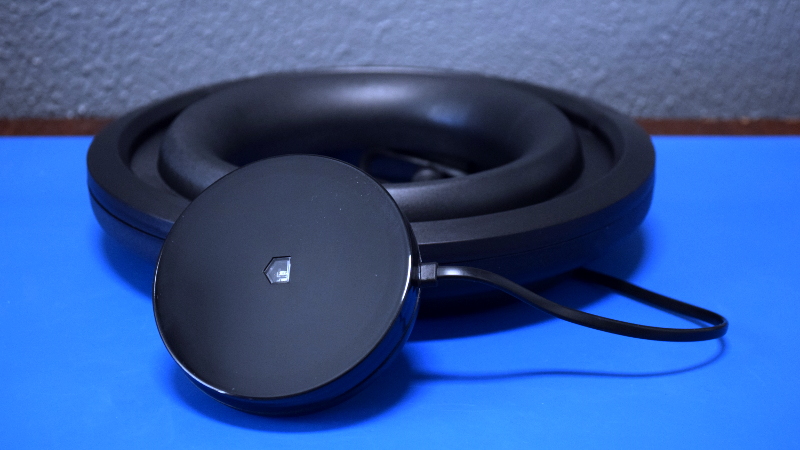
The Refuel Propane Tank Monitor is one of those smart-home gadgets that makes you smile, raise an eyebrow, and ask, “Did my grill really need Wi-Fi?” On paper, the idea is brilliant: place your standard 20-pound propane tank on a smart scale, connect it to the Wink app, and check your fuel level from your phone before burgers, ribs, or an ambitious batch of grilled peaches meet their destiny.
In practice, Refuel is a fascinating snapshot of early Internet of Things design. It came from the Quirky + GE + Wink era, when companies were racing to make everyday objects smarter, shinier, and occasionally more complicated than a charcoal grill at a rainstorm picnic. But under the plastic shell, this propane tank monitor is not a cheap novelty. A teardown reveals thoughtful engineering, weather-conscious construction, an Electric Imp Wi-Fi module, a separate scale controller, Hall effect sensors, magnets, LED feedback, and enough technical charm to make hardware tinkerers lean forward in their chairs.
This teardown-style review looks at what the Refuel Propane Tank Monitor was designed to do, how its internal hardware works, why it is more clever than it first appears, and whether the concept still makes sense today for grill owners, RV users, smart-home fans, and weekend pitmasters who do not enjoy discovering an empty tank halfway through dinner.
What Is the Refuel Propane Tank Monitor?
The Refuel Propane Tank Monitor is a smart propane tank gauge designed for outdoor grills that use non-hanging, standard 20-pound propane cylinders. Instead of attaching to the valve like a pressure-style gauge, Refuel uses weight. The propane tank sits on a reinforced ring-shaped base, and the device calculates fuel remaining by measuring how heavy the cylinder is.
That approach makes sense because portable propane cylinders are already weight-based objects. A common 20-pound grill tank usually weighs around 17 pounds empty, although the exact tare weight is stamped on the collar. When properly filled, it contains about 20 pounds of propane, bringing the total to roughly 37 pounds. Subtract the tare weight from the current tank weight, and you get a practical estimate of how much propane remains. In other words, Refuel is a bathroom scale for your grill tank, except it reports to an app instead of silently judging your late-night snack choices.
First Impression: A Smart Scale Wearing Grill Gear
The Refuel system has two main external parts. The first is the scale base, a low, square-ish ring where the propane cylinder sits. The second is the sensor module, often called the puck or base unit, which connects to the scale through a flat cable. The puck attaches magnetically to the grill frame or tank area and displays fuel level with LEDs.
That physical design is more practical than it sounds. Propane tanks live in dirty places: under grills, near patios, inside storage cabinets, and sometimes beside mystery spider neighborhoods. A tank monitor must survive heat, vibration, moisture, dust, and the occasional “I’ll clean the grill next weekend” promise. Refuel uses a separated module and a rugged base to keep the user interface accessible while the scale stays under the tank doing the heavy lifting.
How Refuel Measures Propane Level
Most people check propane with one of three methods: lifting the tank and guessing, pouring warm water down the side to feel the cold fill line, or placing the cylinder on a scale and subtracting the tare weight. Refuel automates the third method.
The Weight-Based Formula
The basic math is simple:
Propane remaining = current total tank weight – tare weight
For example, if your tank weighs 28 pounds and the collar says the tare weight is 17 pounds, you have about 11 pounds of propane left. That is a bit over half of a standard 20-pound fill. Refuel turns that calculation into a digital reading, then sends the information to the Wink app and displays a rough local reading with LEDs.
This is more accurate than a quick tank-lift test and usually more useful than pressure gauges, which can be misleading because propane pressure depends heavily on temperature. A tank can show pressure until it is nearly empty, because liquid propane vaporizes to maintain pressure. Weight tells the more honest story.
Opening the Refuel: The Interesting Stuff Starts Fast
A teardown of the Refuel Propane Tank Monitor reveals that this gadget is not just a load cell slapped inside plastic. The electronics are more elaborate and, honestly, more interesting than expected.
The Wi-Fi Brain: Electric Imp IMP002
Inside the wireless module is an Electric Imp IMP002, a 32-bit Wi-Fi-enabled module used in connected devices before cheaper Wi-Fi microcontrollers became everywhere. Electric Imp modules were known for making Wi-Fi provisioning and cloud connectivity easier for product designers. In Refuel, the module handles wireless networking and communication with the Wink ecosystem.
The setup method feels very “early smart home.” Instead of creating a temporary Wi-Fi hotspot, Refuel uses a screen-flashing method known as BlinkUp. The user places a phone screen close to the sensor module, and the phone flashes encoded light patterns that transmit Wi-Fi credentials to the device. It is clever, slightly magical, and also the sort of setup process that can make a normal person wonder if they accidentally joined a secret society for appliances.
LED Feedback on the Module
The module includes bi-color LEDs around the edge. These provide a local fuel gauge and connection status indicators. That matters because a smart device should still be useful when your phone is not nearby. A grill-side LED reading lets you check propane without opening an app, unlocking your phone, updating the app, accepting new terms, and forgetting why you walked outside in the first place.
The Scale Base: Not a Typical Load Cell
The biggest surprise is inside the scale base. Many people would expect a conventional load cell: a metal beam or strain gauge that changes resistance under force. Instead, Refuel uses a more unusual arrangement involving three Hall effect sensors and spring-mounted magnets arranged in a triangle.
Hall effect sensors detect magnetic fields. In this design, the weight of the propane tank slightly changes the position of magnets relative to sensors. The electronics can interpret those changes as a weight reading. Three sensing points help distribute and measure the load more evenly, which is important because a propane cylinder may not sit perfectly centered every time.
This is a surprisingly elegant solution. It avoids some exposed mechanical strain components and allows the sensors to be encapsulated for weather resistance. For a device that many buyers probably saw as a $50 grill accessory, the engineering is more steakhouse than dollar-menu.
The Hidden Controller: PIC16F1823 Microcontroller
The scale base contains its own small circuit board with a Microchip PIC16F1823 microcontroller. This chip reads the Hall effect sensors, processes the measurement data, and communicates with the wireless module. That means the scale base is not just a passive sensor. It is an independent measuring subsystem.
This separation is smart design. The scale side handles real-world measurement and calibration. The wireless module handles app communication, LEDs, and cloud connectivity. By dividing the responsibilities, the engineers made the system easier to control, protect, and troubleshoot.
Communication Between the Scale and Wi-Fi Module
The scale connects to the module through a four-wire cable. Two wires provide power, and two carry data. The teardown showed that communication appears to use a simple UART-style serial protocol rather than something like I2C.
At startup, the wireless module requests information from the scale controller, including what appears to be firmware or calibration data. After that, the system exchanges regular heartbeat signals, followed by data packets likely representing current tank weight. For hardware hackers, this is where the Refuel becomes especially tempting. If the protocol were fully decoded, the scale base could potentially be reused with a different microcontroller or home automation system.
Why Refuel Was Overbuilt in a Good Way
The Refuel Propane Tank Monitor may sound like a silly gadget at first, but the teardown suggests real engineering effort. The scale sensors are protected. The cable includes a connector. The module uses a real Wi-Fi platform. The system has local LEDs. The base design supports a common propane cylinder use case. It is not a disposable novelty pretending to be smart; it is a genuine connected measurement device wrapped around a very specific grilling problem.
That said, the product also shows the weakness of many early smart-home devices. It depends on a cloud platform, account setup, app compatibility, and a Wi-Fi onboarding method that can feel fussy. For a grill owner who only wants to know whether there is enough propane for chicken wings, that may be more technology than the moment requires.
Safety and Practical Limits
Refuel is designed to monitor a propane tank, not modify it. That distinction matters. Propane cylinders are pressure vessels, and users should not tamper with valves, OPD devices, regulators, or tank fittings. If you are inspecting or repairing a monitor like Refuel, disconnect the propane tank, close the valve, work away from open flame, and do not treat the cylinder itself as a DIY playground.
The monitor was built for standard 20-pound outdoor grill tanks with non-hanging setups. It is not ideal for every grill, patio heater, RV cylinder, or large home propane tank. Hanging tanks already use a weight-based support system, and large fixed tanks need different monitoring technology, often ultrasonic or float-based systems designed for larger capacities.
Refuel vs. Other Propane Level Methods
Warm Water Method
The warm water method is cheap and reliable enough for quick checks. Pour warm water down the side of the tank, then feel where the metal turns cool. That cool line suggests the propane level. It is not precise, but it is fast and requires no batteries, app, account, Wi-Fi signal, or ritualistic screen flashing.
Pressure Gauge
A pressure gauge is inexpensive and easy to install between the tank and regulator. However, pressure readings can be affected by temperature and may not provide a linear fuel-level estimate. It is better than guessing, but not always better than weighing.
Bathroom Scale or Hanging Scale
A simple scale gives a very practical reading. Check the tank collar for the tare weight, weigh the tank, subtract tare weight, and you know the pounds of propane left. The downside is convenience. You may need to disconnect and lift the tank, which is not everyone’s favorite patio activity.
Ultrasonic Monitor
Modern propane monitors often use ultrasonic sensors attached to the bottom of the tank. These measure liquid height rather than total tank weight. They can be excellent for RVs, multi-tank setups, and users who want Bluetooth readings without relying on an older cloud ecosystem.
Who Would Actually Use a Refuel Propane Tank Monitor?
Refuel makes the most sense for people who grill often, dislike surprise empty tanks, enjoy connected gadgets, and already live comfortably inside a smart-home app. It also makes sense for remote-check situations: maybe you are leaving work and want to know whether to grab a tank exchange before the cookout, or you maintain a vacation cabin grill and want to avoid hauling a tank unnecessarily.
For casual grillers, a second full propane tank may be the simpler solution. When one tank runs out, swap it and refill the empty one later. It is not high-tech, but neither is a spatula, and spatulas have had a pretty good product run.
Teardown Verdict: Clever, Quirky, and Very Much of Its Era
The Refuel Propane Tank Monitor is a wonderful example of early smart-home optimism. It took a real annoyancerunning out of propane at the worst possible timeand solved it with a Wi-Fi scale, an app, LEDs, cloud connectivity, magnetic mounting, and a surprisingly sophisticated sensor base.
Was it necessary? Not always. Was it over-engineered? A little. Was it more impressive inside than expected? Absolutely.
The best part of the teardown is discovering that Refuel was not lazy hardware. The Hall effect sensor arrangement, potted electronics, PIC microcontroller, Electric Imp module, and serial communication all point to a product that was designed with care. Even if the market did not fall in love with it, the hardware deserves respect.
Hands-On Experience: Living With a Smart Propane Monitor
Using a device like the Refuel Propane Tank Monitor changes the way you think about grilling fuel. Without a monitor, propane is invisible until it is suddenly very visible in its absence. You turn the knob, hit the igniter, and instead of a satisfying whoosh, you get silence. That silence has ruined more backyard confidence than overcooked hot dogs.
The most useful experience with Refuel-style monitoring is planning. Before a cookout, you can check whether the tank is worth trusting. If the app says you are low, you have time to refill or exchange the cylinder before guests arrive. That is especially helpful for long cooks. Burgers can survive a quick tank swap. A pork shoulder or brisket is less forgiving. Running out of propane during a slow cook feels like your grill filed a complaint with the universe.
Another practical benefit is learning your own propane habits. Many people assume a tank lasts “a while,” which is technically true and also completely useless. A smart monitor helps you notice patterns: high-heat searing drains fuel faster, multi-burner cooking burns through propane quickly, and weekend grilling season can empty a tank sooner than expected. Once you see usage over time, you start treating propane less like a mystery and more like an ingredient.
The downside is setup and dependency. A simple scale works forever if you do the math. A smart monitor needs batteries, an app, Wi-Fi, cloud support, and correct tare-weight settings. If you change tanks and forget to confirm the tare weight, your reading may be off. If the device loses connectivity, the local LED gauge still helps, but the “smart” part becomes less smart. This is the classic smart-home tradeoff: convenience when everything works, comedy when one small thing does not.
In real backyard use, the best approach is not to treat Refuel as the only source of truth. Use it as a helpful early warning system. If it says the tank is low, believe it. If it says the tank is full but the cylinder feels suspiciously light, check the stamped tare weight and verify with a scale. Technology is great, but gravity has excellent uptime.
For tinkerers, the experience is even better. Refuel is the kind of device that invites curiosity. The scale base could inspire projects for measuring other outdoor supplies, tracking consumables, or building a local-only propane dashboard. Even if the original cloud ecosystem is not ideal, the hardware teardown shows a durable sensing platform with real reuse potential. That makes Refuel more than a discontinued smart grill accessory. It is a small lesson in product design, measurement engineering, and the charming weirdness of the first big smart-home wave.
Conclusion
The Refuel Propane Tank Monitor is part grill accessory, part smart-home artifact, and part engineering surprise. It solves a simple problem with a surprisingly sophisticated system: a weight-sensing base, Hall effect sensors, a PIC microcontroller, an Electric Imp Wi-Fi module, local LEDs, and app-based monitoring. It may not be the most necessary gadget ever made, but it is far from pointless. For frequent grillers, it offers convenience. For hardware fans, it offers a fun teardown. For SEO readers searching for a smart propane tank gauge, it offers a clear reminder that not every connected device is silly on the insideeven when the outside says, “Yes, your propane tank has entered the cloud.”