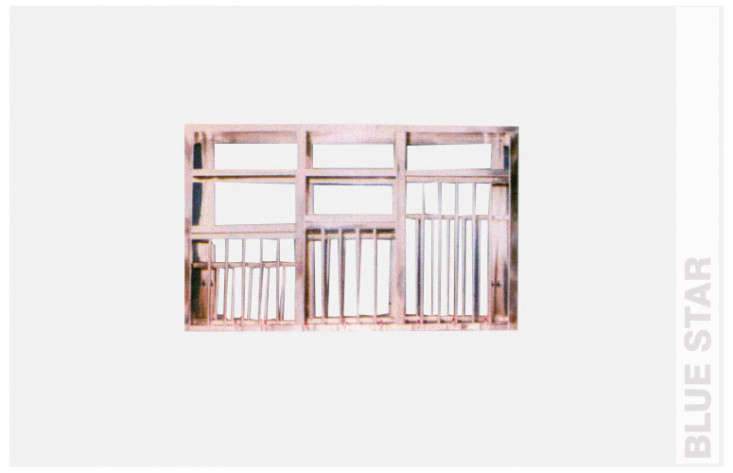
A stainless steel plate rack is one of those kitchen objects that rarely gets a dramatic entrance. Nobody unveils one at a dinner party. Nobody posts a heartfelt anniversary tribute to the rack beside the sink. Yet when the right one quietly keeps plates upright, counters dry, cabinets orderly, and freshly washed dishes from collapsing like porcelain dominoes, it becomes surprisingly difficult to imagine the kitchen without it.
Whether used as a dish drying rack, a cabinet organizer, a countertop plate holder, or part of a wall-mounted storage system, a stainless steel plate rack combines a simple idea with a lot of practical engineering. The best designs do more than provide a row of metal slots. They support dishes securely, allow air to circulate, manage dripping water, fit the available space, and remain easy to clean.
Modern dish-rack testing and product design increasingly emphasize drainage, stability, capacity, cleanability, and efficient use of counter space. Large comparative tests have evaluated racks on precisely these everyday factors, while current designs range from compact ten-plate holders to expandable systems, two-tier drainers, foldaway racks, and models that direct water straight into the sink.
What Is a Stainless Steel Plate Rack?
At its simplest, a stainless steel plate rack is a framework designed to hold plates vertically or at a slight angle. The spaces between its dividers keep individual pieces separated, which can improve organization and, when the plates are wet, expose more surface area to circulating air.
The term covers several closely related products:
- Countertop drying racks for dishes washed by hand.
- Compact plate holders that organize plates inside cabinets or drawers.
- Over-the-sink racks that let water drain directly into the basin.
- Wall-mounted plate racks that free up work surfaces.
- Two-tier dish drainers that use vertical space for plates, bowls, mugs, and utensils.
- Integrated cabinet drying racks that combine drying and storage in one location.
Current products illustrate just how varied the category has become. Some stainless steel racks are compact units intended for roughly ten plates, while larger systems include separate areas for cups, cutlery, cookware, and glassware. Other designs fold, expand, or reposition their plate supports when the user needs room for a large pot instead of a neat row of dinner plates.
Why Stainless Steel Works So Well in the Kitchen
It is strong without looking bulky
A well-designed metal rack can support substantial dishware while maintaining an open framework. That matters in a kitchen, where a giant block of storage furniture beside the sink would be about as welcome as a parking meter beside the toaster.
The open structure of a wire or rod-based stainless steel plate holder also makes it easier to see what is stored, reach individual dishes, and circulate air around wet items.
It offers useful corrosion resistance
Stainless steel is valued for resistance to corrosion, which helps explain its widespread use in kitchens and food-related equipment. However, “stainless” should not be interpreted as “magically immune to every spot, stain, mineral deposit, or neglected puddle forever.” Quality, finish, exposure conditions, cleaning habits, and the exact metal used can all affect long-term appearance.
For kitchen products generally, cleanability, durability, and resistance to the use environment are important design considerations. Stainless steel fits naturally into that environment when the product is properly made and maintained.
It suits many kitchen styles
Brushed stainless steel can sit comfortably beside a stainless sink, range, refrigerator, or commercial-style faucet. It also works as a neutral accent in kitchens dominated by wood, stone, white cabinetry, or darker modern finishes.
That visual flexibility is especially useful for a countertop rack. Unlike an organizer hidden behind a cabinet door, a dish rack may remain on display every day. Manufacturers now treat appearance as part of the product rather than as an unfortunate side effect of owning dishes. Some racks combine stainless frames with silicone-coated supports, removable trays, wood accents, or fingerprint-resistant surfaces.
The Most Important Features to Consider
1. Plate slot spacing
The dividers must match the dishes you actually own. Thin everyday dinner plates need less space than thick stoneware, deep pasta bowls, or chunky handmade ceramics.
If the slots are too narrow, plates may not sit properly. If they are excessively wide, smaller dishes may lean too far, slide together, or take up unnecessary space. Anyone with a collection of unusually deep bowls should pay particular attention here. A rack designed around flat plates may look magnificent online and then react to soup bowls as though they are unauthorized visitors.
2. Stability
A plate rack should remain steady when loaded unevenly. Real kitchens are not laboratory displays where every plate enters in height order. One side may hold heavy stoneware while the other has a single saucer and a lonely coffee mug.
Look for a broad base, non-slip feet, strong joints, and a low enough center of gravity for the intended load. Product testers commonly treat stability under a mixed load of dishes and cookware as a major performance factor.
3. Drainage
For a drying rack, drainage is not a minor bonus. It is the difference between an orderly washing station and a tiny indoor wetland.
Useful drainage designs include:
- A sloped drainboard.
- A removable drip tray.
- A rotating or adjustable drainage spout.
- An over-the-sink configuration.
- Raised ribs that keep dishes above collected water.
Current racks use several of these approaches. Some direct water into the sink through a swiveling spout, while others elevate items above the tray or position the entire rack over the basin.
4. Capacity versus footprint
Do not automatically buy the rack that holds the most dishes. A huge rack that permanently consumes half the prep counter may solve one problem and introduce a larger, shinier one.
Measure the available area beside the sink and think about a normal day of washing. A household that mainly uses a dishwasher may need a small rack for knives, glasses, pans, and hand-wash-only pieces. A household without a dishwasher may benefit from a full-size or two-tier design.
Vertical storage can increase capacity without expanding the footprint, while foldable, expandable, and over-the-sink models can be useful where counter space is limited. Kitchen organization guidance also frequently recommends moving storage upward, into cabinets, or over the sink when work surfaces are scarce.
5. Protection for delicate dishes
Bare metal is durable, but delicate plates may benefit from silicone caps, coated contact points, or carefully rounded supports. This is particularly relevant for fine china, decorative edges, or easily chipped ceramics.
A rack should hold plates securely without forcing them into tight metal slots. Some premium designs specifically use softer contact surfaces to reduce scratching or chipping.
6. Removable components
Utensil cups, drip trays, glass holders, and drainage pieces should ideally be easy to remove. Water and food residue have a remarkable talent for finding the one corner that requires three screwdrivers and emotional resilience to reach.
Simpler shapes and removable components generally make routine washing easier. Before buying, look closely at the underside, joints, and tray. The glamorous front photograph rarely shows where three months of hard-water residue plans to move in.
Choosing the Right Type of Stainless Steel Plate Rack
Countertop plate rack
This is the classic choice for frequent hand washing. It is easy to access and can offer dedicated spaces for plates, bowls, mugs, and utensils.
Best for: Everyday dish drying and households with adequate counter space.
Compact plate holder
A narrow plate holder is useful when only a small number of dishes need to dry or when plates are being organized vertically inside a cabinet. Compact models can also work for pot lids, cutting boards, or serving pieces if the spacing is suitable.
Best for: Apartments, small kitchens, secondary drying areas, and cabinet organization.
Two-tier plate rack
A two-level rack uses vertical space to increase capacity. Plates may occupy one level while cups, bowls, or other items sit above or below.
Best for: Larger households or kitchens with limited horizontal counter space.
The trade-off is height. Measure the clearance beneath wall cabinets before bringing home a rack that turns out to be too tall to live where you planned.
Over-the-sink rack
This design can free the countertop and allow water to fall directly into the sink. It works particularly well when the sink dimensions and rack dimensions are properly matched.
Best for: Small kitchens and anyone determined to eliminate the mysterious puddle beside the sink.
Wall-mounted or cabinet-integrated rack
Wall-mounted systems move plates away from the counter altogether. Cabinet drying racks take the concept further by allowing dishes to dry where they may eventually remain stored.
The cabinet-drying concept is famously associated with Finnish kitchens, where open-bottom or drained rack systems above the sink can combine drying and storage. Stainless steel versions provide a modern interpretation of the idea.
How to Measure Before Buying
A few minutes with a tape measure can prevent a surprisingly expensive argument between a plate rack and a faucet.
Measure:
- The usable counter width beside the sink.
- The available depth from the wall or backsplash to the counter edge.
- The clearance below upper cabinets.
- The sink width if choosing an over-the-sink model.
- The diameter and thickness of your largest frequently used plates.
- The space needed to remove plates without hitting a cabinet or faucet.
Then consider workflow. The rack should not block a cabinet door, cover an electrical outlet, interfere with food preparation, or force dripping dishes to travel across the kitchen.
A rack that technically fits but makes every kitchen task more awkward is not space-saving. It is simply occupying space with confidence.
How to Keep a Stainless Steel Plate Rack Clean
Even a high-quality rack needs routine care because dish racks live in a demanding environment: water, soap residue, mineral deposits, occasional food particles, and constant handling.
For routine cleaning
Empty the rack, remove detachable trays and utensil holders, and wash accessible surfaces with warm water and a mild dish soap. Rinse thoroughly and dry the components before reassembly.
Regular drying helps limit water spots and residue. Cleaning experts also commonly recommend avoiding unnecessarily harsh or highly abrasive methods on finished stainless surfaces and using soft cloths where appropriate. Manufacturer-specific instructions should take priority because coatings and mixed materials differ between products.
Pay attention to the drip tray
The tray usually needs more frequent cleaning than the frame because it receives everything gravity can deliver. Do not let standing water become a permanent decorative feature.
Remove trapped food particles, rinse away soap film, and dry the tray regularly. Check drainage spouts for buildup that could slow water flow.
Follow the manufacturer’s instructions
Do not assume the entire rack belongs in the dishwasher. A stainless frame may be combined with plastic, silicone, adhesives, coatings, or other parts with different cleaning requirements. Some manufacturers explicitly recommend hand washing particular rack components.
Common Mistakes to Avoid
Buying based only on appearance
A beautiful rack that cannot hold your plates is sculpture. Possibly good sculpture, but still not the kitchen organizer you needed.
Ignoring drainage direction
A drainage spout is useful only when it can actually reach the sink. Check whether the rack can be positioned on the left, right, or either side of the basin.
Overloading one side
Even a sturdy rack benefits from sensible loading. Place heavier pieces securely and avoid balancing oversized cookware where it can tip into glassware.
Never cleaning the rack because “clean dishes go on it”
This logic sounds reasonable for approximately four seconds. Water, residue, dust, and food particles still reach the rack. Treat it as part of the sink area and clean it accordingly.
Confusing stainless steel with coated steel
Product descriptions may refer to stainless steel, steel, chrome-plated wire, coated metal, or a combination of materials. These are not automatically identical. Check the actual construction rather than assuming every silver-colored rack is made the same way.
Is a Stainless Steel Plate Rack Worth It?
For many kitchens, yes. Stainless steel plate racks offer a useful balance of strength, visual simplicity, moisture resistance, and long-term practicality. They can work especially well for people who hand-wash frequently, need vertical cabinet organization, or want a rack that visually coordinates with modern kitchen fixtures and appliances.
The best choice, however, is not automatically the most expensive or largest model. A compact ten-plate holder may outperform a feature-packed countertop station when the kitchen is tiny. Conversely, a small minimalist rack can become frustrating in a household that produces a minor ceramic avalanche after every dinner.
Choose according to your dishes, available space, washing habits, and tolerance for maintenance. The ideal rack is the one that makes the daily routine easier without demanding more attention than the plates themselves.
Real-World Experience: What Living With a Stainless Steel Plate Rack Is Actually Like
Product specifications can tell you the width, height, material, and number of plate slots. They cannot fully describe the small daily details that determine whether a rack becomes a trusted kitchen tool or an object you quietly resent every morning.
One of the first things people tend to notice is that capacity on paper and useful capacity are not the same thing. A rack may advertise space for a certain number of plates, but real households rarely wash twelve identical dinner plates and nothing else. There are cereal bowls, travel-mug lids, wooden spoons, a frying pan that was “definitely going to be easy to clean,” and one enormous cutting board determined to occupy the best location.
This is why flexible layouts tend to feel more useful over time. A rack with fixed, closely spaced plate slots may perform beautifully for a matching dinnerware set. A rack with an open section, fold-down supports, or movable components can be easier to adapt when the washing load changes from breakfast dishes to heavy cookware. That flexibility is a recurring feature in modern rack designs, including systems with folding plate supports, expandable trays, and removable accessories.
The second lesson is that drainage becomes more important after the novelty wears off. On the first day, almost any attractive stainless steel plate rack looks organized. After several weeks, the real question is where the water goes. A rack that consistently directs runoff into the sink reduces the amount of wiping required around the washing area. A poorly positioned tray, meanwhile, can create a thin line of water exactly where you rest your sleeve.
In a small kitchen, the experience is even more sensitive to footprint. A large rack may hold an impressive load, but when it permanently occupies the only comfortable chopping area, the extra capacity starts to feel expensive in a different currency: counter space. Compact or over-the-sink racks often make more sense for households that wash a few items at a time.
There is also a noticeable difference between storing plates vertically and stacking them. Vertical storage can make individual plates easier to retrieve because you do not have to lift five pieces to reach the sixth. In a cabinet, this can be particularly convenient for serving platters, lids, cutting boards, or frequently used dishes. However, the divider spacing must be appropriate. Deep bowls and unusually thick ceramics may refuse to cooperate with a rack designed for slim plates.
Cleaning habits develop quickly, too. The stainless frame itself may remain attractive with simple routine care, while the less glamorous drip tray demands most of the attention. Removable trays are noticeably easier to live with because they can be carried to the sink, washed, dried, and returned. Fixed crevices are where enthusiasm goes to retire.
Another practical observation concerns noise and dish protection. A completely bare metal rack can sound surprisingly lively when heavy ceramic plates are loaded quickly. Softer contact points, silicone caps, or coated dividers can make the experience quieter and provide reassurance for delicate edges. That may not matter for durable everyday stoneware, but it becomes more important when the rack holds fine china, handmade ceramics, or sentimental dishes.
Finally, the best stainless steel plate rack tends to disappear into the routine. Not physically, unfortunately; kitchen technology has not advanced that far. But mentally, it stops requiring attention. Plates stand securely. Water goes where it should. The rack is easy to wipe down. Nothing wobbles. Nothing blocks the faucet. Nobody has to perform a small engineering project to fit one additional bowl.
That is the real test of good kitchen organization. The product does not need to be exciting every day. It needs to remove friction every day. A well-chosen stainless steel plate rack turns a wet, cluttered collection of dishes into an orderly system with almost no thought. And in a busy kitchen, “almost no thought” may be the most luxurious feature of all.
Conclusion
A stainless steel plate rack can serve as a compact plate holder, a full dish drying station, a cabinet organizer, or part of a space-saving wall or sink system. Its usefulness depends less on how polished it looks in a product photo and more on fundamentals: correct dimensions, stable construction, suitable plate spacing, effective drainage, and easy cleaning.
Measure first. Think honestly about how many dishes you wash. Check whether your plates are unusually thick or deep. Decide where dripping water will go. Then choose the simplest design that solves those problems well.
A good plate rack will not transform you into a person who enjoys washing dishes. Let us remain realistic. It can, however, make the final stage of the job faster, neater, and significantly less annoyingand that is a respectable achievement for a collection of stainless steel rods.
Note: Product materials, finishes, capacities, and cleaning instructions vary by manufacturer. Measure your available space and check the maker’s care guidance before purchasing or using a stainless steel plate rack.