When most people think of the Super Nintendo, they picture colorful
platformers, JRPG epics, and Mode 7 racing games. But hiding between all
those plumber jumps and chocobo rides is a surprisingly deep library of
SNES strategy gamestactical RPGs, grand strategy sims,
business management titles, and even a few “edutainment” outliers that
tried their best.
This list ranks the standout strategy titles on the Super Nintendofrom
absolute must-play masterpieces down to the awkward curiosities you might
only fire up once out of nostalgia or morbid curiosity. Whether you’re
into grid-based tactics, god games, or running an airline empire, there’s
something here to scratch that “just one more turn” itch.
How We Ranked These Classic SNES Strategy Games
To sort the best from the rest, we looked at several factors:
- Strategic depth: Does the game reward planning, experimentation, and long-term thinking?
- Learning curve vs. payoff: Is the complexity satisfying once you “get it,” or just confusing?
- Replay value: Multiple endings, scenarios, or ways to win always score extra points.
- Historical impact & fan love: How often the game still gets recommended today.
- Accessibility in 2025: How well it holds up, whether via original carts, re-releases, or fan translations.
The Best SNES Strategy Games, Ranked
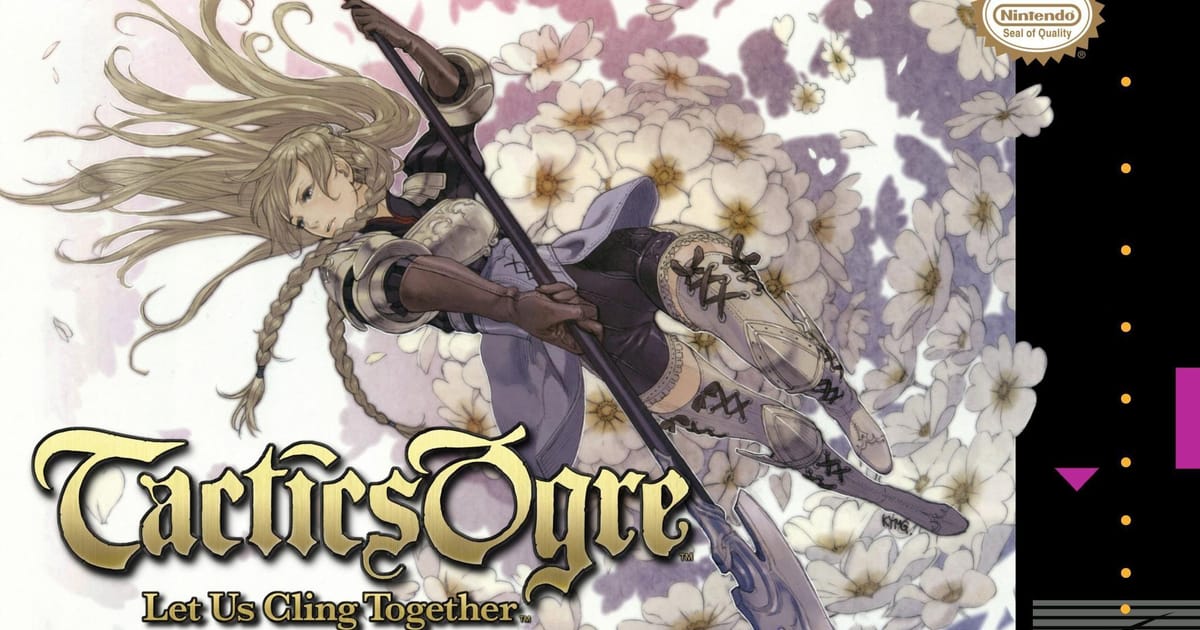
1. Tactics Ogre: Let Us Cling Together
If you’re looking for the single most intricate tactical experience on the
SNES, Tactics Ogre is your new obsession. This
Japan-only tactical RPG (widely played today via fan translation) drops
you onto isometric battlefields where unit facing, elevation, class
synergy, and turn order all matter. Every move feels like it belongs in a
chess match that’s also a political drama.
Tactics Ogre is famous for its branching story paths, moral choices, and
unforgiving difficulty. Characters can die, your loyalty ratings can
plummet, and you’ll learn the hard way that charging your squishiest mage
straight into a line of archers is a bad life decision. It’s deep, it’s
demanding, and it’s still one of the most respected grid-based strategy
games ever made on any platform.
2. Ogre Battle: The March of the Black Queen
Where Tactics Ogre zooms in on small squads, Ogre Battle
zooms out to entire armies marching across huge maps. You organize units
into squads, send them across real-time battlefields, liberate towns, and
try to keep your reputation from tanking while you do it.
Your choiceswho you recruit, which towns you liberate, how you treat your
enemiesaffect your alignment and the game’s multiple endings. The
Tarot-card system adds another layer of strategy, letting you influence
battles with powerful one-off effects. It’s a hybrid of tactical RPG and
grand campaign, and it still feels ambitious even decades later.
3. Front Mission
Before Front Mission became a long-running mech franchise, it started here
on Super Famicom as a tactical RPG about giant walking tanks called
wanzers. On the battlefield, Front Mission plays a bit
like a grittier Fire Emblem with robotsevery part of your mech (body,
arms, legs) has separate HP, and losing an arm means losing a weapon.
The real magic is in the customization. You outfit each wanzer with
different frames, weapons, and equipment, then watch your experiments
either dominate the map or get absolutely wrecked. The storyline, focused
on war, politics, and the people stuck between them, is surprisingly
grounded for a 16-bit game. It’s import-only on SNES, but worth the effort
if you love tactical mech warfare.
4. Uncharted Waters: New Horizons
Uncharted Waters: New Horizons is part seafaring sim,
part RPG, part grand strategy. You pick from several captainsa privateer,
a merchant, a would-be explorerand roam a 16th-century world map looking
for fame, fortune, and occasionally trouble.
Strategy here is all about route planning, investing in ports, managing
your crew, and deciding when to engage in naval battles and when to turn
tail and sail away. It’s the rare SNES game that lets you build a trading
empire instead of just grinding levels, and once the systems click, it
becomes dangerously addictive. It’s also one of the best ways to feel like
you’ve accidentally started doing homework on global trade routes.
5. Metal Marines
Metal Marines is a real-time/turn-based hybrid war game
where you build bases, launch missiles, and drop giant mechs on your
opponent’s headliterally. The SNES version has you swapping between
resource management, base construction, and dramatic attacks as your
metal-clad soldiers stomp through enemy defenses.
Unlike slower, menu-heavy strategy titles, Metal Marines moves at a brisk
pace. You’re constantly deciding whether to shore up defenses, expand your
economy, or send another volley of missiles. It’s not as deep as Ogre
Battle or Tactics Ogre, but it nails that satisfying “I outsmarted you and
blew up your HQ” feeling.
6. Romance of the Three Kingdoms II
If you’ve ever looked at a history book and thought, “This needs more
spreadsheets,” Romance of the Three Kingdoms II is your
game. You play as one of many warlords in ancient China, trying to unify
the land through a mix of diplomacy, resource management, and large-scale
battles.
Every decision matters: do you hire that suspicious officer, raise taxes
and risk revolt, or march on your neighbor before they march on you? It’s
slow-paced and text-heavy, but for players who love planning campaigns
that span years of in-game time, it’s one of the deepest strategy
experiences on the SNES.
7. Nobunaga’s Ambition
Nobunaga’s Ambition moves the grand-strategy stage to
feudal Japan, putting you in the role of a daimyo trying to unify the
country. You juggle rice harvests, flood control, peasant loyalty, ninja
spies, and epic battles while hoping your leader doesn’t die of old age at
the worst possible moment.
Compared with Romance of the Three Kingdoms II, Nobunaga’s Ambition feels a
little more approachable, but it’s still very much a “take notes in a
notebook” kind of game. It’s nerdy, slow-burning, and extremely satisfying
when your careful planning finally pays off in a decisive victory.
8. Sid Meier’s Civilization
Yes, Civilization did make it to the SNES, and yes, it’s
still dangerously hard to put down. You guide a civilization from the
ancient era through the space age, expanding cities, researching tech, and
occasionally being “that” neighbor who parks tanks on someone else’s
border for “reasons.”
The SNES port trims some of the PC version’s complexity and can feel a
little cramped on console controls, but the core 4X loopexplore, expand,
exploit, exterminateis largely intact. If you want a strategy game where
your biggest enemy is “just one more turn” at 3 a.m., Civilization will
happily ruin your sleep schedule.
9. Populous
Before “god games” were a genre, there was Populous. On
SNES, you still raise and lower land, nurture your followers, build up
mana, and then unleash divine punishment on your rival deity. It’s equal
parts city-building, terrain sculpting, and gleeful smiting.
The console interface takes a little getting used to, and the difficulty
curve can be rough, but once you understand how terrain, population, and
mana generation loop together, Populous becomes a hypnotic strategy
sandbox. It’s not the deepest game on this list, but it’s one of the most
historically important.
10. Aerobiz
Think of Aerobiz as “Airline Tycoon: 16-Bit Edition.”
You’re the CEO of a fledgling airline, choosing hubs, purchasing planes,
opening routes, and trying not to go bankrupt while world events mess with
demand and fuel costs.
Strategy here revolves around long-term planning: which regions to
prioritize, how to respond to competitors, and when to invest in new
aircraft. It’s surprisingly sophisticated for a SNES business sim, and
watching your airline grow from a few rickety routes to a global network
is incredibly satisfyingif you’re the kind of person who finds balance
sheets exciting.
11. Aerobiz Supersonic
Aerobiz Supersonic takes the airline management formula
and turns every dial up: more eras, more cities, more airplanes, more ways
to either dominate the globe or crash your company into the ground.
Supersonic adds long-range jets, changing political climates, and even
supersonic travel into the mix. It’s deeper than the original Aerobiz but
also more demanding, which is why it sits slightly lower on this list:
it’s fantastic if you’re all-in on airline strategy, but a bit much if
you’re just dabbling.
12. Utopia: The Creation of a Nation
Utopia: The Creation of a Nation is a sci-fi city-builder
and strategy hybrid. You’re trying to build a thriving colony on an alien
world while also dealing with hostile forces that would love to wreck your
hard work.
On one hand, it’s impressive: detailed resource management, population
needs, and defensive planning made it feel like a cousin to SimCity and
Populous. On the other hand, the interface can be clunky, and the learning
curve is steep. It’s a hidden gem for patient players, but definitely not
the first SNES strategy game you should hand a beginner.
13. Bahamut Lagoon
Bahamut Lagoon is another Japan-only tactical RPG that
blends grid-based combat with traditional JRPG battle scenes. You control
squads of characters and their pet dragons, feeding the dragons items so
they evolve into different forms with new abilities.
Mechanically, it’s clever and stylish, but compared with Tactics Ogre or
Front Mission, it’s a bit lighter on pure strategy and heavier on classic
JRPG story beats. Still, if you like the idea of a tactics game where your
dragon-evolution choices matter as much as your positioning, Bahamut
Lagoon is an atmospheric, worthwhile import.
14. Super Famicom Wars
Long before Advance Wars made handheld tactics cool, there was
Super Famicom Wars. This Japan-only entry in the “Wars”
series has everything you’d expect: infantry, tanks, artillery, and
income-producing cities to capture as you grind your opponent off the map.
The downside is that it never left Japan on SNES, so modern players
usually meet it through imports and fan translations. The core design is
sharp, but the presentation is simple, and later Wars titles on GBA and
beyond refined the formula. Think of this as a fascinating prototype for a
series that would truly shine later.
15. Fire Emblem: Genealogy of the Holy War
Fire Emblem: Genealogy of the Holy War is technically a
tactical RPG, but its huge maps, generational mechanics, and emphasis on
positioning make it one of the more strategic entries in the series. You
command armies across sprawling battlefields, pairing units to influence
their children’s stats in the second half of the game.
It ranks lower here not because it’s weakfar from itbut because it’s
more story-driven than sandboxy compared with some other strategy titles
above it. Still, if you love permanent death, political drama, and
long-term planning, this is one of the most ambitious SNES games you can
play.
16. SimCity (SNES)
The SNES version of SimCity is often remembered as a
city-building classic, but it also earns a place on this strategy list.
Balancing residential, commercial, and industrial zones, managing traffic,
and trying not to bankrupt your city is very much a strategic puzzle.
The SNES port adds Nintendo-specific touches (like Dr. Wright and the
ability to unlock special buildings) and simplifies some PC mechanics. It
lands in the lower half of this ranking not because it’s badit’s great
but because its focus is more on sandbox building than competitive or
tactical play.
17. Mario Is Missing!
Technically, Mario Is Missing! is an educational game,
not a strategy title. But under the hood, you’re still managing routes,
gathering clues, and figuring out where to return stolen artifacts across
various world cities. There’s a thin layer of planning on top of a very
simple gameplay loop.
Realistically, most players remember this one as “the weird Mario game
where you accidentally learned geography.” It’s historically interesting
and occasionally charming, but compared with the tactical and sim-heavy
giants above, it’s firmly in the “bottom of the list” tier.
What It’s Like Revisiting SNES Strategy Games Today
Firing up a SNES strategy game in 2025 feels a bit like opening a time
capsule from a more patient era. These games assume you’re willing to read
a manual, experiment, and lose a few campaigns before you really
understand what you’re doing. There’s no glowing tutorial arrow screaming
“CLICK HERE”; there’s just you, a confusing menu, and the quiet suspicion
that you just raised taxes way too high.
In a modern context, though, that’s exactly what makes them special. SNES
strategy games force you to slow down. In Ogre Battle, you’re
watching the map like a hawk, trying to intercept enemy units before they
sneak around and grab your HQ. In Romance of the Three Kingdoms II,
a single bad alliance or underfunded harvest can haunt you for in-game
decades. In Aerobiz, betting on the wrong type of aircraft can
quietly kneecap your future growth ten “years” later.
Emulation and virtual-console style re-releases also change the
experience. Save states soften the brutality of permanent consequencesyou
can redo that awful decision instead of living with it for 30 hours. At
the same time, it’s easy to see why these games impressed players on
original hardware: the amount of simulation happening behind the scenes
with 16-bit resources is wild.
There’s also the social side. Back in the ’90s, you’d compare notes with
friends about how to keep citizens happy in Utopia or which
dragons you were raising in Bahamut Lagoon. Today, you can fall
down entire rabbit holes of strategy guides, fan patches, and tier lists
discussing optimal Ogre Battle unit compositions or the best Aerobiz
starting hubs. The games haven’t changed, but the conversation around them
has grown.
Most importantly, replaying these SNES strategy games reminds you that
depth doesn’t require photorealistic graphics or 200-page skill trees.
Sometimes all you need is a chunky map, a handful of clever systems, and
the freedom to fail spectacularly. Whether you’re commanding wanzers,
herding pixel citizens, or sending Luigi around the world to find his
brother, the core appeal is the same: making a plan, watching it unfold,
and adapting when everything inevitably goes sideways.
Final Thoughts
The best SNES strategy games still hold up because they
respect the player’s intelligence. They expect you to think, to plan, to
pay attentionand they reward that effort with satisfying victories and
memorable stories. Start at the top of this list if you want deep,
demanding tactics, or dip into the middle if you’re curious about
business sims and god games.
Either way, don’t be surprised if you sit down “just to try one mission”
and suddenly realize you’ve spent the whole evening reshaping continents,
conquering empires, or chasing airline market share on a 30-year-old
console. Some strategies never go out of style.