Note: This article is written as original, publication-ready web content based on real retro-computing and analog media history, with no source links inserted into the article body.
Before software subscriptions, online activation, cloud accounts, two-factor prompts, and that tiny spinning wheel of doom, copy protection had a much more physical personality. It lived on floppy disks, cassette tapes, VHS tapes, instruction manuals, code wheels, cardboard decoder gadgets, and sometimes in the weird little noises a disk drive made when a game was deciding whether you were a loyal customer or a suspicious character with a second floppy drive.
Rolling old school with copy protection from the 1980s means stepping into an era when anti-piracy technology was creative, annoying, clever, fragile, and occasionally hilarious. Developers had a real problem: software was expensive to make, floppy disks were easy to duplicate, and every school computer lab had at least one kid who treated copying games like an Olympic event. Publishers responded with tricks that turned storage media into puzzles, hardware into gatekeepers, and manuals into secret treasure maps.
Today, these systems feel charmingly strange. Back then, they were serious business. A successful copy protection scheme could buy a game weeks or months of sales before cracked versions spread. A bad one could anger paying customers faster than a modem disconnecting during a file transfer. The 1980s were not just the decade of big hair, neon jackets, and synth music; they were also the golden age of copy protection with a soldering iron in one hand and a legal headache in the other.
Why Copy Protection Became Such A Big Deal In The 1980s
The home computer boom changed everything. Machines like the Apple II, Commodore 64, IBM PC, Atari ST, Amiga, and many others made software a consumer product. Games, spreadsheets, word processors, educational programs, and utilities were suddenly sitting on store shelves in colorful boxes. The problem was simple: once someone bought a disk, making another disk could be almost effortless.
For publishers, that was terrifying. A commercial program might represent months or years of work, but a copied floppy could be passed around a classroom, office, or user group in minutes. In an era before broadband, piracy did not need the internet. It had backpacks, bulletin board systems, disk-swapping parties, and one friend who always said, “Don’t worry, I know a guy.”
Unlike modern digital rights management, 1980s copy protection was often forced to work without network checks. Most computers were offline. There was no central server to phone home to, no login system, no cloud license validation. The protection had to be embedded in the disk, the tape, the packaging, or the hardware itself. That limitation made the era strangely inventive.
The Floppy Disk Became A Battlefield
The floppy disk was the star of 1980s software distribution, and it quickly became the star of copy protection too. Standard disk-copy utilities expected disks to follow standard formats. Publishers realized that if they made a disk just strange enough, ordinary copying tools would fail.
Intentional Bad Sectors
One popular trick was the intentional bad sector. A publisher could create a disk with a sector that looked damaged or unreadable. The program would later check for that exact flaw. If the flaw existed, the software assumed it was running from the original disk. If the sector read cleanly, the software suspected a copy and refused to start.
This was wonderfully sneaky because normal disk-copy programs usually tried to make a “good” disk. They would skip unreadable data, repair what they could, or write a clean version. In other words, the copy was too perfect. The original had a deliberate scar, and the scar was the password.
Weak Bits And Fuzzy Bits
Another famous category involved weak bits, sometimes called fuzzy bits. These were areas on the disk that did not produce the same data every time they were read. A protection routine might read the same spot twice and expect different results. A normal copy, however, would tend to produce stable data. Again, the original disk was not proving authenticity by being clean; it was proving authenticity by being weird.
That is the beautiful madness of 1980s floppy copy protection. The disk could be authentic precisely because it behaved badly. Modern users are taught to fear errors. Old software sometimes demanded them like a bouncer checking IDs at a nightclub.
Odd Tracks, Strange Sector Numbers, And Disk Geometry Tricks
Some systems played with disk structure itself. Tracks could be written in unusual ways. Sector numbers could be unexpected. Data could appear in places a normal operating system did not look. On platforms such as the Apple II, where disk control was unusually flexible, developers and protection specialists could create formats that standard copiers struggled to understand.
This led to a fascinating arms race. Protection designers invented unusual disk layouts. Copier developers created more powerful tools. Then protection designers added another layer. Then crackers studied the loader code and removed the checks. Everyone went around the carousel, and the floppy drive kept making that crunchy little sound of mechanical drama.
Apple II, Nibble Copiers, And The Art Of Reading Between The Bits
The Apple II deserves special mention because its disk system gave programmers unusually direct control over low-level disk behavior. That flexibility made it a paradise for creative developers and a playground for copy protection.
Ordinary file copying was often useless against protected Apple II disks because the disk might not use a standard file system at all. Instead, it might rely on custom boot loaders and unusual “nibble” patterns. A nibble copier attempted to copy the raw encoded data patterns from disk rather than simply copying files. This was a major step forward for people trying to back up or duplicate protected disks.
But even nibble copiers had limits. Protection could use synchronization tricks, abnormal address marks, long tracks, or deliberately unstable areas. The whole scene became a technical duel. Copy protection was no longer just a lock; it was a conversation between the disk controller, the drive hardware, and the programmer’s willingness to make everyone else’s Saturday afternoon more complicated.
Manual Lookups: When The Book Was The Lock
Not all 1980s copy protection lived on the disk. Some of it lived in the box. Manual lookup protection asked the user to enter a word, number, symbol, or code from a specific page, paragraph, line, or illustration in the printed manual.
For example, a game might ask, “What is the third word on page 17, paragraph two?” A flight simulator might request a value from a chart. A role-playing game might ask for a spell code or map coordinate. This worked because copying a floppy was easy, but photocopying a thick manual was annoying, expensive, and sometimes physically awkward. Nothing says “high-tech security” quite like standing by a copy machine with a 160-page manual and a guilty expression.
Manual lookups had a practical benefit: they were cheap. Publishers already printed manuals. Adding copy protection to them did not require exotic disk manufacturing. The downside was obvious. Lose the manual, and the legitimate owner could be locked out. Buy a used copy missing the reference card, and congratulations, you now own a decorative disk.
Code Wheels, Decoder Sheets, And Cardboard Cryptography
Code wheels were one of the most memorable forms of old-school copy protection. These rotating cardboard or plastic devices asked users to align symbols, dates, planets, ship names, colors, or other themed elements to reveal a code. They looked playful, but their job was serious: make copying the game less convenient.
Code wheels appeared in many forms, especially in adventure games, simulations, and role-playing games. They had a certain charm because they matched the fantasy of the software. A pirate game could use nautical symbols. A spy game could use classified-looking codes. A science-fiction game could make the player feel like they were operating a suspiciously affordable starship console.
Of course, code wheels were not invincible. Players could photocopy them, trace them, share tables online through bulletin board systems, or eventually remove the check from the software. But they delayed casual copying, and delay was often the real goal. In the 1980s, if protection held for the crucial launch window, it had done its job.
Lenslok And The Era Of Strange Physical Gadgets
Some publishers went even further with physical devices. Lenslok, used on several 1980s computer games, was a small plastic optical device that unscrambled a code displayed on the screen. The user had to hold the lens up to the monitor and read the result.
In theory, this was clever. In practice, it could be a comedy routine. Screen sizes varied. Display quality varied. Users misplaced the lens. Some people had trouble reading the distorted characters. A protection system that frustrates pirates is one thing; a protection system that frustrates paying customers is how a software box learns to fly across a bedroom.
Still, Lenslok and similar gadgets show how experimental the 1980s were. Publishers were not just protecting software; they were testing the limits of what buyers would tolerate. Sometimes the answer was: not much.
Dongles: Hardware Says “No”
Hardware dongles also became important, especially for expensive professional software. A dongle plugged into a port and acted as a physical license key. The software would check for the dongle before running or during operation.
Dongles made more sense for costly business, engineering, accounting, music, or design applications than for budget games. If a program cost hundreds or thousands of dollars, shipping a hardware key was easier to justify. For users, however, dongles created their own headaches. Lose the dongle, and the software might become useless. Break it, and your workflow could collapse. Need the port for something else? Welcome to the 1980s, where convenience was optional.
VHS Copy Protection: Macrovision And The Rolling Picture
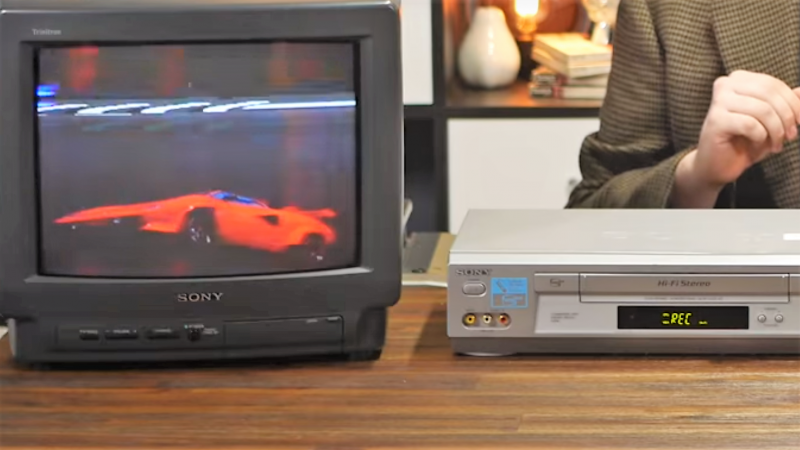
The title “Rolling Old School With Copy Protection From The 1980s” also points directly to the analog video world. VHS tapes had their own anti-copying tricks, and the most famous was Macrovision’s analog copy protection system.
The basic idea was not to stop a television from displaying the movie. Instead, it exploited the difference between how a TV handled a video signal and how a VCR recorded one. Macrovision inserted signal changes into parts of the analog video signal that could confuse a VCR’s automatic gain control. The result was a copy with shifting brightness, unstable images, or that classic rolling-picture chaos that made viewers wonder whether the movie was haunted.
This was old-school copy protection at its most analog. No encryption keys. No online accounts. No pop-up saying your license has expired. Just a video signal engineered to make the recording device panic while the television mostly carried on like nothing weird was happening.
Of course, Macrovision could also cause headaches for legitimate users, especially with certain equipment chains. The broader lesson is familiar: copy protection often works by introducing friction, and friction does not always politely limit itself to pirates.
Dungeon Master And The High Art Of Being Hard To Crack
Some 1980s games became famous not just for gameplay but for unusually strong protection. Dungeon Master, released for platforms including the Atari ST and Amiga, is often remembered as an example of sophisticated disk-based copy protection. Its protections went beyond simple manual lookups or basic bad sectors and became a serious challenge for crackers.
The most successful protection schemes did not rely on one trick. They layered checks. They hid routines. They made tampering risky. They forced crackers to understand not only the obvious startup check but also deeper validation that might occur later. A lazy crack might launch the game but fail after hours of play. That was brutal, but from the publisher’s perspective, it was effective.
This layered approach resembles modern security thinking. One lock is nice. Several locks, some visible and some hidden, are better. The difference is that in the 1980s, the locks were often made of magnetic media, timing assumptions, and code that behaved like a raccoon guarding a trash can.
The Copy Protection Arms Race
For every protection, there was a countermeasure. Copy utilities became more advanced. Hardware boards appeared that could read disks at lower levels. Crackers disassembled programs, patched checks, and shared cracked versions through local networks and bulletin board systems. Magazines and user groups discussed backup tools. The line between legitimate backup and piracy was often debated, especially because floppy disks were not exactly immortal.
This mattered because users had a reasonable concern: original disks could fail. If a disk was copy protected and the publisher did not provide a practical replacement, the buyer’s investment was fragile. A child, a magnet, a bent sleeve, or a drive alignment problem could turn an expensive program into a coaster. Copy protection protected revenue, but it could also punish careful owners who simply wanted a backup.
The arms race produced technical brilliance on both sides. Protection authors learned hardware quirks. Crackers learned loader routines. Preservationists today study both because protected disks can be difficult to archive accurately. Ironically, anti-copying systems designed to prevent duplication now sometimes make historical preservation harder.
Why 1980s Copy Protection Still Matters
Old copy protection is not just nostalgia. It is an early chapter in the long story of digital rights management. Many of today’s debates were already present in the 1980s: How do creators get paid? How much inconvenience is fair for paying customers? Should buyers be able to make backup copies? What happens when a company disappears and activation, hardware, or documentation is lost?
The 1980s made these questions physical. Instead of license servers, there were fragile manuals. Instead of encrypted media keys, there were unreadable sectors. Instead of account bans, there were games that refused to load because the disk was missing its original weirdness.
It also matters because retro preservation depends on understanding these systems. A normal disk image may not capture weak bits, timing patterns, or abnormal track layouts. Specialized preservation tools read magnetic flux transitions directly, giving archivists a better chance of saving not only the files but the strange physical behaviors the software expected.
The Human Side: Copy Protection As Memory
Ask retro-computing fans about old copy protection and many will not start with technical diagrams. They will talk about the feeling. The clack of a floppy drive. The smell of a printed manual. The panic of being asked for a code from a page that had mysteriously vanished. The family VCR producing a rolling, dimming mess when someone tried to duplicate a rented tape. The friend who swore he had “the good copier” and then produced a disk that booted exactly once before giving up on life.
That human memory is why the subject remains fun. Copy protection was annoying, but it was also tactile. It made software feel like an object. The box mattered. The manual mattered. The disk label mattered. Even the defects mattered. In a world where software now often arrives as an invisible download attached to a password reset email, there is something oddly charming about a game that needed a cardboard wheel to believe in you.
Experiences Related To Rolling Old School With Copy Protection From The 1980s
Imagine sitting down with an old computer and a stack of floppy disks from the 1980s. The first thing you learn is patience. Nothing happens instantly. The drive door closes with a small mechanical snap. The disk spins. The head moves. The computer thinks. Then, if everything goes well, the screen changes and you feel like you have successfully awakened a tiny museum exhibit.
Now add copy protection, and the experience becomes part archaeology, part detective story, and part comedy. You might boot a game only to be asked for a word from page 23 of a manual you do not have. You search the box. You search the desk. You search your soul. The disk is right there, the computer is ready, but a single missing booklet has become the gatekeeper. That is when you realize 1980s copy protection was not only technical; it was domestic. It depended on whether someone kept the paperwork.
With disk-based protection, the experience can be even stranger. A modern instinct says, “Make an image of the disk and preserve it.” Then the old program laughs politely. A standard disk image may capture the visible files but miss the abnormal sector, fuzzy data, or special track that the software checks. The copy boots, shows a title screen, and then fails at the exact moment you start feeling confident. It is like a haunted house built by a software publisher.
There is also a special kind of suspense in hearing a drive attempt to read a protected disk. Old drives are expressive machines. They chatter, click, grind, pause, and sometimes sound as if they are trying to translate ancient runes. When a protection check runs, the drive may seek to a specific track or retry a questionable sector. If you know what is happening, the noise becomes part of the drama. The software is not simply loading; it is interrogating the medium.
VHS copy protection creates a different memory. Anyone who experimented with tape-to-tape copying in the old days may remember the picture darkening, brightening, tearing, or rolling. The television could play the original just fine, but the copied version looked like it had been filmed during an earthquake inside a thunderstorm. It was frustrating, but technically clever. Macrovision did not need to make the movie unwatchable on the original tape. It only had to make the copy unpleasant enough that most people gave up.
Another experience worth remembering is the social side. Copy protection shaped conversations. Kids traded tips. Adults called support lines. Computer clubs debated backup rights. Some people admired the ingenuity. Others hated the inconvenience. A legitimate buyer who lost a manual could feel punished, while a determined cracker treated the same system as an invitation. The protection was supposed to control copying, but it also created stories.
Today, revisiting these systems can be surprisingly educational. You learn how storage really worked. You learn that a floppy disk was not just a container for files but a physical object with timing, magnetic patterns, and mechanical personality. You learn that analog video was full of invisible structure. You learn that security is never just about locks; it is about users, tools, incentives, and failure modes.
Most of all, old-school copy protection reminds us that technology is shaped by its era. The 1980s had no always-online validation system, so protection had to hide in cardboard, plastic lenses, odd sectors, unstable bits, and video signals. It was imperfect, sometimes ridiculous, often clever, and absolutely memorable. Rolling old school with copy protection from the 1980s is not just about stopping copies. It is about a time when software fought back using every strange trick the hardware would allow.
Conclusion
Copy protection from the 1980s was a wild mix of engineering, psychology, inconvenience, and creativity. Floppy disks carried deliberate flaws. Manuals became security devices. Code wheels turned cardboard into cryptography. VHS tapes used analog signal tricks to confuse recorders. Games like Dungeon Master showed how deep and sophisticated anti-piracy design could become when developers were determined.
Looking back, these systems can seem clumsy compared with modern DRM, but they were often ingenious for their time. They reflected the limits of offline computers and analog media. They also revealed a tension that still exists today: protecting creators without punishing honest users. The 1980s did not solve that problem. It simply gave it better sound effects, more floppy disks, and occasionally a code wheel shaped like something from a space opera.
For retro fans, preservationists, and technology history lovers, old-school copy protection remains fascinating because it turns software into a physical mystery. It asks us to remember that bits once had texture, disks had personalities, and sometimes the most important part of a program was the part that refused to be copied.