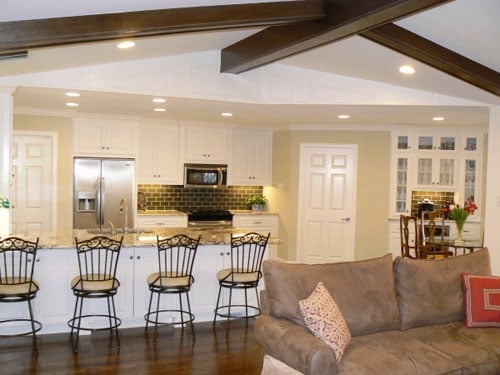
Some rooms whisper, “I need a new throw pillow.” Others shout, “Please rescue me from 1978 before the paneling starts reproducing.” The magic of a great reader redesign is that it turns an ordinary space into a room with personality, polish, and the kind of ceiling people actually notice. That is the heart of Reader Redesign: Beam Me Up: a transformation story built around one of the most underrated design moves in the home-improvement universeceiling beams.
Whether they are original structural beams, lightweight faux beams, painted wood details, or carefully framed box beams, ceiling beams can do what many design upgrades cannot. They add architecture where there was none. They create rhythm in a room. They make a plain ceiling look intentional instead of forgotten. And, when done well, they give a living room, bedroom, basement, kitchen, or dining area that “finished magazine spread” feeling without requiring your home to be a centuries-old farmhouse with chickens out back and a sourdough starter named Gary.
This guide explores how a beam-centered redesign works, why exposed beams remain so popular, what homeowners should consider before installation, and how to use beams without making your room look like a theme restaurant called The Rustic Moose. We will look at design strategy, paint and stain choices, layout tips, lighting, proportion, budget-friendly ideas, and real-life lessons from redesign experiences.
What Makes “Beam Me Up” Such a Strong Reader Redesign Idea?
The phrase “Beam Me Up” is playful, but the design concept is serious. Beams draw the eye upward, which changes how a room feels. A low room can feel more layered. A large room can feel warmer. A plain room can suddenly gain character. In many reader redesigns, the biggest win is not buying expensive furniture; it is discovering the one architectural feature that makes everything else look better.
Ceiling beams work because they create visual structure. A room with four blank walls and a flat white ceiling can feel boxy. Add beams, and the ceiling becomes part of the design conversation. Suddenly, the sofa placement makes more sense. The fireplace feels anchored. The dining table appears centered. Even simple furniture looks more deliberate because the ceiling is helping organize the room.
Why Exposed Beams Still Feel Fresh
Exposed beams have been around for centuries, but they do not belong only in old cabins or Tudor homes. Modern interiors use beams in clean, minimal, coastal, industrial, transitional, farmhouse, and even contemporary spaces. The secret is finish and proportion. Rough, dark beams can feel historic and cozy. White-painted beams can look bright and cottage-like. Natural oak or pine beams can bring warmth to a modern room without dragging it into full barn mode.
Designers often use beams to add texture, contrast, and architectural weight. A smooth drywall ceiling may be practical, but it rarely sparks joy unless you are deeply passionate about gypsum. Wood beams, on the other hand, introduce grain, shadow, and depth. They also pair beautifully with other materials: painted paneling, brick fireplaces, stone hearths, plaster walls, linen upholstery, metal lighting, and natural fiber rugs.
The Before: When a Room Has Good Bones but Needs Direction
Many successful reader redesigns begin with a room that is not terribleit is just confused. Maybe the walls are paneled in a dated finish. Maybe the ceiling feels heavy. Maybe the beams already exist but are too dark, too orange, or too visually dominant. Maybe the space has decent light but no focal point. This is where the redesign process becomes less about demolition and more about editing.
A common “before” scenario includes wood paneling, dark trim, older carpet, bulky furniture, and exposed beams that feel more oppressive than charming. The beams may be beautiful in theory, but if they are paired with dark walls and poor lighting, they can make the room feel like a basement even when it is above ground. The trick is not always to remove them. Often, it is to rebalance them.
The After: How Beams Can Transform the Whole Room
A strong beam redesign usually succeeds because several choices work together. The walls are lightened. The ceiling is refreshed. The beams are painted, stained, cleaned, or visually emphasized. Furniture becomes simpler. Lighting improves. Accessories are edited. The result is a space that feels intentional, brighter, and more architectural.
For example, painting old paneling a soft white or warm neutral can instantly modernize a room. If beams are left natural, they become a warm contrast against the lighter envelope. If beams are painted white, they blend with the ceiling and create subtle texture instead of heavy drama. If beams are darkened intentionally, they can become a bold graphic featureespecially when balanced with light walls, pale upholstery, and layered lighting.
Real Beams vs. Faux Beams: Which One Makes Sense?
Real Structural Beams
Real beams are part of the structure of a home. They may support floors, roofs, or major spans. If your home already has them, the goal is usually to preserve, clean, restore, or highlight them. However, never cut, drill, remove, or alter structural beams without professional guidance. A beam may look decorative, but your ceiling may strongly disagree.
Faux Wood Beams
Faux beams are decorative and can be made from solid wood, hollow box construction, MDF, or lightweight polyurethane. They are popular because they create the beam look without requiring major structural changes. Hollow box beams are often built from three pieces of wood and mounted over cleats attached to ceiling joists. Polyurethane beams are lighter and easier to handle, which makes them attractive for DIY-minded homeowners.
Box Beams and Coffered Details
Box beams can also be used to create a coffered ceiling, where beams form a grid of recessed panels. This is a more formal look and works best in rooms with enough ceiling height. In a room with eight-foot ceilings, oversized coffers can feel like the ceiling is slowly coming in for a hug you did not request. Proportion matters.
Design Rule #1: Respect the Ceiling Height
Ceiling height determines how bold your beam design can be. Tall, vaulted, or cathedral ceilings can handle large beams, dark stains, and dramatic spacing. Standard eight-foot ceilings require more restraint. In lower rooms, beams should usually be slimmer, lighter in color, or spaced carefully so they add interest without making the room feel compressed.
If you want the beam look in a low-ceiling room, consider shallow faux beams, painted beams that match the ceiling, or flat trim arranged in a subtle pattern. Another option is using beams only in one zone, such as over a dining table, reading nook, or fireplace area. This creates impact without overwhelming the entire room.
Design Rule #2: Use Beams to Create Rhythm
Beams are not random ceiling decorations. They should relate to the room’s architecture. Before installing anything, study the room’s shape, windows, doorways, fireplace, built-ins, and furniture plan. Beams often look best when they run in a direction that emphasizes the room’s length or supports a natural focal point.
In a long living room, beams running across the width can break up the tunnel effect. In an open-plan kitchen and dining area, beams can help define zones. In a bedroom, one central beam or a pair of beams can frame the bed wall. In a basement, beams can disguise mechanical runs or create a finished look around low-clearance areas.
Paint, Stain, or Natural Wood?
Painted Beams
Painted beams are ideal when you want texture without heavy contrast. White beams on a white ceiling look clean and architectural. Soft gray, cream, or greige beams can add subtle definition. Dark painted beams can create a modern graphic effect, especially in rooms with black window frames, iron lighting, or moody cabinetry.
Stained Beams
Stained beams preserve the character of wood grain. They work beautifully in farmhouse, rustic, craftsman, coastal, and transitional interiors. The key is choosing a stain that relates to other wood tones in the room. A beam does not need to match the floor exactly, but it should feel like it was invited to the same party.
Natural or Whitewashed Beams
Natural beams bring warmth and authenticity. Whitewashed beams soften strong wood tones while keeping texture visible. This is a smart approach when old beams are too orange, red, or visually heavy but still worth showing off.
Lighting: The Secret Partner in a Beam Redesign
Beams can look flat without good lighting. Recessed lights, sconces, pendants, chandeliers, and floor lamps all help reveal texture and depth. In kitchens and dining rooms, pendants can hang between beams or align with them. In living rooms, recessed lighting can be placed in ceiling fields between beams. In bedrooms, a simple fixture centered between beams can feel tailored and calm.
One warning: do not let lighting placement become an afterthought. A beautiful beam layout with awkwardly placed lights is like wearing a tuxedo with one sneaker. It may technically work, but people will stare for the wrong reason.
Using Beams to Hide Imperfections
One reason faux beams are so useful is that they can conceal problems. They can cover ceiling seams, cracks, old texture transitions, awkward wiring paths, or evidence of past renovations. In basements, beams and painted exposed ceilings can make pipes, ducts, and joists feel more intentional. In older homes, box beams can hide new mechanical work while preserving a traditional look.
However, beams should never be used to hide active moisture damage, structural problems, mold, or unsafe wiring. Cosmetic cover-ups are fine. Covering up trouble and hoping it becomes “character” is not design; it is denial with a nail gun.
Budget-Friendly Beam Ideas
A beam redesign does not need to be wildly expensive. DIY box beams made from common boards can create a custom look at a manageable cost. Pre-primed boards are helpful for painted beams because they are usually straight and ready for finishing. Lightweight faux beams cost more per piece but can save labor and reduce installation difficulty.
For a smaller project, consider one accent beam over a doorway, a fireplace, or a transition between rooms. You can also add beam-like trim in a grid pattern for a simplified coffered effect. In rental homes or temporary spaces, removable wood-look treatments may offer the feeling of beams without permanent construction, though they should always be installed safely and within lease rules.
Common Mistakes to Avoid
Choosing Beams That Are Too Big
Oversized beams can make a room feel heavy. The goal is architectural charm, not medieval banquet hall cosplay. Match beam size to ceiling height, room scale, and design style.
Ignoring the Joists
Decorative beams must be securely attached. That usually means fastening cleats or supports into ceiling joists, not just drywall. Drywall alone cannot support heavy wood beams safely.
Forgetting the Whole Room
Beams are powerful, but they are not magic wands. If the room has poor furniture layout, bad lighting, and cluttered surfaces, beams will simply give everyone a more interesting ceiling to look at while noticing the chaos below.
How to Style a Room After Adding Beams
Once beams are installed or refreshed, the rest of the room should support them. Choose furniture with clean lines if the beams are rustic. Add soft textiles to balance hard wood surfaces. Use rugs to ground the seating area. Bring in plants, books, ceramics, and art to keep the space personal. If beams are dark, repeat that tone in small doses through picture frames, lamp bases, curtain rods, or side tables.
The best redesigns feel layered, not matched. A room with beams, linen curtains, a vintage rug, a modern sofa, and a sculptural light fixture can feel collected and warm. A room where every wood item is the exact same stain can feel like it was assembled from one very determined catalog page.
Best Rooms for a Beam-Focused Redesign
Living Rooms
Living rooms are natural candidates because beams add warmth and structure to gathering spaces. They work especially well with fireplaces, built-ins, and open seating arrangements.
Kitchens
In kitchens, beams can soften cabinetry and hard surfaces. Natural wood beams look beautiful with white cabinets, stone counters, brass fixtures, or matte black accents.
Bedrooms
Bedroom beams can create coziness. A single beam above the bed or several light-toned beams across the ceiling can make the room feel custom without crowding it.
Basements
Basements benefit from ceiling attention because low ceilings are common. Painted exposed joists, faux beams, beadboard, or shallow box beams can make the space feel finished and intentional.
Experience Section: Lessons From Real-Life Beam Redesigns
After seeing many beam-centered makeovers, one lesson stands out: the ceiling is rarely the first thing homeowners think about, but it is often the element that makes the redesign feel complete. People usually begin with paint colors, sofas, rugs, or curtains. Those choices matter, of course. But when the ceiling is ignored, the room can still feel unfinished, as if the design stopped at eye level and got tired.
One common experience is the “dark beam panic.” A homeowner loves the idea of exposed wood, but once the beams are installed or uncovered, the room suddenly feels heavier than expected. This does not mean the project failed. It usually means the surrounding design needs balance. Lighter walls, better lighting, pale upholstery, mirrors, and warm neutral textiles can make dark beams feel rich instead of gloomy. Sometimes the solution is not repainting the beams; it is giving them better friends.
Another real-world lesson is that faux beams can look surprisingly convincing when the proportions are right. The most successful faux beam projects do not try too hard. They avoid overly dramatic fake distressing, strange orange stains, and layouts that make no architectural sense. A simple hollow wood beam in a believable size often looks better than a heavily textured beam that appears to have survived three pirate attacks and a thunderstorm.
DIY installers often discover that measuring is the true boss battle. Walls are not always square. Ceilings are not always level. Old houses, especially, enjoy keeping secrets. A beam that looks straight on the floor may reveal every ceiling wave once installed. The best approach is to measure multiple times, use chalk lines or laser levels, mark joist locations carefully, and dry-fit before committing. Patience is cheaper than repairing a ceiling full of enthusiastic mistakes.
Paint choice also teaches big lessons. A beam color that looks subtle on a sample board may look much darker overhead because ceilings receive light differently than walls. Stain can also shift depending on wood species. Pine, oak, cedar, and reclaimed wood absorb color differently. Testing finishes on scrap material is not a fussy extra step; it is the difference between “warm natural oak” and “accidental pumpkin spice ceiling.”
Lighting is another experience-based game changer. Rooms with beams need layered light. A single ceiling fixture may cast harsh shadows or leave the beams looking flat. Recessed lights, picture lights, sconces, and lamps help the beams feel dimensional. In dining rooms, a chandelier centered between beams can look elegant. In living rooms, warm lamps at different heights make the whole space feel relaxed and welcoming.
The final lesson is emotional. A beam redesign often makes homeowners feel like their house has gained history, even when the beams are new. That is the beauty of architectural detail. It gives a space memory, rhythm, and a sense of permanence. Done thoughtfully, beams do not just decorate a room. They make the room feel like it knows who it is.
Conclusion
Reader Redesign: Beam Me Up is more than a catchy title. It is a reminder that ceilings deserve attention, beams can redefine a room, and smart design does not always require tearing everything out. Whether you restore original beams, build faux box beams, paint existing wood, or use ceiling details to add structure, the goal is the same: create a room that feels warmer, more finished, and more personal.
The best beam redesigns respect scale, safety, lighting, and the character of the home. They also leave room for personality. After all, a great makeover should not look like a showroom where nobody is allowed to sit down. It should look beautiful, livable, and just a little bit delighted with itself.
Note: This article is written for web publication in standard American English and is based on established home design, remodeling, ceiling-beam, and DIY best practices.