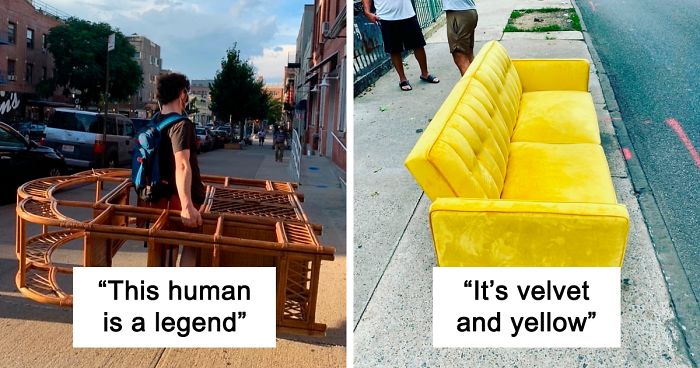
Most people see a pile of furniture on the curb and speed up. A dedicated treasure hunter slows down, squints suspiciously, and asks the important question: “Is that solid wood?”
Across New York City and other densely populated communities, people regularly rescue discarded dressers, mirrors, lamps, plants, artwork, bookshelves, chairs, and objects so unusual that even their original purpose appears to have resigned. Online communities devoted to curbside finds have turned these discoveries into entertainment, inspiration, and proof that perfectly usable possessions are often thrown away simply because someone is moving, redecorating, or running out of patience.
The practice is commonly called stooping in New York. Someone places an unwanted item on the sidewalk, and another person gives it a new home. Social media accounts documenting Stooping NYC helped bring the tradition to a much larger audience beginning in 2019, showcasing everything from velvet couches and vintage dressers to enormous houseplants and wonderfully strange decorative objects.
These rescued treasures are funny, beautiful, practical, and occasionally valuable. More importantly, they expose an uncomfortable truth: our definition of “trash” often has less to do with an object’s condition than with timing, convenience, available space, and whether somebody owns a vehicle large enough to transport a six-foot bookcase.
Why Thrown-Away Treasures Are Everywhere
Americans generate an extraordinary amount of waste. According to the Environmental Protection Agency’s most recent national material estimates, the United States generated 292.4 million tons of municipal solid waste in 2018, equal to roughly 4.9 pounds per person per day. Furniture and furnishings accounted for approximately 12.1 million tons, while clothing and footwear contributed another 13 million tons. Only a relatively small share of discarded textiles was recycled.
Those numbers do not mean every object was tossed carelessly. Many items reach the waste stream after years of service. Still, anyone who has walked through a city neighborhood on moving day knows that plenty of functional belongings are abandoned because disposal is faster than resale.
Apartment living makes the situation even more dramatic. Elevators are small, leases end suddenly, storage is expensive, and landlords rarely respond enthusiastically to the sentence, “I just need three more weeks to find a buyer for my armoire.” A perfectly decent table can become curbside property because its owner has six hours, one staircase, and no remaining emotional attachment to dining furniture.
The Best Things People Find on the Curb
Vintage and Solid-Wood Furniture
Furniture is the undisputed celebrity of the stooping world. Mid-century-style cabinets, hardwood desks, dining chairs, side tables, and dressers frequently appear in online curbside-find communities.
Older furniture can be especially appealing because many pieces were built with solid wood, repairable joints, replaceable hardware, and finishes that can survive sanding. A scratched vintage dresser may require an afternoon of work. A damaged piece of low-cost particleboard furniture may require prayer, structural engineering, and several tubes of glue.
Architectural Digest has described New York stooping as a cherished local ritual and documented how a discarded blue sofa became a viral design story after being rescued from the curb. The appeal was not merely that the sofa was free. Its unusual shape, color, and history gave it a personality that mass-produced furniture often lacks.
Mirrors That Make Renters Question Their Life Choices
Large mirrors are another common curbside prize. Ornate frames, unusual shapes, and vintage glass can transform a room immediately. They are also heavy, fragile, and apparently designed to become most desirable when located four subway stops from home.
A rescued mirror may need nothing more than cleaning and a stronger hanging system. Wooden frames can be repaired or refinished, while unattractive colors can be repainted. Even a frameless mirror may be useful for a bathroom renovation, home gym, or custom woodworking project.
Lamps, Art, and Decorative Oddities
Lamps and artwork offer the greatest surprise-to-effort ratio. A lamp can look hopeless under a layer of dust yet become stylish after rewiring and the addition of a modern shade. Framed prints can be separated from outdated frames. Empty frames can be reused. Sculptures can become conversation pieces, although sometimes the main conversation is, “What exactly is that supposed to be?”
Discarded art occasionally turns out to be more than decoration. In 2017, Connecticut mechanic Jared Whipple discovered hundreds of artworks in a dumpster near an abandoned farmhouse. The pieces were later connected to artist Francis Hines and were considered potentially worth millions as a collection. Whipple originally thought some might work as Halloween decorations, which is an impressively casual beginning for a major art discovery.
Plants Looking for a Second Chance
Large houseplants often appear on sidewalks when owners move or discover that their beloved indoor jungle will not fit into the next apartment. Some look healthy. Others resemble botanical distress signals.
Rescuing a plant can be rewarding, but it should be isolated from existing plants until it has been checked for pests. Damaged foliage may recover with pruning, fresh soil, appropriate lighting, and a consistent watering schedule. The key word is “consistent.” Pouring half a bottle of water into the pot whenever guilt becomes overwhelming is not a recognized horticultural method.
Useful Items Nobody Expected to Find for Free
Curbside communities also highlight practical finds: shelving, unopened household supplies, kitchen equipment, storage containers, tools, bicycles, pet accessories, books, records, and office chairs.
The monetary value may be modest, but the practical value can be enormous. A free desk can help a student create a study area. A shelving unit can organize a crowded apartment. A set of chairs can furnish someone’s first dining room. Treasure is not always an object that sells for thousands of dollars. Sometimes it is the exact thing a person needed but could not comfortably afford.
Why Valuable Objects Get Thrown Away
Convenience Often Beats Resale Value
Selling a used item requires photographs, measurements, messages, negotiations, scheduling, and at least one person asking whether a $300 cabinet can be delivered for free to a location two states away.
Owners may recognize that something has value but decide that their time is more valuable. Putting the object outside creates an instant solution, especially in neighborhoods where curbside items are quickly claimed.
Owners Do Not Always Know What They Have
Labels disappear. Family stories are forgotten. Original receipts vanish. An inherited painting may be treated as decoration rather than art, while an old chair may be dismissed without anyone checking its maker, age, or construction.
Antique dealer Kaja Veilleux once found a 1776 copy of the Declaration of Independence sitting on a pile intended for disposal. It later sold at auction for $99,000, although a legal dispute ultimately transferred possession to the state of Maine. Veilleux has also emphasized the importance of inspecting objects carefully and not aggressively cleaning potentially valuable pieces. Improper cleaning can permanently reduce the value of coins, furniture, paintings, and other collectibles.
Taste Changes Faster Than Durability
A piece can remain structurally sound long after its style falls out of fashion. Dark wood becomes unpopular, then fashionable again. Brass hardware disappears, then returns. Floral upholstery moves from grandmotherly to ironic to genuinely desirable, sometimes during the lifespan of the same couch.
Because trends are cyclical, a person willing to repaint, reupholster, or reinterpret an item can see possibilities that the previous owner no longer recognizes.
How to Tell Whether a Curbside Find Is Worth Saving
Inspect the Structure First
Before imagining the finished makeover, check whether the object is stable. Look for cracked supports, loose joints, water damage, mold, severe warping, and missing structural components.
Drawers should open. Chair legs should remain attached when gently tested. Shelves should not sag dramatically. A tiny wobble may be repairable; a chair that folds itself when touched is communicating clearly.
Look for Maker’s Marks and Construction Details
Examine the back, underside, drawers, hardware, and interior surfaces. Manufacturer labels, signatures, stamps, serial numbers, and handwritten notes may help identify age or origin.
Dovetail joints, solid wood grain, hand-finished surfaces, unusual hardware, and older construction methods can indicate quality. None automatically proves that an item is valuable, but they can justify additional research before sanding, painting, or converting it into a cat bed.
Consider Restoration Costs Honestly
A free object is not always a free project. Replacement hardware, upholstery fabric, professional cleaning, transportation, electrical repair, and refinishing supplies can quickly exceed the price of a ready-to-use secondhand item.
The best rescue is an object that fits your needs, abilities, space, and budget. Taking home everything with “potential” is how treasure hunting quietly transforms into clutter collecting.
Safety Rules Every Treasure Hunter Should Follow
Be Extremely Careful With Upholstered Furniture
Couches, mattresses, padded chairs, and fabric headboards can harbor bed bugs, fleas, odors, moisture, and mold. Consumer Reports recommends closely inspecting secondhand furniture, including non-upholstered pieces, for signs of bed bugs before bringing it into a home. Seams, cracks, screw holes, joints, and the underside deserve particular attention.
If an upholstered item smells strongly, appears damp, shows insect activity, or cannot be thoroughly inspected, leave it behind. No free sofa is worth turning your apartment into an expensive pest-control documentary.
Check Product Recalls
Used appliances, children’s products, exercise equipment, and furniture may have been recalled. The U.S. Consumer Product Safety Commission warns that used products have caused serious injuries and deaths and advises resellers and consumers to check items carefully against recall information.
Be especially cautious with cribs, bassinets, car seats, helmets, portable bed rails, and products that depend on current safety standards. Missing parts or an unknown history can make these items unsuitable for reuse.
Do Not Plug In Mystery Electronics Immediately
Inspect cords for cuts, exposed wiring, melted sections, loose plugs, rust, and signs of water damage. Older lamps may need rewiring, and appliances may require professional evaluation.
Clean electronics outdoors or in a controlled area before testing. When the inside of an appliance contains evidence that it once served as housing for a small animal, the testing phase has officially been canceled.
Respect Property and Local Rules
An object placed clearly at the curb for collection may be available to take, but laws and sanitation rules differ by location. Do not enter private property, apartment disposal rooms, construction sites, locked areas, or commercial dumpsters without permission.
When uncertain, ask. A polite question is easier than explaining to a property manager why you are carrying away half a patio set.
How Reuse Strengthens Communities
Curbside rescue is only one part of a larger reuse culture. Buy Nothing communities allow neighbors to give, lend, and receive goods without payment. Habitat for Humanity ReStores accept furniture, appliances, home goods, and building materials, helping divert usable products from landfills while supporting affordable housing programs. Earth911 also maintains directories that help consumers locate donation, reuse, and recycling options for many materials.
These systems extend an object’s useful life and make household goods accessible to people who may not be able to buy them new. They also create small moments of human connection. A person giving away a table may meet the student furnishing a first apartment. A gardener may pass unwanted pots to a new neighbor. A repaired lamp can illuminate several homes over several decades.
Reuse does not require every object to be rare, fashionable, or Instagram-worthy. Its success is measured by whether something useful remains useful.
Experiences From the Curb: What Treasure Hunting Actually Feels Like
The following experiences are composite scenarios based on commonly reported stooping, reuse, and curbside-rescue stories.
The Dresser That Looked Worse Than It Was
Imagine walking home after work and spotting a low wooden dresser beside several trash bags. Its finish is scratched, two handles are missing, and one drawer is sitting slightly crooked. At first glance, it looks tired. At second glance, the wood grain is real, the drawers have dovetail joints, and the frame feels surprisingly solid.
Getting it home becomes the first challenge. A friend is recruited. An improvised cart is found. The dresser is carried up three flights of stairs while everyone involved develops strong opinions about why elevators should be legally required in all buildings.
After cleaning, tightening the joints, replacing the hardware, and applying a fresh finish, the piece becomes the most distinctive furniture in the apartment. The restoration costs less than a new dresser, but the real reward is the transformation. Something dismissed as useless now feels personal because effort, judgment, and a mildly traumatic staircase were involved.
The Lamp With a Second Personality
Another common rescue begins with an outdated table lamp. The base is attractive, but the shade is yellowed and shaped like a wedding cake from 1987. The cord looks questionable, so the lamp is not plugged in.
A replacement socket, new cord, and simple shade reveal a completely different object. What looked old-fashioned becomes sculptural and modern. Guests assume it came from a vintage store. The rescuer enjoys telling them it came from beside a recycling bin, because every good treasure deserves an origin story.
This experience teaches an important lesson: many discarded objects are not ugly. They are simply wearing the wrong accessories. New hardware, fabric, paint, or lighting components can change how an item is perceived without erasing its history.
The Plant Nobody Thought Would Survive
A large plant left near an apartment entrance may look beyond saving. Its leaves droop, the soil is dry, and several stems are damaged. Still, the roots appear healthy, and there are no obvious signs of insects.
The plant is carried home, isolated, pruned, repotted, and placed near suitable light. For several weeks, nothing dramatic happens. Then a small new leaf appears. A month later, the plant looks less like a rescue case and more like an intentional part of the room.
Unlike furniture, a rescued plant visibly responds to care. Its recovery makes the experience feel less like acquiring a free object and more like participating in a second chance.
The Find That Was Better Left Behind
Not every experience ends with a successful makeover. A beautiful upholstered chair may reveal suspicious dark marks along its seams. A cabinet may smell strongly of mold. An appliance may have a damaged cord and no model information.
Walking away can feel disappointing, especially when the object photographs beautifully. However, experienced curbside hunters learn that good judgment is part of the hobby. The goal is not to rescue everything. It is to recognize what can be reused safely and responsibly.
That restraint prevents a treasure hunt from becoming a collection of costly problems. There will always be another chair, lamp, mirror, shelf, or inexplicably large decorative flamingo waiting around the next corner.
Conclusion: Trash Is Often Just a Matter of Perspective
The phrase “one man’s trash is another man’s treasure” survives because it describes more than bargain hunting. It explains how differently people value space, time, history, craftsmanship, and possibility.
A discarded dresser may be inconvenient to one person and essential to another. A neglected painting may be worthless, sentimental, or unexpectedly important. A struggling plant may need only better light. Even an ordinary shelf can become valuable when it helps someone build a functional home.
Curbside finds remind us to look twice before declaring that an object has reached the end of its life. With careful inspection, responsible cleaning, realistic restoration plans, and proper safety checks, many thrown-away possessions can be used for years longer.
And if the rescue does not work out, at least the experience provides a story. Preferably one that does not involve bed bugs.
Note: The narrative experiences above are representative composites rather than claims about specific individuals. Safety guidance should be applied according to the item, its condition, manufacturer information, product recalls, and local regulations.