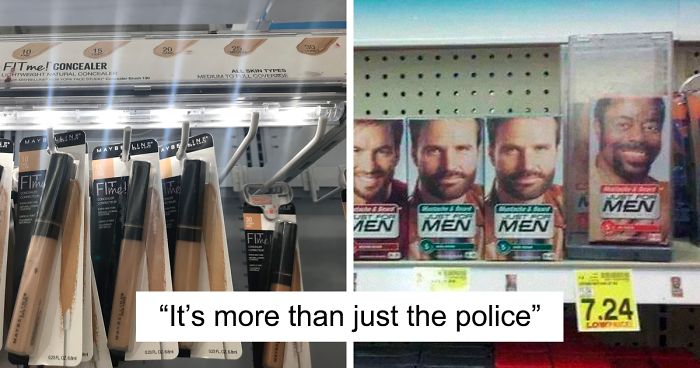
Let’s talk about a topic that is uncomfortable, common, and way too easy to dismiss with a shrug: alleged everyday racism in shops. Not the headline-grabbing, movie-scene version. The quieter stuff. The “Can I help you?” asked six times in four minutes. The security guard who appears out of nowhere when one customer walks in, but not when another does. The return policy that suddenly becomes a doctoral dissertation. The beauty counter where someone is watched more than welcomed.
People online keep sharing these moments because they are familiar. They are not always easy to prove in a single snapshot, and that is exactly what makes them so exhausting. One incident can be explained away. Ten incidents start to look like a pattern. This article takes a practical, evidence-based look at what people mean by “everyday racism” in retail spaces, why it keeps coming up, what it looks like in real life, and what stores can do if they genuinely want customers to feel safe, respected, and not like they need an alibi to buy shampoo.
What People Mean by “Everyday Racism” in Shops
Everyday racism in retail usually refers to repeated, subtle, or normalized behaviors that make shoppers feel singled out because of race. These are often described as microaggressions, profiling, or differential treatment. The behavior may be framed as “just policy” or “just being careful,” but the impact lands differently when it follows a clear pattern.
In plain English: it is the difference between customer service and customer suspicion. Same store. Same aisle. Different experience.
Common examples people describe
- Being followed by staff or security while browsing.
- Being asked if they need help repeatedly in a way that feels like surveillance, not service.
- Having receipts checked when others are not.
- Being told an item is “store policy locked” while other customers get quicker access.
- Waiting longer for service, or being skipped altogether.
- Having returns, exchanges, or coupons scrutinized more aggressively.
- Staff speaking in a suspicious tone before any issue even exists.
A key point: “alleged” matters. Not every awkward retail interaction is racism. Retail is busy, messy, and occasionally chaotic. But when the same customers report the same patterns across stores, cities, and years, the conversation shifts from isolated misunderstandings to systemic behavior.
Why This Keeps Coming Up
Because the data keeps showing that unfair treatment in shopping environments is not rare. Multiple U.S. surveys and retail studies have found that Black shoppers, in particular, report unfair treatment in stores at meaningful rates. Public polling and retail-industry analysis also show that many Americans recognize unequal treatment in everyday settings, including shopping and neighborhood stores.
In other words, this is not just a social media mood. It is a documented consumer experience.
It is often subtle, not dramatic
The hardest part of everyday racism is that it often hides inside plausible deniability. A worker can say, “I ask everyone that.” A manager can say, “We were just following protocol.” A security guard can say, “Random check.” Sometimes that is true. Sometimes it is not. The problem is that shoppers who deal with this repeatedly do not experience it as random. They experience it as predictable.
Retail spaces are full of judgment calls
Stores run on quick decisions: who needs help, who looks confused, who might be a risk, who should be watched, who gets the benefit of the doubt. When staff training is weak, workplace culture is biased, or store policies are vague, those judgment calls can reflect stereotypes. That is when “normal store behavior” starts producing unequal outcomes.
Real-World Examples That Keep Shaping the Conversation
1) Beauty retail and the SZA-Sephora incident
One of the most widely discussed examples came from singer SZA, who said she was reported to security while shopping at a Sephora location. The story spread fast because it matched what many shoppers already felt: being treated like a suspect before being treated like a customer. ABC News reported that Sephora responded by announcing a one-hour inclusivity training across its U.S. stores for thousands of employees.
That moment mattered for two reasons. First, it gave a name and visibility to a common complaint. Second, it pushed a major retailer to publicly acknowledge that “belonging” in a store is not automatic for everyone.
2) “Shopping while Black” is not just a phrase, it is a pattern
U.S. polling has repeatedly tracked unfair treatment in everyday settings, including stores. Gallup found large shares of Black adults reporting unfair treatment in retail spaces, and in one survey cycle, stores were the most commonly reported site of unfair treatment among the categories measured. That is not a tiny signal. That is a loud one.
Pew Research Center has also documented how Black Americans report ongoing discrimination in daily life, including being treated with suspicion and receiving poorer service in many settings. Retail is one of the most visible places where those experiences show up because shopping is routine, public, and frequent.
3) Tech can make old bias look “modern”
Here is where the story gets even more frustrating: bias does not disappear when stores add technology. Sometimes it scales. The FTC’s action against Rite Aid over facial recognition allegations is a major example. Federal regulators said the company’s system generated false matches, and the agency described harms including embarrassment, harassment, and public accusations. The FTC also said the system’s impact was worse in communities of color.
AP reporting on the same case added a detail that stuck with people: the complaint described an incident involving an 11-year-old girl being stopped and searched. When that kind of mistake happens in a store, it is not just “bad tech.” It becomes a deeply human moment of humiliation.
This is why “retail racism” conversations now include algorithms, watchlists, and surveillance policy. If a biased judgment becomes a storewide system, the harm can become faster, more repeatable, and harder to challenge in the moment.
4) Cafés and shop-like public spaces count too
While not a traditional department store, Starbucks is often cited in these discussions because it operates as a retail-facing public space. After the 2018 Philadelphia incident, Starbucks announced it would close more than 8,000 company-owned stores for racial-bias education. That move became a reference point for what corporate response can look like when a brand realizes that “we value everyone” is not enough without training and systems.
Why “Small” Incidents Feel So Big
Because shoppers are not reacting to one receipt check. They are reacting to the pattern, the repetition, and the meaning attached to it. A person who gets followed once might roll their eyes and move on. A person who gets followed in beauty stores, electronics stores, and grocery stores over and over starts planning errands around stress.
That cumulative effect is the real story. It changes behavior:
- People avoid certain stores even if prices are better.
- They shop online to reduce friction.
- They bring friends as “witnesses.”
- They keep receipts visible before anyone asks.
- They spend less time browsing, which hurts both customer experience and sales.
No brand wants a customer journey that feels like a low-budget courtroom drama. Yet that is what happens when shoppers feel they have to defend their presence.
What Stores Get Wrong About This Topic
“We treat everyone the same” is not a strategy
Most companies say this, and most employees probably mean it. But fairness is not just about intent. It is about outcomes. If one group is more likely to be watched, challenged, or denied the benefit of the doubt, then the store experience is not equal even if the policy manual sounds neutral.
One-time training is not a magic wand
A one-hour workshop can be a start, not a finish line. Good retail training needs reinforcement: scripts, coaching, mystery-shopper testing, manager accountability, and a system for reviewing complaints. Otherwise, “inclusion” becomes a poster in the break room and nothing more.
Security policy is often too vague
Many problems happen because staff are told to “keep an eye out” without clear behavioral standards. That invites stereotypes. Better policy focuses on specific, observable actions, not “gut feelings.” If the rule cannot be explained without sounding subjective, it is probably risky.
What Better Retail Looks Like
For store leaders
- Define suspicious behavior, not suspicious people. Train staff on actions (tampering, concealment, repeated shelf sweeps), not appearance.
- Standardize customer interactions. Use consistent greeting and assistance scripts so “help” does not become code for surveillance.
- Audit complaints by pattern. Track who complains, what store, what shift, and what staff response happened.
- Review surveillance tech carefully. If the system is inaccurate or poorly governed, it can magnify bias instead of reducing theft.
- Give managers a response playbook. The worst responses are defensive. The best responses are calm, specific, and repair-focused.
For frontline staff
- Offer help once, naturally, then give space.
- Do not tail customers unless a clear policy threshold is met.
- Explain locked-case or checkout rules consistently to everyone.
- Avoid public accusations whenever possible; escalate privately through protocol.
- Remember that tone matters as much as words.
For shoppers
You should not have to manage other people’s bias, but practical steps can help if something feels off:
- Stay calm and ask direct questions: “Is there a policy you’re applying right now?”
- Request a manager and note names, time, and store location.
- If safe, document what happened immediately after leaving.
- Follow up in writing with the company’s customer support channel.
- If a pattern seems serious, report it to local or state consumer/civil rights agencies where applicable.
The goal is not to “win” the aisle argument. The goal is to create a record and force a better response.
Why This Matters for Business (Not Just PR)
Retail leaders sometimes treat this topic like a reputation issue. It is bigger than that. It is a customer retention issue, a staffing issue, and a trust issue. McKinsey has noted that many Black consumers report discrimination inside retail stores, and business analysts have increasingly tied inclusion to brand relevance and growth. Harvard Business Review has also highlighted that BIPOC customers report in-store discrimination at much higher rates, which means the problem can directly affect who comes back and who tells others not to.
Translation: a shopper who feels profiled does not just leave with nothing. They leave with a story. And stories travel faster than any loyalty points program.
Additional Experiences People Commonly Describe in Shops
The following examples are composite experiences based on recurring patterns reported in U.S. surveys, reporting, and customer accounts. They are not one person’s story, but they reflect the kind of moments people keep pointing out when they talk about alleged everyday racism in retail.
Experience 1: The “Invisible Until Checkout” Problem. A shopper walks into a home goods store looking for kitchen storage. Three employees are chatting near the front. Nobody greets them. They spend fifteen minutes comparing containers, then finally ask for help. The employee answers in a clipped tone, points vaguely toward the back, and moves on. Minutes later, another customer enters and gets a warm welcome, a product suggestion, and a cart. Nothing openly hostile happened. No slur. No scene. But the contrast is obvious, and it leaves the first shopper wondering whether they were seen as a customer at all.
Experience 2: The “Helpful Shadow.” In a cosmetics store, a customer is approached immediately: “Can I help you?” They say they are just browsing. Two minutes later, another employee appears. Then a third. Each asks nearly the same question, while nearby shoppers browse uninterrupted. The customer starts picking up products less often because it feels like every movement is being watched. By the time they get to the register, they buy one small item instead of the basket they planned. On paper, the store offered excellent service. In reality, the customer felt escorted by suspicion.
Experience 3: Locked Cases, Unlocked Patience for Others. A customer asks for an item in a locked case at a pharmacy or big-box retailer. The employee says someone will be over soon. Ten minutes pass. Another customer asks for a different locked item, and a staff member opens the case quickly. The first customer asks again and is told to wait. It may be a staffing issue. It may be random. But when this happens repeatedly across stores, it starts to feel less like bad luck and more like a familiar script: your time is less valuable, and your presence is less trusted.
Experience 4: The Public Receipt Check. As a customer exits with a bag, an employee asks to see the receipt. The request is made loudly, near the door, while other shoppers pass without being stopped. The customer complies, but the sting is not about the paper. It is about being singled out in public, as if everyone nearby is invited to assume the same thing. Even when the interaction lasts fifteen seconds, the emotional residue lasts much longer.
Experience 5: The Return Counter Interrogation. A customer brings back an unopened item with a receipt. Instead of a simple transaction, they get a string of questions: “Why are you returning this?” “Did you use it?” “Are you sure you bought it here?” Meanwhile, another return at the next register wraps up in under a minute. Return policies should be consistent. When they are enforced unevenly, the message customers hear is not “policy.” It is “prove yourself.”
Experience 6: The Employee Side of the Story. Retail workers also describe being put in a bad position. A new employee is told by a supervisor to “watch” certain customers more closely, without clear criteria. The instruction is vague, but the pattern is not. Over time, the employee notices who gets flagged and who gets left alone. Many workers are uncomfortable but feel pressure to follow direction. This matters because everyday racism is not always one person’s personal bias. Sometimes it is a store culture problem passed down as “how we do things here.”
These experiences are why people keep talking. Not because every bad interaction is racism, but because too many interactions follow the same pattern to ignore. Once you see the pattern, you cannot unsee it.
Conclusion
Alleged everyday racism in shops is difficult to discuss precisely because it often hides in ordinary moments. But ordinary moments are where trust is built or broken. A store can have a diversity statement, a polished website, and a perfect playlist, yet still make people feel unwelcome in aisle seven.
The good news is that this is fixable. Retailers can tighten policies, improve training, audit outcomes, and use technology responsibly. Staff can learn the difference between assistance and surveillance. Customers can document patterns and expect better. And brands can stop treating these incidents as isolated PR headaches and start seeing them for what they are: a real customer experience problem with a clear fairness dimension.
If people keep pointing out the same examples, the smartest response is not “Are they overreacting?” It is “What pattern are we still refusing to fix?”