Parenting in public is a lot like live theater, except the lead actor is sticky, emotionally unpredictable, and fully prepared to yell something medically inaccurate in the toothpaste aisle. One minute you are buying grapes like a normal adult. The next, your child is loudly asking a stranger why their belly is “so squishy,” announcing that Daddy has a rash in a place no one wanted to picture, or stripping down at the splash pad like they are headlining a freedom-themed festival.
That is exactly why stories about embarrassing kid moments never run out of steam. They are equal parts horror, comedy, and karmic payback. Across parenting sites, community threads, and family humor roundups, parents keep reporting the same universal truth: children are honest in the least helpful way possible, deeply committed to bathroom commentary, and wildly confident at the exact moment adults wish they would whisper.
Below are 40 of the most shameful, jaw-dropping, “please let the floor open up and take me” things kids have done in public. After that, we will talk about why these moments happen, why they are more normal than parents think, and how to survive them with at least some dignity left in your cart.
40 Public Kid Fails That Made Parents Want To Move Towns
- The pharmacy overshare: A child shouted that Mom was buying cream for “her itchy butt,” instantly turning aisle seven into a courtroom drama.
- The grocery store body commentary: They pointed at a stranger and loudly asked why that person was “so big,” because children have never met subtlety.
- The restroom color commentator: From inside a stall, a kid announced, “Wow, that’s a huge poop! Great job!” and somehow made applause feel possible.
- The pool confession: A child proudly revealed they had peed in the water approximately three seconds after everyone got in.
- The accidental profanity launch: A toddler repeated a word they definitely learned from adult television and deployed it at full volume in public.
- The anatomy lecture: A preschooler asked an aggressively personal question about body parts in the checkout line while elderly shoppers pretended not to hear.
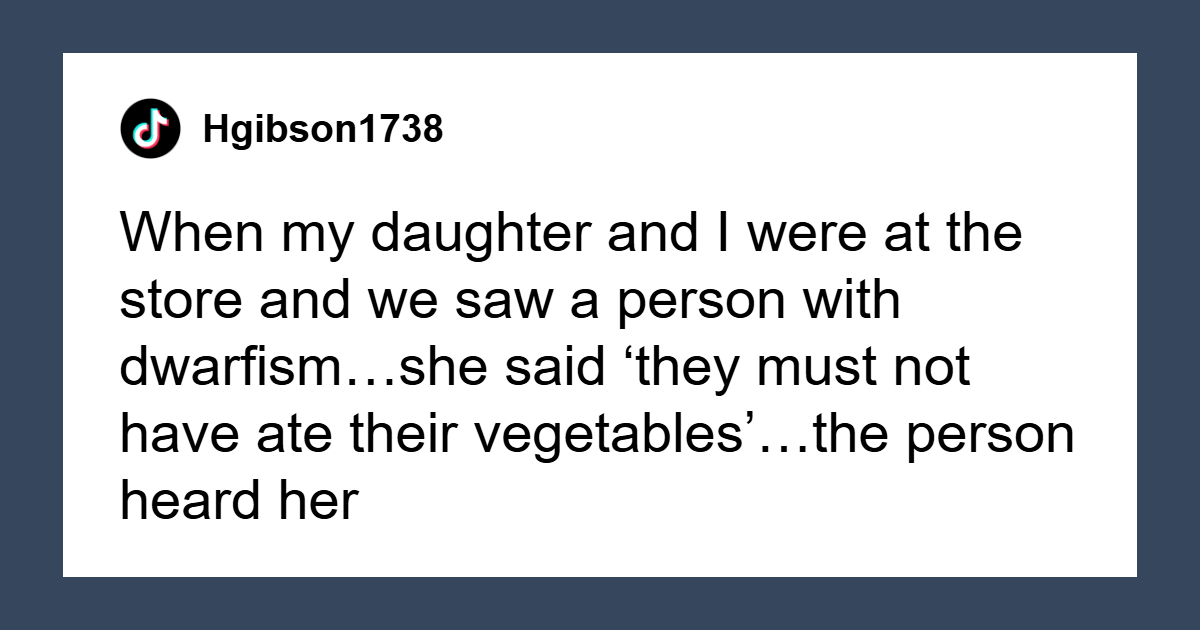
- The “why is her face like that?” moment: Honest curiosity plus zero filter equals instant parental soul exit.
- The church whisper that was not a whisper: During a quiet service, a child yelled something about farts, butts, or Jesus loving snacks.
- The target tantrum trilogy: First the screaming, then the floor flopping, then the dramatic claim that they were being “kidnapped” by their own parent.
- The naked escape: At a park, beach, or public fountain, the kid decided clothing was a prison and freedom was now.
- The doctor’s office remix: They repeated private family details to the receptionist like a tiny gossip columnist with no ethics policy.
- The cash register betrayal: A child informed the cashier that Mommy says the store is “too expensive and kind of ugly.”
- The accidental exposure of adult habits: They casually told strangers who in the house snores, farts, shaves weird places, or hides snacks.
- The wedding interruption: Right in the quietest moment, a child asked when everyone would stop talking and eat cake.
- The funeral disaster: A badly timed joke, giggle fit, or question about whether the dead person was “just sleeping longer” landed like a brick.
- The elevator announcement: A small voice stated that someone smelled bad, and suddenly no one made eye contact for six floors.
- The school pickup scandal: A child shouted something wildly misleading about what happened at home, leaving teachers with expressions usually reserved for crime documentaries.
- The restaurant floor performance: Instead of eating fries, they licked the table, barked like a beagle, and then cried because the ketchup was “too red.”
- The public bathroom interview: They asked detailed questions about tampons, peeing, hair, or “what that sound was,” all with investigative-journalist energy.
- The playground accusation: They announced another parent was “old” or “weird” while standing two feet away from that exact adult.
- The mall mannequin misunderstanding: The child loudly discussed underwear, boobs, or “naked ladies” at a volume normally used for fire drills.
- The accidental theft panic: They grabbed something, ran, and created fifteen seconds of retail-security cinema.
- The haircut betrayal: In front of the stylist, they said the haircut made Mommy look like a mushroom.
- The Santa interrogation: They asked the mall Santa if he was the real one, then demanded proof.
- The family secret leak: A child informed the room that their parents “sleep with the door locked” and then requested clarification.
- The swear-word experiment: They discovered a powerful new word and tested it repeatedly in the cereal aisle like a scientist with no grant oversight.
- The music-class mutiny: During a recital, they sat down, refused participation, and picked their nose like performance art.
- The sibling betrayal: They told strangers their brother wets the bed, because apparently confidentiality is not introduced until middle school.
- The accidental romance rumor: They announced that Mommy “likes that man,” referring to someone who merely said hello.
- The restaurant bathroom escape: Pants off, shoes missing, wet hands everywhere, and suddenly a family dinner became a tactical situation.
- The airport scream: A tired child yelled something alarming enough to make nearby travelers turn around in synchronized panic.
- The neighbor roast: They repeated what they heard at home about the neighbor’s dog, yard, or personality directly to the neighbor.
- The public breastfeeding commentary: Curiosity arrived without social awareness, and the parent nearby deserved a medal for grace under pressure.
- The loudly inaccurate health diagnosis: They decided a stranger was pregnant, sick, or old, and guessed wrong in the most public way possible.
- The class-performance confession: At school, they announced a family detail so odd that every teacher involved wanted follow-up and none of it felt safe.
- The sneeze-level meltdown: A minor inconvenience triggered an emotional collapse usually associated with Shakespearean tragedy.
- The face-touching incident: They touched someone’s hair, belly, mobility aid, or visible difference while asking a question no parent can answer fast enough.
- The “Mommy likes wieners” situation: A child combined innocent vocabulary with unfortunate timing and permanently changed the mood of a room.
- The accidental mooning: Whether through pants failure or intentional chaos, the kid’s rear end became part of the public record.
- The fake emergency: To avoid leaving, they screamed as if actual danger were occurring, which is how a simple errand turns into a trust exercise with strangers.
Why Kids Do Mortifying Things In Public
Here is the deeply annoying truth for embarrassed adults: much of this behavior is developmentally normal. Young kids are still learning social rules, timing, empathy, self-control, and which thoughts are supposed to stay inside their heads. They are not tiny politicians with media training. They are curious humans with incomplete brakes.
Toddlers and preschoolers especially live in the glorious gap between noticing everything and understanding almost nothing about social consequences. They comment on bodies because they notice differences. They blurt out family details because they do not yet understand privacy. They melt down in public because hunger, noise, fatigue, transitions, and frustration hit hard when emotional regulation is still under construction.
That does not make the moment fun. It just means parents are not necessarily failing because their child loudly asked a stranger why he has “such a shiny head.” Public embarrassment is often less a sign of bad parenting than a sign that a child is, inconveniently, being a child in public where witnesses are available.
The Four Biggest Triggers
1. Radical honesty: Kids say what they see. They do not yet understand that “observant” and “devastating” can be the same sentence.
2. Weak impulse control: Even when children know a rule, they may not be able to apply it quickly under stress, excitement, boredom, or sensory overload.
3. Bathroom humor supremacy: Anything involving poop, pee, butts, underwear, or gas is comedy gold to small children. Society did not ask for this, but here we are.
4. Big feelings in small bodies: Tantrums are often less manipulation and more emotional system overload, especially when routines are disrupted.
How Parents Can Survive The Shame Spiral
First, do not turn one embarrassing moment into a family legend that follows your kid to college. It is tempting. It is funny. It is also the kind of thing children may internalize as shame if it is replayed too often. A better move is to correct calmly, redirect quickly, and process later when everybody has fewer crackers in their hair.
In the moment, keep responses short. “We do not comment on people’s bodies.” “That is private.” “Indoor voice.” “We will talk in the car.” This works better than launching into a TED Talk while your child is half upside down in a shopping cart.
It also helps to prepare before public outings. Feed them. Warn them about transitions. Pack distractions. Avoid pushing your luck during nap-danger hours unless you enjoy negotiating with a furious raccoon in sneakers.
And when the incident is especially awful, remember that most adults nearby have either lived through the same thing or will. Judging parents may look confident, but somewhere in their history is a child who screamed “penis” in a library. Karma keeps receipts.
What These Stories Reveal About Family Life
The funniest public parenting disasters stick because they reveal something real. Family life is messy, human, unedited, and wildly different from the polished version people post online. Kids crash through social performance. They expose the chaos, the vulnerability, the private habits, and the fact that every household is one missed nap away from complete nonsense.
That is why these stories travel. They are embarrassing, yes, but they are also strangely comforting. They remind parents that no one gets through childhood without a public scene, a horrifying comment, or a moment where the only option is to stare into the middle distance and keep walking.
In other words, if your child has loudly roasted your appearance, announced your medical business, or performed a dramatic body-roll tantrum next to frozen peas, congratulations. You are not alone. You are not uniquely cursed. You are simply participating in one of the oldest traditions in family life: being publicly humbled by someone who still cannot tie their own shoes properly.
More Real-Life Experiences Parents Relate To
Ask enough parents about their most humiliating public moments, and the details start changing while the emotional core stays exactly the same. There is always that split second where a parent knows something bad is coming, but not quickly enough to stop it. The child inhales, points, or climbs. The parent’s spirit leaves their body. The room goes quiet. Then comes the sentence that will be remembered forever.
Some experiences are small but brutal. A child tells the waiter that the food at home is better. A daughter asks why a woman has a mustache. A son announces, in crystal-clear surround sound, that Daddy snores and Mommy hides in the bathroom to eat chocolate. These are not crimes, but they do create the unique sensation of wanting to dissolve into the nearest potted plant.
Other moments are full-scale public events. There are the legendary parking-lot tantrums where a child goes completely boneless. There are the restroom monologues, often delivered from a stall with the acoustic confidence of a Broadway performer. There are the beach and pool incidents, where kids either forget clothing is required or proudly confess to something that should have remained private and heavily chlorinated.
Parents also relate to the stories because embarrassment rarely travels alone. It usually comes bundled with exhaustion, stress, and the pressure to look like a competent adult while managing a tiny person who has chosen this exact moment to act like a caffeinated goblin. That is what makes these stories funny after the fact. In the moment, they feel like a test of emotional endurance. Later, they become family folklore.
Many moms and dads say the worst part is not even the child’s behavior. It is the audience. The side-eyes. The smirks. The overly helpful strangers. The people who have apparently never met a toddler and behave as though a public meltdown is a new and disturbing weather pattern. Parents remember the judgment almost as clearly as the incident itself.
Still, with time, the humiliation usually softens into comedy. The child who screamed an anatomical word in Target becomes a teenager who begs for rides and acts horrified when the story is mentioned. The kid who once licked a grocery cart or mooned a playground grows up, usually, into a person with at least a slightly better sense of timing. That is part of the comfort in these stories. Most embarrassing public kid moments are not evidence of doom. They are snapshots from a chaotic stage of development.
And for many parents, sharing these experiences becomes a kind of survival strategy. Humor drains the shame out of the moment. Telling the story later, especially to other parents, turns a personal nightmare into a communal one. Suddenly the terrible incident at the pharmacy or restaurant does not feel like proof that you are failing. It feels like proof that children are gloriously unpredictable and that adults, despite all our planning, remain no match for a four-year-old with a loud voice and bad timing.
So yes, these public parenting stories are cringe-worthy. They are awkward, ridiculous, and occasionally spiritually damaging. But they are also deeply human. They show families as they really are: loud, loving, mortifying, and impossible to keep perfectly polished. That may be the most reassuring part of all. Behind every graceful-looking parent is at least one story they pray never gets retold at Thanksgiving.
Conclusion
Children have an elite talent for creating unforgettable public embarrassment, but that chaos is also part of what makes family life funny, relatable, and real. The stories that parents share are not just about shame. They are about honesty without filters, emotion without brakes, and the strange magic of surviving a social disaster with your kid still attached to your leg. If there is a lesson in all 40 of these moments, it is simple: no parent escapes public humiliation forever, and the best coping tool is usually a mix of calm correction, perspective, and a very dark sense of humor.