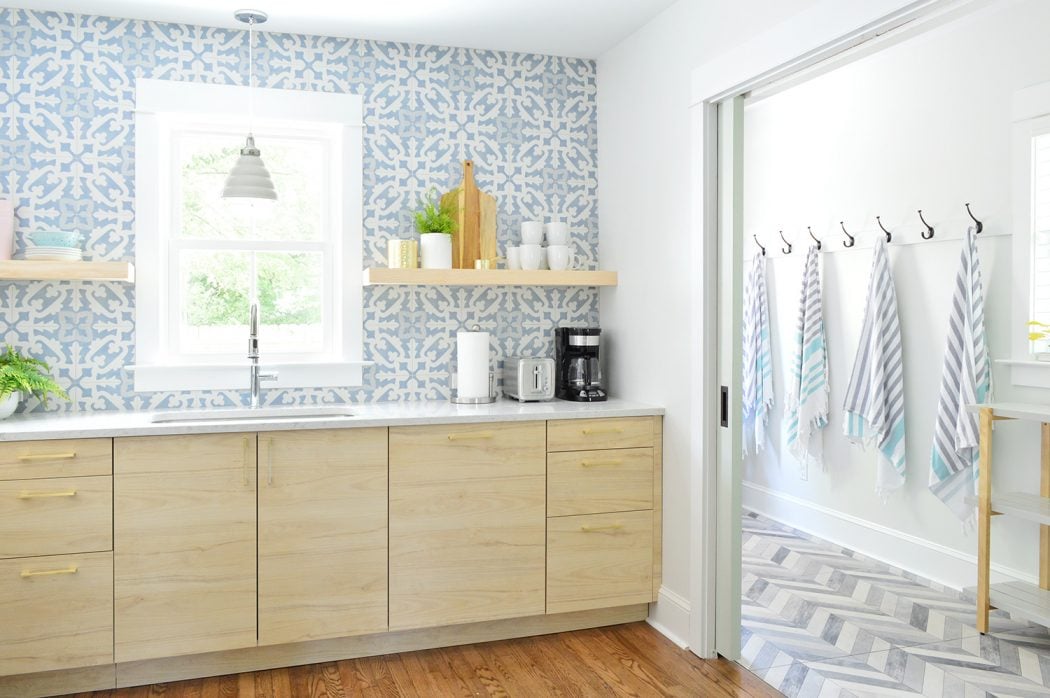
A laundry room is rarely the first space guests photograph, but it may be the room that quietly saves their vacation. After a sandy beach day, a rainy hike, or a toddler-versus-chocolate-ice-cream incident, a washer, dryer, bench, and row of hooks can feel more luxurious than a decorative pillow with an inspirational quote. In our Airbnb duplex, the laundry room and mudroom makeovers were designed to do exactly that: absorb the mess, support longer stays, and keep the rest of the house from becoming a damp-towel habitat.
The project involved two nearly mirrored rooms in a vacation rental, so the challenge was not simply to make them pretty. Each room needed to be durable, understandable at a glance, easy to clean between bookings, and useful to guests who had never seen the house before. A washer or dryer remains one of the amenities travelers commonly search for, which made this upgrade more than a decorating exercise. It was part guest convenience, part operational strategy, and part peace treaty with wet swimsuits.
From Awkward Pass-Through to Hardworking Guest Space
Before the renovation, the back portions of the duplex had been altered over time and were doing too many jobs badly. The rooms felt dim, the layout was chopped up, and valuable square footage was occupied by outdated utility elements and an improvised kitchen arrangement. Because guests would usually enter from the back, near outdoor amenities and beach gear, the area needed to become a welcoming arrival zone rather than a corridor everyone hurried through.
The makeover replaced that confusion with a clear sequence. Guests could enter, drop shoes and bags, hang towels, store snacks, and reach the laundry equipment without weaving around furniture. Stacked machines, tall cabinets, open shelving, benches, baskets, and generous hook rails created a compact command center. The finished rooms also connected more gracefully to the kitchens through pocket doors, allowing the laundry noise to disappear when someone wanted to eat dinner without a spin-cycle soundtrack.
The Design Goals That Guided Both Makeovers
Make the Layout Obvious
Short-term rentals should not require an orientation seminar. Guests need to understand where shoes go, where detergent lives, and which storage is theirs within a few seconds. We created visible zones: hooks and a bench near the entry, appliances grouped together, laundry supplies in an accessible upper cabinet, and open shelves for groceries or personal items.
This zoning also improved turnover cleaning. When each activity has a dedicated area, stray objects are easier to spot and restocking becomes faster. The same principle appears in well-planned laundry rooms that provide a place for every stage of the process, including sorting, washing, drying, hanging, folding, and storage.
Use Vertical Space Before Consuming the Floor
Stacking the washer and dryer was one of the most important decisions. Side-by-side appliances would have swallowed the wall and reduced room for guest storage. Going vertical freed enough width for a tall cabinet beside the machines, giving us separate zones for detergent, replacement supplies, and owner-only maintenance materials.
Compact or stackable equipment is especially practical in smaller rentals, but capacity still matters. A machine that looks adorable yet cannot handle a set of sheets will quickly become the appliance equivalent of a tiny decorative spoon: technically present, functionally suspicious. ENERGY STAR advises matching washer size and configuration to the available space and typical load size, including stackable and under-counter options.
Create Storage for Guests and Storage for Hosts
Vacation rentals need two types of storage. Guest storage should be easy to see and simple to use. Host storage should be secure, organized, and out of the way. In our rooms, accessible cabinets held laundry essentials, while concealed lower areas stored paint and property-maintenance supplies. Freestanding shelving was anchored for safety and positioned to provide bonus pantry space without making the room feel crowded.
Open shelves and baskets are helpful because guests can see available space immediately. Closed cabinets are better for backup inventory and visual calm. Combining both keeps the room friendly without displaying every detergent bottle like it is part of a museum exhibition. Designers often recommend this blend of open access and concealed storage in high-traffic mudrooms.
The Mudroom Half: Hooks, Benches, and a Landing Zone
The mudroom side of each makeover was built around the behavior of real travelers. People arrive carrying tote bags, groceries, jackets, towels, hats, and occasionally one exhausted child who has become emotionally opposed to walking. A bench gives everyone a place to sit while removing shoes. Baskets collect footwear and loose gear. Multiple hooks keep damp items separated and off furniture.
We installed more hooks than seemed strictly necessary because rental math is unusual: six guests can somehow produce fourteen towels, nine hats, and a mysterious tote bag nobody claims. Hooks are inexpensive, intuitive, and much easier to reset than complicated storage systems. For family-friendly rentals, placing some hooks lower also helps children manage their own belongings.
The best mudrooms work as filters between outdoors and indoors. They capture sand, water, grass, and clutter before those materials migrate into bedrooms and living areas. Benches, shoe trays, cubbies, washable surfaces, and accessible baskets are repeatedly recommended because they support this transition without slowing people down.
Pocket Doors Solved Noise Without Stealing Light
One of the most useful architectural choices was adding pocket doors between the kitchens and laundry/mudrooms. When open, the rooms feel connected and the back of each unit appears larger. When closed, the doors reduce appliance noise and hide the practical side of vacation life from the dining area.
Glass panels in the upper portion of the doors allow daylight to continue passing into the kitchen. The doors were also designed so their handles remained visible instead of disappearing completely into the wall. That detail matters in a rental: a hidden feature is often an unused feature. Guests should not need detective skills to discover that a door exists.
Durable Finishes Beat Precious Finishes
Flooring That Can Handle Water and Grit
A combined laundry room and mudroom is exposed to leaks, wet shoes, detergent drips, and abrasive sand. That makes carpet an easy rejection and delicate flooring a risky romance. We favored hard, cleanable flooring with enough pattern to disguise ordinary debris between cleanings.
Water-resistant vinyl, linoleum, porcelain tile, sealed brick, and similar durable surfaces are common recommendations for these spaces. The exact material matters less than the performance: it should tolerate moisture, clean without drama, and provide reasonable traction. Patterned flooring can also give a small utility room visual energy without consuming storage space.
Walls and Cabinets That Welcome a Wipe-Down
Washable paint and durable wall treatments are smarter than fragile finishes near hooks and appliances. Semigloss paint, beadboard, tile, and other wipeable surfaces can tolerate fingerprints, splashes, and suitcase bumps. Tall cabinetry should be secured properly, and any freestanding unit should be anchored, especially in a family rental.
We gave the two rooms related layouts but distinct personalities through color, tile, and door finishes. This approach kept the renovation efficient while allowing each side of the duplex to feel memorable. Repeating the functional plan saved decision-making time; changing the palette prevented the rooms from feeling cloned.
Laundry Safety and Moisture Control Are Part of the Design
A beautiful laundry room is not successful if the dryer vent is neglected or the room traps humidity. Conventional dryers require appropriate venting, and lint screens should be cleaned after every load. The surrounding area should remain free of combustible clutter, and ducts need regular inspection and cleaning according to the appliance manufacturer and local requirements. NFPA and Consumer Reports both emphasize lint removal and proper vent maintenance as basic dryer-fire prevention.
Moisture deserves equal attention. Laundry rooms should dry quickly after wet gear, mopping, or a minor leak. Ventilation, air movement, and prompt repairs help prevent musty odors and material damage. The EPA notes that moisture control is central to mold prevention and recommends keeping indoor relative humidity below 60 percent, ideally in the 30-to-50-percent range when practical.
For a new renovation, consider a drain pan, leak sensors, accessible shutoff valves, and a floor drain where feasible and permitted. These features are not glamorous, but neither is discovering that a supply hose has created an indoor wading pool five minutes before check-in.
Choosing Appliances for an Airbnb Laundry Room
The best rental appliances are reliable, easy to operate, and sized for the property. Controls should be readable, cycles should be straightforward, and instructions should fit on one small sign. A guest should not have to download an app, create an account, or negotiate with a touchscreen merely to wash a T-shirt.
Efficient models can reduce operating costs over repeated stays. ENERGY STAR reports that certified washers use about 20 percent less energy and about 30 percent less water than standard models. Heat-pump dryers can reduce energy use compared with standard dryers and do not require exterior venting, although they have drainage and maintenance considerations that must be planned correctly.
Hosts should also plan for service access. Leave enough clearance to reach valves, outlets, drains, filters, and vent connections. Record model and serial numbers, keep manuals digitally, and avoid building cabinetry so tightly around the machines that repair requires removing half the room. The appliance will eventually demand attention, usually during a holiday weekend because appliances enjoy theater.
Guest-Friendly Details That Improve Reviews
Small conveniences often create the strongest impression. We recommend providing a modest starter supply of detergent, a clearly labeled laundry basket, a drying rail or rack, a trash bin for lint and dryer sheets, and a simple instruction card. Families and longer-stay guests especially appreciate knowing whether detergent is included and whether there are any restrictions or fees.
The room should also be photographed for the listing. A washer and dryer hidden in the amenity checklist may help search visibility, but a bright photo of the actual space builds confidence. Show the machines, the bench, available shelving, and any beach-towel or gear storage. Honest photography helps guests understand how the room supports their stay.
Keeping the Makeover Easy to Maintain
Every design choice was evaluated through the lens of turnover. Could a cleaner vacuum beneath it? Could a guest spill detergent on it? Could a replacement part be found without a treasure map? Smooth counters, wipeable cabinet fronts, machine-washable mats, labeled baskets, and minimal countertop decor all reduce maintenance.
We also avoided overfilling the shelves. Empty space is not wasted space in a rental; it is an amenity. Guests need somewhere to put groceries, folded clothes, or personal supplies. A beautifully styled shelf with no usable room is merely a still life that charges a cleaning fee.
Experience Notes: What These Airbnb Laundry Room and Mudroom Makeovers Taught Us
The biggest lesson was that utility spaces should be designed around movement, not photographs. During planning, it is tempting to focus on tile samples, cabinet colors, and the perfect basket. Those decisions matter, but the room succeeds or fails based on what happens when several people enter at once carrying wet towels and grocery bags. We learned to trace the path from the back door to the kitchen, then remove anything that interrupted it. The bench stayed close to the entry, hooks landed where arms naturally reached, and pantry shelving remained shallow enough to preserve circulation.
We also learned that guests use storage differently from homeowners. A homeowner memorizes where everything belongs. A guest scans the room for clues. Open shelving, visible baskets, and simple labels performed better than clever hidden compartments. At the same time, owner supplies needed separation. Keeping maintenance products out of guest reach reduced clutter and prevented confusion, while a dedicated guest cabinet made detergent feel intentionally provided rather than accidentally abandoned.
Another surprise was how much the doors affected the experience. Closing off the laundry during a meal made the kitchen feel calmer, but the glass panels preserved brightness. Leaving the pocket-door handles visible prevented guests from overlooking them. That tiny decision reminded us that vacation-rental design must be self-explanatory. Elegant features are not useful when nobody knows they exist.
The high number of hooks proved justified almost immediately. Hooks handled towels, bags, lightweight jackets, hats, and reusable shopping totes without instructions. They also made cleaning easier because fewer damp items ended up draped over chairs. A bench and shoe baskets performed the same quiet magic near the door. None of these elements were technologically impressive, yet together they protected the rest of the property.
We became more practical about finishes, too. A rental mudroom floor should forgive sand and water, not demand admiration from a safe distance. Mid-tone patterns concealed minor debris, while washable paint and sturdy cabinet fronts tolerated constant contact. Whenever we debated two materials, we asked which one we would rather clean during a tight turnover. That question ended several glamorous but unwise relationships.
One more operational lesson came from restocking. We created a repeatable checklist for detergent, stain remover, lint disposal, spare baskets, and machine inspection. That checklist prevented small shortages from turning into guest messages at inconvenient hours. It also revealed which supplies guests actually used and which products merely occupied shelf space. In a rental, every stored item should earn its place through usefulness, safety, or speed of turnover; otherwise, it becomes decorative clutter wearing a label.
Finally, we learned to preserve breathing room. We did not fill every shelf, cubby, or wall. Guests bring their own things, and a rental works better when it gives those things somewhere to land. The finished rooms felt organized not because they contained more objects, but because every necessary object had a clear purpose. That is the real success of the makeover: the rooms support beach days, family trips, longer stays, and quick turnovers without calling attention to how hard they are working. They simply catch the mess, quiet the machines, and let the vacation continue.
Conclusion
Our Airbnb’s laundry room and mudroom makeovers transformed overlooked pass-through spaces into durable, attractive workhorses. Stacked appliances preserved floor space, tall cabinets separated guest and host supplies, pocket doors managed noise, and benches, hooks, baskets, and open shelving made arrival and departure easier. Moisture-resistant finishes and straightforward maintenance choices helped the rooms survive the less photogenic parts of hospitality.
The project also proved that a practical room can have personality. Colorful doors, patterned floors, good lighting, and thoughtful hardware made the spaces feel connected to the rest of the duplex rather than treated as backstage areas. For hosts planning a similar renovation, the best formula is simple: design for wet towels, muddy shoes, unfamiliar guests, fast cleaning, and future repairs. Then add just enough style to make laundry feel slightly less like a punishment.