Operation Neptune Spear remains one of the most analyzed, debated, and culturally remembered military operations of the 21st century. Conducted by U.S. forces in Abbottabad, Pakistan, in May 2011, the mission ended the decade-long search for Osama bin Laden, the founder of al-Qaeda and the figure most associated with the September 11 attacks. It was a moment that mixed history, intelligence work, special operations, politics, public emotion, and international controversy into one extremely tense chapter. In simpler terms: it was not just a raid; it was a geopolitical pressure cooker with night vision.
This article ranks the most important dimensions of Operation Neptune Spear and offers balanced opinions on why the mission is still discussed today. The goal is not to glorify violence or turn history into an action movie. The goal is to understand why this operation mattered, how people interpret it, and where its legacy sits among modern national security events.
What Was Operation Neptune Spear?
Operation Neptune Spear was the code name for the U.S. mission that killed Osama bin Laden in Abbottabad, Pakistan. The operation took place in the early hours of May 2, 2011, Pakistan time, which was the afternoon of May 1 in Washington, D.C. President Barack Obama later announced to the American public that bin Laden had been killed by U.S. forces after years of intelligence work and a carefully planned mission.
The operation involved a combination of intelligence gathering, presidential decision-making, military planning, and special operations execution. Public accounts describe it as the culmination of years of work by the CIA, the broader intelligence community, and U.S. military personnel. The mission’s success was not simply the result of one night. It was the final scene of a long and complicated investigation that included tracking couriers, analyzing a suspicious compound, and making a high-risk decision without perfect certainty.
How These Rankings Were Decided
Ranking Operation Neptune Spear requires more than asking, “Was it successful?” On the surface, the answer is obvious: the mission achieved its central objective. But history is rarely that tidy. A good ranking should consider intelligence quality, operational risk, strategic impact, diplomatic consequences, public reaction, legal debate, and long-term influence.
For that reason, the rankings below are based on five practical criteria: historical importance, operational difficulty, public impact, strategic consequences, and controversy. Think of it as a report card for a world-changing event, except the teacher is history and history grades with a red pen the size of a baseball bat.
Operation Neptune Spear Rankings
1. Intelligence Breakthrough: 10/10
The intelligence work behind Operation Neptune Spear deserves the highest ranking. Before any helicopters lifted off, analysts had to build a case that a mysterious compound in Abbottabad might be hiding the world’s most wanted terrorist. The evidence was not simple, direct, or perfectly certain. It involved patterns, human intelligence, surveillance, and a long chain of reasoning.
This is the part of the story that often gets overshadowed by the dramatic ending. Popular culture loves the final raid because it is visual and intense. But the quieter workfollowing leads, reviewing data, debating probabilities, and challenging assumptionswas the real engine of the mission. Without intelligence work, there is no operation. There is just a compound, a suspicion, and a very expensive guessing game.
Opinion: The intelligence phase ranks first because it shows that major national security successes are usually built on patience, not luck. The raid may have lasted minutes, but the search lasted years.
2. Presidential Decision-Making: 9.5/10
The decision to authorize the mission was a major gamble. Public accounts have emphasized that U.S. officials did not have absolute certainty that bin Laden was inside the compound. A failed raid could have caused military casualties, diplomatic fallout with Pakistan, political disaster at home, and a propaganda victory for America’s enemies.
President Obama faced several options, including a strike from the air or a ground raid. The ground raid carried enormous risk, but it also offered the possibility of confirming bin Laden’s identity and gathering intelligence materials from the site. That trade-off made the decision especially difficult. It was not a Hollywood-style button push. It was a moment where risk, law, diplomacy, intelligence, and leadership all collided.
Opinion: This deserves a near-perfect ranking because the decision required accepting uncertainty. Leaders rarely get perfect information. In this case, the choice was made under pressure, and the outcome became one of the defining moments of Obama’s presidency.
3. Mission Execution and Adaptability: 9/10
Operation Neptune Spear is widely remembered for its execution by U.S. special operations forces. Publicly available accounts describe a mission that faced unexpected complications, including the loss of one helicopter at the compound. Even so, the team adapted and completed the operation without U.S. fatalities.
Adaptability is the key word. Real operations do not unfold like neat PowerPoint slides. Something usually goes wrong. Equipment behaves badly, assumptions crack, timing shifts, and everyone discovers that reality did not attend the planning meeting. The ability to continue under pressure is one reason the mission is studied as an example of preparation and disciplined response.
Opinion: The execution ranks extremely high, but not as a simple “flawless victory.” Its significance lies in how the team handled problems rather than pretending problems did not exist.
4. Strategic Impact on al-Qaeda: 8.5/10
The death of bin Laden was a major symbolic and organizational blow to al-Qaeda. He was not just a figurehead; he was the founder, ideological symbol, and central personality associated with the group’s global identity. Removing him weakened al-Qaeda’s image and disrupted its leadership narrative.
However, it did not end terrorism. It did not erase extremist networks, stop every affiliated group, or magically close the book on post-9/11 conflict. Analysts from national security organizations have often noted that bin Laden’s death mattered greatly, but al-Qaeda and related movements were already evolving into more decentralized forms.
Opinion: The strategic impact was huge but not absolute. Operation Neptune Spear closed a chapter, not the entire book. Anyone claiming it “ended terrorism” is trying to sell you a very suspiciously simple bumper sticker.
5. Public Reaction and Emotional Closure: 8/10
For many Americans, the announcement of bin Laden’s death triggered a powerful emotional response. Crowds gathered near the White House and at Ground Zero. Families affected by the September 11 attacks experienced the news in deeply personal ways. For some, it felt like justice. For others, it brought back grief rather than closure.
Polling at the time showed a short-term boost in confidence and presidential approval. Many Americans believed the event made the country safer, though concerns about retaliation remained. That mixed response is important. Public emotion was not one single thing. It included relief, pride, sorrow, anxiety, and moral reflection.
Opinion: The emotional impact ranks high because national events are not measured only in policy outcomes. They also live in memory. Operation Neptune Spear became one of those “where were you when you heard?” moments for a generation.
6. Diplomatic Consequences: 7.5/10
The operation created serious diplomatic questions because it occurred inside Pakistan, a U.S. partner with a complicated relationship to counterterrorism efforts. The discovery that bin Laden had been living in Abbottabad raised uncomfortable questions about Pakistani security, sovereignty, intelligence, and trust.
From the American perspective, secrecy was essential to the mission’s success. From Pakistan’s perspective, the raid created a sovereignty problem and public embarrassment. These two realities can exist at the same time. International politics is rarely a clean living room; it is more like a garage where everyone insists the mess belongs to someone else.
Opinion: The diplomatic consequences rank lower than the mission’s direct success but remain central to its legacy. Operation Neptune Spear was not only a military event. It was also a diplomatic earthquake.
7. Legal and Ethical Debate: 7/10
The legality and ethics of the raid have been debated by scholars, officials, journalists, and human rights observers. Supporters argue that the United States was engaged in an armed conflict with al-Qaeda and that bin Laden remained a lawful military target. Critics and skeptics have raised questions about sovereignty, capture versus kill options, due process, and the precedent created by cross-border operations.
These debates matter because democracies are supposed to ask hard questions even after successful missions. A successful outcome does not eliminate the need for legal scrutiny. In fact, success can make scrutiny more important because it sets examples for future leaders.
Opinion: The legal and ethical debate ranks in the middle because it does not erase the mission’s importance, but it complicates the story. Mature historical analysis should be able to say, “This was effective,” and “This raises questions,” without short-circuiting like an old laptop.
8. Media Portrayal and Pop Culture Memory: 6.5/10
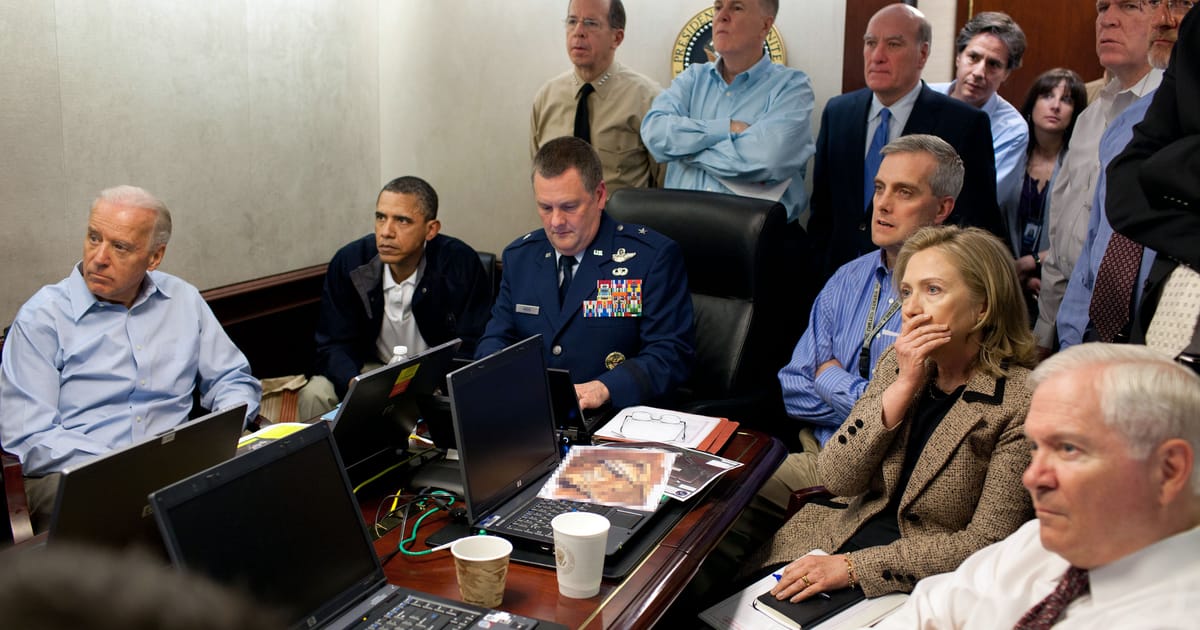
Operation Neptune Spear quickly entered books, documentaries, interviews, films, and online debates. The famous Situation Room photograph became one of the defining images of the Obama era. It captured top officials watching the mission unfold, faces tense and bodies frozen in concentration.
Yet media portrayals can simplify complex events. Films and television often compress intelligence work, exaggerate personalities, or make history feel smoother than it was. Public memory tends to prefer clean heroes, clean villains, and clean endings. Real history is messier. There are classified details, conflicting recollections, political incentives, and unanswered questions.
Opinion: Pop culture helped keep the operation in public memory, but it also made it easier to confuse dramatization with documentation. Good storytelling is useful. Lazy mythmaking is not.
9. Long-Term Lessons: 8/10
One of the biggest lessons from Operation Neptune Spear is that modern security challenges require coordination across agencies, disciplines, and decision levels. Intelligence analysts, military planners, policymakers, pilots, operators, lawyers, and diplomats all played roles. The mission was not a solo performance. It was an orchestra, and the instruments included satellites, briefing books, classified analysis, and nerves of steel.
Another lesson is that symbolic victories matter, but they have limits. Removing a central leader can weaken a network, damage morale, and shift momentum. But ideology, recruitment, regional instability, and political grievances can survive the death of one person. That is why Neptune Spear is best understood as a major counterterrorism milestone, not a final cure.
Balanced Opinions: Was Operation Neptune Spear a Historic Success?
Yes, Operation Neptune Spear was a historic success by its core objective. The mission located and killed Osama bin Laden, confirmed his death, avoided U.S. casualties, and produced a major symbolic victory after nearly ten years of searching. By those standards, the operation ranks among the most consequential U.S. military and intelligence actions of the post-9/11 era.
But a serious opinion should not stop there. The operation also raised enduring questions about international law, state sovereignty, secrecy, and the relationship between justice and force. It also reminds us that tactical excellence does not automatically solve strategic problems. A raid can remove a leader, but it cannot rebuild unstable regions, erase extremist ideology, or answer every moral question created by war.
The best way to view Operation Neptune Spear is as a rare case where intelligence, leadership, and military execution aligned under extreme pressure. It was decisive, dramatic, and historically important. It was also legally debated, diplomatically sensitive, and emotionally complicated. In other words, it was history doing what history does best: refusing to fit neatly into a tweet.
Specific Examples That Shape Public Opinion
The Situation Room Photo
The Situation Room photograph shaped public understanding because it showed leadership under pressure. The image did not show the raid itself, but it showed the human tension around the decision. For many observers, it became a symbol of seriousness, secrecy, and national stakes.
The Abbottabad Location
The fact that bin Laden was found in Abbottabad, not in a remote cave, changed public discussion. It led many people to question how he had remained hidden for so long and what Pakistani authorities did or did not know. This single fact helped keep the diplomatic debate alive long after the mission ended.
The Intelligence Materials
Public accounts have noted that materials collected from the compound later helped analysts better understand al-Qaeda’s internal communications and concerns. That added another layer to the operation’s value. It was not only about removing bin Laden; it was also about learning more from the place where he had been hiding.
Why Operation Neptune Spear Still Matters Today
Operation Neptune Spear still matters because it sits at the intersection of memory and policy. It is tied to September 11, the war on terror, U.S.-Pakistan relations, intelligence reform, special operations, presidential leadership, and public expectations of justice. Few events touch that many nerves at once.
It also remains relevant because modern audiences continue to debate how democracies should respond to non-state terrorist threats. Should leaders prioritize capture when possible? How should intelligence uncertainty be handled? What happens when a threat is located inside another country? How should the public evaluate missions when many details remain classified? These questions did not disappear in 2011.
For students, writers, analysts, and general readers, Operation Neptune Spear is a case study in complexity. It rewards careful thinking. It punishes easy slogans. And it reminds everyone that even the most successful operations can carry consequences beyond the moment of success.
Experience-Based Reflections on Operation Neptune Spear Rankings And Opinions
Engaging with Operation Neptune Spear as a topic is a different experience from reading ordinary military history. Many historical events feel distant, almost sealed behind museum glass. This one still feels close. People remember where they were when the announcement came. They remember the late-night address, the headlines, the crowds, and the strange mixture of relief and unease that followed. For readers who lived through September 11, the operation is not just a national security case study. It connects to grief, anger, memory, and the long emotional shadow of that day.
One common experience when studying the operation is realizing how much happened before the famous final night. At first, many people focus on the raid itself because that is the dramatic centerpiece. But the deeper one reads, the more the intelligence process becomes the most fascinating part. The patient tracking of leads, the uncertainty around the compound, and the internal debates among officials show that history often turns on probabilities rather than certainties. That can be uncomfortable. People like clean answers. Operation Neptune Spear offers a successful outcome, but not a simple path.
Another experience is the shift from emotion to analysis. The first reaction may be patriotic pride, moral satisfaction, or curiosity. Over time, the questions become more layered. Was the operation strategically necessary? Was it diplomatically justifiable? Could capture have been possible? What did it change, and what did it fail to change? These questions do not weaken the importance of the mission. They make the discussion more honest. A serious reader can respect the skill involved while still examining the legal, ethical, and diplomatic issues.
For writers and students, ranking the operation’s different elements is a useful exercise because it prevents one-dimensional thinking. If you rank only execution, the story becomes a military success narrative. If you rank only legal controversy, the operational achievement disappears. If you rank only public reaction, the intelligence work gets buried. A balanced ranking forces every piece of the event to stand in the light. That is where the topic becomes richer and more useful.
There is also a personal learning experience in comparing public memory with documented history. The movie version of events is always faster, louder, and neater. The historical version is slower, more bureaucratic, more uncertain, and more human. Officials disagreed. Analysts estimated. Leaders worried. Operators adapted. Citizens reacted in different ways. That messiness is not a flaw in the story; it is the story.
In the end, the experience of studying Operation Neptune Spear is an exercise in holding several truths at once. It was a successful mission. It was a symbolic turning point. It was not the end of terrorism. It brought relief to many people. It created controversy for others. It showed the power of intelligence and the limits of force. Anyone looking for a simple opinion will probably leave frustrated. Anyone looking for a meaningful historical discussion will find plenty to think about.
Conclusion
Operation Neptune Spear ranks as one of the most significant U.S. national security operations of the modern era. Its highest marks belong to intelligence work, presidential decision-making, and operational adaptability. Its most complicated areas involve diplomacy, legal debate, and long-term strategic impact. The mission achieved its immediate objective, but its legacy is broader than one night in Abbottabad.
The fairest opinion is that Operation Neptune Spear was both a remarkable success and a complex historical event. It delivered a form of justice many Americans had waited nearly a decade to see. It also raised questions that continue to matter in discussions about counterterrorism, international law, and the use of military force. That is why the operation remains powerful as history, as policy, and as public memory.
Note: This article is written for historical analysis and public education. It avoids tactical instructions and focuses on documented context, rankings, opinions, and long-term significance.