Buying a new car once felt like a normal milestone. You graduated, landed a decent job, saved a down payment, and drove home in something that smelled like plastic, optimism, and aggressively applied upholstery chemicals.
Today, the same purchase can resemble a luxury subscription with cupholders. New-vehicle prices remain near historic highs, loan rates are stubborn, insurance premiums have climbed, and buyers increasingly stretch financing across six or seven years just to make the monthly payment look less terrifying.
That does not mean every new-car buyer is foolish. Some buyers have enough income or savings to absorb the expense. Others genuinely benefit from a warranty, modern safety technology, predictable maintenance, or manufacturer financing. But for an average household, purchasing a brand-new vehicle without examining the full cost can quietly derail retirement contributions, emergency savings, homeownership plans, and nearly every financial goal that does not come with alloy wheels.
The New-Car Market Is Increasingly Built for Wealthier Buyers
By June 2026, the average advertised price of a new vehicle in the United States had reportedly climbed above $51,000. That does not mean every buyer pays $51,000, but it shows how dramatically the market has shifted toward expensive trucks, SUVs, premium trims, electrified powertrains, and feature-heavy models.
The customer base has changed along with the inventory. Households earning less than $100,000 represented only about 36% of new-car buyers in 2025, compared with 51% in 2020. In other words, new-car showrooms are becoming less dependent on ordinary middle-income families and more dependent on affluent buyers who can withstand higher prices, financing costs, and insurance bills.
Research basis: current advertised prices and income distribution among U.S. new-car buyers.
This helps explain an apparent contradiction. Consumers constantly complain that cars are unaffordable, yet automakers continue selling millions of them. The answer is that “the consumer” is not one person. A household earning $300,000 can purchase a $55,000 SUV without rearranging its entire financial life. A household earning $65,000 may need an 84-month loan, a trade-in, a tax refund, and a small act of divine intervention.
Affordable models still exist, but they are no longer the center of the market
There are still new sedans and compact crossovers priced well below the national average. However, the selection of genuinely inexpensive models has narrowed, while popular vehicles frequently reach the mid-$30,000 range before taxes, registration, accessories, destination charges, and dealer-installed extras.
The base price featured in an advertisement may also describe a vehicle that is technically available in the same way a quiet table is technically available at a restaurant on Valentine’s Day. The cars actually sitting on the lot may have larger wheels, premium paint, upgraded technology packages, and several thousand dollars in options.
The Monthly Payment Has Become a Financial Optical Illusion
In the first quarter of 2026, the average amount financed for a new vehicle reached $43,925. The average monthly new-car payment rose to $770, up from $748 one year earlier. Nearly one-fifth of new-vehicle loans reportedly carried monthly payments above $1,000.
Research basis: Experian Q1 2026 automotive finance data and reporting on $1,000-plus payments.
A four-figure car payment is not automatically reckless for a high-income household. The danger comes when buyers judge affordability by the payment alone. Dealers can lower a payment by extending the loan term, increasing the down payment, adding a lease structure, or quietly moving costs elsewhere. None of those techniques necessarily makes the vehicle cheaper.
Longer loans make expensive cars appear affordable
An 84-month loan can turn an alarming payment into a merely uncomfortable one. Unfortunately, the buyer may still be making payments when the car needs major repairs, new tires, or an expensive out-of-warranty electronic component.
Long terms also increase the risk of negative equity. A vehicle loses value while the loan balance declines slowly, leaving the owner owing more than the car is worth. If the vehicle is traded early, the unpaid balance may be rolled into the next loan. That is how one overpriced car can reproduce.
Research basis: risks associated with 84-month loans and negative equity.
The most useful question is not, “Can I make this payment?” It is, “How much will this car cost from the day I sign until the day I sell it?”
Interest Turns the Sticker Price Into a Suggestion
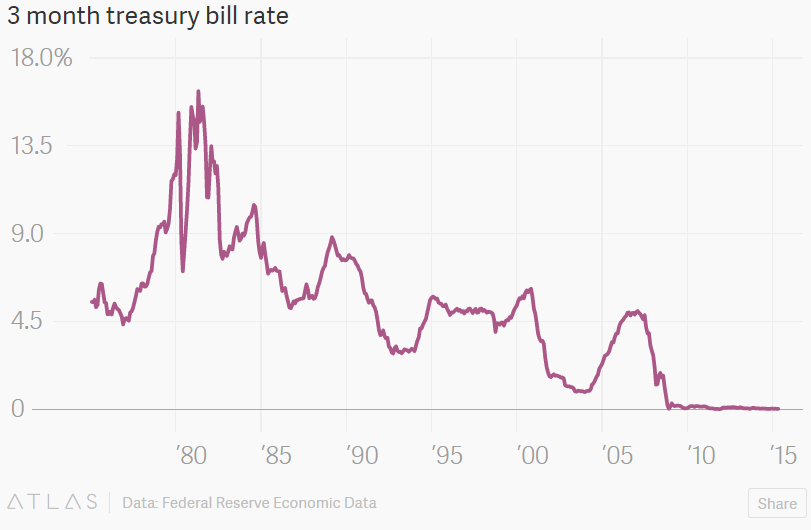
As of June 2026, the average rate for a 60-month new-car loan was approximately 6.93%. Buyers with excellent credit may qualify for lower rates, while borrowers with weaker credit can face dramatically higher offers.
Research basis: June 2026 U.S. new-car loan rates and credit-based rate differences.
Consider a buyer who finances $43,925 for 60 months at 6.93%. The payment would be roughly $868 per month, and total interest would exceed $8,100. Add sales tax, registration, documentation charges, insurance, maintenance, fuel, parking, and depreciation, and the original purchase price begins to look like the opening bid rather than the final expense.
Promotional financing can change the calculation. A manufacturer offering 0.9% or 1.9% APR on a discounted model may make a new vehicle competitive with a lightly used one, especially because used-car loan rates are often higher. The mistake is assuming every “special offer” is automatically special. Low-interest financing may require excellent credit, a short term, a large down payment, or the surrender of a cash rebate.
Compare the total amount paid
Ask for the out-the-door price, annual percentage rate, loan term, down payment, and total of all scheduled payments. Those five numbers reveal far more than a salesperson’s enthusiastic promise to “get you under $700.”
Depreciation Is the Cost Buyers Rarely Feel Until It Is Too Late
Unlike fuel or insurance, depreciation does not arrive as a monthly bill. It quietly removes value from the vehicle while the owner is sleeping, working, or explaining to friends that the panoramic roof was absolutely necessary.
Recent market analysis found that the average vehicle loses about 41.8% of its value over five years. Edmunds has estimated that a new car can lose roughly 22% of its value during the first year alone, although the actual result depends heavily on the model, demand, mileage, incentives, and condition.
Research basis: average five-year and first-year vehicle depreciation.
A $50,000 vehicle that depreciates by 40% has lost $20,000 in value. That loss may never appear in an online banking notification, but it is still real money. It becomes painfully visible when the owner tries to sell, refinance, trade the vehicle, or settle an insurance claim.
AAA’s 2025 ownership analysis estimated that depreciation alone averaged $4,334 per year across the new vehicles in its study. The total average cost of owning and operating a new vehicle was $11,577 annually, or nearly $965 per month, even though the average manufacturer’s suggested retail price in the study was below the broader market’s highest advertised averages.
Research basis: AAA 2025 Your Driving Costs analysis.
This is why a paid-off, reliable older car can be a powerful financial asset. It may not impress anyone in the office parking lot, but neither does a brokerage accountand one of those may eventually let you stop going to the office.
The Car Payment Is Only One Member of the Expense Family
Transportation already consumes a large share of the American household budget. In 2024, U.S. households spent an average of $13,318 on transportation, equal to about 17% of total annual expenditures. That category includes vehicle purchases, fuel, insurance, maintenance, repairs, and other transportation costs.
Research basis: U.S. Bureau of Labor Statistics Consumer Expenditure Survey.
A new car can increase several of those costs at once:
- Insurance: A more valuable vehicle usually costs more to repair or replace, and lenders generally require comprehensive and collision coverage.
- Registration and taxes: Many states base fees or property taxes partly on the vehicle’s value.
- Tires: Large wheels and performance-oriented tire sizes can turn a routine replacement into a four-digit event.
- Technology repairs: Cameras, sensors, headlights, screens, and driver-assistance components can be costly after a collision or warranty expiration.
- Opportunity cost: Money tied up in a down payment or monthly payment cannot simultaneously fund an emergency account, retirement plan, education, or home purchase.
A household comparing a $650 payment with its existing $300 payment may conclude that the upgrade costs an extra $350 per month. If insurance rises by $120, registration adds another $30, and premium fuel or larger tires increase operating expenses, the real difference may be closer to $550.
Keeping an Older Car Is More Normal Than Ever
The average age of cars and light trucks on U.S. roads reached approximately 12.8 years in 2025. Americans are not keeping vehicles longer because everyone suddenly developed an emotional attachment to faded clear coat. High replacement costs, improved vehicle durability, and economic pressure have made repair-and-keep decisions more attractive.
Research basis: S&P Global Mobility analysis of average U.S. vehicle age.
A $2,500 repair can feel outrageous until it is compared with replacing the car. A new vehicle carrying a $770 payment consumes $9,240 in payments during the first year, before insurance, taxes, and depreciation. If the repaired car can operate safely and reliably for another two years, the ugly repair bill may be the cheaper option.
That does not mean pouring unlimited money into an unreliable vehicle. Structural rust, repeated engine or transmission failures, severe safety deficiencies, and constant breakdowns can justify replacement. The comparison should be based on expected annual cost and reliabilitynot on the fact that a salesperson has offered free coffee.
Buying New Is Not Always Foolish
The article’s title is intentionally provocative. There are situations in which a new vehicle is financially defensible or practically necessary.
Modern safety equipment can provide real value
New vehicles commonly include automatic emergency braking, pedestrian detection, lane-departure prevention, improved crash structures, and more advanced airbag systems. Insurance and crash research indicate that bundled driver-assistance technologies can reduce certain types of collisions.
Research basis: Insurance Institute for Highway Safety research on advanced driver-assistance systems.
A warranty can reduce uncertainty
A buyer who drives long distances, depends on a vehicle for work, or cannot tolerate unexpected repairs may reasonably value several years of warranty coverage. Predictable expenses are especially useful for families with tight schedules, even when the mathematically cheapest option might be an older car.
Incentives can narrow the new-versus-used gap
Automakers have been spending more on incentives to support sales. In March 2026, average incentive spending was reported at $3,541 per vehicle, or about 7.2% of the average transaction price. A discounted new model with subsidized financing may occasionally cost little more than a two-year-old example financed at a higher used-car rate.
Research basis: Cox Automotive incentive and inventory reporting.
Keeping the vehicle for a decade changes the economics
Depreciation hurts most when a buyer replaces vehicles frequently. Someone who buys a reliable new car, maintains it carefully, pays it off quickly, and keeps it for 10 to 15 years spreads the initial cost across a much longer ownership period.
The foolish purchase is not necessarily a new car. It is a new car bought primarily for status, financed for too long, traded too early, and replaced before the owner has enjoyed the inexpensive years after the loan disappears.
Smarter Alternatives to Paying Full New-Car Prices
Buy a two- to five-year-old used vehicle
A carefully selected used car allows the first owner to absorb the steepest depreciation. Focus on reliability history, service records, accident history, ownership costs, and an independent pre-purchase inspection. The cheapest listing is not always the best value, particularly when it comes with bald tires, warning lights, and a seller who insists the transmission noise is “just how they sound.”
Research basis: Consumer Reports guidance on new, certified pre-owned, and used vehicles.
Consider certified pre-owned vehicles
A certified pre-owned car usually costs more than a conventional used vehicle but may include inspection requirements, warranty coverage, roadside assistance, and favorable financing. It can provide a compromise for buyers who want lower depreciation without accepting maximum mechanical uncertainty.
Shop the vehicle and the financing separately
Obtain loan offers from banks and credit unions before visiting the dealership. A preapproval gives you a benchmark and makes it easier to recognize whether dealer financing is genuinely competitive.
Get an insurance quote before signing
Insurance costs vary significantly by model, location, driver history, repair complexity, theft frequency, and coverage level. A vehicle that is only $2,000 more expensive to buy could be substantially more expensive to insure.
Negotiate the out-the-door price
Do not negotiate solely through monthly payments. Ask for a written breakdown showing the vehicle price, destination charge, taxes, registration, documentation fee, accessories, service contracts, protection packages, and every other item between you and the exit.
The “Rich or Foolish” New-Car Test
Before buying, answer the following questions honestly:
- Can I make a meaningful down payment without draining my emergency fund?
- Can I afford the payment on a loan lasting no more than 48 to 60 months?
- Have I calculated insurance, registration, fuel, parking, maintenance, and depreciation?
- Am I carrying negative equity from another vehicle?
- Will I still contribute adequately to retirement and other long-term goals?
- Do I plan to keep the vehicle several years after it is paid off?
- Would a reliable used vehicle meet the same transportation need?
- Am I buying functionality, or am I financing an identity?
If the purchase requires an 84-month loan, consumes nearly all available cash, eliminates saving, or depends on future raises and bonuses, the vehicle is probably too expensive. Hope is an excellent motivational tool but a terrible loan officer.
A 500-Word Real-World Experience: When the Payment Finally Becomes Real
The following composite experience reflects situations commonly faced by American car shoppers.
A couple enters a dealership planning to replace their nine-year-old crossover. Their current vehicle has 118,000 miles, a scratched bumper, and an air conditioner that occasionally behaves like it belongs to a different car. A mechanic has recommended $2,400 in repairs over the coming year. The couple considers that number outrageous.
They find a new crossover advertised for $34,995. It has adaptive cruise control, heated seats, a large touchscreen, and enough cameras to produce a documentary about parking. The salesperson asks what monthly payment they want. They say $600, believing this represents responsible restraint.
The written proposal tells a different story. The vehicle includes a destination charge, premium paint, a dealer protection package, window tint, documentation fees, and taxes. The out-the-door total is nearly $40,000. After applying their trade-in and a $3,000 down payment, they would finance approximately $34,000.
At 7.4% for 72 months, the payment comes close to $590. Success, apparently. The salesperson has “hit their number.”
Then they call their insurer. Full coverage on the new crossover will cost $135 more per month than coverage on their old vehicle. Registration will increase. Their down payment will remove most of their emergency savings. The loan will continue for six years, and the total interest will add thousands of dollars to the purchase.
The $590 payment is now closer to a $750 monthly change in household cash flow. Over one year, that difference exceeds $9,000nearly four times the estimated repair cost on the old crossover.
They leave without buying. This is not nearly as exciting as ringing a dealership bell or posing beside a giant bow, but financial victories rarely have good lighting.
The couple pays for the most urgent repairs, postpones a cosmetic fix, and begins transferring $600 per month into a dedicated vehicle account. Ten months later, the old crossover is still operating. Their account contains $6,000, giving them options they did not have at the dealership.
Eventually, they purchase a three-year-old certified vehicle with a clean inspection and remaining warranty coverage. It lacks the newest dashboard design, but it meets their safety, space, and reliability needs. Their larger down payment reduces the loan, and they choose a four-year term instead of six years.
Now consider a different buyer: a physician earning $280,000 with no consumer debt, a fully funded emergency account, and strong retirement savings. She buys the same new crossover with cash and plans to keep it for 12 years. The purchase may not maximize every dollar, but it does not threaten her financial security. She is paying for convenience, known history, safety technology, and the exact configuration she wants.
The vehicle is identical. The financial decision is not.
That is the central lesson. A new car is not affordable merely because a lender approves the loan. It is affordable when the purchase fits comfortably beside savings, housing, insurance, family obligations, and long-term goals. Rich buyers can absorb the inefficiency. Careful buyers can sometimes justify it. Everyone else should remember that the most satisfying feature in any vehicle is eventually seeing a loan balance of zero.