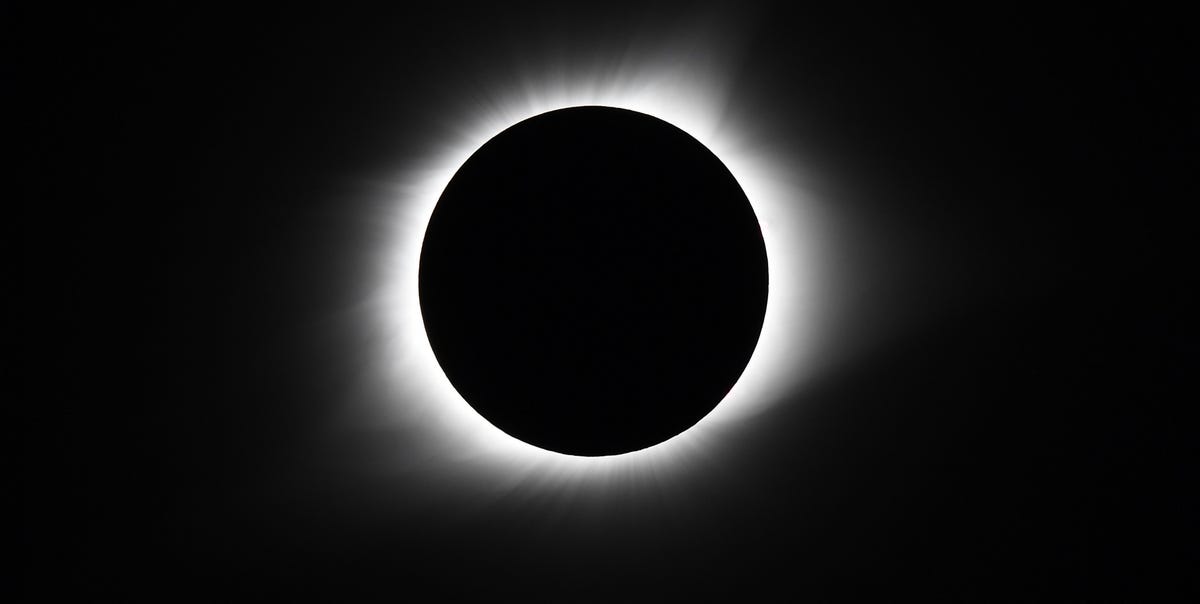
The next solar eclipse is the kind of sky event that makes people suddenly remember they own calendars, cameras, lawn chairs, and at least one friend who “knows a good viewing spot.” As of May 9, 2026, the next solar eclipse will be the total solar eclipse on August 12, 2026. It will be visible as a total eclipse along a narrow path crossing the Arctic region, Greenland, Iceland, the Atlantic, northern Spain, and a small part of Portugal, while a much larger region will see a partial solar eclipse.
For eclipse chasers, this is a big one. Not because it will be visible everywhere, but because total solar eclipses are nature’s most dramatic “lights off, please” moment. The Moon slides between Earth and the Sun, the daylight dims, shadows sharpen, the air feels strange, and for a brief stretch inside the path of totality, the Sun’s outer atmospherethe coronabecomes visible. It is science, travel, weather anxiety, and goosebumps all bundled into a few unforgettable minutes.
This guide explains when the next solar eclipse happens, where to see it, why it matters, how to watch safely, and how to plan a trip without becoming the person who forgets eclipse glasses and tries to borrow some from a stranger named Gary.
When Is the Next Solar Eclipse?
The next solar eclipse will occur on Wednesday, August 12, 2026. It will be a total solar eclipse, meaning the Moon will completely cover the Sun for viewers positioned inside the narrow path of totality.
Worldwide, the eclipse begins as a partial eclipse at approximately 15:34 UTC. The first location to experience totality begins around 16:58 UTC, and the moment of greatest eclipse occurs around 17:46 UTC. The final partial phase ends around 19:58 UTC. Local times will vary depending on where viewers are standing, so anyone planning to watch should check location-specific eclipse maps before making travel plans.
Quick Facts About the August 12, 2026 Solar Eclipse
- Date: August 12, 2026
- Type: Total solar eclipse
- Best viewing regions: Greenland, Iceland, northern Spain, and a small area of Portugal
- Partial eclipse visibility: Parts of Europe, Africa, North America, the Arctic, the Atlantic, and nearby regions
- Maximum totality: About 2 minutes and 18 seconds in the best locations
- Safety rule: Use certified solar viewers during all partial phases
Where Will the Next Solar Eclipse Be Visible?
The path of totality for the next solar eclipse will sweep across remote northern areas before reaching some highly attractive travel destinations. The total eclipse path includes parts of the Arctic Ocean, Greenland, Iceland, the Atlantic Ocean, northern Spain, and a small portion of northeastern Portugal.
For many travelers, Spain is likely to be the most practical and weather-friendly destination. Northern Spain offers road access, hotels, historic towns, open landscapes, and better odds of clearer skies compared with more northern regions. Iceland will be spectacular if skies cooperate, but weather in the North Atlantic can behave like a toddler with a drum set: loud, unpredictable, and not especially concerned with your plans.
Greenland
Greenland will be among the early land areas touched by the Moon’s shadow. The scenery could be extraordinary, with ice, mountains, and polar light creating a once-in-a-lifetime setting. However, Greenland is remote, travel logistics can be difficult, and weather uncertainty is high. This destination is best suited for experienced eclipse travelers or organized expeditions.
Iceland
Iceland will also sit in the path of totality. The idea of watching a total solar eclipse over lava fields, waterfalls, or coastal cliffs is almost unfairly cinematic. Still, cloud cover is a serious consideration. Visitors should stay flexible, monitor weather forecasts closely, and consider renting a vehicle if they plan to move to clearer skies on eclipse day.
Northern Spain
Spain may become the star of the 2026 eclipse show. The path crosses northern Spain, with many inland areas offering promising weather prospects. Locations away from the cloudy northern coast may provide better chances of a clear view. Cities, towns, rural plateaus, and elevated viewpoints across the path are expected to attract large numbers of eclipse watchers.
Portugal
A small part of Portugal will be touched by the path of totality. Because the path is narrow, exact location matters. A short drive could mean the difference between seeing a partial eclipse and experiencing totality. For serious viewers, “close enough” is not close enough. Totality is the main event; partial is the trailer.
Total Solar Eclipse vs. Partial Solar Eclipse
A total solar eclipse happens when the Moon completely covers the Sun for viewers inside the path of totality. A partial solar eclipse happens when only part of the Sun is covered from a viewer’s location. Both are interesting, but they are not the same experience.
During a partial eclipse, the Sun may look like a glowing cookie with a bite taken out of it when viewed through proper solar filters. During totality, the sky darkens dramatically, bright stars or planets may appear, the temperature may drop, and the Sun’s corona becomes visible. That brief total phase is why people cross oceans, book hotels years in advance, and willingly discuss cloud statistics at dinner.
Why Solar Eclipses Do Not Happen Every Month
A solar eclipse can only happen during a new Moon, when the Moon is positioned between Earth and the Sun. So why don’t we get one every month? Because the Moon’s orbit is tilted compared with Earth’s orbit around the Sun. Most months, the Moon passes slightly above or below the Sun from our point of view.
Eclipses happen only when the geometry lines up near points called lunar nodes. When the Sun, Moon, and Earth align just right, the Moon casts a shadow on Earth. If you are standing inside the darkest part of that shadow, called the umbra, you see a total solar eclipse. If you are outside that narrow zone but still within the broader shadow, you see a partial eclipse.
How Long Will the Next Solar Eclipse Last?
The full event lasts several hours from the first partial phase to the final partial phase, but totality at any one location will be brief. The maximum duration of totality for the August 12, 2026 eclipse will be a little over two minutes in the most favorable locations.
Two minutes may not sound long, but eclipse time is different from normal time. Two minutes in a checkout line is mildly annoying. Two minutes of totality can feel like the universe has opened a secret door, whispered “look at this,” and closed it again before your brain finishes loading.
Best Places to Watch the Next Solar Eclipse
Choosing the best viewing location depends on four practical factors: whether the site is inside the path of totality, the expected cloud cover, the Sun’s height above the horizon, and your ability to move if the weather turns against you.
Pick a Spot Inside the Path of Totality
This is the golden rule. To see totality, you must be inside the path. Being near the path is not enough. A location just outside totality may see a deep partial eclipse, but it will not experience the full darkness, corona, or dramatic total phase.
Think About the Horizon
In Spain, the eclipse will occur with the Sun relatively low in the sky, especially toward sunset. That means a beautiful view is possible, but so is disappointment if a hill, building, forest, or extremely confident tour bus blocks the western horizon. Choose a site with a wide, clear view.
Watch the Weather
Weather can make or break an eclipse trip. Historical climate patterns can guide planning, but short-term forecasts matter most in the final days. If possible, choose a base that allows driving inland or shifting location on eclipse day. Flexibility is the eclipse traveler’s secret superpower.
How to Watch the Next Solar Eclipse Safely
Solar eclipse safety is simple, but it is not optional. During the partial phases of any solar eclipse, you must use proper solar viewing glasses or a handheld solar viewer that meets the ISO 12312-2 safety standard. Regular sunglasses are not safe, even if they are dark enough to make you look mysterious at brunch.
The only time it is safe to look without eclipse glasses is during the brief total phase, and only if you are inside the path of totality and the Sun is completely covered. The moment the Sun begins to reappear, glasses must go back on immediately.
Safe Viewing Checklist
- Use ISO 12312-2 compliant eclipse glasses or solar viewers.
- Inspect glasses for scratches, holes, tears, or damage before use.
- Do not use regular sunglasses.
- Do not look through cameras, binoculars, or telescopes without proper solar filters.
- Supervise children carefully during the event.
- Use indirect viewing methods, such as a pinhole projector, if you do not have safe glasses.
Can You Photograph the Next Solar Eclipse?
Yes, but photographing a solar eclipse requires planning. A smartphone can capture the mood of the day, the crowd, the changing light, and the scenery. However, photographing the Sun directly requires proper solar filters for cameras, especially during partial phases. Looking at the Sun through an unfiltered camera, telescope, or binoculars can be dangerous.
If you are not an experienced eclipse photographer, consider enjoying the moment with your eyes during totality instead of wrestling with settings. Many first-time viewers spend the entire eclipse trying to fix a blurry image and later realize they barely looked up. The best camera is often your memory, which has terrible resolution but excellent emotional range.
Travel Planning for the August 12, 2026 Solar Eclipse
Major eclipses bring crowds. Hotels, rental cars, tours, and transportation near the path of totality can book up early. If you plan to travel for the next solar eclipse, start organizing as soon as possible.
Book Early
Popular destinations in Spain and Iceland may see heavy demand. Book lodging early, but also check cancellation policies. Weather flexibility may matter more than having the fanciest room in town.
Arrive Before Eclipse Day
Do not plan to arrive at the last minute. Roads can become crowded, local services may be busy, and unexpected delays can turn a dream trip into a dashboard-viewing festival. Arriving at least a day early gives you time to scout locations and adjust plans.
Pack Like a Practical Human
Bring eclipse glasses, backup glasses, water, snacks, sunscreen, a hat, layers, a portable charger, printed maps, and patience. If you are traveling with children, pack more snacks than you think any human could possibly need. You will still be wrong, but at least you tried.
What Makes the 2026 Solar Eclipse Special?
The August 12, 2026 eclipse is special because it brings totality back to parts of Europe and the North Atlantic region. It is also part of an exciting run of solar eclipses in the late 2020s, including additional total and annular eclipses in the following years.
For travelers in Europe, this eclipse offers a relatively accessible opportunity to experience totality without crossing the globe. For astronomy fans, it is a chance to observe one of the most beautiful natural alignments on Earth. For everyone else, it is a reminder that space is not just something “out there.” Sometimes it shows up in the afternoon and turns the lights down.
Common Questions About the Next Solar Eclipse
Will the Next Solar Eclipse Be Visible in the United States?
The August 12, 2026 total solar eclipse will not cross the contiguous United States as a total eclipse. Some regions may see a partial eclipse depending on location, but the main path of totality will be in Greenland, Iceland, northern Spain, and a small part of Portugal.
Is a Total Solar Eclipse Rare?
Total solar eclipses happen somewhere on Earth about every 18 months on average, but any specific location may wait centuries to see one. That is why eclipse travelers are willing to move. The eclipse will not come to your backyard on command; it has a busy schedule.
Do Animals React to Solar Eclipses?
Many people report changes in animal behavior during totality. Birds may quiet down, insects may change their sounds, and pets may seem confused by the sudden dimming. Reactions vary, but the shift in light and temperature can make the world feel briefly turned upside down.
Personal Experience: What Watching the Next Solar Eclipse Can Feel Like
Planning for the next solar eclipse is not just about astronomy. It is also about anticipation. The days before an eclipse feel strangely electric. People who usually discuss traffic, groceries, and email suddenly become amateur meteorologists. Everyone checks cloud maps. Everyone has opinions about parking lots. Someone will say, “I think that field looks promising,” as if they are leading a historic expedition instead of pointing at a patch of grass.
The first emotional stage is logistics. You test your eclipse glasses. You check the path of totality again, even though you already checked it twelve times. You compare weather apps and believe whichever one has the least clouds. You pack water, snacks, a folding chair, and one extra layer because eclipse day has a talent for making normal temperatures feel suspicious.
Then the partial phase begins. At first, it is subtle. Through eclipse glasses, the Sun looks like a bright disk with a tiny bite missing. Around you, people make delighted noises at something that, objectively, looks like a cosmic cookie being nibbled. But the bite grows. The light changes. It becomes thinner, cooler, and slightly metallic. Shadows under trees turn into tiny crescents. The air feels like evening is trying to sneak in through the side door.
As totality approaches, the mood shifts. Conversations fade. People who were joking a minute earlier start looking around quietly. The horizon may glow strangely while the sky above darkens. The temperature can drop. Birds may settle. The world feels paused, as if someone pressed a giant mute button.
Then totality arrives. If you are in the right place and the sky is clear, the Sun disappears behind the Moon, and the corona appears like a silver-white crown. It is delicate, bright, and almost unreal. No photo fully prepares you for it. The experience is both grand and strangely personal, like the universe is performing for everyone and whispering directly to you at the same time.
The funniest part is how fast human behavior returns. The instant the Sun begins to reappear, people cheer, gasp, fumble for their glasses, hug strangers, check their photos, and immediately begin discussing the next eclipse. That is how eclipse chasing starts. One minute you are a normal person. Two minutes later you are considering a future trip based entirely on the Moon’s shadow.
For the August 12, 2026 eclipse, the experience may be especially memorable because many viewing locations will combine totality with dramatic landscapes. Imagine standing in northern Spain with the Sun low in the sky, the light turning gold, the horizon glowing, and the Moon briefly covering the Sun before sunset. Or picture Iceland, where volcanic scenery and ocean air could make the event feel almost mythic if the clouds cooperate.
The best advice is simple: prepare carefully, then let yourself experience it. Do not spend the entire event behind a screen. Take a few photos if you want, but save time to simply look, listen, and notice. Watch the shadows. Feel the temperature change. Listen to the crowd. Remember the weird quiet. Totality is brief, but the memory has a way of lasting much longer than the clock says it should.
Conclusion
The next solar eclipse, on August 12, 2026, will be one of the most exciting sky events of the decade. With a path of totality crossing Greenland, Iceland, northern Spain, and a small part of Portugal, it offers travelers and astronomy lovers a rare chance to witness the Sun vanish behind the Moon. Whether you plan to chase totality across Europe or watch a partial eclipse from another region, the keys are preparation, safety, and flexibility.
Use proper eclipse glasses, choose your viewing location carefully, watch the weather, and give yourself enough time to enjoy the event without rushing. A total solar eclipse is short, strange, beautiful, and unforgettable. It is also the rare event where staring at the sky with a crowd of strangers is not only acceptableit is the entire point.