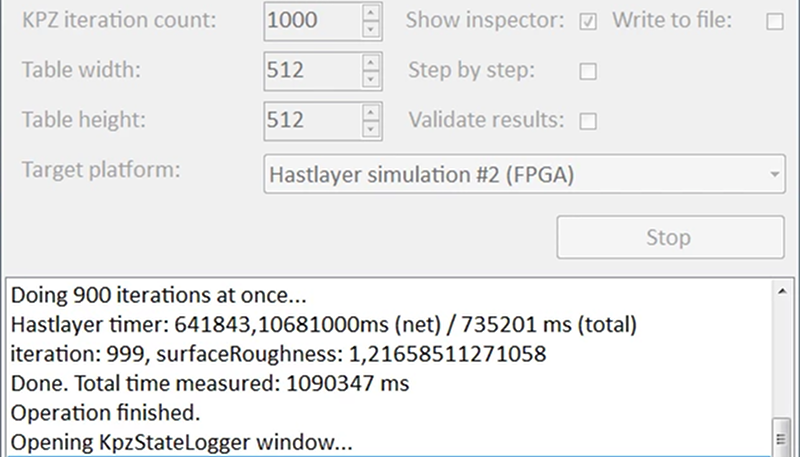
Most .NET developers spend their days thinking about clean architecture, async calls, LINQ queries, API contracts, and whether that one “temporary” helper class has somehow become the spiritual leader of the codebase. FPGAs, meanwhile, live in a very different neighborhood: hardware description languages, timing closure, bitstreams, lookup tables, registers, and toolchains that do not care how elegant your service layer is. Hastlayer tries to build a bridge between those worlds by letting developers turn performance-critical parts of .NET applications into FPGA-implemented logic circuits.
That sounds like science fiction with a Visual Studio extension, but the idea is real. Hastlayer, developed by Lombiq, is designed to accelerate compute-bound .NET code by converting selected .NET assemblies into hardware logic that can run on a field-programmable gate array. Instead of rewriting a hot algorithm in VHDL or Verilog, the developer keeps working in a familiar .NET environment and lets the tool generate hardware from the compiled intermediate representation. In plain English: you write software, Hastlayer attempts to turn the heavy part into a custom digital circuit, and your CPU gets to stop sweating through its shirt.
What Is Hastlayer?
Hastlayer is a .NET-to-FPGA hardware acceleration platform. Its goal is not to replace your whole application with a chip. That would be both unnecessary and a fantastic way to ruin a peaceful sprint planning meeting. Instead, Hastlayer focuses on performance-critical code: the loops, calculations, transformations, and repetitive workloads where custom hardware can outperform general-purpose execution.
The key concept is simple: identify a compute-heavy portion of a .NET program, isolate it into a separate class library, and let Hastlayer generate an FPGA implementation for that logic. The surrounding software continues to behave like ordinary .NET software. The application still calls methods. The business logic still lives in a recognizable structure. But behind selected method calls, an FPGA may be doing the actual work.
Hastlayer works with .NET assemblies rather than raw C# source code. That distinction matters. Since .NET languages compile into intermediate language, Hastlayer can theoretically support code written in C#, F#, Visual Basic, or other .NET-targeting languages, provided the resulting assembly uses constructs the tool can handle. In practice, developers should think in terms of “Hastlayer-compatible .NET,” not “anything I can type into a C# file after three coffees.”
Why Would Anyone Want .NET Code on an FPGA?
CPUs are wonderfully flexible. They are the Swiss Army knives of computing: great at branching, multitasking, running operating systems, handling I/O, and politely pretending your over-abstracted code is fine. GPUs are excellent at massive parallel numerical workloads, especially when the problem fits their execution model. FPGAs sit in another category. They can be configured into custom hardware pipelines that match a specific algorithm.
A field-programmable gate array is a reconfigurable chip. Instead of executing instructions one after another like a CPU, an FPGA can be programmed so that logic blocks, registers, memory blocks, and digital signal processing resources form a custom circuit. That circuit can process data in parallel and with predictable timing. The result can be high throughput, low latency, and impressive performance per watt for the right workload.
That “right workload” phrase is important. FPGA acceleration is not a magic speed button. If your application is mostly waiting on a database, web API, file system, or human being to click “Submit,” an FPGA will not save it. If your bottleneck is a tight computational kernel, repeated millions of times, with predictable memory access and limited branching, then an FPGA becomes much more interesting.
How Hastlayer Works
1. Find the Hot Path
The journey starts with profiling. Before moving anything to hardware, a developer should measure where time is actually being spent. Visual Studio profiling tools, benchmark suites, logs, and custom timing measurements can help identify the true bottleneck. This avoids the classic engineering tragedy of optimizing the wrong thing beautifully.
Good candidates include hashing routines, compression algorithms, image filters, signal-processing kernels, encryption-like transformations, scientific calculations, numerical simulations, and other CPU-heavy loops. Poor candidates include UI code, database calls, business workflows with lots of branching, reflection-heavy code, dynamic object graphs, and anything that depends heavily on operating system services.
2. Move the Compute-Heavy Code Into a Class Library
Hastlayer’s typical workflow involves factoring the performance-critical logic into a separate .NET assembly. That separation gives the tool a cleaner target. It also encourages better software design because the accelerated component becomes easier to test, benchmark, and reason about. In other words, Hastlayer quietly nudges developers toward modularity while pretending it is only here for the hardware.
3. Add Hastlayer and Route Calls Through Its Proxy
Once the candidate assembly is separated, the application uses Hastlayer’s library and configuration model to generate proxy objects. These proxies allow method calls to be routed either to the standard software implementation or to the FPGA-backed version. This design is useful because it preserves a fallback path. If the hardware is not available, not yet programmed, or still being tested, the software implementation can remain usable.
4. Generate Hardware Logic
Hastlayer transforms the selected .NET assembly into hardware description output, such as VHDL, and integrates it into a hardware framework. The FPGA vendor’s toolchain then performs synthesis, implementation, and bitstream generation. This is where software developers meet the hardware world’s favorite hobby: waiting for builds that feel like they are contemplating philosophy.
The result is a bitstream that programs the FPGA. Once programmed, the FPGA contains a custom circuit designed to execute the selected algorithm. Your application calls the method, but the work happens in hardware.
5. Validate Results
Hardware acceleration is only useful if it is correct. Hastlayer’s documentation encourages verification of hardware results during testing. This is especially important because hardware generation can behave differently from CPU execution in edge cases, unsupported constructs, arithmetic overflow behavior, or data-type handling. A fast wrong answer is just a bug wearing running shoes.
What Makes Hastlayer Different From Traditional FPGA Development?
Traditional FPGA development usually requires hardware description languages such as VHDL or Verilog. These languages describe circuits, not ordinary software control flow. Developers must think about clocks, registers, signal timing, state machines, memory interfaces, and resource usage. That is powerful, but it is not exactly “Hello World” with extra semicolons.
High-level synthesis tools improve this by compiling C, C++, OpenCL, or SYCL-style code into hardware. AMD Vitis HLS and Intel oneAPI FPGA tools are well-known examples of higher-level FPGA development flows. They reduce the amount of hand-written RTL required, but developers still need to understand FPGA architecture, memory movement, pipelining, pragmas, and hardware-oriented optimization.
Hastlayer pushes abstraction in a different direction: it starts from the .NET ecosystem. That is attractive for teams already invested in C#, F#, Visual Studio, automated testing, NuGet packages, CI workflows, and managed-code development practices. Instead of asking a .NET team to become hardware engineers overnight, Hastlayer asks them to shape performance-critical code in a hardware-friendly way.
The Best Use Cases for .NET to FPGA Acceleration
Image Processing
Image-processing workloads often involve applying the same operation across thousands or millions of pixels. Filters, edge detection, thresholding, transforms, and feature extraction can be strong candidates when the algorithm is predictable and data can be streamed efficiently. An FPGA can build a pipeline where each stage performs part of the image operation, allowing many pixels to move through the circuit at once.
Cryptographic and Hash-Like Workloads
Algorithms that apply repeated mathematical or bitwise operations can map well to hardware, provided they fit within the FPGA’s resources. Hastlayer’s own materials discuss cryptocurrency mining as a conceptual possibility, while also noting that Bitcoin mining is no longer competitive on FPGAs because ASICs dominate that specific space. The broader lesson remains useful: repeated bitwise computation is often FPGA-friendly, but economics and hardware fit still matter.
Data Compression and Encoding
Compression, encoding, and decoding workloads can benefit when the algorithm has clear data flow and limited unpredictable branching. Hardware pipelines can process streams efficiently, especially when throughput and power efficiency are important.
Signal Processing and SDR
Software-defined radio, filtering, transforms, and signal analysis are classic FPGA-friendly domains. The reason is simple: these workloads often require predictable, repetitive math at high speed. A CPU can do the job, but an FPGA may do it with lower latency and better energy efficiency when designed well.
Satellite and Embedded Acceleration
Hastlayer has also been discussed in the context of satellite software development. Space systems often care deeply about power, performance, reliability, and specialized processing. A .NET-based workflow that can generate FPGA logic is interesting because it may let software developers contribute to hardware-accelerated mission logic without writing every circuit by hand.
The Limitations: Where Reality Taps the Brakes
Hastlayer is impressive, but it is not a universal .NET-to-hardware teleportation machine. FPGAs have finite resources. A large or complex algorithm may not fit. Some .NET features are not practical to map into hardware. Dynamic allocation, reflection, exceptions, complex object graphs, recursion, heavy runtime services, and unpredictable memory behavior can all create problems.
Developers must also think differently about data types. Floating-point arithmetic is possible in FPGA designs, but it is often more expensive than fixed-point or integer arithmetic. In hardware, every operation consumes resources. A multiplication is not just “one line of code”; it may become DSP block usage, routing pressure, and timing constraints. The compiler does not sprinkle fairy dust. It builds circuits.
Memory access is another major factor. CPUs hide memory latency with caches, prefetching, speculation, and decades of architectural wizardry. FPGAs can be extremely fast when data flows cleanly through a pipeline, but random memory access can hurt performance. The best accelerated design is usually not merely “my old code, but on a chip.” It is code shaped for predictable data movement.
How Hastlayer Fits Into the .NET Performance Toolbox
Most .NET performance work should begin with ordinary tools: better algorithms, fewer allocations, smarter data structures, caching, asynchronous design, database tuning, vectorization, parallel processing, and runtime profiling. Many applications become dramatically faster with these techniques alone. FPGA acceleration enters the conversation when the workload remains compute-bound after sensible software optimization.
A practical decision tree looks like this: first, measure the bottleneck. Second, optimize the algorithm. Third, consider CPU parallelism or SIMD. Fourth, evaluate GPU acceleration if the workload is massively parallel and GPU-friendly. Fifth, consider FPGA acceleration when latency, power efficiency, deterministic timing, or custom pipelines matter enough to justify the hardware workflow.
Hastlayer’s value is that it reduces the entry cost for .NET teams exploring that fifth step. It does not remove the need for engineering judgment. It does, however, make FPGA acceleration feel less like wandering into a cave labeled “abandon all managed-code hope.”
A Specific Example: Accelerating a Repetitive Numeric Kernel
Imagine a .NET application that analyzes sensor data. The system receives large arrays of readings and applies the same mathematical transformation to every sample: scaling, thresholding, filtering, and accumulating a result. The code is already clean. The database is not the bottleneck. The CPU profiler shows that one method consumes most of the runtime.
That method could be moved into a separate class library. The developer would simplify the code, avoid unsupported constructs, use deterministic loops, minimize object allocations, and prefer fixed-size data structures. Hastlayer would then be configured to generate a hardware version. The application would call the method through a proxy, allowing comparison between software and hardware output.
If the design fits and the data movement overhead does not outweigh the acceleration, the FPGA could execute the transformation as a custom pipeline. The CPU remains responsible for the larger application, while the FPGA behaves like a specialized coprocessor. That is the sweet spot: not replacing the app, but giving its hardest-working calculation a dedicated machine.
Developer Experience: What It Feels Like to Work With .NET to FPGA
The first experience many .NET developers have with FPGA acceleration is not amazement; it is humility. On a CPU, you can often get away with expressive code that is not especially close to the metal. On an FPGA, the metal is the meeting room. You start noticing every loop, every branch, every type conversion, and every memory access. The machine is not hostile, but it is very literal.
One useful habit is to write the target method as if it were already a small hardware component. That means clear inputs, clear outputs, limited side effects, predictable loops, and simple data structures. Avoid clever abstractions inside the hot path. Save the elegant architecture for the surrounding application. The accelerated kernel should be boring in the best possible way. Boring code is easier to translate, test, and trust.
Testing becomes more important, not less. Keep the original software implementation as the reference model. Feed both versions the same inputs and compare outputs across normal cases, edge cases, boundary values, and random data. Include tests for overflow, rounding, negative numbers, empty arrays, maximum sizes, and repeated calls. When hardware and software disagree, the test suite becomes your detective, therapist, and occasionally your snack reminder.
Another practical lesson is to benchmark the whole workflow, not only the kernel. Data transfer overhead can erase impressive acceleration if the kernel is too small. A tiny function called once may run faster on the CPU simply because the FPGA trip is not free. Larger batches, streaming workloads, and repeated execution usually provide better opportunities to benefit from hardware acceleration.
Compilation time also changes expectations. Software builds are usually fast enough to support rapid edit-run-debug cycles. FPGA synthesis can take much longer because the toolchain is building and placing actual hardware logic. This encourages a different rhythm: simulate early, test the software reference thoroughly, make deliberate changes, and reserve full hardware builds for meaningful milestones.
Finally, successful Hastlayer work requires collaboration between software instincts and hardware thinking. A .NET developer brings maintainability, testing, domain logic, and productivity. FPGA concepts bring parallelism, pipelining, timing, and resource awareness. When those mindsets meet, the result can be powerful. When they argue, make coffee and check the profiler again.
Is Hastlayer Worth Exploring?
Hastlayer is worth exploring if you have a serious .NET workload that is compute-bound, repetitive, measurable, and important enough to justify specialized acceleration. It is especially compelling for teams that already have .NET expertise and want to evaluate FPGA performance without rewriting core algorithms from scratch in a hardware description language.
It is less attractive for ordinary web applications, CRUD systems, I/O-bound services, or projects where cloud scaling is cheaper and simpler. If your problem can be solved by adding an index to a database table, please do that before ordering an FPGA board. The database will thank you. The FPGA will not know, but it would probably approve.
Conclusion
.NET to FPGA with Hastlayer is a fascinating example of where software development is heading: higher abstraction, specialized hardware, and performance strategies that go beyond “buy a faster CPU.” Hastlayer does not make FPGA design effortless, and it does not support every corner of .NET. What it does offer is a practical bridge for developers who want to move selected compute-heavy code into reconfigurable hardware while staying close to familiar .NET workflows.
The best way to think about Hastlayer is not as magic, but as leverage. It lets a team ask a valuable question: what if this one expensive method did not have to run like ordinary software? For the right algorithm, that question can lead to lower latency, better throughput, and reduced power consumption. For the wrong algorithm, it can lead to a very educational afternoon. Either way, Hastlayer makes the conversation between .NET and FPGA development much more approachableand considerably less allergic to curly braces.
Note: This article is written for web publication and is based on real information from official Hastlayer/Lombiq materials, Microsoft .NET documentation, FPGA vendor documentation, and reputable technical coverage. It does not include source links in the body to keep the article clean and reader-friendly.