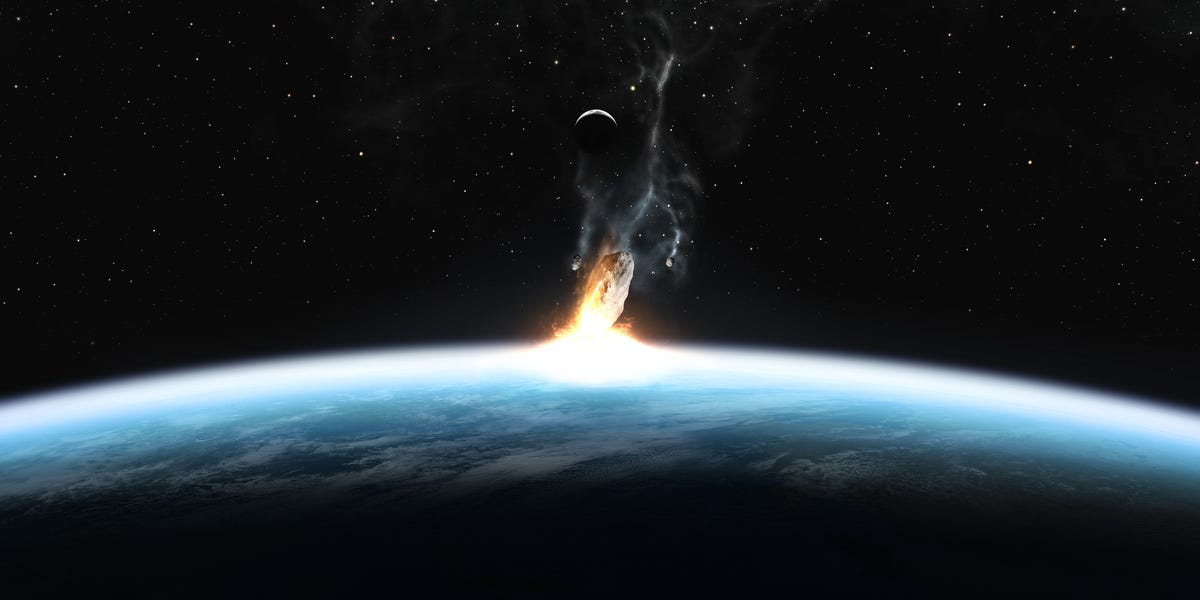
NASA is not warning that a giant space rock is currently packing its bags for Earth. Let’s get that out of the way before anyone starts pricing underground bunkers or apologizing to their houseplants. What NASA is doing is much more practicaland, honestly, more interesting. The agency is preparing for a fake asteroid impact through carefully designed planetary defense exercises that test how scientists, emergency managers, diplomats, and government leaders would respond if a real threat appeared in the sky.
The phrase “fake asteroid impact” may sound like the plot of a streaming sci-fi thriller with suspiciously dramatic music. In reality, it is a tabletop exercise: a realistic simulation where agencies walk through a hypothetical crisis without launching rockets, evacuating cities, or making cable news anchors shout over animated fireballs. These drills are built to expose weak spots before a real emergency does. In planetary defense, that matters because an asteroid impact is one of the rare natural disasters that could potentially be predicted years in advanceand possibly prevented.
What NASA’s Fake Asteroid Impact Exercise Actually Means
The exercise centers on a fictional asteroid discovered with an alarmingbut imaginarychance of striking Earth. In the 2024 scenario, participants considered an asteroid with a 72% probability of impact roughly 14 years in the future. That number was not a real forecast. It was a stress test, designed to force difficult conversations about uncertainty, public communication, mission planning, emergency response, and international coordination.
Unlike a hurricane forecast, an asteroid warning does not always begin with a clear map and a neat cone of uncertainty. Early observations may reveal only part of the object’s orbit. Its size, composition, rotation, reflectivity, and exact path may remain unknown. That is a lot of “maybe” for something that could be traveling through space faster than a political argument on the internet.
NASA’s planetary defense team uses these simulations to ask uncomfortable but necessary questions. Who speaks to the public first? How do agencies explain risk without causing panic? When should a reconnaissance mission be launched? What happens if follow-up observations are delayed because the asteroid moves behind the Sun from Earth’s point of view? Who coordinates with other nations if the possible impact corridor crosses borders?
Why NASA Practices for Something That Is Not Happening
There are no known significant asteroid impact threats for the foreseeable future. That is the reassuring part. The realistic part is that Earth lives in a busy solar system. Asteroids and comets are leftovers from planetary construction, and some of them cross Earth’s neighborhood. Most are harmless. Many are tiny. A few are large enough that we would very much prefer they remain in the “passing by politely” category.
Preparedness is not paranoia. Fire drills do not mean the building is on fire. Tornado drills do not mean the sky has developed a personal grudge. Asteroid impact exercises serve the same purpose: they make people practice decisions before fear, uncertainty, and headlines arrive at the same time.
The value of a fake impact scenario is that it reveals practical gaps. A scientific team may need better data. Emergency managers may need clearer planning assumptions. Diplomats may need faster international notification channels. The public may need simple explanations of probability, uncertainty, and what “risk” actually means. In other words, the exercise is less about pretending a rock is coming and more about making sure Earth’s group project does not fall apart when the due date is planetary.
The Agencies Behind Planetary Defense
NASA’s Planetary Defense Coordination Office leads much of the U.S. effort to find, track, and understand near-Earth objects. The office works with observatories, researchers, mission teams, and other government agencies. In the 2024 exercise, NASA partnered with FEMA and received assistance from the U.S. Department of State Office of Space Affairs. Johns Hopkins Applied Physics Laboratory hosted the event, bringing together nearly 100 participants from U.S. agencies and, for the first time in this exercise series, international planetary defense collaborators.
FEMA’s role is especially important because asteroid response is not only a space problem. If a small or medium-sized object were expected to impact Earth, emergency planning could become a major part of the response. Depending on the size and impact location, officials might need to plan for evacuations, infrastructure protection, medical readiness, transportation coordination, and public messaging. NASA may track the object, but communities would need practical guidance on the ground.
International cooperation is just as critical. Asteroids do not file flight plans with national borders. A possible impact corridor could stretch across oceans, continents, or several countries. Even a successful deflection mission would require shared confidence in the data, the technique, and the consequences of changing an object’s path. Planetary defense is one of the few subjects where “global coordination” is not a fancy phraseit is the assignment.
How Scientists Find and Track Potentially Hazardous Asteroids
The first rule of asteroid defense is simple: you cannot deal with what you have not found. NASA supports surveys that scan the sky for near-Earth objects, then calculates their orbits through the Center for Near Earth Object Studies, better known as CNEOS. Once an object is detected, scientists gather repeated observations to refine its path. More observations usually shrink uncertainty, which can turn a scary preliminary probability into a harmless flybyor, in rare cases, confirm that more action is needed.
Size matters, but size can be tricky. A bright asteroid might be large and reflective, or smaller and shiny. A dark asteroid might be bigger than it looks because it reflects little visible light. That is one reason infrared observations are so valuable. Objects warmed by the Sun glow in infrared wavelengths, allowing scientists to estimate size more accurately than visible-light observations alone.
NASA’s NEOWISE mission helped demonstrate the value of infrared asteroid hunting. Before it ended, the mission made millions of measurements of solar system objects and improved understanding of near-Earth asteroids and comets. Its successor in spirit is NEO Surveyor, a purpose-built infrared space telescope designed to discover and characterize potentially hazardous asteroids and comets, including objects that ground-based telescopes may miss because they are dark, small, or hidden near the Sun’s glare.
DART Changed the Conversation
For decades, asteroid defense was mostly a question of detection, modeling, and theory. Then came DART, NASA’s Double Asteroid Redirection Test. In 2022, DART intentionally crashed into Dimorphos, a small moonlet orbiting the asteroid Didymos. Neither object threatened Earth. That was the point. NASA chose a safe test target to see whether a spacecraft could change an asteroid’s motion.
It worked. DART shortened Dimorphos’ orbit around Didymos and provided the first full-scale demonstration of kinetic impact asteroid deflection. Later analysis showed that the collision did more than simply shove the asteroid. The impact blasted debris into space, and that ejected material added extra momentum, increasing the effect of the crash. In plain English: the spacecraft hit the asteroid, the asteroid spat out rocky material, and that cosmic recoil gave the deflection extra muscle.
DART does not mean humanity can casually swat away any asteroid like a mosquito at a picnic. Planetary defense depends on warning time, asteroid size, composition, structure, rotation, and trajectory. A loosely bound “rubble pile” asteroid may respond differently than a solid metallic object. A large asteroid discovered late would be far harder to address than a smaller object discovered decades early. Still, DART proved that a kinetic impactor is not just a cool idea on a whiteboard. It is a real tool in the planetary defense toolbox.
Why the Fake Scenario Was So Difficult
The 2024 tabletop exercise was designed to be messy, because real emergencies are rarely tidy. In the scenario, astronomers discovered a never-before-detected asteroid with a high initial chance of Earth impact. But the first observations were not enough to determine its size, composition, or precise long-term trajectory. Then the scenario added a particularly annoying twist: follow-up observations would be delayed for at least seven months because the asteroid moved behind the Sun from Earth’s perspective.
That delay is not just an inconvenience. Time is the most valuable resource in planetary defense. With decades of warning, a tiny change in an asteroid’s speed can grow into a comfortable miss distance. With months of warning, options narrow dramatically. Early detection is like finding out about a school project when it is assigned. Late detection is remembering it exists at 11:47 p.m. with glue on your sleeve and regret in your soul.
The exercise forced participants to think through decisions under uncertainty. Should a reconnaissance mission be planned before all data is available? How quickly can agencies move from scientific concern to formal response? What information should be shared publicly, and how should it be framed? How do leaders avoid both panic and complacency? These questions are not glamorous, but they are the difference between science fiction and actual preparedness.
The Public Communication Challenge
One of the hardest parts of planetary defense is explaining uncertainty. A 72% impact probability in a fictional exercise sounds terrifying. In real asteroid tracking, early probabilities can rise or fall as scientists gather more observations. The public may see changing numbers and assume someone made a mistake. Usually, the opposite is true: the numbers change because the data is improving.
Good communication must be honest, calm, and specific. Saying “don’t worry” is not enough. People need to know whether a threat is real, what scientists know, what they do not know yet, when the next update is expected, and what actionsif anyare recommended. NASA’s fake impact exercise helps test that communication pipeline before a real alert ever appears.
The internet adds another layer of difficulty. A fictional scenario can be misunderstood, exaggerated, or stripped of context. Someone will inevitably turn a simulation into a dramatic post with too many exclamation points. That is why official language matters. The phrase “this is only an exercise” is not decorative. It is a public safety feature.
What Would Happen If a Real Asteroid Threat Were Found?
A real response would begin with confirmation. Astronomers would collect more observations, refine the orbit, estimate the object’s size, and assess possible impact regions. If the risk remained serious, NASA and partner agencies would evaluate mission options. A reconnaissance spacecraft might be sent to study the asteroid up close. If there were enough warning time, a deflection mission could be considered.
For some scenarios, a kinetic impactor like DART could be appropriate. For others, experts have discussed additional concepts such as gravity tractors, ion-beam deflection, or nuclear options. These are not one-size-fits-all solutions. The right approach depends on the asteroid and the clock. The main lesson is that the earlier we know, the more choices we have.
If an impact could not be prevented, the focus would shift toward civil protection. That could include evacuation planning, infrastructure preparation, emergency supplies, medical readiness, and public alerts. The response would depend heavily on the object’s size and where it was expected to hit. A small object might produce an airburst. A larger one could cause regional devastation. Truly global-scale impacts are extremely rare, but they are part of why planetary defense exists.
Why NEO Surveyor Matters
NEO Surveyor is central to NASA’s future planetary defense plans because detection is the front door to every other solution. The telescope is being built to observe in infrared from space, where it can find objects that are difficult for ground-based surveys to see. Many hazardous objects are dark, small, or positioned near the Sun in the sky. Those are exactly the kinds of targets that can make planetary defense challenging.
By finding more near-Earth objects earlier, NEO Surveyor could give humanity more time to study, track, and respond to possible threats. That extra time is not a minor advantage. It is the difference between nudging an asteroid years ahead of impact and trying to improvise when the calendar is already sweating.
The mission also supports science beyond emergency planning. Asteroids are ancient material from the early solar system. Studying them helps researchers understand how planets formed, how water and organic materials moved through the solar system, and how small bodies evolve. Planetary defense and planetary science are siblings: one protects Earth, and the other explains where Earth came from.
Experience Notes: What This Topic Teaches Us About Real Preparedness
Thinking about NASA preparing for a fake asteroid impact offers a surprisingly useful lesson for everyday life: the best time to prepare is when nothing is happening. That is not the most exciting sentence ever written, but it is probably one of the most practical. NASA’s exercise is not built on panic. It is built on rehearsal. The same idea applies to households, schools, businesses, cities, and digital systems. Practice before pressure arrives.
One relatable experience is how people react to uncertain information. Imagine a weather forecast that says there is a chance of severe storms next week. Some people ignore it completely. Others act like the sky has already mailed a resignation letter. The smartest response is in the middle: check updates, understand the risk, and prepare reasonable steps. Asteroid defense works similarly, just with more math and fewer umbrellas.
Another lesson is that coordination is harder than it looks. In a real emergency, being technically correct is not enough. The right people must receive the right information at the right time. NASA may have orbital calculations. FEMA may have emergency response plans. State and local officials may understand community needs. International partners may hold key observation data. If those pieces do not connect smoothly, the response slows down. The fake asteroid exercise is essentially a giant rehearsal for teamwork under stress.
There is also a communication lesson for publishers, educators, and content creators. Space stories attract attention because they are dramatic, visual, and easy to exaggerate. A responsible article should make the headline interesting without misleading readers into thinking a real impact is imminent. That balance matters. Good science writing should invite curiosity, not manufacture fear. The asteroid may be fake, but the trust between writer and reader is real.
Finally, the topic reminds us that technology is only part of preparedness. DART proved that humans can change an asteroid’s motion, which is astonishing. But a successful planetary defense strategy also needs observation networks, funding, international agreements, public education, emergency planning, and repeated exercises. Saving the planet, as it turns out, involves both spacecraft and paperwork. The spacecraft gets the movie trailer. The paperwork keeps the mission from becoming a mess.
So when NASA prepares for a fake asteroid impact, it is not playing make-believe. It is practicing the rare art of taking a low-probability, high-consequence risk seriously without turning it into theater. That is a good model for many modern problems: prepare carefully, communicate clearly, use evidence, and do not wait until the asteroidor deadline, storm, outage, or crisisis already at the door.
Conclusion
NASA’s fake asteroid impact exercise is not a warning that Earth is doomed. It is a sign that planetary defense has matured from “interesting science problem” into a coordinated public-safety effort. The 2024 tabletop exercise tested how agencies would respond to uncertainty, delayed observations, public communication pressure, and the possibility of future space missions. It also showed why early detection, international cooperation, and realistic rehearsal are essential.
The good news is that humanity is not helpless. NASA has already demonstrated asteroid deflection with DART. Scientists are improving detection systems. NEO Surveyor is being developed to find hard-to-see objects earlier. Emergency managers are practicing how to coordinate if a threat ever becomes real. The fake asteroid is fictional. The preparation is very real. And in a universe full of flying leftovers, that is exactly the kind of boring-but-brilliant planning Earth should be doing.