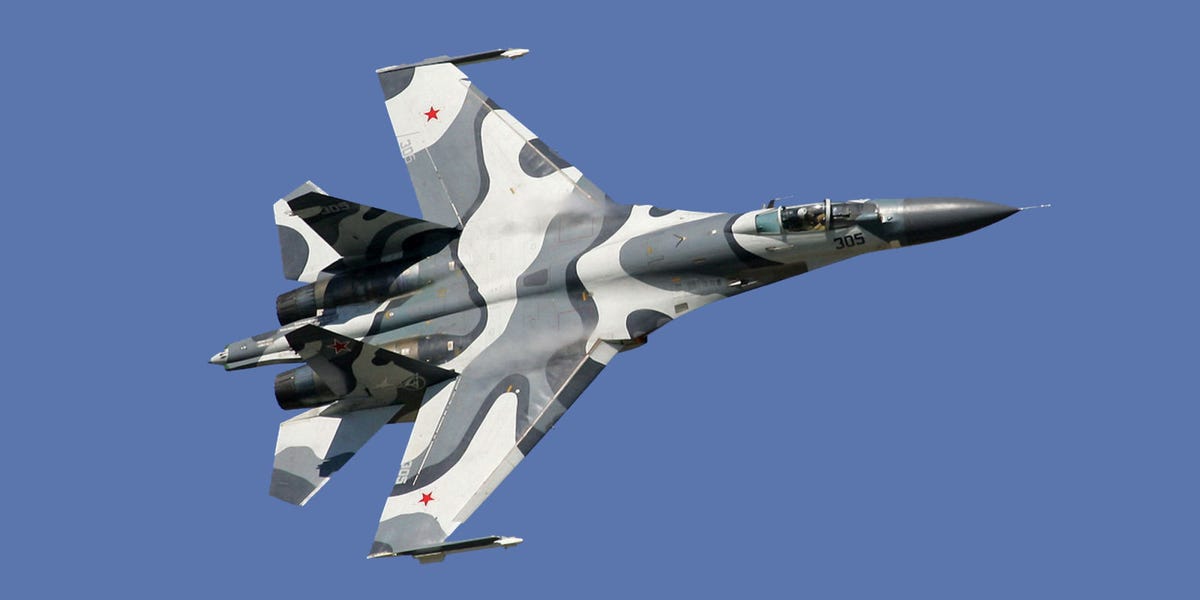
Some aviation stories arrive with a neat stack of facts, a press conference, and maybe a serious-looking person pointing at a chart. This is not one of those stories. This one showed up in the desert, wrapped in secrecy, with a pilot’s death, a classified aircraft, and just enough official silence to make every defense watcher on earth lean forward at the same time.
The mystery centers on a September 2017 crash at the Nevada Test and Training Range, the vast and famously secretive stretch of sky and sand linked in the public imagination to Area 51, black programs, and airplanes that tend to appear first as rumors and only much later as history. The U.S. Air Force confirmed that one of its aircraft went down during a training mission and that Lt. Col. Eric Schultz was killed. What it would not confirm was the aircraft type. And that single omission turned a tragic crash into one of the most intriguing military aviation stories of the decade.
Over time, reporting from defense outlets suggested that the crash may have involved a foreign aircraft being flown by a highly specialized Air Force unit that evaluates non-U.S. jets. Later accounts went even further, pointing to a Soviet-designed Sukhoi fighter. The result is a story that sits at the uncomfortable crossroads of military secrecy, test-pilot risk, intelligence work, and public curiosity. In other words, it is exactly the kind of story that makes aviation nerds forget lunch.
What Happened in the Nevada Desert?
On September 5, 2017, a U.S. Air Force aircraft crashed while flying a training mission on the Nevada Test and Training Range, roughly 100 miles northwest of Nellis Air Force Base. The Air Force said only a few things for certain: the aircraft belonged to Air Force Materiel Command, Lt. Col. Eric Schultz died from injuries sustained in the accident, and an investigation would follow.
Normally, the type of aircraft involved in a military crash is released quickly, even if the cause remains unknown. That did not happen here. Instead, officials said the aircraft type was classified and not releasable. That phrase did what it always does in the internet age: it took a bad situation and poured high-octane speculation on it.
Early rumor centered on whether Schultz had been flying an F-35, partly because he had deep ties to the Joint Strike Fighter program and had been one of the early Air Force pilots to fly it. But that theory was quickly swatted down. Air Force leadership made clear that the airplane was not an F-35. Once that possibility disappeared, attention shifted toward something even more sensitive: a foreign aircraft operated quietly by the United States for testing and training.
Why a “Foreign Plane” Theory Made Sense
The idea sounded dramatic, but it was not crazy. In fact, it fit a long and very real history. The United States has spent decades acquiring, analyzing, and in some cases flying foreign military aircraft to understand how potential adversaries think, maneuver, and fight. If you want to beat another country’s jet in combat, there is no substitute for learning how that jet behaves in the real world rather than just reading about it in a briefing binder thick enough to stop a truck.
During the Cold War, one of the most famous secret efforts was Constant Peg, a program in which the Air Force flew Soviet-designed MiGs against U.S. pilots in highly classified training. The point was brutally practical: let American pilots see enemy aircraft up close, learn their strengths and weaknesses, and develop better tactics before any real shooting started. The program helped demystify Soviet fighters and gave U.S. aircrews a more realistic picture of air combat.
That mission did not vanish with the Berlin Wall. It evolved. Various Air Force organizations have continued to support foreign military exploitation and advanced tactical evaluation, especially in Nevada’s restricted ranges. Reporting in 2017 suggested Schultz was linked to a secretive unit often associated with “Red Hats,” pilots and specialists involved in testing and evaluating foreign aircraft. If that reporting was correct, then the “foreign plane” theory was not sensationalism. It was the most logical explanation available.
Who Was Lt. Col. Eric Schultz?
The mystery of the airplane often overshadows the man in the cockpit, which is a shame, because Eric Schultz was not a footnote. He was the kind of pilot whose résumé sounds like it was assembled by a committee trying to win an argument. Schultz held advanced degrees, including a doctorate in aerospace engineering, worked in industry, flew combat missions, graduated from the Air Force Test Pilot School, and became deeply involved in advanced test programs. He had also flown the F-15E and worked on the F-35 program.
By every public account, Schultz was exactly the sort of pilot the Air Force would trust with the hardest jobs: technical enough to understand complex systems, experienced enough to manage risk, and disciplined enough to operate inside tightly controlled, highly classified environments. That matters, because secret test flying is not just dangerous in the usual pilot way. It can also be dangerous in a “the aircraft manual may not have started life in English and the maintenance chain may involve three continents and a shrug” kind of way.
His death also helps explain why the story never felt like mere gossip. This was not a tabloid mystery about a weird object in the sky. It was a fatal accident involving one of the Air Force’s elite test professionals. That gave the secrecy more weight and the silence more emotional gravity.
The Reporting That Changed the Story
Several days after the crash, defense reporting began adding shape to the outline. Aviation Week reported that the mishap appeared to involve a foreign aircraft type and linked Schultz to a unit that tests and evaluates foreign aircraft. Popular Mechanics amplified that possibility, explaining why the location, command structure, and Schultz’s background all pointed in the same direction. Suddenly, the question was no longer whether the airplane was classified. The question was what kind of foreign aircraft it might have been.
At the time, analysts floated possibilities such as the Sukhoi Su-27 or Su-30, both of which would make sense in a U.S. evaluation context. The Su-27 family has long been significant because it represents a high-performance design lineage that influenced multiple fighters used around the world. If American pilots and tacticians wanted a closer look at how that family of aircraft performed, test flights on U.S.-controlled examples would be invaluable.
Then came later reporting, years after the crash, that pushed the story further. A 2022 account cited by TWZ said Schultz had been flying a two-seat Su-27UB Flanker-C. According to that report, the aircraft suffered a landing gear-related emergency. The back-seat officer survived after ejecting, but Schultz’s ejection sequence reportedly failed during man-seat separation. It was a detailed and sobering account, but it remains important to draw a bright line here: the Air Force has not publicly confirmed that version of events in an official release.
So where does that leave the story? In an unusual but not uncommon place for military aviation reporting: the broad picture appears increasingly credible, while the final technical details remain trapped behind classification and unofficial sourcing.
Why the Air Force Would Keep It Quiet
Some secrecy around black programs is expected, but this case felt especially opaque. There are several reasons the Air Force might stay quiet about a crash involving a foreign aircraft.
1. Protecting sources and acquisition channels
Foreign aircraft do not simply wander into U.S. test ranges looking for parking. When the United States acquires adversary equipment, the path can involve diplomacy, intelligence relationships, private intermediaries, export puzzles, and enough legal sensitivity to make a normal procurement officer ask for a vacation. Public confirmation of a specific aircraft could expose how it was obtained.
2. Protecting tactical knowledge
If the Air Force is studying a foreign aircraft, it is also studying how to fight it. Revealing which jet is being tested can offer clues about current U.S. concerns, threat priorities, or even what operational lessons have become urgent.
3. Protecting the unit and the mission
Units involved in foreign aircraft exploitation often operate quietly because publicity undermines the mission. Once public attention grows, every photo, every local sighting, and every airport movement turns into open-source detective work. That may be fun for the internet, but it is not ideal for a classified test program.
4. Avoiding diplomatic awkwardness
Admitting that the U.S. is flying another nation’s design inside a secret test ecosystem can create diplomatic discomfort, especially if that design is tied to a country the U.S. watches closely or if the aircraft came indirectly through a third-party relationship.
What the Crash Reveals About Modern Air Power
This story matters for a reason bigger than mystery. It is a reminder that modern air superiority is not just about building new fighters. It is also about understanding the aircraft other countries fly, the sensors they use, the way they turn energy into maneuvering advantage, and the tactical habits their pilots are likely to bring into a fight.
That is why foreign aircraft exploitation still matters. A beautiful brochure and a satellite photo can tell analysts a lot, but they cannot replicate what happens when experienced test pilots actually fly the machine, put it through scenarios, and compare its behavior with U.S. systems. The margin between “interesting intelligence” and “operationally useful knowledge” often lives in that hands-on work.
The crash also shows how dangerous that work remains. A foreign aircraft may be capable and fascinating, but it may also have a maintenance history the U.S. did not oversee, parts availability issues, unique quirks, unfamiliar systems logic, and escape equipment that was not designed around American procedures. None of that makes the mission reckless. It makes it specialized, high-risk, and dependent on exceptional people.
And that may be the most important point of all. Hidden programs can seem glamorous from a distance. Up close, they are still aviation: metal, fuel, procedures, split-second judgment, and the occasional brutal reminder that gravity does not care how classified your project is.
The Problem With Mystery Is That It Breeds Myth
Once the Air Force refused to identify the aircraft, the public imagination did what it always does around Nevada ranges: it started sprinting. Some theories leaned toward secret U.S. prototypes. Others went all in on foreign fighters. A few wandered off into terrain best described as “aviation fan fiction with a government badge.”
But the most durable stories usually survive because they contain a core of truth. In this case, the core appears to be that the crash was not a conventional frontline Air Force mishap. It happened in a place associated with high-end test work, involved an unusually accomplished test pilot, sat under unusual classification, and was later tied by multiple reports to the evaluation of foreign aircraft. Even without full official confirmation, that pattern is hard to ignore.
At the same time, responsible analysis requires restraint. The strongest conclusion is not that every rumor is true. It is that the available evidence supports the broad claim that the crash likely involved a foreign aircraft or a mission directly tied to foreign aircraft exploitation. The exact chain of events, aircraft tail number, and technical failure sequence remain partly hidden.
Why the Story Still Resonates
Nearly a decade later, this crash still fascinates people because it combines three things the public rarely gets in one story: genuine tragedy, real secrecy, and just enough reporting to suggest that something important was happening behind the curtain. It is not simply an “Area 51 mystery.” It is a rare glimpse of how the Air Force learns about future threats before the rest of us even know which questions to ask.
It also endures because it humanizes the hidden side of defense work. Behind every classified program are real people with families, careers, expertise, and risk. Schultz’s death reminds us that some of the most consequential military work happens far from headlines and even farther from certainty.
So yes, the mysterious Air Force crash reportedly involving a foreign plane remains partly unresolved. But it also tells us something clear: the United States still devotes serious effort to understanding adversary aircraft from the inside out, and that mission still demands extraordinary skill at extraordinary cost.
Experience, Memory, and the Strange Feeling of Following a Classified Crash
There is a very particular experience that comes with following a story like this one. It is not the same as reading about a normal aviation accident, where investigators publish timelines, maintenance histories, and final findings. A classified military crash creates a different emotional weather system. You know something serious happened. You know someone died. You know the government is not lying about the tragedy itself. But you also know it is choosing not to tell you the whole story, and that gap changes how the event feels.
For aviation enthusiasts, defense reporters, former service members, and even casual readers, that experience is oddly split in two. One side is technical curiosity. What aircraft was it? What mission was being flown? Was it a prototype, a threat-replication platform, or a foreign jet under evaluation? The other side is something more human and more uncomfortable: the awareness that real people are grieving while everyone else is trying to solve a puzzle.
That tension is part of why the Eric Schultz crash stayed in public memory. The event never became emotionally tidy. There was no full public wrap-up, no neat explanatory bow, no national briefing that settled the matter once and for all. Instead, the story arrived in fragments: a brief official statement, scattered reporting, informed speculation, later accounts from knowledgeable observers, and a lingering sense that the full truth existed somewhere just beyond public reach.
That kind of uncertainty creates a powerful experience for readers. It makes the story feel unfinished, almost suspended in midair. You return to it months later, then years later, because your brain dislikes unresolved things. Human beings can tolerate bad news more easily than partial news. A confirmed hard truth is easier to process than a mystery with credible hints and missing pages.
There is also a broader cultural experience attached to crashes near Nevada’s restricted ranges. For decades, Americans have associated those spaces with aircraft that are secret today and normal tomorrow. The U-2, A-12, and F-117 all lived in that awkward stage where the government knew plenty and the public knew just enough to be fascinated. When a crash happens in that world, people do not experience it as an isolated event. They experience it as part tragedy, part history-in-progress.
And then there is the quiet experience of respect. Even people deeply interested in the mystery usually end up in the same place: whatever Schultz was flying, it was dangerous work performed by a highly trained professional operating in one of the most demanding corners of military aviation. That tends to strip away the cheap excitement and leave something more sober behind. The mystery matters, yes. But the loss matters more.
In that sense, the enduring experience of this story is not really about secrecy alone. It is about what secrecy does to memory. It slows closure, sharpens curiosity, and makes a single crash feel larger than itself. You are left with a rare thing in modern media: a story that still has edges, shadows, and unanswered questions.