What would the world look like if humans suddenly ceased to exist? It is the kind of question that sounds like it belongs in a late-night documentary, right between “aliens built the pyramids” and “your toaster may be plotting something.” But behind the dramatic title is a surprisingly serious idea: the world does not need our permission to keep going.
These 30 post-apocalyptic pictures imagine a planet where people vanished without packing a suitcase, watering the plants, or canceling their streaming subscriptions. Cities stand silent. Cars rust in the middle of streets. Vines climb office buildings like they have finally received a promotion. Shopping malls, once temples of weekend spending, become greenhouses with broken skylights. The view is eerie, yesbut also strangely peaceful.
The post-apocalyptic world is often shown as fire, chaos, and dramatic background music. But the more realistic version may be quieter. Nature does not arrive with a movie trailer voice. It arrives as moss. Then grass. Then shrubs. Then trees. Give it enough time, and a sidewalk becomes a suggestion.
A World Without Humans: Not Empty, Just Different
If humans disappeared suddenly, Earth would not become lifeless. In many places, it would become louder with non-human life. Birds would nest in traffic lights. Deer would wander through suburbs. Foxes, raccoons, coyotes, rats, insects, and feral animals would treat our abandoned neighborhoods like a real estate opportunity with zero paperwork.
The first few days would be defined by silence. No engines. No lawn mowers. No delivery trucks. No leaf blowers making one heroic leaf travel six inches. Cities would still look familiar, but the rhythm would be gone. Streetlights might continue briefly where power systems still function, but without maintenance, fuel, operators, and repairs, modern infrastructure would begin to fail.
Within weeks and months, weather would become the main editor of the human story. Rain would collect in clogged drains. Wind would push dust through broken windows. Heat and cold would expand and contract metal, glass, asphalt, and concrete. Buildings are strong, but they are not immortal. They are more like very confident sandwiches made of steel, stone, wiring, and human maintenance.
Picture 1–5: Streets Where Grass Wins the Argument
The first images in this collection focus on roads, crosswalks, and intersections. These are places built for speed, control, and direction. In a world without people, they become slow again. Grass pushes through cracks in asphalt. Roots widen tiny fractures. Stormwater pools where street crews no longer clear drains.
This is not fantasy. Cities already show this pattern in abandoned lots and forgotten industrial zones. Pavement blocks water from soaking naturally into the ground, so when drainage systems fail, streets flood more easily. Over time, standing water weakens surfaces, freezes in colder climates, and gives plants the opening they need. A tiny weed may look harmless, but it is basically nature’s crowbar.
In these pictures, the road is no longer a route. It is a habitat. The painted lane lines fade. Traffic signs lean. The stop sign remains, which is funny, because the trees absolutely do not care.
Picture 6–10: Skyscrapers Becoming Vertical Forests
Skyscrapers are the proudest objects humans build, which is exactly why they look so dramatic when abandoned. Glass towers depend on constant care: sealed windows, working pumps, climate control, inspections, cleaning, and repair. Remove people, and the enemy is not one giant disaster. It is moisture, one drip at a time.
In a post-human city, windows break from storms, temperature stress, or falling debris. Once water enters, carpets rot, walls stain, metal corrodes, and mold spreads. Seeds blow into ledges and rooftop gravel. Birds nest in vents. Vines rise wherever they find texture, cracks, and sunlight. The modern office tower becomes a cliff face with better conference rooms.
These images show the irony of urban design: buildings created to separate us from nature would eventually invite nature in through every weak point. A lobby once polished enough to make shoes feel underdressed might become a fern nursery. The executive floor could host pigeons with excellent skyline views.
Picture 11–15: Malls, Schools, and Homes After the Last Footstep
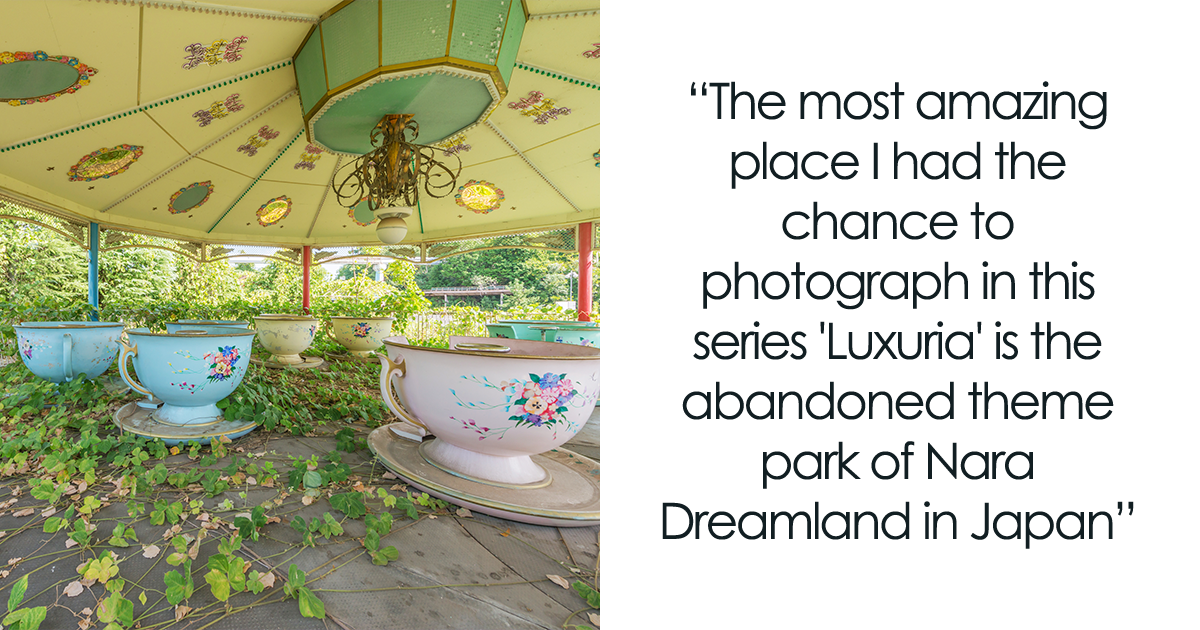
Abandoned interiors are powerful because they still feel personal. A classroom with desks in rows. A kitchen with sunlight crossing the floor. A mall escalator frozen between levels. These spaces suggest people were just here a moment ago, which makes the silence heavier.
But the visual story changes quickly. Dust gathers first. Then water damage. Then plant life appears near windows, roof openings, and broken walls. Animals use human rooms in practical ways. A bedroom becomes shelter. A food court becomes a hunting ground for small predators. A school hallway becomes a tunnel for windblown leaves.
One reason abandoned places fascinate viewers is that they reverse the usual relationship between humans and objects. We normally arrange rooms around ourselves. In these pictures, the rooms have moved on. Chairs are no longer for sitting. Lockers are no longer for books. A shopping cart covered in vines is no longer a shopping cart; it is modern sculpture, and honestly, some galleries have displayed less interesting things.
Picture 16–20: The Return of Wildlife
The most hopeful post-apocalyptic images are not the broken buildings. They are the animals. A deer standing in a train station. A fox crossing a supermarket aisle. Birds nesting inside traffic signals. The absence of humans can reduce pressure from hunting, traffic, noise, farming, construction, and habitat disturbance.
Real-world abandoned zones offer clues. The Chernobyl Exclusion Zone, despite its radioactive history, has become a striking example of how large mammals can rebound when most people leave. Scientists still debate the long-term effects of radiation on different species, but the broader lesson is clear: human absence can create unexpected refuges for wildlife.
Still, the picture is not simple. Nature reclaiming a place does not always mean perfect healing. Some abandoned areas may be dominated by invasive plants. Some domestic animals would struggle badly without people. Many pets rely on human food, shelter, medicine, and protection. Feral pigs, cats, rats, and certain hardy species might adapt well, while others would not. The post-human world would not be a Disney movie. It would be ecology with no customer service desk.
Picture 21–25: Water Takes Back the Low Places
Water is the patient villainor hero, depending on your perspectiveof many post-apocalyptic scenes. Coastal cities, subway tunnels, basements, parking garages, and underpasses all depend on pumps, drainage systems, and maintenance. Without people, those systems fail.
In low-lying cities, the first major floods would redraw the map. Underground stations would fill. Roads near rivers and coasts would become seasonal wetlands. Saltwater would damage concrete and metal. Wooden structures would swell, rot, and collapse. In humid climates, decay would move fast. In dry deserts, ruins might last much longer, preserved by the lack of moisture.
That difference matters. A post-apocalyptic view of Miami would not age like a post-apocalyptic view of Nevada. Moisture is a demolition crew with no lunch break. Desert air, on the other hand, can turn abandoned towns into long-lasting monuments, which is why many ghost towns in the American West still stand in recognizable form.
Picture 26–30: Monuments, Memory, and the Last Traces of Us
The final pictures in this collection focus on monuments, statues, bridges, stadiums, and symbols of permanence. These are the places humans build to say, “Remember us.” Nature replies, “Sure, but I am bringing ivy.”
Steel bridges would corrode without inspection and repair. Concrete would crack as water entered and reinforcing metal rusted. Stadiums would collect rainwater, seeds, and animals. Museums might preserve some objects for a while, especially in dry or sealed environments, but without climate control, humidity and pests would slowly rewrite history.
Some human-made things would last far longer than others. Stone carvings, bronze statues, ceramics, plastics, and certain buried materials could persist for centuries or even millennia. But the meaning attached to them would fade without people to explain it. A future species might find a parking meter and assume we worshiped tiny metal robots. Honestly, not our worst legacy.
Why Post-Apocalyptic Photography Feels So Addictive
Post-apocalyptic photography works because it mixes fear with beauty. We see collapse, but we also see renewal. We see the end of human order, but not the end of the world. That emotional contrast gives these images their power.
Abandoned places also make time visible. A fresh building hides the labor that keeps it alive. A ruined building reveals it. Peeling paint, rust stains, broken tiles, and creeping roots are not just decay; they are clocks. They show how every object is moving, slowly, toward another form.
These 30 pictures are not meant to celebrate human disappearance. They are meant to make us notice our footprint. When we imagine cities without us, we see how much effort it takes to hold back water, plants, animals, weather, and entropy. Civilization is not a permanent setting. It is an ongoing project.
The Science Behind the Silence
Air and Sound Would Change Quickly
Without traffic, factories, and daily fuel burning, many forms of air pollution would decline. Rain and wind would gradually clear particles from the atmosphere. Noise pollution would drop almost immediately. The loudest parts of cities might become bird calls, insects, thunder, and the occasional crash of something that used to be very expensive.
Plants Would Move First
Plants are the first major visual sign of nature reclaiming cities. Seeds travel by wind, birds, animals, and water. Once they find cracks, soil, dust, roof gravel, or rotting organic material, they begin the slow occupation. Moss and grasses arrive early. Shrubs and young trees follow. Eventually, roots become structural forces.
Infrastructure Would Fail Unevenly
Not everything would collapse at once. Some structures might stand for centuries, while others would fail within years. Climate, material quality, design, elevation, and exposure to water would all matter. A wooden house in a humid forest would decay much faster than a stone building in a dry region. The post-apocalyptic world would be less like one global disaster scene and more like millions of local experiments.
What These Pictures Say About Us
The most haunting thing about a world without humans is not that nature survives. It is that so much of what we consider permanent is actually temporary. We build roads, towers, malls, and monuments as if they are final answers. But they are more like questions written in concrete.
These pictures ask: What are we leaving behind? Are we building places that work with nature or places that require endless battle against it? Are our cities designed to breathe, absorb water, cool themselves, and support life? Or are they giant machines that begin falling apart the moment the operators leave?
A post-apocalyptic view of the world can be spooky, but it can also be useful. It reminds us that the planet is not fragile in the way we sometimes imagine. Earth has survived ice ages, asteroid impacts, volcanic eruptions, and several billion years of cosmic nonsense. What is fragile is the version of Earth that comfortably supports us.
Experiences Behind the Theme: Walking Through the Almost-After
Creating or viewing a collection like My 30 Pictures That Show The Post-Apocalyptic View Of The World If Humans Suddenly Ceased To Exist feels less like looking at fantasy and more like stepping into a warning whispered by empty rooms. The strange part is that abandoned places do not always feel dead. Sometimes they feel busyjust not busy with people.
When I imagine walking through these scenes, the first thing I notice is sound. In a normal city, sound arrives in layers: engines, phones, voices, doors, music, air conditioners, distant sirens. In a post-human city, the soundtrack is smaller but sharper. A loose sign creaks. Water drips somewhere inside a building. Birds argue from the roof like tiny landlords. Leaves scrape across the floor of a department store where someone once spent twenty minutes deciding between two nearly identical shirts.
The second thing is smell. A reclaimed building would not smell like cinematic smoke forever. It would smell like wet wood, soil, leaves, rust, old paper, and rain. Nature has a way of making even ruins smell productive. A cracked lobby with ferns growing near the windows is not only falling apart; it is becoming something else.
The third experience is the emotional tug-of-war. Part of you feels sadness because every abandoned object points back to ordinary life. A child’s desk. A bus stop. A coffee cup. A faded sign promising a sale that, tragically, no one survived to enjoy. But another part of you feels awe. Roots do not need applause. Moss does not need a building permit. The world keeps making life from whatever materials are available.
That is why post-apocalyptic photography is so powerful. It does not simply show destruction. It shows succession. One chapter closes, and another begins with green handwriting. The images make viewers feel small, but not meaningless. They remind us that our choices matter precisely because our time is limited.
Looking at 30 pictures of a world after humans, I do not only think, “What if we vanished?” I think, “What if we paid better attention while we are still here?” We could design cities with more trees, better stormwater systems, less waste, stronger public spaces, and buildings that age with dignity instead of collapsing into expensive regret. We could treat nature less like an enemy at the gate and more like the original owner of the property.
The funniest thing about the post-apocalyptic view is that nature never looks surprised. Humans disappear, and nature does not hold a press conference. It simply gets to work. Grass enters the crosswalk. Birds inspect the penthouse. Vines climb the mall. The planet does not need dramatic closure. It prefers compost.
In the end, these pictures are not really about a world without humans. They are about the world with humans, right now. They show what happens when maintenance stops, but they also show what begins when pressure lifts. They are beautiful, uncomfortable, and oddly motivating. If our cities would become forests without us, maybe the smarter question is how to make them greener while we are still around to enjoy the shade.
Conclusion
My 30 Pictures That Show The Post-Apocalyptic View Of The World If Humans Suddenly Ceased To Exist is more than a dramatic title. It is a visual thought experiment about time, decay, resilience, and the quiet power of nature. The images invite us to picture empty streets, flooded tunnels, silent schools, animal-filled neighborhoods, and skyscrapers slowly turning into cliffs of glass and ivy.
The post-apocalyptic world would not be simple. Some ecosystems would rebound. Some human damage would remain for centuries. Some places would become greener, while others would suffer from pollution, invasive species, or climate-driven flooding. But one message stays clear: humans are not the only story on Earth. We are one chapter in a much longer book, and nature has excellent handwriting.
Note: This article is an original, publication-ready synthesis based on real information from environmental science, urban ecology, infrastructure research, abandoned-place photography, ghost town preservation, stormwater studies, wildlife recovery research, and documented examples of places reclaimed by nature.