Every parent knows the scene: a toddler grabs a marker, attacks a sheet of paper with heroic confidence, and produces something that looks like a spaghetti tornado having an emotional breakthrough. Most of us smile, stick it on the refrigerator, and call it “modern art” because, frankly, toddlers and famous abstract painters often share the same commitment to explaining absolutely nothing.
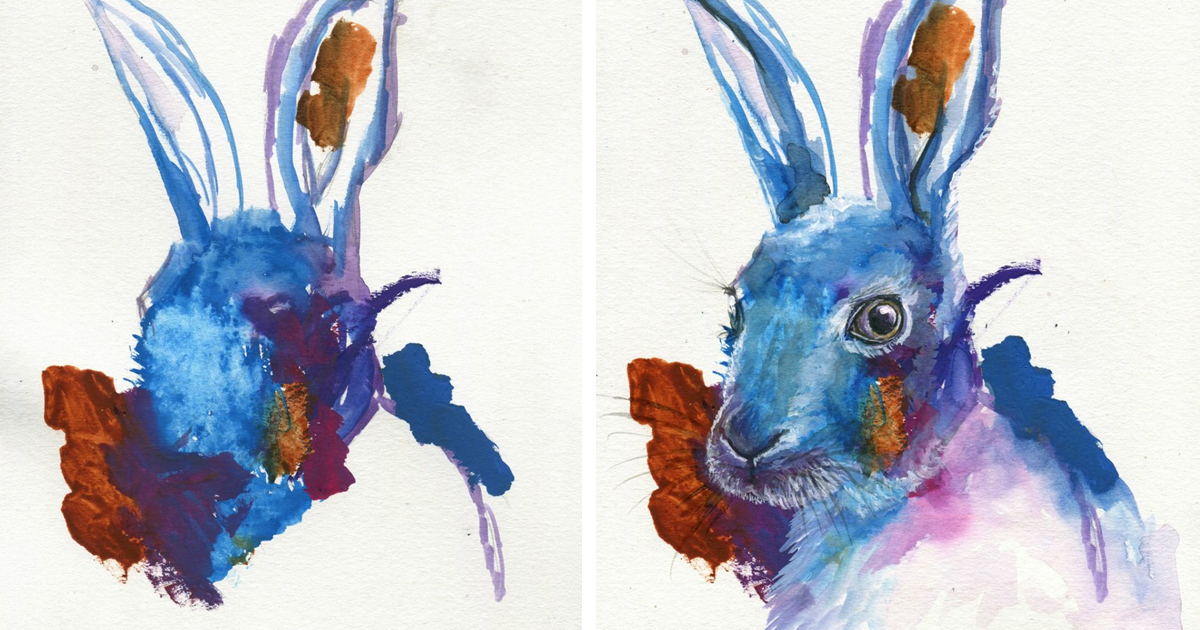
But artist and mother Ruth Oosterman saw something more in her daughter Eve’s doodles. Instead of treating those wild lines as cute little throwaway scribbles, she turned them into the starting point for finished paintings. Eve, just 3 years old, would make marks with a felt-tip pen, and Ruth would study the shapes, follow the energy, and paint imaginative scenes around them. The result was a charming mother-daughter collaboration that transformed toddler doodles into expressive works of art.
The project became known as “Collaborations with my Toddler,” and it captured the internet’s attention for a good reason. It was not just adorable. It was thoughtful, visually surprising, and emotionally warm. It showed what can happen when an adult stops asking, “What is this supposed to be?” and starts asking, “What could this become?”
The Sweet Story Behind the Doodles
Ruth Oosterman, a professional artist based in Canada, began collaborating with her daughter when Eve was still very young. The process was simple, but the idea behind it was powerful. Eve would begin with free, uninhibited marks. Ruth would then respond to those marks with watercolor, ink, and imagination, turning the original lines into animals, figures, landscapes, or dreamy storybook scenes.
That simplicity is part of the magic. There was no complicated studio ritual, no expensive equipment, and no toddler being instructed to “please produce a commercially viable sketch before snack time.” Eve’s role was to play. Ruth’s role was to listen visually. The finished work belonged to both of them.
Many of the paintings feel like they are built from two kinds of intelligence. Eve contributes movement, instinct, surprise, and fearless composition. Ruth contributes technique, color, interpretation, and structure. One starts the sentence; the other turns it into a story. Together, they create something neither would have made alone.
Why This Project Resonates With So Many Parents
The reason this story feels so irresistible is not only because the paintings are beautiful. It is because the idea honors children in a way that many adults forget to do. A toddler’s drawing is often treated as a milestone, a memory, or a refrigerator decoration. Ruth treated Eve’s doodles as creative material worth taking seriously.
That does not mean she pretended a 3-year-old was secretly planning advanced composition theory. The point is not to overpraise every scribble as a masterpiece. The point is to recognize that young children create with a freedom most adults spend years trying to recover. They do not worry about perspective. They do not panic over whether the fox looks like a fox. They do not ask whether the market for mixed-media toddler abstraction is oversaturated this quarter.
They simply make marks. And sometimes those marks carry rhythm, emotion, and energy that can open a door for an adult artist.
What Toddler Doodles Can Teach Adults About Creativity
Children draw before they can fully explain themselves. Their lines may seem random, but those early marks are part of how they explore movement, control, imagination, and communication. At around age 3, many children are moving from uncontrolled scribbling toward lines, patterns, early shapes, and simple symbolic drawings. Some drawings may still look like cheerful chaos, but inside that chaos is development in motion.
Ruth’s work with Eve reminds us that creativity does not always begin with a plan. Often, it begins with a mark. A curve becomes a bird’s wing. A loop becomes a face. A jagged line becomes a mountain, a dragon, or a very suspicious-looking cat. The adult imagination enters not to correct the child’s idea, but to extend it.
That distinction matters. Many adults accidentally turn children’s art time into a quality-control department. We ask, “What is it?” We suggest the sky should be blue. We quietly rotate the paper so the house is less likely to resemble a pancake with windows. These instincts are understandable, but they can limit the very freedom that makes children’s drawings so alive.
Process Art: The Real Treasure Is in the Making
Early-childhood educators often emphasize “process art,” which means the value lies in exploring materials, making choices, and experimenting rather than producing a perfect final product. In process art, the child is not trying to copy a sample craft made by an adult. The child is discovering what happens when crayon meets paper, when paint mixes with water, or when one confident purple line marches directly across a carefully cleaned table.
Ruth and Eve’s collaboration fits beautifully into this philosophy. Eve begins with open-ended drawing. Ruth does not erase the original marks or hide them under a polished adult painting. Instead, she lets Eve’s lines remain visible as the backbone of the piece. That choice keeps the collaboration honest. The adult skill enhances the child’s contribution without swallowing it.
For parents, this is a useful reminder: children’s art does not need to look impressive to be meaningful. The scribbling, smearing, layering, and experimenting are the work. The finished page is just the souvenir.
The Developmental Benefits of Drawing for Young Children
Drawing may look like a quiet activity, but it works several developmental muscles at once. When a child grips a marker, controls pressure, changes direction, and fills space on a page, they are practicing fine motor skills. Those hand and finger movements help prepare children for later writing tasks.
Art also supports language development. A child may point to a swirl and announce that it is a whale, a storm, a grandma, or possibly all three before lunch. That storytelling matters. When adults ask open-ended questions like “Can you tell me about this part?” children practice describing, remembering, inventing, and connecting ideas.
Drawing also gives young children a safe way to express emotions. A child who cannot yet explain frustration, excitement, fear, or pride may still show intensity through color, pressure, repetition, or movement. Not every drawing requires deep psychological interpretation, of course. Sometimes a red scribble is just a red scribble. But art gives children another language, and that language deserves attention.
How Ruth Oosterman Turns Doodles Into Paintings
The beauty of Ruth’s method is that it begins with restraint. She does not force Eve’s marks into a predetermined idea. She looks at the doodle and searches for visual clues. A sweeping line might suggest an animal’s back. A cluster of loops might become hair, clouds, feathers, or waves. A tiny accidental hook might become the beak of a bird.
Then Ruth adds layers of watercolor and ink. Watercolor is a fitting medium because it has its own unpredictability. It blooms, spreads, softens, and surprises. That makes it a natural partner for a toddler’s spontaneous line work. The final paintings often feel whimsical because they preserve that sense of discovery.
In a way, Ruth is doing what great collaborators do in any field: she says “yes, and.” Eve makes a mark. Ruth accepts it and builds from it. The result is not a correction. It is a conversation.
Specific Examples of What Makes the Art Work
Imagine a child drawing a loose oval with a few wandering lines shooting out from it. One adult might see a mess. Another might see a fish, a moon, a mask, or a tiny alien who has had too much apple juice. Ruth’s artistic eye turns these possibilities into finished images by leaning into the shape rather than fighting it.
If Eve’s line curves dramatically, Ruth may use it as the spine of an animal or the outline of a figure. If the doodle has repeated loops, they may become texture: fur, leaves, curls, clouds, or ripples. If the drawing has a strong diagonal, it can create movement, making the finished painting feel active instead of static.
This is why the project works visually. The child’s marks are not merely decorative. They determine the composition. Ruth’s painting does not sit on top of the doodle; it grows out of it.
A Lesson in Parenting: See the Child, Not Just the Paper
The project also carries a gentle parenting lesson. Children are often eager to show adults what they made, not because they want a museum review, but because they want connection. When a parent pauses, studies the page, and responds with curiosity, the child receives a powerful message: “Your ideas matter.”
That message can build confidence. It can encourage risk-taking. It can teach children that creativity is not only about being praised for a perfect result, but about sharing a process with someone who cares. And yes, it can also result in a kitchen table that looks like a craft store sneezed. Some sacrifices must be made for greatness.
Parents do not need to be professional artists to borrow this idea. The goal is not to produce gallery-worthy paintings. The goal is to collaborate. Add a sun to your child’s swirl. Turn a line into a road. Ask what creature lives inside the shape. Let your child add more after you do. Make the page a shared playground.
How to Try a Doodle Painting Collaboration at Home
1. Start With Simple Materials
You only need paper, washable markers, crayons, pencils, or paint. If your child is very young, choose safe, age-appropriate materials and supervise closely. Fancy supplies are not required. A toddler does not need archival paper to create magic; they need permission, space, and ideally something that will not permanently tattoo your dining chair.
2. Let the Child Go First
Give your child the first move. Do not suggest what to draw. Let them make lines, dots, shapes, or scribbles. The more relaxed the beginning, the more interesting the collaboration can become.
3. Look Before You Add
Before painting or drawing over the page, study it. Turn it sideways. Look for animals, faces, landscapes, buildings, flowers, monsters, or imaginary creatures. This step teaches adults to slow down and notice.
4. Build With Respect
Add details without erasing the child’s original work. Try to preserve the energy of the doodle. The child’s marks should still feel important when the piece is done.
5. Invite the Child Back In
After you add something, let your child respond. They may add more lines, color, stickers, or commentary. They may also decide your elegant bird is actually a banana rocket. Accept the correction with dignity.
Why Adults Need Childlike Creativity Too
One reason Ruth and Eve’s paintings feel so fresh is that they reverse the usual direction of teaching. Adults assume they teach children how to make art. But children can teach adults how to begin again.
Adult creativity often becomes tangled in judgment. We want the idea to be good before we start. We want the line to be correct before we draw it. We want proof that the project is worth our time. Children do not wait for proof. They begin with motion.
That is a creative superpower. The willingness to make imperfect marks is the first step in any artistic practice. Painters, writers, designers, musicians, and inventors all need the courage to start badly. A toddler already has that courage. They will draw a purple horse with seven legs and move on with their day like a legend.
The Internet Loves This Story Because It Feels Human
In a digital world full of polished images, filtered interiors, and suspiciously perfect parenting moments, a mother building paintings from toddler doodles feels refreshingly human. It is not about perfection. It is about attention. It is about finding beauty in the small, messy, ordinary moments of family life.
The project also appeals because it is easy to understand. A child makes a doodle. A mother turns it into a painting. That is the whole concept, and yet it opens into bigger themes: creativity, motherhood, childhood development, collaboration, patience, and imagination.
It proves that meaningful art does not always begin in a silent studio with dramatic lighting. Sometimes it begins at the kitchen table, between snack crumbs and washable markers, while a 3-year-old confidently declares that the blue blob is “a dinosaur taking a bath.”
Experiences Related to Turning a Child’s Doodles Into Paintings
Anyone who has spent time with young children knows that their drawings arrive with their own private logic. A circle may be a face, a planet, a pancake, or a hole in the floor where an imaginary crocodile lives. Adults often want clarity. Children offer possibility. That is why turning a child’s doodles into paintings can become more than a craft activity; it can become a shared experience of discovery.
One of the most enjoyable parts of this kind of collaboration is the surprise. You may sit down thinking you will make a cute rabbit from a scribble, only to discover that the child insists it is a robot, a volcano, or “Daddy when he cannot find his keys.” The humor is built in. Children are natural surrealists. They do not need permission to combine a whale with a birthday cake or give a tree a pair of shoes. Their imagination runs on a fuel adults cannot buy at any art store.
Another valuable experience is learning to let go of control. Adults are tempted to improve the drawing too much. We want symmetry, proportion, clean color, and a result that can be proudly posted online. But the best collaborations often happen when the adult follows the child’s energy instead of replacing it. If the original doodle is wild, keep some wildness. If the line is wobbly, let the painting breathe around that wobble. The charm lives in the imperfections.
This activity can also create memorable conversations. A parent might ask, “Who lives here?” or “What is this creature thinking?” Suddenly the child is not just drawing; they are storytelling. They may invent a name, a problem, a favorite food, or an entire dramatic biography for a creature that began as three loops and a dot. These conversations are often funnier and more revealing than the final artwork.
For families, doodle painting can become a small tradition. You might save one collaboration each month and date it. Over time, the collection becomes a visual diary of growth. Early pages may be mostly scribbles. Later pages may include shapes, figures, invented letters, and more intentional scenes. Looking back, parents can see not only how the child’s drawing changed, but how their shared relationship changed too.
Teachers and caregivers can adapt the idea in classrooms as well. Children can trade doodles and finish one another’s drawings, learning that creativity can be shared rather than owned. An adult can enlarge a child’s small sketch and invite the group to imagine a mural from it. This encourages cooperation, flexible thinking, and respect for different interpretations.
The most important experience, however, is emotional. When an adult treats a child’s marks as worthy of attention, the child feels seen. That does not require professional painting skills. It requires presence. It requires sitting beside the child, looking carefully, and entering their world for a little while. In that moment, the doodle becomes more than lines on paper. It becomes a bridge.
Conclusion: A Small Doodle Can Hold a Big Idea
Ruth Oosterman’s collaboration with her 3-year-old daughter Eve is a reminder that creativity often begins before skill. A child’s doodle may not look polished, but it can carry movement, emotion, and imagination. When an adult responds with patience and artistic curiosity, those marks can become something unexpectedly beautiful.
For parents, the lesson is simple: do not underestimate the scribbles. Inside those loops and lines may be a story waiting for someone to notice it. You do not need to be a professional painter to celebrate your child’s creativity. You only need to pay attention, ask good questions, and be willing to follow a little imagination wherever it goes.
Note: This article is a fully rewritten editorial synthesis based on real public information about the mother-child art collaboration and established early-childhood creativity research. It is written for web publication without source-link clutter inside the article body.