Some family arguments start with money. Some start with chores. Some begin because someone put an empty milk carton back in the fridge like a tiny domestic villain. But this one? This family drama kicked off because a teenage girlfriend kissed her injured boyfriend in a hospital room, and his mother reacted as if someone had performed a Broadway number called Too Much Affection, Act I.
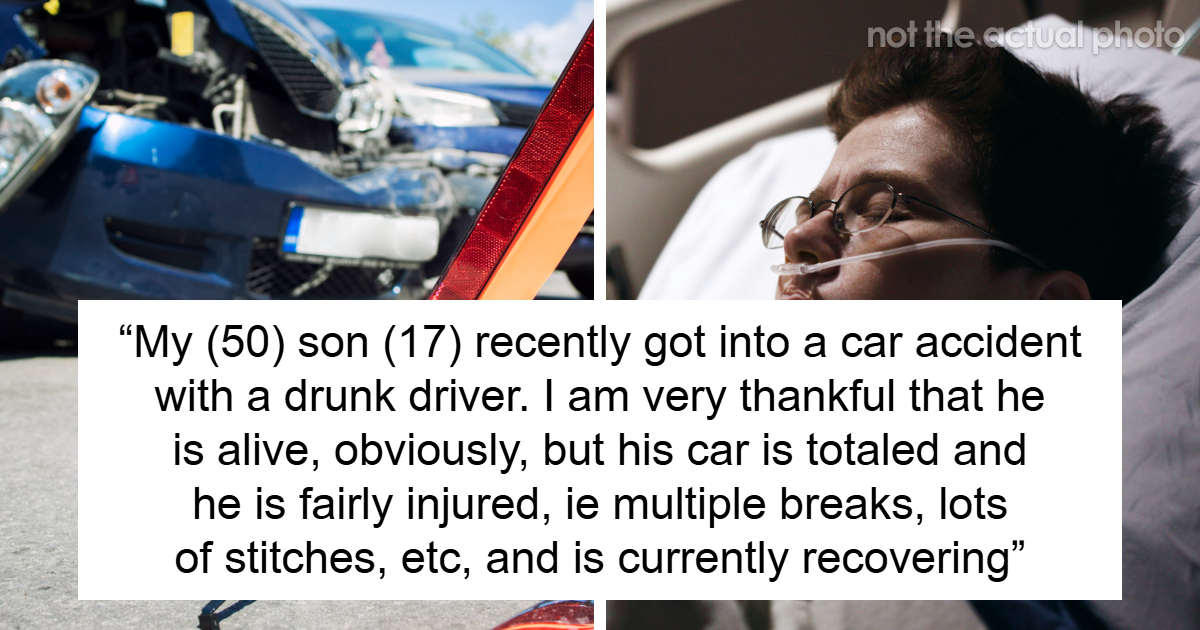
The story centers on a 17-year-old boy recovering after a serious car accident. Naturally, his loved ones came rushing to see him. Among them was his girlfriend, who reportedly left work early, arrived still in her work clothes, and immediately showed him affection: kisses, comfort, and emotional support. To the boy’s father, it was sweet. To his mother, it was apparently a five-alarm emergency in the Department of Things Moms Should Not Be Staring At Too Closely.
Afterward, the mom demanded that her husband should have stopped the girlfriend from being affectionate. He refused, arguing that nothing inappropriate had happened. She saw the girlfriend’s behavior as “too much.” He saw a scared teenager comforting someone she loved. And the internet, as it does, grabbed popcorn, put on reading glasses, and began discussing family boundaries, teen romance, parental jealousy, and the ever-controversial “boy mom” dynamic.
When Teen Affection Meets Parental Discomfort
At the heart of this conflict is one simple question: when does affection become inappropriate? In this case, the girlfriend was not making a scene at Thanksgiving dinner, trying to climb into the gravy boat, or declaring eternal love over a hospital intercom. She was reacting to fear, relief, and concern after her boyfriend had been injured. For many people, kissing someone after a frightening accident is not shocking. It is human.
That does not mean parents are never allowed to feel awkward. Watching your child grow into romantic relationships can be strange. One minute, you are reminding him to brush his teeth; the next, someone else is kissing his face while you stand nearby holding a hospital cafeteria coffee that tastes like wet cardboard. That transition can hit hard.
But discomfort is not the same as danger. A parent may feel surprised, embarrassed, or even protective without needing to control the situation. The key difference is whether the parent pauses to ask, “Is this actually harmful?” or jumps straight to, “Someone stop this young woman before she commits another felony of affection.”
Why the Father Refused to Intervene
The father’s refusal makes sense because he seemed to read the room correctly. His son was injured. His girlfriend was worried. The affection appeared consensual and emotionally appropriate. There was no indication that the son felt uncomfortable or that the girlfriend was ignoring his boundaries. In fact, her staying by his side suggested care, loyalty, and maturity.
Good parenting often means knowing when to step in and when to step back. If the girlfriend had been disrespectful to hospital staff, disturbing the patient, or making the son visibly uncomfortable, intervention would be reasonable. But stepping between two teenagers simply because one parent felt squeamish could have sent the wrong message: that the mother’s discomfort mattered more than the son’s emotional support.
The father also avoided humiliating the girlfriend during a vulnerable moment. That matters. Teenagers remember public embarrassment with the precision of courtroom stenographers. A harsh comment like “stop kissing him” could have damaged the girlfriend’s relationship with the family and made the son less likely to share future relationship details with his parents.
The “Boy Mom” Question: Love, Possessiveness, or Panic?
Online commenters quickly raised the “boy mom” label. The phrase can be harmless when it simply means a mother is proud to raise sons. But on the internet, it is often used to describe a more uncomfortable pattern: a mother who treats her son’s romantic partner as competition rather than as someone important to him.
To be fair, one incident does not prove a lifelong pattern. The mom may have been stressed after the accident. Fear can make people irrational. A child in the hospital can turn even the calmest parent into a walking thundercloud with a purse. Still, the intensity of her reaction raises eyebrows. She did not just privately feel awkward. She wanted her husband to police the girlfriend’s affection and seemed angry that he did not.
That is where the issue becomes less about kissing and more about control. A parent can say, “I felt uncomfortable seeing that,” without demanding, “You must stop them.” The first statement is self-awareness. The second is interference.
Healthy Family Boundaries Matter, Especially During Teen Dating
Teen relationships can be messy, dramatic, and occasionally powered by enough emotion to light a small suburb. Still, they are also an important part of growing up. Young people learn communication, empathy, consent, conflict resolution, and emotional support through early relationships. Parents do not have to approve of every detail, but they should avoid turning ordinary affection into a family scandal.
Healthy boundaries work in several directions. Teens need boundaries with partners. Parents need boundaries with teens. And families need boundaries around private romantic moments. The mother had a right to her feelings, but the son also had a right to be comforted by someone he cared about. The girlfriend had a right to show concern, as long as the son welcomed it. The father had a right to say, “I am not going to manufacture a problem where I do not see one.”
The best family systems leave room for closeness without turning love into surveillance. Parents can guide, support, and protect without hovering over every hug like affection referees in striped shirts.
What the Mother Might Really Be Feeling
The mother’s reaction may not be about the girlfriend at all. It may be about grief over her son growing up. A teenager’s first serious relationship can feel like a symbolic transfer of emotional priority. Suddenly, the child who once ran to Mom after every scraped knee now reaches for his girlfriend’s hand. That can sting, even for loving parents.
There may also be fear. After a car accident, emotions are already running hot. The mother may have felt powerless and latched onto the one thing she thought she could control: the girlfriend’s behavior. That does not make her response fair, but it makes it more understandable.
Another possibility is that she has strict beliefs about public affection, especially among teenagers. Some families view kissing in front of parents as disrespectful. Others see it as normal, especially in a crisis. Cultural values, religious beliefs, personal history, and comfort with intimacy can all shape how people interpret the same behavior.
But even if the mother’s values differ, the delivery matters. A calm later conversation about hospital etiquette would land very differently from demanding that her husband “stop it” while everyone is emotionally shaken.
What the Girlfriend’s Behavior Actually Showed
From the outside, the girlfriend’s actions looked caring. She left work early, arrived quickly, stayed with him, and checked on him. That is not a red flag. That is a green flag wearing sneakers and carrying emotional support.
Teenagers are often stereotyped as selfish, distracted, or allergic to responsibility. Yet this girlfriend showed up. She prioritized her boyfriend’s well-being. She did not need perfect words; she offered presence. In moments of crisis, presence can matter more than eloquence. Nobody expects a teenager to deliver a TED Talk at a hospital bedside.
If anything, the father recognized something valuable: his son had someone outside the immediate family who cared deeply about him. For parents, that should be reassuring. A teen with a supportive partner is not being stolen from the family. He is learning how to build his own circle of trust.
Why Ordering a Spouse to “Handle It” Can Backfire
The mother did not simply say she felt uncomfortable; she expected her husband to enforce her discomfort. That dynamic creates two problems. First, it puts the father in the role of emotional bouncer. Second, it avoids direct self-reflection. Instead of asking, “Why did this bother me so much?” the issue becomes, “Why did you not stop it?”
In marriage, partners can disagree without one being disloyal. The husband was not betraying his wife by refusing to scold a worried teenager. He was making a judgment call. In fact, his calm reaction may have protected the family from unnecessary conflict.
If the mother truly wanted a boundary, the healthier path would be a private conversation with her husband later: “I know emotions were high, but I felt uncomfortable with that much kissing in front of us. Am I overreacting?” That opens a discussion. Demanding action shuts one down.
How Parents Should Handle Teen Romance Without Making It Weird
1. Focus on respect, not control
Parents should pay attention to whether a teen relationship is respectful, safe, and balanced. Is there trust? Is there kindness? Does either teen seem pressured, isolated, or afraid? Those questions matter more than whether a girlfriend kissed her boyfriend’s forehead in a hospital room.
2. Talk privately, not publicly
If parents have concerns, they should avoid correcting teens in a way that embarrasses them. A private conversation later is usually more effective. Public shame rarely produces wisdom. It mostly produces silence, resentment, and group chats titled “Can You Believe My Parents?”
3. Separate personal discomfort from actual harm
It is okay for a parent to feel awkward. It is not okay to turn every awkward feeling into a rule. Before intervening, parents should ask whether the behavior is unsafe, disrespectful, or nonconsensual. If not, deep breathing may be the better tool.
4. Keep communication open
Teens are more likely to talk to parents who stay calm. If a parent reacts dramatically to normal affection, the teen may hide more in the future. Supportive curiosity works better than interrogation with decorative throw pillows.
5. Welcome the partner without replacing boundaries
A teen’s girlfriend or boyfriend does not need to become an instant family member, but kindness goes a long way. A simple “We’re glad you came” can make a young person feel respected. Families can be warm without being invasive.
The Real Lesson: Your Child’s Love Life Is Not a Threat
One of the hardest parts of parenting is accepting that children eventually build emotional lives that do not revolve around their parents. That is not rejection. That is development. A son having a girlfriend does not mean he loves his mother less. It means he is learning how to love someone in a new way.
Parents who treat romantic partners as rivals risk pushing their children away. Parents who treat partners with reasonable respect often strengthen the family bond. The son sees that his parents trust him. The partner sees that the family is safe. Everyone gets to breathe. Imagine that: oxygen, the original family therapy.
The mother in this story may need time to process her feelings. But her husband was right not to turn a tender hospital moment into a disciplinary event. Sometimes the most powerful parental move is doing nothing.
Related Experiences: What Families Can Learn From Similar Situations
Many families face some version of this conflict when a teenager begins dating seriously. The details change, but the emotional script is familiar: a parent sees affection, feels uncomfortable, and wonders whether the relationship is moving too fast. The teen sees support, comfort, and normal romance. Both sides feel misunderstood.
For example, imagine a mother walking into the kitchen and seeing her son’s girlfriend hugging him after he failed a major exam. The girlfriend is comforting him. The mother, however, feels oddly excluded. Her first instinct might be to interrupt: “Okay, that’s enough.” But if she pauses, she may realize the hug is not an attack on her role. It is simply another person offering care. The better response might be, “I’m sorry the test went badly. I’m glad you have support.” That one sentence keeps the door open instead of slamming it shut.
Another common experience happens during family gatherings. A teen couple sits close on the couch, whispers, laughs, and shares little affectionate gestures. Older relatives may roll their eyes. Someone may mutter, “In my day, we didn’t act like that.” But every generation has its own version of young love. Yesterday’s handwritten notes are today’s shared playlists. Yesterday’s nervous porch goodbye is today’s hospital-room forehead kiss. The emotional need is the same: to feel seen, chosen, and safe.
Parents can also struggle when a teen partner becomes highly involved during a crisis. If a son is injured, sick, grieving, or stressed, his girlfriend’s presence may suddenly feel very significant. A parent may think, “That is my job.” But love is not a single chair. More people can care for a teenager without pushing the parent out of the room. In fact, a caring partner can help a teen recover emotionally because support does not have to come from only one source.
Some families learn this lesson the hard way. A parent overreacts, criticizes the girlfriend, and the teen becomes defensive. Suddenly, the original issue is no longer “too much affection.” Now it is trust. The teen may stop inviting the partner over, stop sharing updates, or assume every conversation will become a trial. Once that happens, parents lose influence. They may still have rules, but they no longer have openness.
Other families handle it better. They set reasonable expectations without shaming anyone. For instance: “We know you care about each other. In shared family spaces, keep affection respectful. In emergencies, we understand emotions run high.” That kind of message is calm, specific, and fair. It teaches boundaries without turning love into contraband.
The biggest experience-based takeaway is this: teens watch how adults respond to vulnerability. If a girlfriend shows up after an accident and the family welcomes her kindness, the teen learns that love and family can coexist. If the family treats her as an intruder, the teen learns that romance must be hidden or defended.
Parents do not have to be cool with everything. They do not need to become best friends with every high school sweetheart who enters the house wearing sneakers and nervous perfume. But they should aim to be steady. Ask questions. Stay respectful. Save serious concerns for serious problems. And when a young person shows genuine care during a frightening moment, consider recognizing it for what it is: not a scandal, not a threat, but a sign that your child is loved by more people than just you.
Conclusion
The drama over a son’s affectionate girlfriend is not really about a few kisses. It is about growing pains, family boundaries, parental discomfort, and the emotional shift that happens when a child begins forming romantic attachments. The mother may have felt awkward, scared, or replaced, but her reaction crossed into control when she demanded that her husband stop a caring moment. The father’s refusal was not neglectful; it was reasonable.
Healthy families do not panic every time affection appears. They look for respect, consent, kindness, and emotional safety. In this story, the girlfriend showed up when it mattered. The son received comfort. The father understood the moment. The mother, hopefully, can learn that her son’s relationship is not a rival for her love. It is part of his growing life.