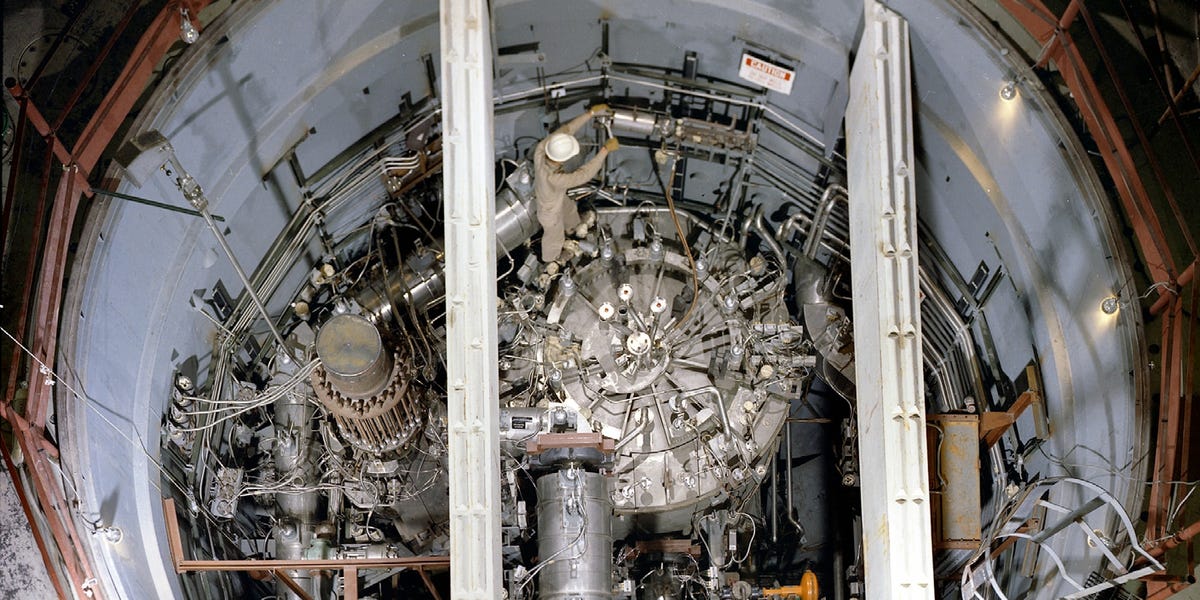
Molten salt reactors sound like something cooked up in a science-fiction kitchen: take nuclear fuel, add a bath of glowing hot salt, stir carefully, and somehow produce clean electricity without a giant pressure cooker full of water. The surprising part is that the basic idea is not new. Scientists tested molten salt reactor technology in the United States during the 1950s and 1960s, and today it is returning to the energy conversation because the world wants reliable, low-carbon power that can run when the sun is down, the wind is taking a coffee break, and the grid is begging for help.
A molten salt reactor, often shortened to MSR, is an advanced nuclear reactor that uses liquid salt at high temperature as a heat-transfer fluid. In some designs, the salt is only the coolant. In others, the nuclear fuel is dissolved directly into the molten salt, which means the fuel itself flows through the reactor. That one sentence is why engineers get excited and why non-engineers squint suspiciously. Flowing nuclear fuel? Liquid salt hotter than a pizza oven with ambition? Yes, and there is real science behind it.
This guide explains what molten salt reactors are, how they work, why they matter, what problems they still face, and why they are suddenly getting attention from laboratories, utilities, universities, and energy investors. No lab coat required, although safety glasses do make everyone look 17% more serious.
What Is a Molten Salt Reactor?
A molten salt reactor is a type of nuclear fission reactor that uses salts melted into liquid form to move heat. These salts are usually fluoride or chloride compounds chosen because they can remain stable at very high temperatures. Unlike ordinary table salt, which belongs on fries, reactor salts are engineered chemical mixtures designed for heat transfer, radiation resistance, and compatibility with reactor materials.
Traditional nuclear power plants in the United States are mostly light-water reactors. They use solid fuel rods and water as both coolant and neutron moderator. Water works well, but it must be kept under very high pressure to stay liquid at the temperatures needed for efficient power production. Molten salt reactors take a different path. Their salts can operate at high temperatures while staying at low pressure. That low-pressure feature is one of the big reasons MSRs are considered promising advanced reactors.
Two Main Types of Molten Salt Reactors
Not every molten salt reactor works the same way. The term covers several designs, but most fall into two broad categories:
- Salt-cooled reactors: These use solid nuclear fuel, similar in concept to conventional reactors, while molten salt carries heat away from the core.
- Salt-fueled reactors: These dissolve nuclear fuel directly into the molten salt, so the fuel and coolant are part of the same circulating liquid.
The second category is the most distinctive. Instead of fuel sitting still in metal tubes, the fuel salt moves through the reactor system. That can allow online fuel processing, flexible operation, and different approaches to waste reduction. It also creates engineering challenges because every pump, pipe, valve, heat exchanger, and sensor must handle hot, radioactive, chemically active liquid for a long time. In other words, the reactor is not just a nuclear machine; it is also a chemistry marathon.
How Do Molten Salt Reactors Work?
The basic job of any nuclear reactor is simple: produce heat from fission, control that heat safely, and use it to make electricity or industrial energy. A molten salt reactor follows the same broad recipe, but it swaps the usual water-based cooling system for liquid salt.
Step 1: Fission Produces Heat
Nuclear fission happens when atoms such as uranium or plutonium split after absorbing neutrons. When they split, they release energy as heat and produce more neutrons, which can continue the chain reaction. In a salt-cooled MSR, fission occurs in solid fuel. In a liquid-fueled MSR, fission occurs inside the fuel salt as it circulates through the reactor core.
Step 2: Molten Salt Carries the Heat
The molten salt absorbs heat from the reactor core and moves it to a heat exchanger. Because the salt can remain liquid at very high temperatures without needing high pressure, the system may avoid some of the pressure-related engineering demands of water-cooled reactors. This does not make it magically simple, but it does change the safety and design picture in important ways.
Step 3: Heat Is Transferred to a Power Cycle
The heat from the primary salt loop is transferred to another loop, which may use another salt, gas, or another working fluid. That heat can drive a turbine to produce electricity. It can also be used directly for industrial heat, hydrogen production, desalination, chemical processing, or other applications that need steady high-temperature energy.
Step 4: Safety Systems Control the Reaction
Modern MSR designs often emphasize passive safety. In some concepts, if the reactor overheats, the physics of the fuel and salt naturally reduces the reaction rate. Some liquid-fueled designs also include a freeze plug: a section of salt kept solid by cooling. If power is lost and the plug melts, the fuel salt drains by gravity into passively cooled tanks where the chain reaction stops. Think of it as the reactor equivalent of pulling the emergency bathtub plug, except the bathtub is a serious engineered system and nobody is allowed to bring rubber ducks.
Why Use Salt Instead of Water?
Water has been the workhorse of nuclear power for decades, and it deserves respect. But molten salt has several properties that make it attractive for advanced reactor designs.
High-Temperature Operation
Molten salts can operate at temperatures higher than typical light-water reactors. Higher temperature can improve thermal efficiency, meaning more of the reactor’s heat can be converted into useful electricity. High-temperature heat also opens doors beyond the electric grid, including industrial processes that are difficult to decarbonize with ordinary renewables alone.
Low-Pressure Cooling
Because molten salts have high boiling points, MSR systems can often operate at or near atmospheric pressure. Lower pressure can reduce certain accident scenarios associated with high-pressure coolant systems. It may also simplify some components, although it does not remove the need for rigorous engineering, licensing, inspections, and quality control.
Strong Heat Capacity
Molten salts can carry a lot of heat. This is useful for reactors because heat must be moved away from the core reliably. It is also why molten salts are used in some thermal energy storage systems. A reactor that pairs high-temperature heat with storage can potentially help balance electricity supply and demand.
A Short History of Molten Salt Reactors
Molten salt reactor technology has a surprisingly deep American history. Oak Ridge National Laboratory played a central role in early experiments, including the Aircraft Reactor Experiment in the 1950s and the Molten Salt Reactor Experiment, known as MSRE, in the 1960s. The MSRE achieved criticality in 1965 and later became the first reactor to operate using uranium-233. It was not a commercial power plant, but it proved that a circulating liquid fuel reactor could operate.
So why did molten salt reactors not take over the world immediately? Several reasons. Light-water reactors were already advancing quickly, especially for naval propulsion and commercial power. The nuclear industry built supply chains, regulations, workforce training, and operating experience around water-cooled designs. Molten salt reactors, by contrast, needed more work in chemistry, materials, fuel processing, and maintenance. The technology went quiet for decades, not because it was silly, but because it was early, complicated, and competing with a reactor family that had already left the driveway.
Why Are Molten Salt Reactors Getting Attention Now?
Today, the energy world looks very different from the 1960s. Climate goals, rising electricity demand, data centers, industrial decarbonization, and grid reliability have pushed advanced nuclear power back into the spotlight. Molten salt reactors are interesting because they could provide steady carbon-free heat and electricity while offering design features that differ from conventional reactors.
U.S. laboratories and companies are actively developing molten salt technologies. Idaho National Laboratory supports molten salt research, fuel salt production, and testing systems that help researchers understand how salts behave under realistic conditions. Abilene Christian University received a construction permit for a molten salt research reactor. Kairos Power is developing a fluoride salt-cooled high-temperature reactor. TerraPower and Southern Company have worked on molten chloride fast reactor concepts. These projects are not all the same design, but together they show that molten salt is no longer just a dusty chapter in nuclear history.
Potential Benefits of Molten Salt Reactors
1. Better Fuel Efficiency
Some molten salt reactor designs may use fuel more efficiently than traditional reactors. Liquid-fueled designs can potentially remove certain fission products while the reactor operates, helping maintain performance. Some concepts may also use different fuel cycles, including thorium-based approaches or fuel made from materials recovered from used nuclear fuel. These possibilities are promising, but they must be proven economically and safely at scale.
2. Passive Safety Features
MSRs can be designed with passive safety characteristics. Low-pressure operation, strong heat transfer, negative temperature feedback, and gravity-drain concepts may reduce reliance on active safety systems. Passive does not mean “do nothing and hope.” It means the design uses physics and engineered features so the system tends toward a safer state under certain conditions.
3. High-Temperature Industrial Heat
Electricity gets most of the attention, but industry uses massive amounts of heat. Steel, cement, chemicals, refining, hydrogen, and desalination all need reliable energy. Because molten salt reactors can potentially deliver high-temperature heat, they may serve markets that solar panels and wind turbines cannot easily handle alone.
4. Flexible Power and Energy Storage
Some advanced reactor systems combine nuclear heat with thermal storage. Heat can be stored in molten salt and converted to electricity when demand is high. That could help nuclear energy operate alongside renewables, providing firm power without forcing the grid into an awkward “all or nothing” relationship.
The Big Challenges
Molten salt reactors are exciting, but they are not magic cauldrons of unlimited clean energy. The technology faces real barriers.
Materials and Corrosion
Hot molten salts can interact with metals. Reactor developers need materials that can withstand heat, radiation, chemical exposure, and long operating lifetimes. Researchers are studying nickel-based alloys, stainless steels, coatings, salt chemistry control, and monitoring systems. This is one of the most important technical challenges for MSRs.
Fuel Qualification
For liquid-fueled MSRs, the fuel is not a ceramic pellet sealed in a cladding tube. It is a changing chemical mixture. Its composition evolves as fission products form and as the reactor operates. Regulators and developers must understand how to define, test, and qualify that fuel over time.
Licensing and Regulation
Nuclear licensing is demanding for good reason. Advanced reactors must demonstrate safety in ways that fit their technology. A molten salt reactor does not look exactly like a conventional water-cooled reactor, so safety cases, inspection methods, emergency planning, and operating rules must be carefully developed.
Economics and Supply Chain
Even a brilliant reactor design must be buildable, maintainable, and affordable. MSRs need specialized components, trained operators, salt production, testing infrastructure, and manufacturing capacity. The first reactors will likely be expensive because first-of-a-kind projects usually are. The real question is whether repeated builds can lower costs.
Molten Salt Reactors vs. Traditional Nuclear Reactors
Traditional light-water reactors are proven, licensed, and operating around the world. They have decades of data behind them. Molten salt reactors offer potential advantages, but most modern designs still need demonstration. The comparison is not “old bad, new good.” It is more like “proven technology with known limitations” versus “promising technology with big homework due.”
Light-water reactors use water under high pressure and solid fuel. Molten salt reactors use liquid salt and may use either solid or liquid fuel. Light-water reactors generally produce lower-temperature heat than MSRs. MSRs may offer high-temperature heat, low-pressure operation, and fuel-cycle flexibility, but they also introduce chemistry and materials issues that water reactors do not face in the same way.
Are Molten Salt Reactors Safe?
Safety depends on design, construction, operation, regulation, and culture. Molten salt reactors can include attractive safety features, but no reactor should be judged by marketing slides alone. A safe MSR must show that it can control reactivity, remove heat, contain radioactive materials, handle fuel chemistry, survive equipment failures, and protect workers and the public.
The strongest safety argument for MSRs is that many designs avoid high-pressure water cooling. Some liquid-fueled designs may also drain fuel into safe storage tanks during overheating or power-loss events. However, safety questions remain around salt chemistry, corrosion products, fission product behavior, maintenance, instrumentation, and decommissioning. The smart view is balanced: MSRs may improve some safety margins, but they still require serious engineering and strict oversight.
What About Nuclear Waste?
Molten salt reactors could affect nuclear waste in several ways. Some designs may use fuel more efficiently, reducing the amount of long-lived waste per unit of energy. Some may consume certain actinides found in used nuclear fuel. Thorium-based MSR concepts could produce different waste streams than uranium-plutonium fuel cycles.
Still, MSRs do not eliminate radioactive waste. They produce fission products, activated materials, contaminated salts, and components that must be managed. Waste may be smaller, different, or shorter-lived in some designs, but it remains a serious responsibility. Any article claiming “no waste” should be treated like a suspicious email from a prince offering free uranium.
Could Molten Salt Reactors Use Thorium?
Yes, some molten salt reactor concepts are designed around thorium. Thorium itself is not fissile, meaning it does not easily sustain a chain reaction on its own. Instead, thorium-232 can absorb a neutron and eventually become uranium-233, which is fissile. The MSRE demonstrated uranium-233 operation decades ago, and that historical success is one reason thorium MSRs still attract attention.
Thorium has potential advantages, including abundance and certain waste characteristics, but it is not a cheat code for perfect nuclear energy. A thorium cycle still needs fissile startup material, careful processing, radiation protection, safeguards, and economics that make sense. Thorium is promising, but it is not fairy dust.
Where Could MSRs Be Used?
Molten salt reactors may fit several markets if they prove reliable and affordable:
- Grid electricity: Providing steady clean power for homes, businesses, and data centers.
- Industrial heat: Supplying high-temperature energy for manufacturing, chemicals, and fuels.
- Hydrogen production: Supporting clean hydrogen through high-temperature processes or electricity.
- Desalination: Producing heat and electricity for water treatment.
- Remote sites: Supplying dependable energy where fuel delivery is difficult.
The strongest early opportunities may be places where clean heat is valuable, electricity demand is constant, and customers can support first-of-a-kind projects. Large utilities may move carefully, while industrial partners may be more willing to test advanced systems if the economics and permitting align.
Real-World Examples to Watch
Several U.S.-linked molten salt projects are worth watching. Kairos Power’s Hermes project in Tennessee uses fluoride salt cooling to demonstrate its advanced reactor pathway. The Abilene Christian University Molten Salt Research Reactor is designed to support education and research. Idaho National Laboratory is developing molten salt testing and fuel-handling capabilities. Southern Company and TerraPower have worked on molten chloride fast reactor development. These efforts show different pieces of the same puzzle: licensing, materials, fuel, construction, and operations.
Commercial MSRs are not yet common power plants. The next decade will likely determine whether molten salt reactors move from promising demonstrations to repeatable, bankable energy infrastructure. That transition is the hard part. Science can prove something works; industry must prove it works on time, on budget, and on purpose.
Experience-Based Insights: What Learning About Molten Salt Reactors Feels Like
Understanding molten salt reactors is a little like learning to drive a manual transmission car after years of riding in automatics. The basic destination is familiarproduce reliable energybut the controls feel different. Instead of thinking only about fuel rods, coolant pumps, steam generators, and pressure vessels, you start thinking about chemistry, flowing fuel, salt purity, corrosion control, freeze valves, heat exchangers, and thermal storage. It expands the mental map of what a nuclear reactor can be.
One useful experience is comparing MSRs with ordinary power systems. A coal plant burns fuel constantly to make heat. A gas plant burns fuel quickly and flexibly. A conventional nuclear plant makes heat steadily through solid fuel and water cooling. A molten salt reactor asks a different question: what if nuclear heat could be moved through a high-temperature liquid that does not need extreme pressure? That shift makes the technology easier to appreciate. The salt is not decorative. It is the central character.
Another experience is realizing that “advanced” does not always mean “brand new.” Many people assume molten salt reactors are futuristic because they are not widely deployed. Then they discover Oak Ridge ran a molten salt experiment in the 1960s, and suddenly the story becomes more interesting. MSRs are not a fresh invention from a startup pitch deck. They are an old idea meeting new materials science, better modeling, modern regulation, advanced manufacturing, and a power grid that now needs cleaner firm energy.
The learning curve also teaches humility. Molten salt reactors are often described with glowing benefits: safer, cleaner, more efficient, less wasteful, more flexible. Some of those claims may prove true for specific designs. But each benefit comes with an asterisk that engineers must earn the hard way. High temperature is useful, but materials must survive it. Liquid fuel is flexible, but fuel chemistry must be monitored and controlled. Low pressure is attractive, but containment and maintenance still matter. The technology rewards curiosity, not hype.
For students, writers, investors, or energy enthusiasts, the best way to understand MSRs is to follow one design at a time. Do not lump every molten salt reactor into one bucket. A fluoride salt-cooled reactor with solid fuel is not the same as a molten chloride fast reactor with liquid fuel. A research reactor is not the same as a commercial power plant. A thermal-spectrum design is not the same as a fast-spectrum design. Once these differences click, the conversation becomes much clearer.
The final experience is noticing how practical the future of nuclear energy must be. Molten salt reactors are not competing in a beauty contest for the coolest diagram. They must satisfy regulators, utilities, insurers, local communities, construction teams, fuel suppliers, and grid operators. The winning designs will not simply be the most elegant physics concepts. They will be the systems that can be licensed, built, maintained, financed, and trusted. In that sense, molten salt reactors are less about one miracle technology and more about whether nuclear innovation can become boringly reliable. In energy, “boringly reliable” is actually a compliment.
Conclusion: Are Molten Salt Reactors the Future?
Molten salt reactors are one of the most intriguing advanced nuclear technologies because they rethink how reactors move heat, manage fuel, and support the grid. By using hot liquid salts, MSRs may offer high-temperature operation, low-pressure cooling, passive safety features, fuel flexibility, and valuable industrial heat. They could help provide clean firm energy in a world that needs more electricity and fewer carbon emissions.
But molten salt reactors still have to prove themselves. Materials, corrosion, fuel qualification, licensing, operations, cost, and supply chains remain major challenges. The next wave of demonstrations in the United States will be crucial. If developers can turn strong physics into dependable projects, MSRs could become an important part of the clean energy mix. If not, they may remain a fascinating chapter in nuclear engineering history.
The honest answer is this: molten salt reactors are not a guaranteed revolution, but they are too promising to ignore. They combine old experimental success with modern urgency. And in a world searching for clean energy that works around the clock, a reactor powered by liquid salt might be exactly the kind of weird-but-serious idea worth watching.