Millennials occupy a peculiar place in history. They remember when the internet screamed before connecting, yet they now become impatient when a video takes three seconds to load. They grew up rewinding movies, memorizing phone numbers, and carrying printed directions, but today they can summon transportation, entertainment, and dinner by tapping a glass rectangle.
Pew Research Center commonly defines millennials as people born between 1981 and 1996. That range includes childhoods spanning cassette tapes, VHS rentals, dial-up internet, early cellphones, and the dawn of social media. In other words, millennials did not merely witness technological change. They were repeatedly asked to throw away everything they had just learned.
The following millennial childhood memories may sound perfectly ordinary to anyone who survived the 1980s, 1990s, or early 2000s. To today’s kids, however, they may sound like deleted scenes from a historical drama in which everyone wore cargo pants.
30 Millennial Childhood Experiences That Feel Ancient Today
1. Listening to Dial-Up Internet Connect
Getting online once required a modem to call an internet service provider through the home telephone line. The resulting collection of beeps, static, and robotic shrieks sounded like two fax machines settling a personal dispute. Only after the noise stopped could you begin loading a webpage one geological era at a time.
2. Losing the Internet When Someone Used the Phone
Early home internet and telephone service often shared one line. If someone picked up the phone, the internet connection could disappear instantly. Families therefore negotiated online time like diplomats discussing a ceasefire: “You may check your email, but Grandma is calling at seven.”
3. Using Payphones
Before every child carried a cellphone, public payphones served as emergency communication stations. You needed coins, a memorized number, and enough background knowledge to recognize whether the handset looked suspiciously sticky. Missing your ride home could become a full survival exercise.
4. Making a Collect Call Without Paying
Kids sometimes used the brief name-recording portion of a collect call to deliver an entire message. Instead of saying a name, someone might rapidly announce, “MomPracticeEndedPickMeUp.” The parent rejected the charges but received the message. It was primitive, efficient, and probably not appreciated by telephone companies.
5. Memorizing Everyone’s Phone Number
Millennials frequently knew the phone numbers of relatives, friends, schools, and local businesses by heart. Today, losing a phone can mean losing access to nearly every contact. Back then, the human brain doubled as a small but surprisingly reliable address book.
6. Calling a Friend’s House and Talking to Their Parents
There was no direct message to a friend’s pocket. You called the family landline and hoped your friend answered. Otherwise, you had to make polite conversation with a parent before asking, “Is Jason there?” It was social anxiety training disguised as telecommunications.
7. Leaving Messages on an Answering Machine
When nobody answered, a physical machine recorded your voice. Families sometimes created elaborate outgoing greetings involving jokes, music, and multiple household members speaking in unison. Callers then had to leave a coherent message without the mercy of an edit button.
8. Judging Callers by Caller ID
Caller ID felt revolutionary because it revealed who was calling before anyone picked up. Families gathered around the display, debating whether the unknown number deserved an answer. Ignoring a call became a group decision rather than a silent swipe.
9. Receiving Free Internet CDs in the Mail
Companies such as AOL distributed enormous numbers of promotional discs offering internet access. They appeared in mailboxes, magazines, stores, and possibly through spontaneous generation. Many families used them to begin exploring the web; others turned the discs into coasters, crafts, or shiny objects for confusing younger siblings.
10. Creating an Extremely Dramatic Screen Name
Early online identities were built from nicknames, favorite bands, sports numbers, random capital letters, and enough digits to launch a satellite. A screen name such as “Sk8rGurlXx247” was not merely a username. It was branding, autobiography, and public evidence that adults should never let children name permanent things.
11. Communicating Through AIM Away Messages
AOL Instant Messenger away messages functioned as miniature status updates. People posted song lyrics, inside jokes, emotional declarations, and carefully vague references to friendship drama. The goal was to appear unavailable while secretly watching the buddy list to see who signed on.
12. Typing Texts With T9
Before full smartphone keyboards, many phones assigned several letters to each number key. Writing a message required repeated tapping or predictive T9 input. Millennials could compose a sentence with one thumb while barely looking, a skill now as commercially useful as expert butter churning.
13. Paying Attention to Text and Minute Limits
Mobile plans once limited calls and text messages. A long conversation could consume precious minutes, while excessive texting might produce an alarming bill. Some plans offered free nights and weekends, turning 9 p.m. into the official opening bell of teenage communication.
14. Treating the Family Computer Like Shared Territory
Many homes had one desktop computer used by the entire family. It sat in a common room, surrounded by tangled cables and mysterious printer paper. Private browsing was less a software feature than an impossible dream because someone was always standing behind you asking when you would be finished.
15. Saving Important Work on Floppy Disks
School projects and computer files were stored on floppy disks with capacities that would now struggle to hold a single high-resolution photo. Students carried them between home and school, hoping the disk would open and the computer would recognize it. Sometimes it did neither, teaching valuable lessons about disappointment.
16. Researching With a CD-ROM Encyclopedia
Before search engines answered questions instantly, digital encyclopedias arrived on discs. Microsoft Encarta and similar programs made homework feel futuristic, especially when an entry included a short video or sound clip. Information was limited, but at least there were no autoplay advertisements for miracle supplements.
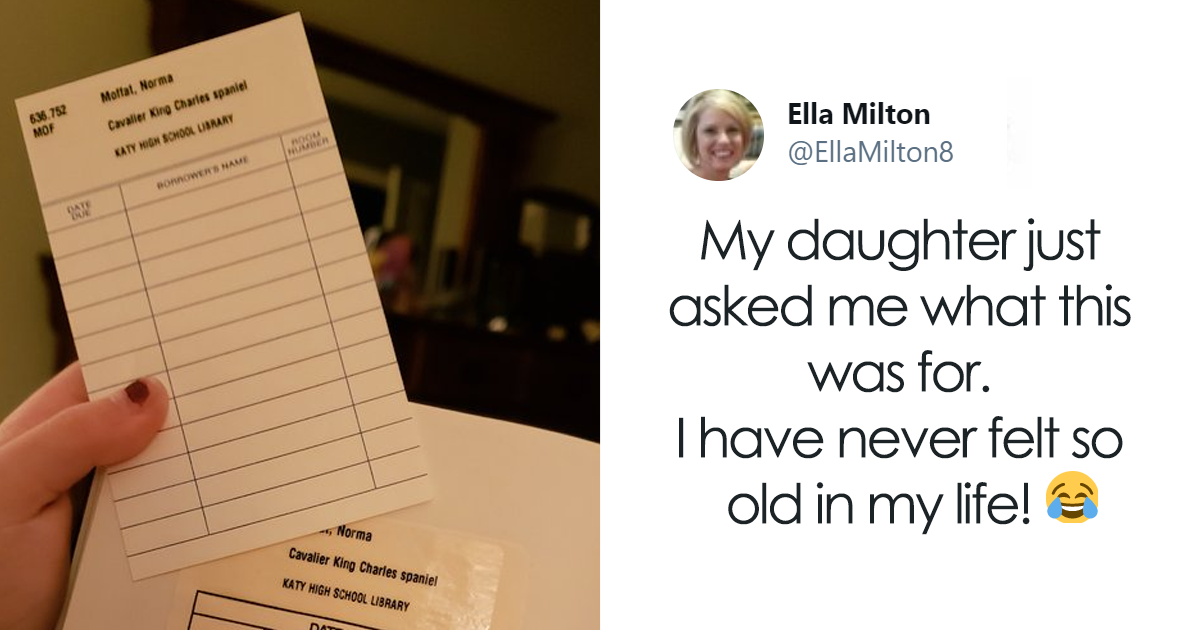
17. Using a Library Card Catalog
Finding a book could involve searching drawers filled with index cards organized by author, title, or subject. The card catalog was a physical map of the library’s collection. It required patience, alphabetization skills, and the ability to resist slamming twenty tiny drawers for no educational reason.
18. Watching Teachers Use Overhead Projectors
Classroom presentations often involved transparent sheets placed on a glowing overhead projector. Teachers wrote on them with special markers while students copied notes. Nothing generated suspense like watching an instructor accidentally smear half a math problem with the side of one hand.
19. Printing Directions From MapQuest
Online directions existed before phones could guide drivers in real time. People printed several pages from MapQuest, placed them on the passenger seat, and attempted to read step 17 while merging across traffic. Missing one turn could transform a ten-minute trip into an unauthorized tour of three counties.
20. Navigating With Paper Maps
Road trips once depended on foldable maps, atlases, and highlighted routes. Refolding a map correctly was a puzzle no family fully solved. The designated navigator also had to identify roads while someone in the driver’s seat repeatedly asked, with increasing emotional intensity, “Was that our exit?”
21. Taking Photos Without Seeing Them
Film and disposable cameras provided no instant preview. You took a picture and hoped the subject was centered, awake, and not covered by a thumb. Every click mattered because a roll offered a limited number of exposures, encouraging careful photography and discouraging 84 nearly identical selfies.
22. Waiting Days to See Your Pictures
Finished film had to be dropped off for processing. When the prints returned, families discovered which memories had survived. Some photos were beautiful. Others were dark rectangles, accidental ceilings, or blurred evidence that an unidentified person once attended a birthday party.
23. Rewinding VHS Tapes
A VHS movie did not automatically return to the beginning. After watching it, someone had to rewind the tape using the VCR or a separate rewinding machine. Video stores encouraged customers to “be kind, rewind,” a cheerful phrase backed by the possibility of fees.
24. Spending Friday Night at a Video Rental Store
Choosing a movie once required traveling to a physical store, walking through aisles, and judging films by their boxes. Popular new releases were frequently unavailable, forcing families to choose between patience and a suspicious direct-to-video sequel. The trip itself was part of the entertainment.
25. Paying Late Fees on Movies
Rental movies came with return deadlines. Forgetting a tape under the couch could cost almost as much as buying it. Millennials learned that time had monetary value because a plastic rectangle was quietly accumulating debt beside the television.
26. Recording Television Shows on VHS
Missing a television episode could mean missing it for months, so viewers programmed VCRs to record broadcasts. This required selecting the correct channel, date, time, and tape speed. One mistake could replace a season finale with two hours of local weather.
27. Reading TV Listings and Watching Shows on Schedule
Television programs aired at specific times, and viewers planned around them. Printed listings helped families determine what was on and when. There was no pausing, restarting, or asking a platform to remember your place. Bathroom breaks were tactical operations conducted during commercials.
28. Repairing Cassette Tapes With a Pencil
When cassette tape spilled from its shell, a pencil could be inserted into one reel and turned to wind the tape back inside. This improvised repair technique saved many albums and mixtapes, although the music might later contain a permanent wobble suggesting the singer had briefly entered another dimension.
29. Making Mixtapes and Burned CDs
Playlists were once physical projects. Creating one meant recording songs from the radio, arranging cassette tracks, or burning files onto a blank CD. The finished mix communicated friendship, romance, or impeccable taste. Track order mattered, and a poorly chosen third song could damage a relationship.
30. Going Outside Without Constant Contact
Many children left home to bike, explore, or visit friends without carrying tracking devices. Parents expected them back at an agreed time, often before dinner or when the streetlights came on. Plans changed through doorbells, shouted conversations, and handwritten notes rather than live location sharing.
Why These Millennial Memories Feel So Different
The objects themselves are amusing, but the deeper difference is how they shaped everyday behavior. Millennial childhood existed during a transition from analog inconvenience to digital abundance. That transition produced experiences today’s children may understand intellectually but never feel in quite the same way.
Waiting Was Built Into Almost Everything
Millennials waited for internet connections, photographs, television episodes, song downloads, returned phone calls, and newly available rental movies. Waiting was not viewed as a wellness practice. It was simply the normal gap between wanting something and receiving it.
That delay could be irritating, but it also created anticipation. A developed roll of film felt like a surprise package. A favorite show became an event because it appeared once a week. Hearing a beloved song on the radio felt lucky because listeners could not instantly replay it. Scarcity made ordinary entertainment seem more valuable.
Mistakes Were Harder to Correct
A wrong turn on a road trip did not trigger an immediate recalculation. A blurry photograph stayed blurry. A message left on an answering machine could not be edited. A school paper saved incorrectly might vanish forever. Technology offered fewer safety nets, so people improvised.
This did not make millennials tougher than younger generations, but it encouraged a particular kind of practical problem-solving. A pencil repaired a cassette. A paperclip opened a stuck computer drive. A road atlas rescued a failed route. The solution was not always elegant, but elegance was optional when nobody had a tutorial video nearby.
Entertainment Was More Communal
When a major television episode aired, millions of people watched it within the same narrow period. Friends discussed it the next day because most had experienced it together. Family members also negotiated over the household television, telephone, and computer. Sharing was not always harmonious, but it created common rituals.
A Friday visit to the video store could involve debate among everyone in the family. Recording songs from the radio required listening long enough to catch them. Going to the mall was not merely shopping; it was a way to find out who was around. Entertainment often demanded participation before consumption.
Privacy and Freedom Had a Different Balance
Millennial children generally had less digital privacy at home because computers and phones were shared. At the same time, many had more physical privacy outside because they could not be continuously tracked. Parents knew where children planned to go, not necessarily where they stood every second.
That freedom came with risks, and romanticizing the past can hide its problems. Still, being temporarily unreachable created room for independence. Children settled small disagreements, changed plans, found their way home, and occasionally invented highly creative explanations for being late.
Technology Felt Like a Series of Astonishing Upgrades
Millennials remember the first time many technologies entered ordinary life: home internet, instant messaging, digital cameras, MP3 players, text messaging, GPS devices, social networks, streaming video, and smartphones. Each innovation removed a familiar inconvenience.
Seeing a photo immediately after taking it felt magical. Downloading one song instead of purchasing an entire album felt revolutionary. Getting directions from a device while driving seemed almost unbelievable. Millennials sometimes complain about modern technology, but they also remember exactly why it became irresistible.
The Past Was Not Better, but It Was Memorable
Nostalgia has a habit of sanding down sharp edges. Dial-up internet was slow. Paper maps were confusing. Film processing cost money. Television schedules were restrictive, and late fees were genuinely annoying. Nobody needs to revive every inconvenience simply because it now looks charming in a social media post.
What people often miss is not the technology itself but the stage of life surrounding it: crowded living rooms, mall food courts, sleepovers, handwritten notes, neighborhood bike rides, and hours spent trying to record one song without a radio host talking over the introduction.
These memories feel ancient because the transformation happened so quickly. Many millennials went from childhood homes with one shared landline to adult homes containing multiple internet-connected devices. Their old routines did not gradually fade over centuries. They disappeared between school picture days and first jobs.
Conclusion: Welcome to the Museum, Millennials
Today’s kids may never understand why anyone needed a separate machine to rewind a movie, why photographs had to be developed, or why families argued about using the phone and internet simultaneously. That is not a criticism. Every generation inherits technologies that make earlier routines look wonderfully absurd.
Millennial nostalgia is especially powerful because it connects two dramatically different worlds. Millennials remember analog childhoods and digital adulthoods. They can explain both cassette surgery and cloud storage, although they may need to sit down afterward because their knees made a noise.
So, yes, these 30 forgotten experiences may make millennials feel ancient. But they also prove that an entire generation adapted to extraordinary changeand still remembers exactly how to fold a paper map incorrectly.