Manhattan is loud in the way a casino is bright: constantly, aggressively, and with a confidence that suggests silence is for amateurs. Sirens bounce between buildings, subway brakes scream from below, delivery bikes chirp past like caffeinated insects, and somewhere in the distance a truck is always backing up with the same three-note warning it has apparently been singing since the Bronze Age. So for a sound to stand out in Manhattan, it has to do something special.
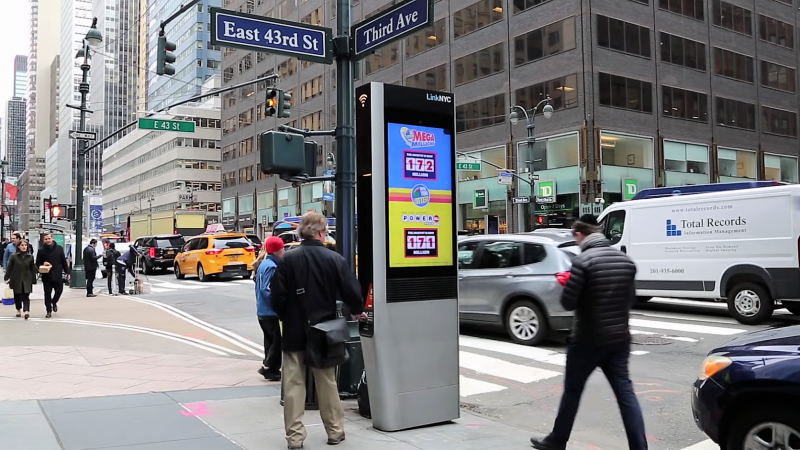
That is exactly what happened when pedestrians started hearing creepy jingles and random noises spilling out of LinkNYC kiosks. These sidewalk towers were supposed to symbolize the sleek future: free Wi-Fi, free calls, charging ports, maps, directions, and a glossy civic-tech glow. Instead, some of them began acting like haunted vending machines for urban anxiety. The weirdest sound of all was a slowed-down Mister Softee jingle, a tune so familiar it usually means childhood, summer, and poor impulse control around soft serve. Distorted and misplaced, though, it sounded less like ice cream and more like a clown crawling out of your Wi-Fi plan.
The good news is that the mystery was solved. The better news is that the explanation was somehow even more New York than the mystery itself. No ghosts. No foreign cyber-plot. No cursed kiosk uprising. Just a payphone obsessive, a public calling feature, a protest against billboard-like street tech, and a prank that managed to expose deeper truths about public space, privacy, and the weird emotional power of sound in a city that never really stops talking.
The Urban Mystery That Made Manhattan Stop and Listen
The saga began when people noticed odd audio coming from LinkNYC kiosks in Manhattan. Some of the sounds were random and confusing. Others were unmistakable: a warped, slowed-down version of the Mister Softee jingle drifting through the street like a childhood memory that had taken a wrong turn in a horror movie. In a quieter town, this might have lasted ten minutes before everyone shrugged and went back to watering hydrangeas. In Manhattan, where public space is dense, performative, and intensely shared, the sound became a tiny citywide mystery.
Part of what made it so effective was the setting. LinkNYC kiosks were designed to look useful and futuristic. They replaced older payphone infrastructure with large digital structures that offered real public services while also functioning as ad-supported street furniture. In other words, they were not supposed to feel whimsical, eerie, or alive. They were supposed to feel efficient. When one of them suddenly started humming a creepy ice cream tune, the contrast did most of the work.
People naturally filled the information gap with speculation. That is how urban legends get oxygen: a weird event appears, nobody knows why, and the city begins brainstorming in public. Was it a hack? A malfunction? Some kind of guerrilla art project? A strange form of advertising? Or was Manhattan, after years of rising rents and diminishing patience, finally just hallucinating together?
How the Mystery Was Actually Solved
The answer turned out to be wonderfully low-tech. Reporting later revealed that the noises were tied to Mark Thomas, a longtime payphone enthusiast associated with The Payphone Project and described as an old-school phone phreak. That phrase sounds like a villain from a 1990s cable thriller, but the reality was more niche and more charmingly analog: Thomas was interested in phone systems, public calling culture, and the disappearance of old payphones from city life.
According to the reporting, Thomas used the kiosk’s built-in calling capability to dial into conference call numbers loaded with prerecorded sounds. Then he turned the speaker volume all the way up, returned the system to the home screen, and walked away before the audio began. One of the clever details was timing. The recording could start after a delay, which let him slip out of sight before the kiosk transformed into a sidewalk sound installation. That delay mattered because mystery loves a missing magician.
It was not a sophisticated cyberattack. No secret code from a bunker. No dramatic breach scene with green letters raining down a black screen. It was closer to creative misuse than digital warfare: a prank, a protest, and a performance rolled into one. But that simplicity is part of why the story became so memorable. Manhattan did not get outsmarted by supervillains. It got outflanked by someone who understood both public phones and public psychology.
The Man Behind the Noises
Thomas reportedly reached out anonymously at first, using a burner email and a pseudonym. He eventually explained his grievances in terms that made the entire episode feel less like random trolling and more like a pointed critique. He objected to LinkNYC being sold as the future of public communication while, in his view, functioning largely as a network of digital billboards planted where payphones once stood.
That objection mattered because it reframed the “creepy jingle mystery” as a debate about what cities owe the people walking through them. Was LinkNYC public infrastructure? Advertising infrastructure? A legitimate digital-access tool? A privatized vision of public space dressed up as convenience? Thomas’s prank did not answer those questions, but it forced people to notice that the questions existed.
The LinkNYC Loophole
The prank only worked because LinkNYC kiosks were built to do real things. They offered phone calls to anywhere in the United States, device charging, and access to city information. The kiosks were not decorative slabs. They were functional communication devices. That functionality created an opening. A system designed to help people make calls could also be persuaded to play audio that nobody requested and everybody remembered.
And that is where the story becomes very New York: a public service device, placed in contested public space, became the instrument of a protest about public space itself. You could not script it better. Well, you could, but it would probably get rejected for being “too on the nose.”
Why the Mister Softee Jingle Felt So Creepy
Not every random sound would have landed the same way. The genius of the slowed-down Mister Softee jingle was that it was instantly recognizable. Familiar sounds carry emotional baggage. Speed them up, slow them down, remove them from their normal setting, and the brain starts waving a red flag. Something is off. Something is wrong. Something that belongs to summer afternoons and sticky fingers is suddenly echoing from a Wi-Fi kiosk near office workers and bus stops. That mismatch creates the uncanny feeling.
Horror movies understand this trick perfectly. They do not always invent scary things from scratch. Often, they twist ordinary things until your mind stops trusting them. A nursery rhyme becomes menacing. A music box becomes unbearable. An ice cream jingle becomes the soundtrack to a very weird walk home.
There is also a practical reason the sound worked so well in Manhattan. People navigate cities partly by sound. You know what should be near you before you even look up. If you hear subway rumble, you expect a station. If you hear a siren, you scan the avenue. If you hear Mister Softee, you expect a truck, a curb, maybe a small crowd of children lobbying parents with Olympic-level persistence. When that sound comes from a kiosk instead, your brain briefly loses the map.
The Bigger LinkNYC Debate Behind the Prank
The mystery did not happen in a vacuum. LinkNYC had already generated debate for years. The project was introduced as a grand reinvention of the payphone: faster connectivity, free public benefits, and a more modern street network. Official materials emphasized free gigabit Wi-Fi, free domestic calls, charging ports, maps, directions, and city-service access. On paper, it sounded like a civic upgrade with a brushed-metal finish.
But plenty of critics were never fully convinced. Some questioned whether the kiosks genuinely addressed the digital divide or mainly served high-traffic, high-visibility areas. Others worried about surveillance, user privacy, data collection, and the larger smart-city habit of asking people to treat monitoring as progress if the screen is shiny enough. Security reporting also raised concerns common to public Wi-Fi systems, from spoofing risks to tampering. Neighborhood residents complained about aesthetics, loitering, and quality-of-life issues. Earlier in the project’s life, the built-in browsing feature was even removed after misuse and public complaints, while the kiosks retained Wi-Fi, calling, and charging features.
Later audit coverage added even more context. Reports criticized slow rollout, maintenance issues, uneven benefits, and weak oversight. That means the prank landed in an environment already primed with skepticism. The creepy sounds were funny, yes, but they were also a symptom. If people were ready to believe the kiosks had become haunted, it may be because many already suspected something about the entire arrangement was just a little cursed.
Public Service or Street Billboard?
This was the philosophical heart of the story. The old payphone represented a simple public promise: here is a communication tool in the street. LinkNYC represented a more complicated bargain: here is a communication tool, plus ads, plus data questions, plus a layer of corporate branding, plus design language that says “innovation” even when what people really want is a charger and a reliable signal.
Thomas’s prank worked as protest because it made that bargain audible. By hijacking the civic-tech performance of the kiosk, he exposed how theatrical it already was. The kiosk was not a neutral object. It carried assumptions about who cities are built for, what counts as progress, and how much commercialization people are expected to accept in exchange for convenience.
Why the Story Still Resonates
Years later, the episode still sticks because it captured something true about modern cities. Urban technology is rarely just technology. It is culture, policy, branding, economics, surveillance, access, and annoyance all welded together into one object on the sidewalk. The creepy jingle saga compressed all of that into a single moment: a passerby hears the wrong sound in the wrong place and suddenly understands that the street itself has become a contested interface.
What the Mystery Says About Manhattan
Manhattan is one of the few places where a mystery can be both ridiculous and revealing at the same time. A distorted ice cream tune coming from a digital kiosk is funny. It is also a perfect metaphor for the city’s ongoing fight over space, noise, memory, and who gets to shape the experience of being outside.
The prank tapped into nostalgia for the payphone era, but it was not merely sentimental. It highlighted the difference between communication infrastructure that feels public and infrastructure that feels monetized. It also reminded everyone that public space is never finished. No matter how carefully a city installs a piece of tech, people will reinterpret it, misuse it, critique it, joke about it, and occasionally make it sing like a demonized dessert truck.
That is not necessarily failure. Sometimes it is democracy in its weirdest form. A city object becomes public not only when everyone can use it, but when everyone can argue about what it means.
Street-Level Experiences: Why Random Manhattan Noises Feel So Personal
To understand why the story grabbed so many people, it helps to imagine the actual experience of hearing one of these sounds in Manhattan. You are walking fast, because this is Manhattan and walking slowly is treated like a minor zoning violation. You are probably half-busy already. Maybe you are heading to the subway. Maybe you are carrying groceries with one handle that feels structurally optimistic. Maybe you are on your phone pretending you are not tired. Then somewhere near the curb, from a kiosk you were not emotionally prepared to notice, comes a stretched-out, eerie jingle that sounds both absurd and deeply wrong.
The first reaction is rarely fear. It is confusion. You look for the source and your brain does a quick inventory. Ice cream truck? No. Street performer? No. Storefront speaker? Not that either. Then you spot the LinkNYC kiosk and experience a tiny modern identity crisis: why is the Wi-Fi pole singing at me?
That moment is more powerful than it sounds because Manhattan residents develop a highly trained relationship with background noise. City people do not ignore sound so much as sort it. The brain learns categories. Useful. Dangerous. Normal. Annoying. Expensive-looking but harmless. Once those categories are built, daily life becomes possible. You stop flinching at every siren. You stop turning around for every truck horn. You stop caring that construction sites seem to reproduce by spores. But a distorted familiar jingle scrambles the filing system. It is not loud enough to be an emergency, not ordinary enough to ignore, and not understandable enough to dismiss. So it lingers.
That is why the prank felt less like a generic nuisance and more like an intrusion into the city’s emotional operating system. Manhattan’s soundscape already runs hot. Office workers, delivery drivers, tourists, dog walkers, doormen, students, insomniacs, and night-shift employees all move through the same layered soundtrack. A random noise added to that mix is not just one more sound. It is a claim on attention. It demands that people stop sorting and start wondering.
There is also something uniquely unsettling about hearing a cheerful sound after its meaning has been drained away. The Mister Softee jingle normally promises a very specific set of things: sugar, nostalgia, children pointing dramatically, and adults pretending they are “just getting one for the kid.” Slow it down, detach it from the truck, and broadcast it through a sleek public kiosk, and suddenly it feels uncanny. It is the same tune, but the emotional contract has been broken.
Manhattan is full of those broken contracts. A plaza is public, but mostly feels sponsored. A bench is available, but somehow also designed to discourage sitting too long. A kiosk offers communication, but doubles as a vertical ad platform. The creepy jingle prank succeeded because it made that tension audible. It turned a polished symbol of urban improvement into a slightly ridiculous actor in a live street performance about who controls the city’s senses.
And that may be the most interesting experience tied to the whole episode: not the joke itself, but the aftereffect. Once people knew the truth, the sounds became less mysterious but more meaningful. The kiosks were no longer just mysterious noise boxes. They were reminders that in Manhattan, technology is never only functional. It is theatrical. It is political. It is emotional. It is often useful. It is sometimes irritating. And every now and then, it plays a haunted ice cream song just to make the point impossible to miss.
Conclusion
The Manhattan mystery of creepy jingles and random noises was solved in the most New York way possible: through a collision of public infrastructure, performance art energy, old-school telecom obsession, and simmering resentment toward shiny urban tech. What sounded at first like a glitch in the city’s nervous system turned out to be a very human intervention by someone who wanted New Yorkers to notice what had replaced their payphones and what that replacement represented.
In the end, the story was never just about a spooky jingle. It was about how cities sound, how they sell themselves, and how even the most polished infrastructure can become a stage for protest. Manhattan did not have a ghost in the machine. It had a critic on the speakerphone. Honestly, that feels much more on brand.