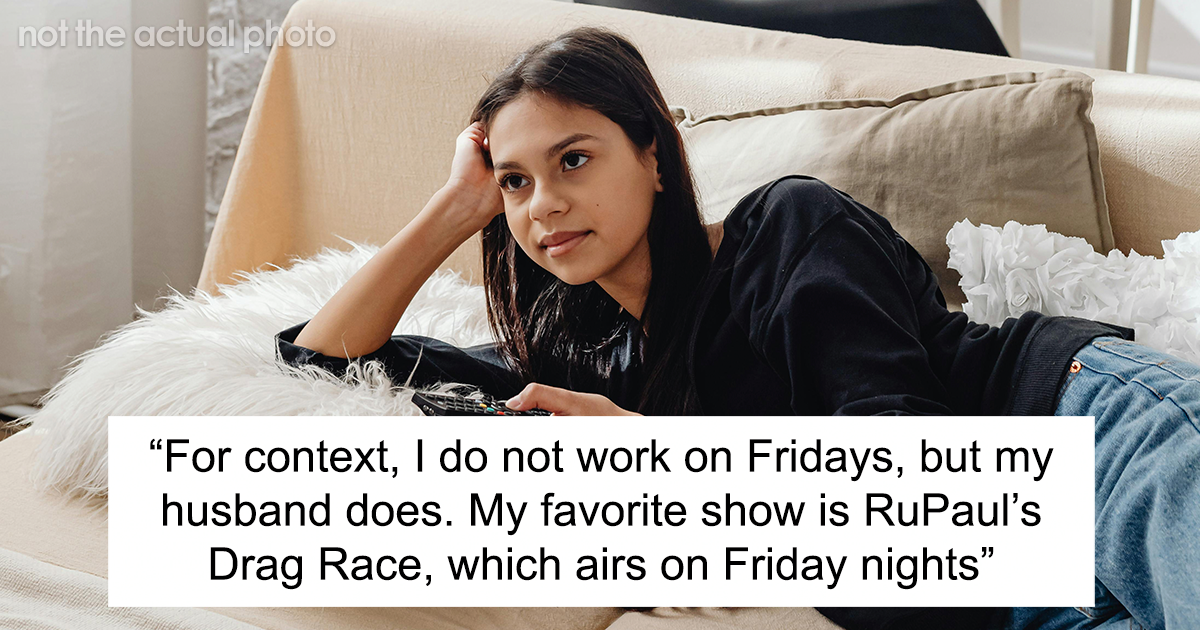
Every marriage has a remote-control battlefield. Some couples argue about thermostat settings. Some debate whether decorative pillows are actually useful or just tiny fabric obstacles. And then there are couples who find themselves in a full-blown household crisis because one person loves RuPaul’s Drag Race and the other suddenly needs to evacuate the room like the Werk Room has been declared a hazmat zone.
The viral story behind the title “Man Needs To Leave The Room Anytime Wife Puts On ‘RuPaul’s Drag Race’, She Continues Doing It” taps into something bigger than one TV show. On the surface, it sounds like a funny domestic disagreement: wife presses play, husband disappears, wife keeps pressing play. But underneath the glitter, shade, runway music, and dramatic lip-sync energy, there is a serious relationship question: when does a personal preference become a boundary, and when does a boundary become a way to control someone else’s harmless joy?
This article looks at the situation through pop culture, marriage communication, LGBTQ representation, shared living-space etiquette, and the delicate art of not turning a television into a relationship referee. Because sometimes the issue is not the show. Sometimes the issue is the conversation nobody wants to have.
Why This Drag Race Argument Hit Such A Nerve
RuPaul’s Drag Race is not just another reality competition. Since its 2009 debut, the series has become a mainstream pop culture machine, blending fashion, comedy, performance, choreography, confessionals, rivalry, vulnerability, and enough catchphrases to decorate an entire coffee mug aisle. RuPaul serves as host, judge, and mentor, while contestants compete for the title of America’s Next Drag Superstar.
For fans, the show is comfort television with rhinestones. It is theatrical, emotional, silly, sharp, and often surprisingly heartfelt. Contestants talk about family rejection, self-expression, chosen family, confidence, ambition, and identity. One episode may feature a ridiculous acting challenge; the next may have viewers crying into their snacks. That emotional range is part of the appeal.
For non-fans, however, Drag Race can feel loud, chaotic, inside-jokey, and overwhelming. The show moves fast. The humor is campy. The fashion is exaggerated. The editing is dramatic. The fandom has its own language. If someone is not used to drag performance or queer pop culture, they may feel like they accidentally walked into the final exam of a class they never attended.
That difference in reaction is normal. The problem begins when dislike turns into disgust, mockery, judgment, or an expectation that another adult should stop enjoying something harmless just because their partner does not personally enjoy it.
Is This About A TV Show Or A Relationship Boundary?
The phrase “he needs to leave the room” is doing a lot of work here. If the husband simply dislikes the show, leaving the room is a reasonable solution. Adults do not have to share every interest. A healthy marriage can survive one partner loving drag competitions and the other preferring football, documentaries, woodworking videos, or sixteen-part YouTube reviews of lawn equipment.
But if he presents his discomfort as an emergency every time the show appears, the wife may feel that her harmless entertainment is being treated like a personal offense. On the other hand, if she deliberately puts the show on to annoy him after he says it bothers him, that can start to feel less like fandom and more like poking the bear with a sequined stick.
One partner has a right to enjoy the show
A spouse should not have to give up a favorite program because the other person finds it embarrassing, unfamiliar, or outside their comfort zone. Watching RuPaul’s Drag Race is not a betrayal. It is not a household emergency. It is television. If the wife enjoys the artistry, humor, runway looks, and emotional stories, that enjoyment deserves basic respect.
The other partner has a right to opt out
At the same time, nobody should be forced to watch a show they dislike. Shared living does not mean shared eyeballs. If the husband genuinely feels uncomfortable, overstimulated, annoyed, or simply uninterested, he can leave the room, put on headphones, read, cook, exercise, or do literally anything else besides turning the living room into a courtroom.
The real issue is intention
The marriage problem is not “wife watches drag show.” The problem is whether either partner is using the situation to dismiss the other. Is he trying to shame her? Is she trying to provoke him? Are they joking playfully, or has the joke turned into resentment wearing a wig?
What RuPaul’s Drag Race Represents To Many Viewers
Part of the reason this story sparked strong reactions is that RuPaul’s Drag Race is closely tied to LGBTQ visibility. Drag has deep roots in performance, nightlife, theater, queer community, satire, and resistance. The show helped introduce mainstream audiences to drag as an art form that combines costume design, makeup, comedy, dance, acting, impersonation, storytelling, and stage presence.
For many viewers, the program is not only entertainment. It is representation. It is a place where queer creativity is not hidden in the corner but placed center stage with lighting, applause, and a wind machine that appears to have union benefits.
That matters because media can influence how people understand communities different from their own. When people see LGBTQ performers as funny, talented, complicated, ambitious, and human, it can challenge stereotypes. The show is not perfect, and fans have debated its choices for years, but its cultural impact is undeniable.
So when someone reacts to Drag Race with immediate rejection, some viewers wonder: is this just personal taste, or is something deeper going on? That question is fair, but it should be handled carefully. Not liking a show does not automatically make someone prejudiced. However, if the discomfort is specifically about drag, queer expression, gender nonconformity, or LGBTQ visibility, then the person should honestly examine that reaction.
Why Couples Fight About Entertainment Choices
TV arguments are rarely only about TV. They are about space, respect, habits, volume, timing, control, identity, and whether one person feels considered. A couple may say, “We’re fighting about the show,” when the real fight is, “Do my preferences matter in this home?”
Shared entertainment can strengthen a relationship when both people enjoy it. Couples often bond over favorite series, recurring jokes, characters they love, or villains they hate with the intensity usually reserved for tax audits. A show can create a private language: quotes, memes, rituals, snacks, and weekly routines. That shared fictional world can become part of the relationship’s culture.
But not every show becomes a couple show. Sometimes one partner’s comfort watch is the other partner’s personal endurance test. Problems happen when couples assume love requires identical taste. It does not. Love requires curiosity, kindness, compromise, and occasionally accepting that your partner’s favorite content may sound like a glitter cannon fired inside a theater camp.
How The Husband Could Handle It Better
If the husband truly cannot stand RuPaul’s Drag Race, he has options that do not involve making his wife feel guilty. The first step is to explain the discomfort without insulting the show or the people on it. There is a huge difference between saying, “The fast editing and shouting stress me out after work,” and saying, “I can’t believe you watch this garbage.”
The first statement explains a personal reaction. The second attacks her taste. One opens a conversation. The other drops a smoke bomb and runs.
He could say: “I know you enjoy this, and I’m not asking you to stop. It is not my thing, so when you watch it, I’m going to do something else. Could we also choose a few nights for shows we both like?” That is calm, adult, and far less dramatic than fleeing the room like a queen just revealed a second wig under the first wig.
How The Wife Could Handle It Better
The wife also has a role. If she knows the show bothers him and intentionally puts it on at moments when he is trying to relax in the shared space, that may not be kind. Being right does not automatically make a person generous. A partner can have every right to watch a show and still choose timing with consideration.
She could ask: “Are you uncomfortable with the show itself, or do you just not like the noise and style?” That question matters. If the issue is sensory overload, maybe headphones solve it. If the issue is unfamiliarity, maybe she can explain why she loves it. If the issue is judgment toward drag or LGBTQ people, then the conversation needs to go deeper.
She should not have to shrink her interests to protect his ego. But if she wants a peaceful home, she can avoid turning every episode into a loyalty test. Marriage is not a reality competition, even if some couples do seem determined to lip-sync for their lives over the remote.
A Practical Compromise For Shared Living Rooms
Here is the simple, unglamorous solution: schedule and separate. The wife can watch Drag Race when she wants, especially during her own downtime. The husband can leave without making a scene. If the living room is the only comfortable screen, they can agree on certain windows for solo shows and certain windows for shared viewing.
Try the “no commentary” rule
If one partner is watching a favorite show, the other should not hover nearby making sarcastic remarks. Nothing ruins a comfort show faster than someone narrating their disapproval from the doorway like a disappointed sports announcer.
Use headphones when possible
If sound is the issue, headphones can save the day. Many entertainment conflicts are actually volume conflicts wearing a fake mustache.
Create a shared-show list
Couples should have a few shows they watch together, separate from solo favorites. That way, one person’s individual entertainment does not feel like rejection. The marriage gets its shared rituals, and each person keeps their own little media kingdom.
Do not weaponize discomfort
If someone says, “This bothers me,” do not immediately use that thing as a button to push. And if someone says, “I enjoy this,” do not treat their joy as a character flaw. Both habits create resentment faster than a bad makeover challenge.
The Bigger Lesson: Respect Is More Attractive Than Control
The healthiest response is not for the husband to demand the show disappear. It is not for the wife to blast it at full volume every time he enters the room. The healthiest response is mutual respect. She gets to enjoy her show. He gets to opt out. Neither person gets to belittle the other.
A secure partner can say, “That’s not for me, but I’m glad it makes you happy.” A considerate partner can say, “I’ll watch it now, and later we’ll pick something together.” Notice how neither sentence requires a dramatic exit, a moral debate, or a couch cushion thrown in slow motion.
When couples learn to handle small conflicts well, they build trust for bigger ones. Today it is RuPaul’s Drag Race. Tomorrow it may be holiday plans, money, parenting, chores, or whether the dishwasher should be loaded like a puzzle or like a raccoon got inside. Small disagreements are practice rounds for emotional maturity.
Related Experiences: When One Person’s Favorite Show Becomes A Household Event
Many couples have their own version of the Drag Race dilemma. One partner loves true crime documentaries, while the other cannot understand why bedtime entertainment must involve three mysterious disappearances and a suspicious neighbor named Gary. One partner loves sports and yells at the television as if the quarterback is receiving direct coaching through the drywall. One partner loves cooking competitions, while the other keeps asking why everyone is crying over risotto. Every home has a genre that tests somebody’s patience.
One common experience is the “background show” problem. A person says, “I’m just putting it on while I fold laundry,” but suddenly the entire house is living inside that show’s soundscape. The theme song repeats. Judges shout. Contestants gasp. Commercials boom. The other partner may not be watching, but they are definitely participating against their will. In that case, the solution is not shame. It is volume control, headphones, or a different room.
Another experience is the “identity show” problem. Some shows are not just entertainment; they reflect who someone is, what they value, or where they feel seen. For a fan of RuPaul’s Drag Race, the show may represent creativity, resilience, humor, queer visibility, and self-confidence. When a spouse mocks it, the fan may hear more than “I dislike this program.” They may hear, “I dislike something that matters to you.” That is why tone matters so much.
There is also the “forced conversion” mistake. A fan loves a show so deeply that they become convinced their partner simply needs more exposure. Episode one becomes episode five. A short clip becomes a full marathon. Suddenly, the reluctant spouse is being educated, initiated, and emotionally held hostage by the pause button. Enthusiasm is wonderful, but it should come with an exit door.
The best couples usually find a rhythm. They create solo-show time without guilt. They create shared-show time without eye-rolling. They allow each other to have separate tastes because independence is not a threat to intimacy. In fact, separate interests can make a relationship more interesting. One person brings drag references. The other brings barbecue techniques, baseball statistics, fantasy novels, or oddly passionate opinions about vacuum cleaners. Together, they become a tiny, chaotic library of human preference.
So if your partner loves a show you cannot stand, try curiosity before criticism. Ask what they enjoy about it. Maybe you will still hate it. That is allowed. But you may understand your partner better, which is the real prize. No crown required.
Conclusion
The story of a man needing to leave the room anytime his wife puts on RuPaul’s Drag Race is funny because it sounds extreme, but it is relatable because every couple has a version of it. The show itself is not the villain. The remote is not the villain. Even the dramatic exit is not automatically the villain. The real issue is whether two people can respect each other’s comfort, identity, taste, and space without turning a harmless TV preference into a power struggle.
A good marriage does not require both partners to love the same shows. It requires enough emotional maturity to say, “Enjoy your thing,” and enough kindness to say, “I will not use my thing to annoy you.” That is not only better communication; it is also much cheaper than couples therapy and easier than explaining to guests why the living room has become a runway-adjacent conflict zone.
Note: This article is written for entertainment and relationship-discussion purposes. It does not diagnose either spouse, and it treats the viral scenario as a broader example of boundaries, shared space, and pop culture disagreements in modern relationships.