Kelly Rowland has never needed a red carpet to prove she knows how to command a room. Still, at the Cannes Film Festival, one brief staircase moment turned into a full internet courtroom drama, complete with slow-motion clips, lip-reading theories, celebrity commentary, and the world’s favorite sport: judging a woman’s reaction without standing in her shoesor her couture gown.
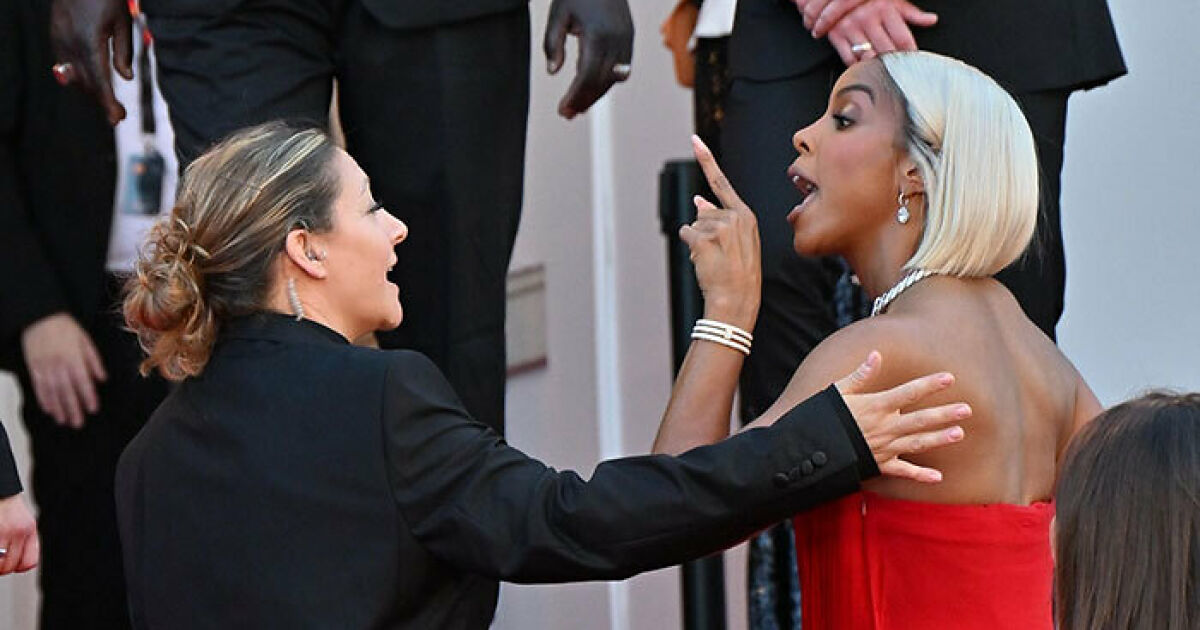
The viral moment happened during the 2024 Cannes Film Festival as Rowland attended the premiere of Marcello Mio. Dressed in a striking red gown, the singer and actress appeared to be guided up the famous Palais des Festivals steps by event staff. What began as a glamorous photo call quickly became tense when Rowland turned toward a female security staffer and appeared to push back verbally. Photos and videos showed her raising a finger, speaking firmly, and refusing to simply smile through whatever had just happened.
Almost immediately, the clip sparked a familiar debate: Was Kelly Rowland being difficult, or was she standing up for herself? According to reports citing an insider close to the situation, Rowland was not worried about being labeled a “diva” if the moment meant defending her boundaries. And honestly, in a celebrity culture where everyone wants authenticity until authenticity raises its voice, that response landed like a mic drop.
What Happened On The Cannes Red Carpet?
The Cannes red carpet is not a casual stroll. It is a highly choreographed, heavily photographed, tightly timed parade of movie stars, musicians, models, filmmakers, influencers, and people who look like they were born knowing where the camera is. Security and ushers are tasked with moving guests along, keeping the stairs clear, and making sure the event runs smoothly. That sounds simple until you add gowns with trains, camera crews, screaming fans, global media, and approximately 900 people trying to look effortless at once.
Rowland was seen smiling, waving, and posing before the exchange became visibly heated. Reports described a staffer repeatedly directing her up the stairs while photographers were still capturing the moment. At one point, Rowland appeared to stop and address the staffer directly. The singer later explained that she had a boundary and stood by it, suggesting that the interaction crossed a line for her.
Online viewers quickly analyzed every frame. Some believed the staffer touched or crowded Rowland too closely. Others argued that security was simply doing its job. A few people, because the internet cannot resist a plot twist, tried to turn the whole thing into a personality trial. But the key issue was not whether Rowland smiled enough, posed long enough, or spoke softly enough. The bigger question was whether a public figure has the right to object when she feels rushed, touched, dismissed, or treated differently.
Why The “Diva” Label Followed Her So Quickly
The word “diva” has a complicated life. Technically, it once referred to a celebrated female opera singer. In pop culture, it can mean talented, glamorous, powerful, dramatic, demanding, or “woman who did not say thank you while being inconvenienced.” It depends on who is using it and how much they enjoy double standards.
In Rowland’s case, the label appeared almost instantly. A source reportedly said she “doesn’t care” if she comes across that way when she is advocating for herself. That line became the heart of the story because it shifted the narrative from red carpet drama to self-respect. In other words: call it diva behavior if you want, but she was not going to pretend everything was fine for the sake of a smoother headline.
This is why the incident resonated with many fans. Kelly Rowland is not new to fame. She rose to global recognition as part of Destiny’s Child, built a solo career, worked in film and television, and spent decades navigating public attention. Someone with that level of experience likely understands red carpet protocol. So when she visibly objected, supporters argued that something must have felt off enough for her to stop the pageant smile and address it.
Kelly Rowland’s Response: Boundaries, Respect, And Standing Ground
After the clip went viral, Rowland addressed the confrontation directly. She did not offer a long apology tour. She did not over-explain every second. Instead, she said she stood her ground and made it clear that she has boundaries. That response was simple, firm, and very on-brand for anyone who has ever had to say, “No, actually, you may not treat me like that,” while everyone around them hoped they would just keep walking.
Rowland also suggested that other women on the carpet who did not look like her were not treated the same way. That comment widened the conversation beyond etiquette and into race, gender, and visibility. For many observers, the incident became another example of how Black women in entertainment can be criticized not only for what they do, but for the tone, volume, facial expression, timing, and hand gesture they use while doing it.
Whether one sees the Cannes exchange as a misunderstanding or a meaningful boundary-setting moment, Rowland’s reaction raised an important point: respect is not a luxury item reserved for the calmest person in the room. Sometimes people are calm because they are being respected. Sometimes they are not calm because they have reached the limit of being handled, hurried, or talked over.
The Cannes Security Debate Got Bigger Than One Clip
The story did not stay focused only on Rowland. Soon after, other red carpet moments involving Cannes security circulated online, including separate incidents with actress Massiel Taveras and K-pop star YoonA. Those clips fueled speculation that the issue might not have been just one celebrity having a bad day. Viewers began asking whether some staffers were being too aggressive in moving women along the carpet, especially when elaborate gowns and major photo opportunities were involved.
To be fair, Cannes security operates under pressure. The festival is one of the most prestigious film events in the world, and the red carpet must move with military-level precision. If one guest pauses too long, the schedule can jam up like a printer five minutes before a deadline. Staffers have a job to do, and that job is not easy.
But pressure does not erase the need for professionalism. A red carpet is not an airport boarding line. Celebrities are invited to be photographed, designers rely on those images, studios want visibility, and fans expect the glamour. The entire machine depends on people being seen. So when security appears to block, rush, touch, or scold a guest during that carefully staged visibility, the optics become messy fast.
Why Fans Defended Kelly Rowland
Many fans defended Rowland because they saw her response as controlled, not chaotic. She did not throw anything. She did not storm the carpet like a reality-show reunion. She appeared to speak firmly, make her point, and move on. In the grand museum of celebrity meltdowns, this was less “scandal” and more “woman declines to be publicly manhandled.”
Supporters also pointed out Rowland’s long-standing public image. She is often described as warm, gracious, and professional. Even hosts and entertainment commentators who discussed the Cannes incident later defended her composure. That matters because the “diva” label can become sticky, especially when attached to women who ask for basic respect in high-pressure environments.
Fans also connected the incident to everyday experiences. You do not need a Cannes invitation to understand what it feels like to be rushed by someone who has decided your comfort is irrelevant. It can happen in a workplace, a restaurant, an airport, a doctor’s office, or a crowded event. Most people have had a moment where they tried to stay polite until something in them finally said, “Enough.” Rowland’s red carpet moment was simply that feeling with better lighting and more diamonds.
Was Kelly Rowland Right To Speak Up?
Based on what is publicly known, Rowland had every right to speak up if she felt her boundary was crossed. That does not mean every viewer must interpret the clip the same way. Short videos rarely provide the full emotional weather report. They show the thunder, not always the humidity that caused it.
Still, the reaction to Rowland says a lot about how society treats public self-advocacy. When a celebrity smiles through discomfort, people call her poised. When she objects, people call her difficult. When she explains herself, people call it damage control. When she refuses to over-explain, people say she must be hiding something. It is a game with rules written in disappearing ink.
Rowland’s response cut through that. She did not beg the internet to approve her tone. She did not shrink the moment into a harmless misunderstanding. She said, in effect, that she knew what happened and stood by her boundaries. That is not diva behavior. That is adult behaviorjust dressed better than most of us will ever manage on a Tuesday.
The Real Lesson: Boundaries Are Not Bad Manners
The strongest takeaway from the Kelly Rowland Cannes security incident is that boundaries are not bad manners. They are the invisible velvet rope around a person’s dignity. Everyone has one. Some people just get criticized more harshly when they enforce it.
In entertainment, especially on red carpets, celebrities are expected to be endlessly available. Smile here. Turn there. Wave now. Move faster. Pose slower. Be glamorous, but not vain. Be grateful, but not passive. Be confident, but never intimidating. That is a lot to ask from anyone, even someone who has been famous since the era when matching girl-group outfits were practically national monuments.
Rowland’s moment reminded people that a glamorous setting does not make discomfort less real. A couture gown does not cancel personal space. A camera flash does not require silence. And being a celebrity does not mean someone must accept disrespect because the event has a schedule.
How The Internet Turned A Few Seconds Into A Cultural Conversation
The Cannes clip went viral because it contained all the ingredients the internet loves: a famous person, a luxury setting, a visible confrontation, and just enough missing context for everyone to become an overnight expert. Within hours, people were debating body language, lip-reading possible phrases, comparing treatment of other stars, and revisiting past stories about Rowland’s public appearances.
That speed is both fascinating and exhausting. Viral culture often treats people like puzzle pieces instead of full human beings. A few seconds of footage can become a personality profile. A facial expression can become evidence. A raised finger can become a think piece, a meme, and a moral referendum before lunch.
But in this case, the conversation also opened a useful door. It allowed people to discuss how quickly assertive women are labeled difficult. It encouraged fans to examine the difference between professionalism and passivity. It also highlighted how race can shape public perception, particularly when Black women are expected to absorb disrespect quietly to avoid being stereotyped as angry or demanding.
Experience-Based Takeaways: What This Moment Teaches Beyond Cannes
Most people will never walk the Cannes red carpet, but almost everyone will face a version of the Kelly Rowland moment. It might happen at work when a manager talks down to you in front of colleagues. It might happen at a family gathering when someone disguises disrespect as a joke. It might happen in a crowded venue when a staff member moves you along with more force than necessary. The setting changes, but the internal calculation is the same: Do I let this slide, or do I say something?
The first lesson is that boundaries work best when they are clear. You do not always need a speech. Sometimes a firm sentence is enough. “Please don’t touch me.” “Don’t speak to me that way.” “I need a moment.” These phrases are not rude; they are practical. They tell the other person where the line is before the situation becomes messier. In Rowland’s case, the public may not know every word exchanged, but her body language communicated that a line had been reached.
The second lesson is that tone policing can distract from the actual issue. People often focus on how someone objected instead of asking why they had to object in the first place. Was the person rushed? Was their space invaded? Were they spoken to disrespectfully? Did others receive more patience? These questions matter. A perfect tone should not be the entrance fee for being treated fairly. Humans are not customer service chatbots with cheekbones.
The third lesson is that self-advocacy can feel uncomfortable, especially in public. Many people stay quiet because they fear being labeled dramatic, sensitive, ungrateful, or yes, a diva. But silence can come with its own cost. When you repeatedly ignore your own discomfort to keep others comfortable, resentment builds. Speaking up early and clearly can prevent a small boundary issue from becoming a full emotional fireworks show.
The fourth lesson is that context matters. Security staff, service workers, assistants, and event teams often deal with intense pressure. They deserve respect too. But professionalism must go both ways. A person doing a difficult job still has a responsibility to communicate respectfully, especially in a public environment where touch, tone, and urgency can easily be misread or mishandled. The best event teams know how to guide without humiliating, redirect without grabbing, and keep things moving without making guests feel like luggage on a conveyor belt.
Finally, the Rowland incident is a reminder that dignity does not need public approval. You may look too firm to one person and perfectly reasonable to another. You may be misunderstood by people who saw only the final five seconds. You may even be called names by strangers who were not there, which is basically the internet’s version of cardio. But if you know a boundary was crossed, standing up for yourself is not a scandal. It is self-respect with posture.
Conclusion
Kelly Rowland’s Cannes security exchange became viral because it looked dramatic, but it lasted because it touched something deeper. It was not only about a red dress, a staircase, or a tense interaction with an usher. It was about boundaries, respect, race, gender, celebrity expectations, and the way public opinion can turn a woman’s self-defense into a character flaw.
Whether one calls it a red carpet clash or a boundary-setting moment, Rowland made one thing clear: she was not interested in pretending discomfort was elegance. If that makes her look “like a diva” to some, then perhaps the word needs an upgrade. Sometimes a diva is just a woman who knows exactly where her line isand refuses to let anyone step over it in designer heels.