There is a certain magic in the French word joie. It is small enough to fit on a café napkin, yet big enough to rearrange your entire life. Pronounced like “zhwah,” it means joy, but not the confetti-cannon kind that requires a marching band, a promotion, or a dessert with sparklers. Joie is quieter. It is the pleasure of butter melting into a warm baguette, the elegant drama of a single flower in a chipped vase, the decision to use the good plates on a Tuesday because Tuesday, frankly, has been through enough.
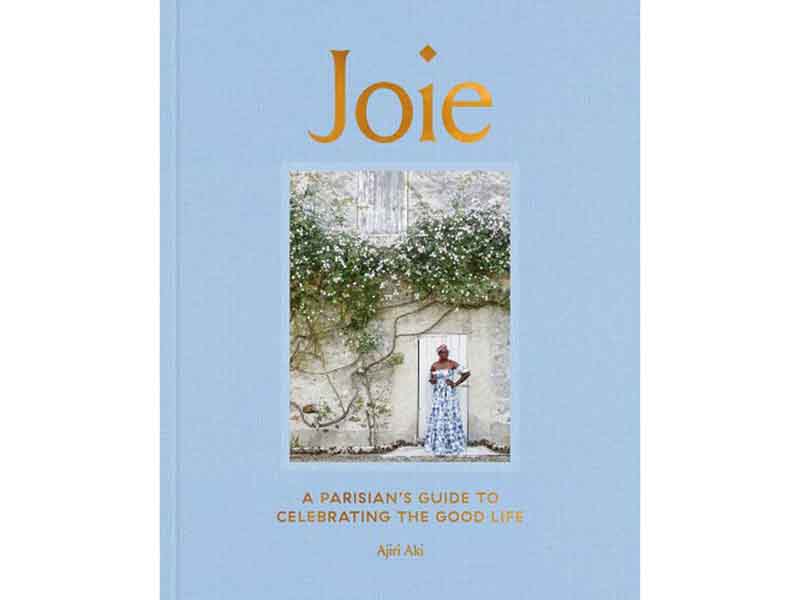
Joie: A Parisian’s Guide to Celebrating the Good Life by Ajiri Aki has become a beautiful modern invitation to this mindset. Aki, an American expat in Paris and founder of the French lifestyle brand Madame de la Maison, writes about the Parisian art of living through the lens of food, gathering, antiques, beauty, leisure, and everyday rituals. The book is not merely about how to look Parisian, although a striped shirt may wander through the scene looking suspiciously chic. It is about how to live with more attention, more pleasure, and less waiting for “someday.”
In a culture that often treats busyness like a competitive sport, the Parisian idea of the good life feels almost rebellious. It says: slow down, sit at the table, taste your coffee, greet the shopkeeper, walk without turning your phone into a tiny demanding boss. The good life is not always expensive, grand, or Instagram-ready. Sometimes it is a clean tablecloth, a market peach, a handwritten note, and the heroic act of doing nothing for fifteen minutes without apologizing.
What Does “Joie” Really Mean?
At its heart, joie is the joy of living deliberately. It is closely connected to the famous French phrase joie de vivre, or joy of life. But this does not mean floating through Paris in a perfume commercial while violins follow you around. Real joie is practical. It is choosing beauty where you can, savoring what you already have, and creating moments that make ordinary life feel cared for.
In Aki’s world, joie shows up through rituals: hosting an apéro before dinner, lingering at a café, wandering like a flâneur, shopping for vintage treasures, setting a table with intention, and refusing to save meaningful objects for an imaginary perfect occasion. The message is refreshingly human: use the good china now. Light the candle now. Wear the earrings now. Life is not a waiting room for the weekend.
Joie Is Not LuxuryIt Is Attention
One of the most useful lessons from Parisian lifestyle culture is that pleasure does not have to be extravagant. A single excellent croissant eaten slowly can feel richer than a rushed brunch that requires a spreadsheet, two reservations, and emotional support shoes. Joie is not about owning more. It is about noticing more.
This is why Parisian living often feels so seductive. The city turns small gestures into rituals. Bread is not just bread; it is the reason to visit the boulangerie. Coffee is not merely caffeine; it is a pause. Flowers are not decoration; they are a reminder that the room is alive. Even a walk can become a form of art when you stop treating it like transportation and start treating it like discovery.
The Parisian Good Life Begins at the Table
If Paris had a love language, it would probably involve a table. The French approach to food is not only about cuisine; it is about rhythm, conversation, and respect for ingredients. The table is where ordinary time becomes shared time. This is why the Parisian guide to celebrating the good life begins not with a shopping list, but with an attitude: sit down, stay awhile, and let the meal matter.
The French gastronomic tradition values convivialitythe pleasure of eating together. That spirit does not require a seven-course dinner or a culinary degree. It can be as simple as olives, cheese, radishes with butter, a loaf of bread, and friends who are willing to talk about something other than deadlines. A Parisian-style gathering does not scream for perfection. It whispers, “Come as you are, but please admire this napkin.”
The Art of the Apéro
The apéro, short for apéritif, is one of the most charming French rituals. It is the little bridge between the workday and dinner, between hurry and ease. In Paris, an apéro might include a glass of wine, sparkling water, nuts, charcuterie, cheese, crackers, or whatever is delicious and requires minimal panic.
The genius of the apéro is that it removes pressure. You are not hosting a state banquet. You are opening the evening. The food can be simple, the table can be casual, and the conversation can do the heavy lifting. A good apéro says, “I wanted to see you,” not “I spent six hours wrestling a soufflé and now need applause.”
Use the Good Plates
Aki’s philosophy strongly encourages using treasured things now rather than saving them for some grand future moment. This is perhaps the most emotionally powerful part of the good-life mindset. Many people own objects that carry memory: inherited dishes, a linen tablecloth, a teapot, crystal glasses, embroidered napkins, silver spoons, or a candleholder that looks like it has survived three dramatic family secrets.
Joie asks a simple question: Why are these objects hidden? If beauty is tucked away forever, it becomes storage, not pleasure. Using meaningful things in daily life turns the ordinary into ceremony. Soup tastes better from a bowl with a story. Tea feels softer in a cup that belonged to someone you loved. Tuesday becomes less Tuesday-ish.
Walk Like a Flâneur: The Joy of Wandering
No Parisian guide would be complete without the flâneur, the leisurely urban stroller who wanders not to arrive, but to observe. Flânerie is the opposite of rushing with your eyebrows clenched. It is walking for the sake of seeing: the bakery window, the crooked balcony, the bookstore display, the stylish dog who appears to have better plans than you.
To practice flânerie anywhere, take a walk without turning it into exercise, productivity, or a podcast marathon. Notice colors, textures, sounds, and people. Look up at buildings. Peek into small shops. Let curiosity choose the route. The point is not to cover distance. The point is to recover attention.
How to Flâneur Without Moving to Paris
You do not need the Seine to practice Parisian slow living. Choose a neighborhood near you and pretend you are visiting it for the first time. Walk down a side street. Visit a local bakery, café, florist, or bookstore. Sit for ten minutes and watch life happen. The good life is often hiding in places you usually pass at full speed.
Try leaving your headphones at home once in a while. Listen to the city. Every place has its own music: bus brakes, birds, doors, bicycles, distant laughter, espresso machines, leaves, construction workers who seem committed to percussion. Flânerie turns background noise into atmosphere.
Parisian Style Is Really About Ease
When people think of Parisian style, they often imagine black blazers, red lipstick, ballet flats, and a woman who can tie a scarf while solving international diplomacy. But the deeper secret of Parisian style is not a uniform. It is ease. Parisian elegance tends to favor quality over quantity, personality over trend-chasing, and confidence over costume.
This same principle applies to interiors. A Parisian-inspired home does not need to look like a museum apartment with chandeliers and ancestral portraits. It needs soul. Mix old and new. Let objects have stories. Keep what is useful, beautiful, or emotionally alive. A flea-market chair, a stack of art books, a linen napkin, a small lamp, and fresh fruit in a bowl can create more atmosphere than a room full of expensive objects with no pulse.
Decorating With Joie
Decorating with joie means asking how a space feels, not just how it photographs. Does your kitchen invite you to cook? Does your table invite people to sit down? Does your bedroom help you exhale? Does your living room contain at least one object that makes you smile for no rational reason?
Parisian interiors often embrace imperfection. A worn wooden table can be more beautiful than a flawless one because it carries evidence of life. Scratches, patina, faded fabric, and mismatched chairs can create warmth. The goal is not sterile perfection. The goal is character. After all, if your home looks too perfect, everyone becomes afraid to eat crackers.
The Market as a Masterclass in Pleasure
Paris food markets are central to the city’s daily rhythm. They are places to buy produce, yes, but also places to practice attention. A market teaches seasonality, conversation, patience, and the joy of choosing ingredients with your senses. Tomatoes should smell like tomatoes. Cheese should look like it has opinions. Strawberries should make you briefly reconsider every packaged snack you have ever eaten.
The Parisian market habit can be adapted anywhere. Instead of shopping only by list, try shopping by freshness. Ask what looks good today. Build a simple meal around one beautiful ingredient: ripe peaches, good bread, fresh herbs, eggs, asparagus, mushrooms, or a wedge of cheese. This is not complicated cooking. It is respectful cooking.
A Simple Joie-Inspired Meal
For a relaxed Parisian-style meal, serve sliced tomatoes with olive oil and salt, a roast chicken or omelet, dressed greens, fresh bread, cheese, and fruit. Add sparkling water or wine, a candle, and cloth napkins if you have them. That is enough. In fact, “enough” might be the most underrated luxury in modern life.
The secret is not complexity. It is care. Put the food on real plates. Sit down. Let everyone serve themselves. Keep dessert simple. A square of chocolate, berries, or a tart from a bakery can close the meal beautifully. Nobody needs you to build a pastry tower unless you are auditioning for a cooking show or avoiding your inbox.
Conversation: The Invisible Ingredient
The Parisian good life is not only aesthetic; it is relational. Gathering matters because people matter. A table becomes meaningful through conversation, laughter, debate, memory, and the occasional strongly held opinion about cheese. Joie thrives when life is shared.
To host with this spirit, focus less on impressing and more on welcoming. Ask good questions. Put your phone away. Let the evening breathe. Do not rush to clear every plate the second someone sets down a fork. A little lingering is where the best parts of a meal often happen.
How to Host Without Losing Your Mind
Choose one thing to make and buy the rest. Set the table earlier in the day. Serve food family-style. Accept help. Keep drinks visible. Make a playlist. Remember that guests do not come over to grade your baseboards. They come for warmth, connection, and possibly the cheese.
A joyful host is not a frantic host. If something burns, call it “deeply caramelized” and move on. If the napkins do not match, congratulations: you have achieved charm. If the conversation is good, nobody will remember the tiny disasters anyway.
Leisure Is Not Laziness
One of the strongest lessons in Joie: A Parisian’s Guide to Celebrating the Good Life is that leisure is not a guilty pleasure. It is a human need. The French art of living often treats rest, meals, walks, and conversation as essential parts of life rather than rewards for finishing all tasks. This is a radical idea in a world where the task list regenerates like a villain in a superhero movie.
Leisure gives life texture. It allows memory to form. It helps us notice what we enjoy. Without leisure, even beautiful things become errands. A café becomes a caffeine stop. A walk becomes steps. Dinner becomes fuel. Joie restores the soul of these moments.
Make Room for Small Rituals
Start with one daily ritual. Drink coffee from a real cup. Buy flowers once a week, even inexpensive ones. Take a ten-minute walk after lunch. Light a candle while cooking dinner. Read a few pages before bed. Write a note instead of sending a text. These rituals do not solve every problem, but they create small islands of pleasure inside ordinary days.
The point is consistency, not extravagance. A ritual becomes powerful because you return to it. It tells your nervous system, “We live here. We are allowed to enjoy it.” That is joie in its most practical form.
of Personal Experiences Inspired by Joie
My favorite way to understand joie is to imagine a day built from small decisions rather than big achievements. The morning begins without theatrical ambition. No one wakes up glowing like a skincare advertisement. There is only coffee, a window, and the choice to sit down for five minutes instead of drinking it while answering emails with the energy of a cornered squirrel. That tiny pause changes the mood of the day. The coffee tastes better. The light looks softer. Even the spoon against the cup sounds like a polite little bell announcing, “You are alive. Please act accordingly.”
Later, there is a walk to buy bread. This sounds ordinary because it is ordinary, which is exactly why it works. The good life often arrives disguised as errands. On the way, there is a florist placing buckets of tulips outside, a dog refusing to cooperate with gravity, and a bakery window filled with pastries that look as if they were assembled by angels with excellent butter budgets. Nothing dramatic happens. Nobody receives life-changing news. Yet the walk feels full because attention has been invited back into the room.
At lunch, joie appears again in the form of a simple plate: eggs, greens, bread, a little cheese, maybe fruit. It is not fancy, but it is arranged with care. A napkin is folded. Water is poured into a glass instead of being chugged from a bottle while standing over the sink like a raccoon with deadlines. This is the quiet revolution of Parisian-inspired living: presentation is not vanity when it helps you honor the moment.
In the afternoon, there is the pleasure of using something beautiful for no reason. Maybe it is a vintage plate, a linen towel, a favorite perfume, or a pen that makes handwriting feel more intelligent than it actually is. Many people save their best things for guests, holidays, or some mythical future version of themselves who has perfect posture and organized drawers. Joie says: bring the beautiful thing into the day you already have.
Evening is where the philosophy becomes social. A friend stops by, and instead of apologizing for not preparing a “real dinner,” you put out olives, crackers, cheese, fruit, and something to drink. This is the apéro spirit at its finest. The table is not overloaded, but it is welcoming. The conversation starts slowly, then widens. Someone laughs too loudly. Someone tells a story they forgot they remembered. The room becomes warmer.
By the end of the night, nothing has been conquered, optimized, scaled, or monetized. But life has been tasted. That is the point. Joie is not an escape from reality. It is a deeper way of entering it. It teaches that the good life is less about waiting for extraordinary circumstances and more about treating ordinary circumstances with tenderness, humor, appetite, and style.
Conclusion: Celebrating the Good Life, Wherever You Are
Joie: A Parisian’s Guide to Celebrating the Good Life is more than a beautiful Paris lifestyle book. It is a reminder that joy is often available before life becomes perfect. You can practice joie through food, conversation, walking, decorating, hosting, resting, and noticing. You can use the good plates. You can buy the flowers. You can sit at the table. You can stop saving pleasure for a future that never sends a calendar invitation.
The Parisian good life is not about pretending to be French. It is about borrowing the wisdom of attention. Make the meal matter. Let beauty into daily routines. Gather people without turning hospitality into a performance review. Walk slowly enough to see your own neighborhood. Choose quality where you can, simplicity where you must, and humor whenever possible.
In the end, joie is a practice of saying yes to life in small, repeatable ways. It is not loud. It is not complicated. It is the candle at dinner, the bread from the bakery, the conversation after dessert, the chair by the window, the market peach, the friendly “bonjour,” the little pause that reminds you the good life may already be sitting at your table, waiting for you to notice.
Note: This HTML article intentionally excludes source links and citation placeholders so it can be copied cleanly for web publishing.