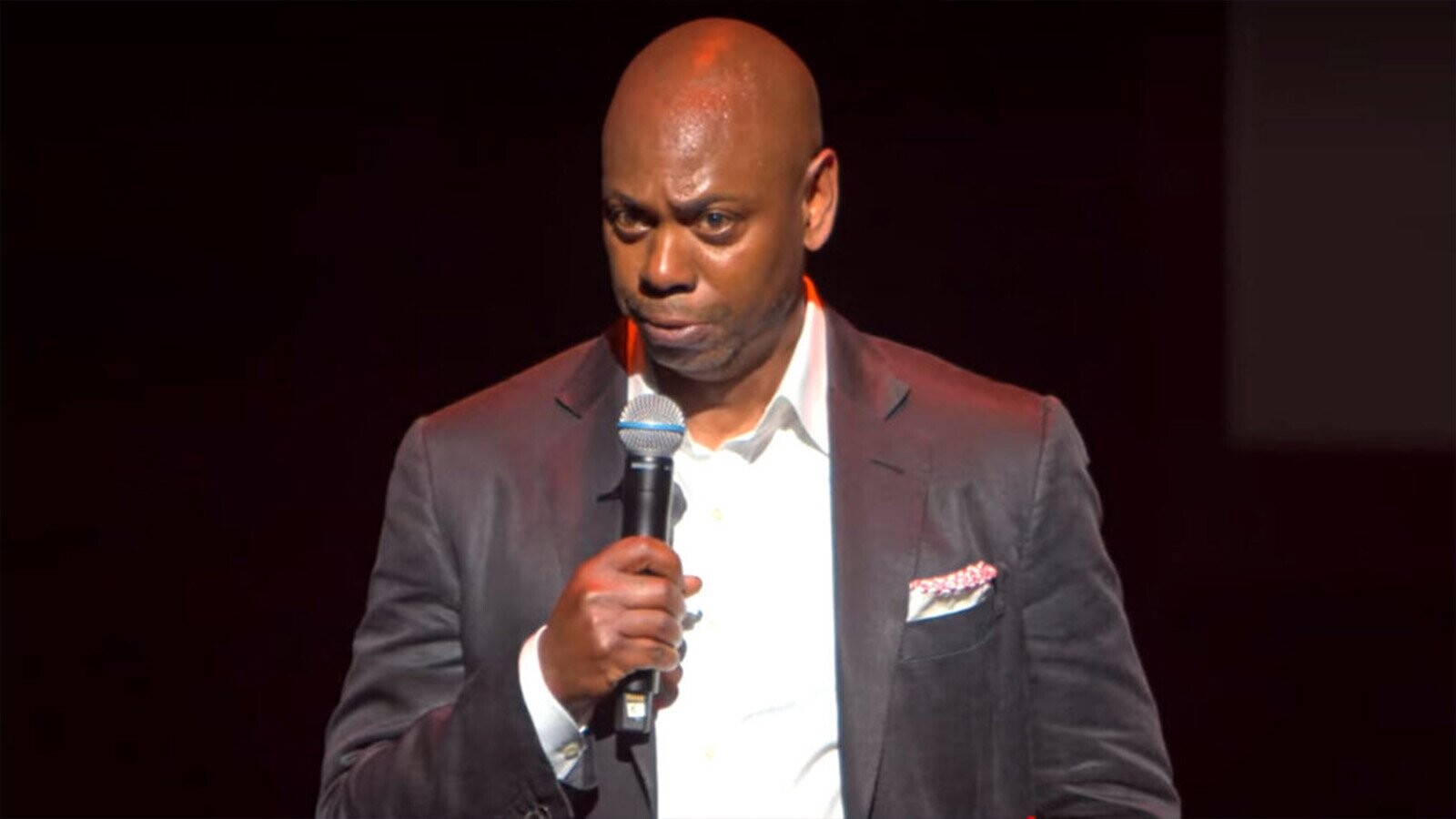
Jerrod Carmichael’s simmering disagreement with Dave Chappelle became a full-fledged comedy-world feud when Carmichael claimed the legendary comic expected a public apology for criticism of his transgender material. Beneath the sharp labels and headline-ready jokes, however, is a revealing argument about artistic growth, personal vulnerability, generational power, and what happens when one comedian challenges a hero who has become an institution.
A Comedy Feud With More Layers Than a Netflix Menu
Stand-up comedians regularly make careers out of saying what everyone else is afraid to say. The situation becomes considerably less comfortable when another comedian says something equally blunt about them.
That tension sits at the center of the disagreement between Jerrod Carmichael and Dave Chappelle. In a 2024 Esquire profile, Carmichael described Chappelle as an “egomaniac” and claimed the veteran comedian wanted him to apologize publicly after Carmichael criticized the direction of Chappelle’s comedy. According to Carmichael, Chappelle interpreted an artistic critique as a personal attack.
The dispute was not simply a case of two celebrities tossing insults across the internet. Carmichael had questioned whether Chappelle’s repeated attention to transgender issues was overwhelming the more personal, complicated, and revealing qualities that once made his work so influential.
Chappelle, as Carmichael tells it, did not hear a younger artist asking an admired comedian to dig deeper. He heard disrespect. And when famous comedians disagree about comedy, everybody suddenly becomes a constitutional scholar, cultural historian, amateur therapist, and open-mic booker before lunch.
How the Jerrod Carmichael and Dave Chappelle Beef Began
Carmichael’s 2022 Criticism Was About Legacy
The public conflict can be traced to Carmichael’s 2022 GQ profile, published shortly after the release of his HBO special Rothaniel. During the conversation, Carmichael criticized established comedians who treated “cancel culture” as their greatest creative emergency.
He then singled out Chappelle, questioning why so much of the conversation around one of America’s most celebrated comedians had become centered on his opinions about transgender people. Carmichael’s point was not that Chappelle lacked the right to discuss the subject. It was that the repetition threatened to flatten a much larger artistic legacy into one prolonged culture-war argument.
Carmichael also wondered why Chappelle’s newer work appeared less personally revealing than the material Carmichael admired. What did Chappelle fear? What did he love? What private contradictions shaped him? Carmichael believed those questions offered richer territory than another round of sparring with critics.
It was an unusually direct challenge because Carmichael was not dismissing Chappelle as untalented. Quite the opposite: he was arguing that Chappelle was too brilliant to remain creatively parked on the same controversial hill.
The Context of Chappelle’s Transgender Material
By then, Chappelle’s jokes about transgender identity had already generated years of debate. His 2021 Netflix special The Closer drew criticism from LGBTQ organizations, commentators, artists, and Netflix employees. Some workers organized a walkout, while Netflix leadership defended the company’s decision to keep the special available.
Supporters argued that stand-up comedy requires broad artistic freedom and that jokes should be considered within the context of a full performance. Critics responded that creative freedom does not place comedians beyond criticism, particularly when jokes repeatedly target a marginalized group.
Carmichael entered this already overheated debate from a different angle. He later emphasized that his central complaint was not primarily about whether Chappelle’s jokes were morally acceptable. He was making an artistic argument: the subject had become repetitive, impersonal, and less interesting than the performer discussing it.
Why Carmichael Called Chappelle an “Egomaniac”
When Carmichael revisited the disagreement in 2024, he said Chappelle had treated his observations as though he had simply declared war on Dave Chappelle, the man, the myth, and apparently the sovereign nation.
Carmichael claimed Chappelle wanted a public apology. That detail transformed a disagreement over material into a disagreement over hierarchy. A private conversation might have addressed hurt feelings or clarified intent. A public apology would have done something else: restored the senior comedian’s authority in front of the same audience that witnessed the criticism.
That is why the word “egomaniac” became the headline. Carmichael appeared to believe that Chappelle’s stature had made ordinary criticism feel intolerable. To Carmichael, an admired performer should be able to hear an uncomfortable opinion without demanding a ceremonial surrender.
There is an important qualification: the apology request was Carmichael’s account of a private conflict. Chappelle had not publicly confirmed that version when the dispute was widely reported. Responsible analysis therefore has to distinguish between Carmichael’s description and an independently documented demand.
The “Bravest Special for 1996” Joke Cut Deeper
Carmichael said Chappelle also mocked Rothaniel by calling it “the bravest special for 1996.” As a punchline, it suggests that coming out as gay was no longer culturally daring by 2022. Carmichael acknowledged that the line was funny, but he also identified its uncomfortable irony.
Rothaniel was not merely an announcement about sexuality. Recorded at New York’s Blue Note Jazz Club and directed by Bo Burnham, the special explored Carmichael’s real name, family secrets, shame, religion, infidelity, and the consequences of coming out to relatives whose acceptance was uncertain. Its quiet staging made the audience feel less like ticket holders and more like witnesses at a confession.
Carmichael’s response was that jokes minimizing the difficulty of coming out help explain why it can remain difficult. Legal and cultural progress does not automatically erase family rejection, religious conflict, professional anxiety, or the fear of becoming a permanent punchline.
The disagreement therefore reflected two different comic instincts. Chappelle’s reported joke reduced the situation to a sharp cultural observation. Carmichael focused on the private emotional cost hidden beneath that observation.
Two Very Different Ideas of Great Stand-Up
Chappelle as the Commanding Social Commentator
Chappelle’s modern performances often position him as an authoritative observer of race, celebrity, politics, media, and social conflict. He is comfortable slowing down, challenging an audience, and defending an argument long after the original controversy has left the news cycle.
To his admirers, that confidence is precisely the point. They see a comedian unwilling to soften his voice merely because critics, corporations, or online campaigns object. His supporters also argue that isolating individual lines can remove the narrative structure and tension that give a stand-up routine its meaning.
Carmichael as the Uncomfortable Confessor
Carmichael’s recent work moves in almost the opposite direction. Rather than standing above the audience as a philosopher, he repeatedly places himself on the examination table. Rothaniel turned family trauma and sexuality into material. The 2024 Jerrod Carmichael Reality Show extended that commitment to exposure, following his relationships, friendships, family conflicts, and frequently questionable decisions.
His comedy asks, “What am I hiding?” Chappelle’s often asks, “What is society refusing to admit?” Neither approach is automatically superior. The feud became compelling because Carmichael argued that Chappelle’s social commentary would be stronger if he aimed more of that ruthless curiosity inward.
The Twist: Carmichael Later Regretted Taking the Criticism Public
About two weeks after the “egomaniac” comments circulated, Carmichael complicated the story during an appearance on The Breakfast Club. He said he deeply regretted discussing Chappelle with the press and emphasized that he remained a major admirer of Chappelle’s talent.
That was not a total withdrawal of his artistic criticism. Carmichael continued to suggest that Chappelle devoted too much material to transgender people and clarified that his objection was not primarily a declaration about the morality of the jokes. He wanted Chappelle to direct his abilities toward subjects that revealed more of his inner life.
In other words, Carmichael apologized for the venue and public handling of the disagreement more than for having an opinion. That distinction matters. He appeared to recognize that a media interview is poorly designed for delivering constructive feedback to someone one respects. Headlines preserve the insult and compress the admiration into a tiny carry-on bag that gets lost at the airport.
The reversal also made the feud more human. Carmichael could believe Chappelle reacted egotistically while simultaneously regretting that he helped turn a complicated artistic disagreement into entertainment news. People can be angry, admiring, disappointed, and embarrassed at the same time. Emotional consistency is mostly a luxury enjoyed by fictional characters and people who have never opened a group chat.
What the Feud Says About Power in Comedy
Stand-up celebrates rebellion, but the comedy business still has hierarchies. Established performers can influence careers, audiences, industry relationships, and the boundaries of acceptable criticism. Younger comedians may be encouraged to attack institutions while quietly learning that certain individuals have become institutions themselves.
A public apology in such an environment is not necessarily a simple expression of regret. It can become a performance of loyalty. The person apologizing acknowledges not only that the words caused offense, but that the other person possessed the status to demand a correction before the crowd.
Carmichael’s resistance challenged that expectation. His argument suggested that reverence should not eliminate peer criticism. Chappelle’s accomplishments can be enormous, and another comedian can still find portions of his recent work repetitive or emotionally distant. Both statements can occupy the same room without security being called.
The controversy also highlights a larger problem in modern comedy: criticism is increasingly treated as censorship. A negative review, social-media backlash, employee protest, or disagreement from another comedian may be unpleasant, but none automatically prevents a performer from speaking. Chappelle continued releasing major specials and attracting large audiences throughout the controversy surrounding his material.
Free expression protects the joke. It also protects the person who says the joke has become predictable.
Experiences This Comedy Beef Mirrors in Real Life
The Carmichael-Chappelle dispute resonates beyond entertainment because it resembles situations that occur in offices, creative teams, families, classrooms, and friendships. Remove the Netflix contracts and HBO cameras, and the emotional machinery is remarkably familiar.
Criticizing Someone You Once Idolized
One of the most difficult professional experiences is realizing that admiration does not require permanent agreement. A young writer may love an editor’s early work but dislike the editor’s current direction. An employee may respect a founder while questioning a new strategy. A musician may treasure an influence while believing that influence has stopped evolving.
The criticism can feel especially dangerous because it threatens two relationships at once: the real relationship with the mentor and the imagined relationship with the hero. Carmichael’s comments carried that tension. He was not speaking about a disposable celebrity. He was criticizing a comedian whose intelligence and importance he openly recognized.
When Feedback Is Heard as Betrayal
People with power often receive filtered feedback. Colleagues soften concerns, employees avoid disagreement, and admirers praise work before they have fully processed it. Over time, even thoughtful criticism can sound like hostility because honest dissent has become unfamiliar.
The safest response is to separate intent from impact. Carmichael may have intended an artistic challenge, while Chappelle may have experienced it as a public insult. Both reactions can exist. The productive question is not merely who felt hurt, but whether the criticism contains something worth examining.
The Difference Between a Private Apology and a Public One
A private apology attempts to repair a relationship. A public apology also repairsor rearrangesa social narrative. It tells observers who crossed the line, who possesses authority, and whose reputation deserves restoration.
That does not make every public apology manipulative. Public harm can require public correction. However, demanding a public apology during an artistic disagreement can easily turn reconciliation into a scoreboard. The conversation stops being about understanding and becomes about who must bow first.
Vulnerability Changes How Criticism Feels
Carmichael’s defense of Rothaniel reflects another common experience: work built from personal pain is difficult to discuss as though it were merely a product. A dismissive joke about a vulnerable project may feel like a dismissal of the life behind it.
Audiences see a finished special. The artist remembers the family conversations, sleepless nights, abandoned drafts, and fear that preceded it. That difference explains why a clever joke can be both funny and painful. Humor does not cancel the emotional consequence any more than emotional consequence automatically makes the joke illegitimate.
Public Platforms Make Nuance Travel in Economy Class
Finally, the feud demonstrates what happens when complicated relationships are translated into headlines. “I admire him, but I think his work has narrowed” is a nuanced position. “Egomaniac demands apology” is a much better notification.
Anyone navigating a disagreement with a mentor, colleague, friend, or family member can take one useful lesson from Carmichael’s later regret: decide whether the goal is honest communication or public victory. The most satisfying quote may not produce the most useful conversation.
Conclusion: This Was Never Just About an Apology
Jerrod Carmichael’s dispute with Dave Chappelle became irresistible entertainment news because it contained famous names, sharp language, identity politics, generational conflict, and the possibility of a comedy heavyweight demanding public submission.
Its deeper significance lies in the artistic question Carmichael originally raised. Should a legendary comedian continue defending the material that causes the greatest controversy, or turn toward more personal and unpredictable territory? Chappelle’s supporters may reject the premise entirely. Carmichael’s supporters may see it as the most respectful criticism possible: the belief that a great artist is capable of more.
Carmichael’s later regret did not erase that question. It showed how quickly admiration and criticism can become distorted once they enter the publicity machine. The feud was not a clean battle between courage and ego. It was a messy collision involving respect, wounded pride, artistic philosophy, sexuality, power, and two comedians who understand better than most that the right sentence can make an audience laughor start a fire.
Note: This article analyzes publicly reported statements and cultural commentary. The alleged request for a public apology is presented as Jerrod Carmichael’s account of a private interaction and not as an independently verified statement from Dave Chappelle.