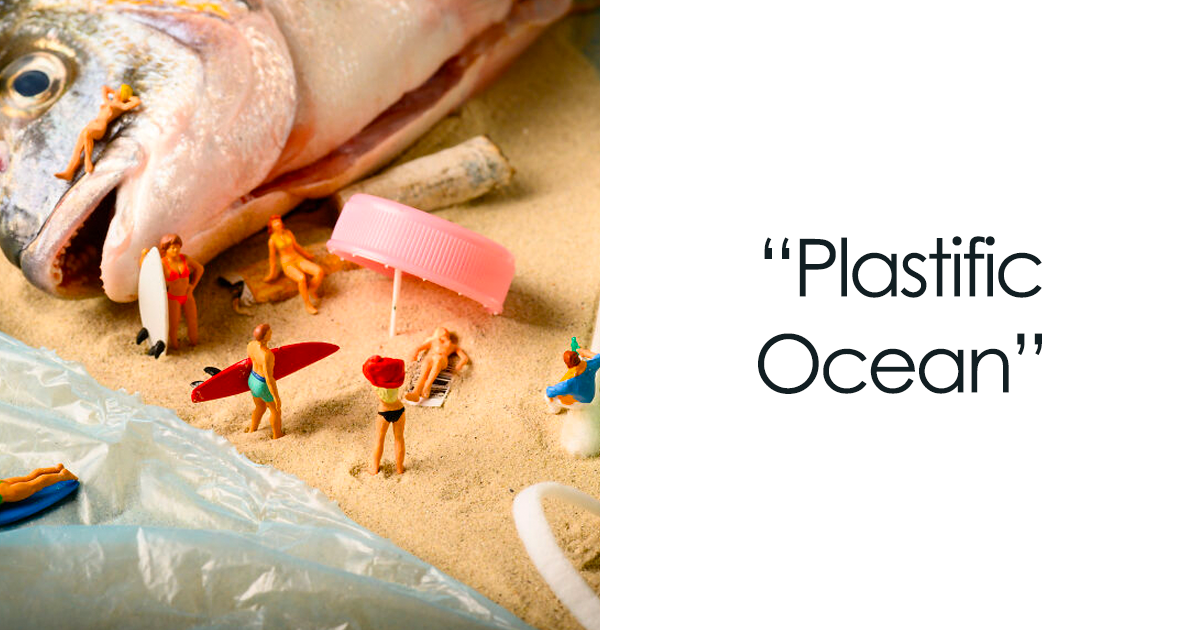
I didn’t build a “world model” with a supercomputer, a government grant, or a suspicious number of blinking server racks.
I built mine with tweezers, paint, cardboard, and the kind of patience you usually only see in people who enjoy untangling
Christmas lights as a hobby.
The idea is simple: if modern life feels too big, too loud, and too chaotic to process, shrink it. Make it small enough to hold in your hands.
Then look at it from above like a benevolent giant and ask, “Oh… so that’s what we’re doing down there.”
These tiny world models (miniature dioramas, really) are my way of turning daily headlines into physical scenespart satire, part therapy,
part “I can’t believe I just glued my thumb to a tiny traffic cone.”
Why Tiny World Models Hit So Hard Right Now
Miniatures have always been a sneaky shortcut to big feelings. Museums have used dioramas to freeze complex worlds in timeecosystems,
history, cultureso visitors can absorb them without needing a graduate seminar and three espresso shots. In art spaces, miniatures do
something even stranger: they make us feel both powerful and tender. Powerful because we can see the whole system at once; tender because
the smallest detailsthe coffee cup, the cracked sidewalk, the tiny handwritten signfeel deeply human.
There’s also a psychological trick at play. When a problem is life-size, we argue about it like it’s a professional sport. When it’s the size
of a shoebox, we study it like a story. That shift matters. A tiny world model turns “the news” into a scene you can actually read: where
the bottlenecks are, who’s being ignored, what’s crumbling, what’s still holding.
And yes, there’s a long tradition behind this obsession. From museum rooms and architectural models to miniature photography and stop-motion
sets, small-scale worlds have been used to test ideas, preserve memories, and critique reality with a wink. I’m just doing it with slightly
more hot glue and slightly less institutional funding.
How I Build a “World Model” Without a Supercomputer
My process looks like a cross between an art studio and a very polite disaster. I start with a modern issueclimate anxiety, housing costs,
tech addiction, misinformation, the gig economyand boil it down to one visual metaphor. Then I pick a scale and build outward:
walls, streets, furniture, signage, tiny props. The props are where the story hides. A miniature flyer taped to a pole can say more than a
full paragraph of explanation.
I light and photograph each scene like it’s a movie set, because (1) it kind of is, and (2) lighting is the difference between “art” and
“did a child hide this under the couch.” I don’t aim for perfect realism; I aim for recognition. The moment you think, “Oh no, I’ve been
in that exact waiting room,” the model has done its job.
13 New Pics: Miniature Scenes With Very Real Problems
Below are 13 new miniature photoseach one a tiny world model that holds a mirror up to modern life. If you feel personally attacked by a
1:24 scale vending machine, that’s between you and your conscience.
Pic 1: “Heat Dome Parade”

This scene is about how we normalize extremes. When heat becomes routine, we treat it like background noiseuntil it isn’t. I built tiny
“cooling center” signs that are slightly too small to notice at first, because that’s how support often feels: technically there, practically
hard to find.
Pic 2: “The Recycling Mirage”

The joke here is the billboard that says “It’s Fine” in cheerful typographybecause modern waste problems love good branding. I filled the
alley with tiny packaging, then added a spotless inspirational poster about “doing your part.” The tension is the point: individual effort
matters, but systems decide whether effort becomes impact.
Pic 3: “Remote Work Snow Globe”

The snow globe is the metaphor: remote work can be cozy, isolating, magical, exhaustingsometimes all before lunch. I added miniature chat
bubbles that drift like snow. Some say “quick question,” which is historically never quick. The model is cute; the boundaries are not.
Pic 4: “The Rent Is Too Darn Tall (But Make It Tiny)”

Housing crises are often described in numbers, but lived in feelings: uncertainty, displacement, and the constant math of “can I stay?”
This model exaggerates the rent sign into a physical towerbecause costs now feel like a structure you can’t climb, only stare at.
Pic 5: “Healthcare Waiting Room Olympics”

The modern healthcare experience can feel like training for a sport nobody chose. I built a tiny reception window with a sign that reads:
“Please have your documents ready,” next to a chair that is visibly uncomfortable on purpose. The scene isn’t anti-careit’s anti-friction.
Help shouldn’t require an obstacle course.
Pic 6: “Student Debt Graduation Cake”

I sculpted a tiny cake frosted to look like a loan statement because nothing says celebration like long-term financial gravity. The graduation
cap is there, the smiles are there, but the centerpiece of the party is a document. That’s the critique: milestones can be real and joyful
even when they come with a shadow.
Pic 7: “Gig Economy Pit Stop”

This model is built like a race track pit stop: delivery workers refuel phones, bikes, and bodies in tiny increments while a scoreboard tracks
“acceptance rate.” The humor is in the sports framing; the sadness is in how accurate it feels. When work is measured in seconds, dignity
becomes an afterthought.
Pic 8: “Misinformation Town Square”

I made a tiny bulletin board where every flyer contradicts the one next to it. The center has miniature megaphonesnot because people are
louder now, but because platforms reward loudness. The model invites a simple question: in a world where everything is “breaking,” what do we
build that helps people verify instead of merely react?
Pic 9: “Surveillance Playground”

The lights in this playground are camera-shaped, a visual shorthand for how monitoring has seeped into ordinary spaces. The kids aren’t doing
anything wrong; that’s the point. When observation becomes default, behavior changes anyway. Privacy isn’t only about secretsit’s about
freedom to be unremarkable.
Pic 10: “AI Office, Human Closet”

This scene is satire, not prophecy. I built a gleaming “AI operations desk” front and center, while human workers share a cramped corner
labeled “creative overflow.” It’s a reminder that technology choices aren’t fatethey’re design decisions. The question isn’t “AI or no AI.”
The question is: who benefits, who’s protected, and who’s quietly resized out of the frame?
Pic 11: “The Burnout Laundromat”

Burnout is often described as personal weakness, which is a hilarious lie told by systems that profit from exhaustion.
I labeled machines “Email,” “Meetings,” and “Notifications” because modern labor isn’t always heavy liftingit’s endless spinning.
The only bench in the room is missing a plank. Rest is “available,” just not fully supported.
Pic 12: “Loneliness Convenience Store”

This model is a store aisle stocked with tiny packages labeled “likes,” “followers,” and “views.” The cashier is a smiling screen.
It’s funny until you realize how often we substitute metrics for connection. Convenience is great for snacks; it’s terrible for belonging.
Pic 13: “Mutual Aid Block Party”

I wanted the last image to be constructive, not just critical. This block party includes a free pantry, a repair station, and a community table
covered in tiny casseroles (miniature comfort food deserves respect). The idea isn’t that community fixes everything. It’s that community
creates tractionsomething real to push against the weight of modern issues.
What Miniature Artists and Museums Taught Me (So I Didn’t Reinvent the Tiny Wheel)
I’m not the first person to use miniatures for big commentary, and thank goodnessbecause learning from others kept me from doing things like
trying to make tiny glass windows out of actual glass (I enjoy having fingertips).
Photographers who build miniature sets and then shoot them have shown how small scenes can carry enormous narratives. Post-apocalyptic
miniature cityscapesdown to decaying subway cars and nature reclaiming infrastructureprove that a tiny model can feel as epic as a movie
still. Other artists build miniature studios, capturing creative life as a series of intimate, meticulous rooms. The lesson I stole (lovingly)
is that the detail isn’t decoration; it’s evidence. Every object is a clue.
Museums reinforced something else: dioramas aren’t only about realism. They’re about framing. A good display doesn’t just show you “what.”
It shows you “how to look.” That’s why architectural models matter too: they make systems visible before they’re permanent. Small scale is a
place to test ideassocial, political, environmentalwithout bulldozers.
And then there’s the craft tradition: miniaturists, woodworkers, stop-motion set builders. They treat tiny objects with full-size respect.
Watching that approach changed my own. If you want people to take the message seriously, you can’t treat the miniature world like a joke.
You treat it like a real placethen let the humor arrive naturally, the way it does in real life.
How to Read These Miniature “World Models” Like a Pro
1) Look for the system, not the villain
Most modern issues aren’t caused by one cartoonishly evil person twirling a mustache behind a curtain. They’re caused by incentives,
infrastructure, and habits that accumulate. In tiny world models, the “villain” is usually something boring: a sign, a queue, a pricing chart,
a camera on a pole. That’s the point.
2) Follow the tiny paper trail
Flyers, labels, receipts, terms-of-service-looking rectanglesthese are the miniature equivalents of footnotes. They tell you what the system
claims to be doing versus what it’s actually doing.
3) Notice what’s missing
In full-size life, absence is hard to photograph. In miniature, absence is a design choice you can’t avoid. Who doesn’t have a seat? Which door
is locked? Where’s the ramp? What’s not stocked on the shelf? Missing pieces are often the loudest statement.
Conclusion: Big Problems, Small Furniture, Surprisingly Clear Mirrors
Tiny world models don’t solve modern issues. They do something more modestand sometimes more useful: they slow us down.
They turn doomscrolling into observing. They turn arguments into questions. And they remind us that society is built from design choices,
which means it can be redesigned.
Also, if you ever want to feel emotionally humbled, try spending 45 minutes making a miniature sandwich only to drop it on the floor and watch
your cat eat the evidence. Life is fleeting. Art is fragile. Cats are undefeated.
Extra: of Hands-On Miniature-Making Experiences
The first thing I learned is that “tiny” does not mean “easy.” Tiny means you’re doing the same job, but with the added challenge of gravity,
glue, and your own overconfidence. A full-size chair can be forgiven for wobbling; a miniature chair wobbles like it’s auditioning for slapstick.
So I became a person who owns multiple kinds of adhesive and has opinions about each one, which is not how I expected adulthood to go.
The second lesson: your tools shape your thinking. Tweezers make you patient. A hobby knife makes you cautious. A magnifying lamp makes you
confront the harsh truth that your “perfectly straight line” is actually a tiny zigzag of chaos. Building miniature dioramas is like running a
focus group on your personality flaws. Are you rushing? The paint bleeds. Are you stubborn? The wall is crooked. Are you optimistic? You attempt
tiny wallpaper patterns and immediately regret your optimism.
Photographing the scenes taught me how much modern life is about framing. If I shoot the “Misinformation Town Square” straight-on, it looks
playfullike a quirky craft project. If I shoot it low with dramatic shadows, it looks ominous and tense. Same model, different story. That
felt uncomfortably familiar, in the best way. The world we experience isn’t only the world that exists; it’s the world that gets lit, cropped,
and amplified.
I also learned to respect the power of the “tiny text.” Writing miniature signs is absurdly difficult and absolutely worth it. A one-inch sign
that reads “LIMITED TIME OFFER” instantly tells you what kind of economy you’re in. A tiny “NOW HIRING” placed next to a broken chair becomes
a whole workplace culture. Sometimes I’ll hide a joke in the cornerlike a microscopic poster advertising “INNER PEACE (TRIAL VERSION)”because
humor lowers defenses. People laugh, then they look again, then the meaning slips in.
The most surprising experience, though, was emotional. I expected building these tiny world models to make me feel more cynical, because the
topics are heavy. Instead, the process made me more attentive. You can’t build a miniature neighborhood without thinking about sidewalks. You
can’t build a waiting room without thinking about who’s comfortable and who isn’t. You can’t build a block party without imagining what would
make it welcoming. Even the bleak scenes carry a strange tenderness: if you bother to model a problem carefully, it means you still believe it’s
worth understandingand that understanding is the first step toward changing anything.
Finally, miniatures changed how I read the real world. I now notice signage, clutter, queue design, lighting, and how people move through space.
I notice the little systems inside the big system. That’s the quiet gift of small-scale art: it trains your eye to see structure. And once you
see structure, you can stop blaming yourself for everything that feels hard. Sometimes it’s not you. Sometimes it’s the tiny “EXIT” sign placed
behind a giant fake plant. In miniature and in life, the fix starts with moving the plant.
SEO Tags