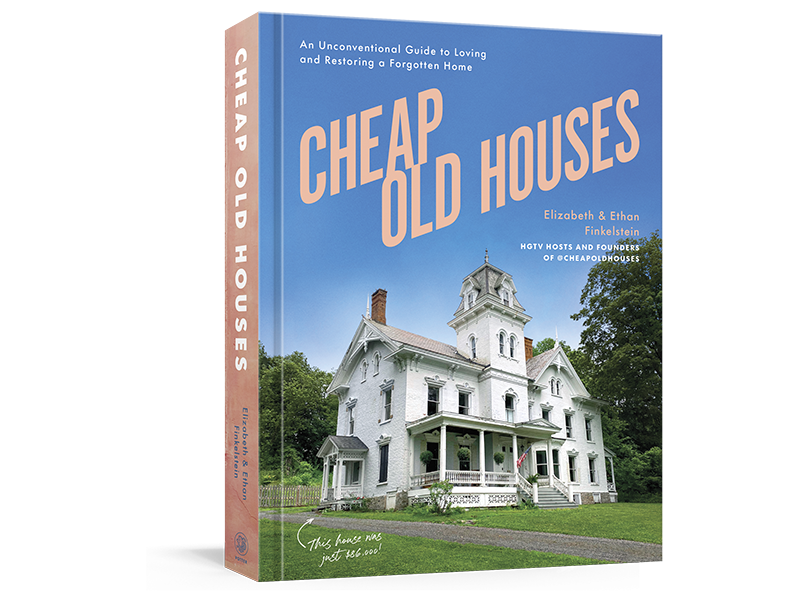
Cheap Old Houses: The Book is not just another pretty coffee-table book for people who like wavy glass windows, creaky staircases, and front porches that look like they have survived 27 family reunions. It is a love letter to affordable historic homes, a practical invitation to rethink homeownership, and a friendly nudge to anyone who has ever whispered, “I could fix that,” while staring at a peeling Victorian mansion online at 1:13 a.m.
Created by Elizabeth and Ethan Finkelstein, the couple behind the beloved Cheap Old Houses platform, the book captures what made the movement so addictive in the first place: real old homes, real low prices, real restoration stories, and enough architectural charm to make a new-build subdivision blush.
What Is Cheap Old Houses: The Book?
Cheap Old Houses: An Unconventional Guide to Loving and Restoring a Forgotten Home is a 288-page hardcover published by Clarkson Potter in October 2023. The book brings the Cheap Old Houses universe from the scrollable world of Instagram and TV into a beautifully photographed, page-turning format that feels equal parts design inspiration, real estate daydream, and restoration reality check.
The concept is simple but powerful: across America, there are historic houses with soul, craftsmanship, and surprisingly low price tags. Some are grand Victorian mansions with turrets and wraparound porches. Others are Italianate farmhouses, tiny cabins, old churches, schoolhouses, recreational camps, or unusual buildings waiting for a brave new chapter. The book gathers these homes and tells the stories behind their purchase, rescue, and revival.
Unlike glossy design books that seem to whisper, “Please admire my marble island from a safe distance,” Cheap Old Houses says, “Grab a flashlight, check the plaster, and imagine what this place could become.” It is aspirational, but not in the usual luxury-magazine way. Its fantasy is not a $9 million kitchen with a refrigerator disguised as a Parisian wardrobe. Its fantasy is affordable square footage, original woodwork, and the thrill of saving something that almost slipped away.
Who Are Elizabeth and Ethan Finkelstein?
Elizabeth and Ethan Finkelstein are the founders and faces of Cheap Old Houses, the platform that helped turn overlooked historic listings into internet-famous objects of affection. Elizabeth is known for her historic preservation background, while Ethan brings a strong appreciation for old buildings, design, and hands-on restoration energy. Together, they have built a community around the idea that old houses are not merely “fixer-uppers.” They are stories with roofs.
Their platform began by spotlighting affordable old homes across the country, often around or below the lower end of the housing market. Over time, that simple idea grew into a major online following, an HGTV presence, a newsletter, and eventually this book. The appeal is obvious: at a time when housing can feel impossibly expensive, Cheap Old Houses offers a different doorway into the American dream. Sometimes that doorway has original hardware, needs sanding, and does not quite close in humid weatherbut that is part of the charm.
Why the Book Matters Right Now
The timing of Cheap Old Houses: The Book is important. Many buyers feel priced out of traditional homeownership, especially in major cities and fast-growing suburbs. Meanwhile, older homes in small towns and rural communities often sit neglected because they are too complicated for casual buyers, too modest for developers, or too far from trendy markets to attract bidding wars.
This book lands right in the middle of that tension. It reminds readers that affordable housing does not always have to mean bland, temporary, or stripped of personality. A forgotten house may offer high ceilings, mature trees, hand-built details, and a connection to local history that no amount of fresh drywall can fake. Of course, it may also offer knob-and-tube wiring, questionable plumbing, and a basement that looks like it hosts secret meetings for spiders. The book does not erase the work involved. Instead, it makes the work feel meaningful.
That is the emotional genius of Cheap Old Houses. It does not sell perfection. It sells possibility.
Inside the Book: Affordable Homes With Big Personalities
The homes featured in the book range from romantic to eccentric, and sometimes both at once. Readers will find examples such as a low-priced Victorian in Mississippi, a mansion in Indiana, and a recreational camp in Maine. The variety matters because it expands the idea of what a dream home can be.
For some people, a dream home is a polished Colonial with fresh paint and a perfect lawn. For Cheap Old Houses fans, it might be a lopsided farmhouse with a staircase that deserves its own fan club. It might be a church transformed into a residence, a bungalow moved miles to a new location, or a 6,000-square-foot manor that required its owners to live semi-camping style while making it habitable.
These examples make the book more than a gallery. They show that old-house ownership is not one-size-fits-all. Some buyers want a slow restoration. Some need a livable home they can improve over time. Some are drawn to architectural rescue as a lifestyle. Others simply want a mortgage payment that does not make their bank account hide under the bed.
The Restoration Philosophy: Save the Good Stuff
One of the strongest messages in Cheap Old Houses: The Book is preservation-minded practicality. Elizabeth Finkelstein’s historic preservation perspective comes through in the attention paid to original details: pocket doors, plaster walls, butler’s pantries, woodwork, antique hardware, old windows, and features that many quick renovations would remove without a second thought.
The book encourages readers to look twice before ripping something out. A cracked plaster wall may not be trash. It may be repairable. A pocket door hidden inside a wall may be a design treasure waiting for its dramatic comeback. A butler’s pantry might feel old-fashioned until you realize it is basically a stylish storage solution that has been patiently waiting for Instagram to catch up.
Restore, Rehabilitate, or Renovate?
A useful way to approach old homes is to understand the difference between restoration and rehabilitation. Restoration usually means returning a building to a specific historical period. Rehabilitation, by contrast, keeps important historic features while making the house functional for modern life. Most real homeowners land somewhere between the two. They want updated electrical systems and safe plumbing, but they also want the original staircase, the wavy glass, and the strange little built-in cabinet whose purpose has been lost to time.
This balanced approach is what makes the Cheap Old Houses mindset so appealing. It is not about freezing a house in amber. It is about letting the building live again without erasing the reasons it was worth saving.
Why Cheap Old Houses Are Not Always “Cheap”
The word “cheap” deserves a friendly warning label. A low purchase price can be exciting, but the real cost of an old house includes inspection, structural repairs, roofing, utilities, heating and cooling, permits, insurance, materials, labor, and time. Sometimes the cheapest house on paper becomes the most expensive teacher you will ever have.
That does not mean the dream is unrealistic. It means the dream needs a spreadsheet. Before buying a cheap old house, smart buyers should budget for a thorough inspection, especially of the foundation, roof, electrical system, plumbing, drainage, and structural framing. Cosmetic problems are usually easier to manage than major structural issues. Peeling paint may look scary, but a failing foundation is the true plot twist.
The Best Buyers Are Patient Buyers
Old houses reward patience. Many preservation experts recommend living in a historic home for a while before making major design decisions. The house will tell you things. Morning light may reveal which room should become the breakfast nook. Winter drafts may reveal where insulation matters most. A weird hallway may suddenly make sense after you learn the house once had a back staircase, a servant’s entrance, or a long-removed porch.
In other words, do not bulldoze the story before you have read the first chapter.
What Makes the Book So Addictive?
The magic of Cheap Old Houses: The Book is that it combines three highly addictive pleasures: real estate browsing, historical imagination, and before-and-after hope. It scratches the same itch as house hunting online, but with more heart and less algorithmic doom-scrolling.
Each featured home invites the reader to ask: Who built this? Who lived here? Why did this detail survive? What would I save first? Could I live in a town I have never visited if the house had a porch like that? These questions turn a simple book into an interactive daydream.
The photography also plays a major role. Old houses are tactile. You want to see the wood grain, the stair rail, the tile, the old windows, the odd proportions, and the glorious imperfections. A perfect room can be admired. An imperfect old room can be entered with the imagination. That difference is why readers linger.
Lessons for Anyone Dreaming of Buying a Cheap Old House
1. Buy the House You Can Actually Live With
Romance is wonderful. Roof leaks are not. Choose a house that fits your lifestyle, location needs, budget, and tolerance for ongoing projects. If you hate uncertainty, do not buy a house that requires a three-year mystery tour through old wiring, plaster dust, and “surprise” joist repairs.
2. Protect Character-Defining Features
Original doors, trim, staircases, mantels, built-ins, windows, and hardware are often what make an old house special. Replacing everything with generic modern materials may make the home easier to manage in the short term, but it can flatten the very character that made the property worth buying.
3. Build a Realistic Restoration Budget
A good budget includes the purchase price, immediate safety repairs, professional inspections, permit fees, contingency funds, and the projects you will inevitably discover after closing. A cheap old house is not a coupon. It is a commitment with character.
4. Find the Right Team
Not every contractor understands historic homes. Look for professionals who respect old materials and can explain when repair is better than replacement. The right contractor will not treat every old window like a personal enemy.
5. Research the House’s History
Local archives, libraries, old newspapers, tax records, maps, and neighbors can reveal valuable clues. You may discover original owners, former floor plans, old photographs, or details that guide a more thoughtful restoration. Even small discoveries can change the way you see a house.
Who Should Read Cheap Old Houses: The Book?
This book is ideal for several types of readers. It is perfect for historic home lovers who enjoy architectural details and restoration stories. It is useful for budget-conscious dreamers wondering whether homeownership might be possible outside the usual expensive markets. It is inspiring for DIY renovators who want proof that imperfect houses can become deeply personal homes. It is also a great gift for anyone who regularly sends real estate listings with messages like, “Hear me out…”
However, it is not only for buyers. Even renters, design fans, preservation students, and small-town enthusiasts can enjoy the book as a visual and cultural tour of America’s overlooked housing stock. It helps readers see beauty where others see inconvenience.
The Bigger Idea: Saving Houses Saves Stories
The deeper value of Cheap Old Houses: The Book is not just affordability. It is continuity. When an old house is restored, a piece of local memory survives. The porch where people once gathered, the kitchen where generations cooked, the staircase worn by thousands of footstepsthese are not luxury details. They are everyday history.
Preserving old homes can also be environmentally thoughtful. Reusing an existing structure often keeps materials out of landfills and makes use of the embodied energy already invested in the building. A restored house can support a neighborhood’s identity, attract new residents to underappreciated towns, and prove that “old” does not have to mean obsolete.
That is why the book feels hopeful. It is not simply saying, “Look at these cheap houses.” It is saying, “Look at what we already have, and look at what we might still save.”
Experience Notes: What the Cheap Old Houses Journey Feels Like
Reading Cheap Old Houses: The Book feels a little like taking a road trip with two friends who are extremely good at spotting beauty behind overgrown hedges. At first, you are just browsing. Then suddenly you are emotionally invested in a house three states away with a sagging porch and a staircase that looks like it belongs in a period drama. This is how the Cheap Old Houses experience sneaks up on people. It starts as curiosity and becomes imagination.
One of the biggest lessons from the cheap old house world is that the best homes are not always the easiest ones. A move-in-ready house may be comfortable, but a forgotten historic home asks for participation. You do not simply decorate it. You listen to it. You learn which floorboards complain, which windows catch the best light, which rooms feel original, and which “updates” from 1974 deserve a polite but firm goodbye.
The experience is also humbling. Old homes have a way of correcting overconfidence. You may begin with a weekend plan to strip wallpaper and end with a three-week investigation into plaster, moisture, and why someone once thought seven layers of paint were a personality trait. But that is part of the appeal. Each repair teaches you something about materials, patience, and the difference between quick improvement and lasting stewardship.
For many readers, the book may also create a new way of traveling. Small towns begin to look different. A boarded-up house is no longer just an eyesore; it becomes a question. Who lived there? What is original? Could it be saved? What would the town gain if someone cared enough to bring it back? This shift in perspective is one of the most meaningful experiences connected to the book. It trains the eye to see value where the market often sees only inconvenience.
There is also a community feeling woven through the Cheap Old Houses movement. People who love old homes tend to share advice generously. They trade salvage sources, paint research, contractor warnings, window repair tips, and emotional support for the moment when a “simple project” becomes a dramatic mini-series. The book captures that communal optimism. It reminds readers that restoration is rarely a solo performance. It usually involves neighbors, craftspeople, inspectors, historians, previous owners, and occasionally a very patient friend with a truck.
Perhaps the most relatable experience is the emotional tug-of-war between romance and reality. A cheap old house can be breathtaking, but it also demands honesty. The roof matters. The foundation matters. The budget matters. The location matters. Love at first sight is allowed, but it should bring a flashlight, a measuring tape, and an inspector. The smartest old-house dreamers learn to balance the poetry of preservation with the practical wisdom of planning.
In the end, the experience of Cheap Old Houses: The Book is not only about houses. It is about permission. Permission to dream differently. Permission to value craftsmanship over trendiness. Permission to consider places outside the obvious markets. Permission to see a cracked, dusty, imperfect building and think, “Maybe the story is not over.” That feeling is why the book works so well. It does not promise an easy path. It offers a more interesting one.
Conclusion: A Book for Dreamers Who Own Work Gloves
Cheap Old Houses: The Book succeeds because it understands that old-house love is both emotional and practical. It celebrates the fantasy of affordable historic homes while acknowledging the patience, money, research, and respect required to save them well. Elizabeth and Ethan Finkelstein have created more than a design book. They have created a guide to seeing overlooked homes with fresh eyes.
For readers who love historic architecture, restoration stories, affordable real estate, and the idea of giving neglected buildings a second life, this book is a deeply enjoyable read. It is charming without being shallow, inspiring without pretending every project is easy, and practical enough to make the dream feel reachable. In a housing culture obsessed with bigger, newer, and shinier, Cheap Old Houses makes a persuasive case for older, quirkier, and more meaningful.
And honestly, if a book can make cracked plaster seem romantic, useful, and possibly worth saving, it has done its job.